Upsell and Cross-Sell: Strategies to Increase Average Order Value
10 min read · AstraLoop Studio
Upsell and cross-sell are the two most underrated levers for growing revenue without spending an extra euro on acquisition. The customer has already decided to buy, already entered their card details, already gotten past the hard part. Offering them the right deal at that moment costs almost nothing and converts far better than cold traffic. Yet most Italian companies leave this money on the table.
The reason is usually the same: everyone focuses only on the first sale. They optimize cost per click, product page conversion rate, maybe cart recovery. But almost no one works systematically on how much each customer spends when they buy and how often they come back. Those are exactly the two numbers, average order value and lifetime value, that decide whether your acquisition is sustainable or not.
In this guide we'll look at what really separates upsell from cross-sell, where to place them in the buying journey so they actually work, what numbers to expect, and how an AI recommendation engine turns these techniques from a "one rule fits all" tactic into an offer calibrated on the individual customer.
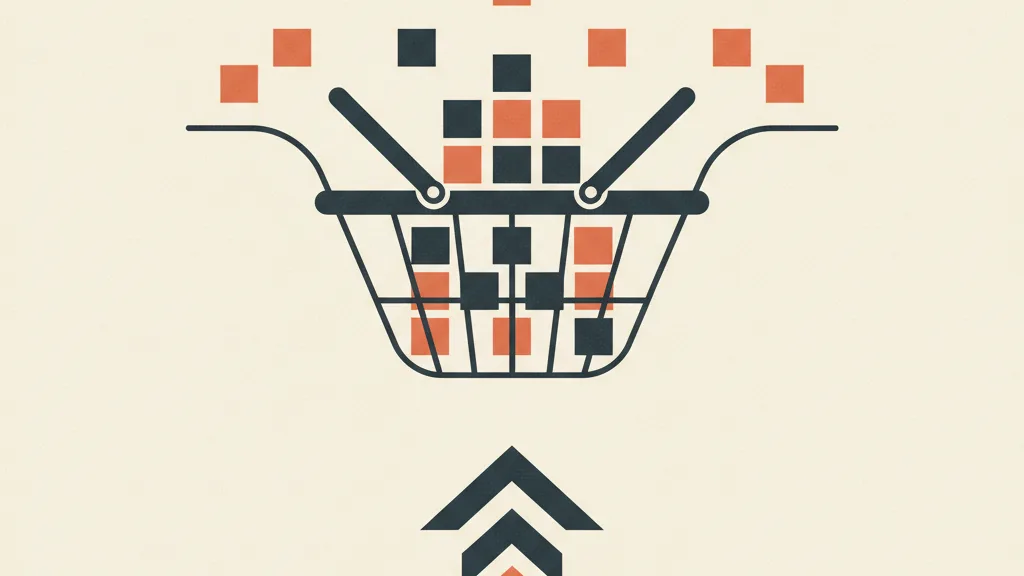
Upsell vs. cross-sell: the difference (and why it matters)
The two get mixed up often, but they're different moves with different logic.
Upsell means moving the customer to a higher-tier or more complete version of the same product. Someone about to buy the base plan gets moved to the pro plan. Someone with the 250 ml size in their cart gets offered the 500 ml family size at a better price per liter. Someone choosing the 2024 model gets shifted to the current one. The object of desire stays the same, only the level changes.
Cross-sell means adding a complementary product to the one being purchased. Someone buying shoes gets offered technical socks and waterproofing spray. Someone buying a coffee machine gets offered capsules and descaler. You're not moving them up a tier, you're widening the order with something that naturally belongs alongside it.
The practical difference: upsell generally raises the single order value more because it plays on higher margins, cross-sell converts more often because the add-on is small and "logical." The two combine well. A well-built order can carry one upsell at the decision stage and one or two cross-sells before payment.
The downsell: the third move almost nobody uses
If the customer declines the upsell, don't close the door. The downsell offers a cheaper alternative or an installment plan. Someone who said no to the annual package might say yes to the monthly one. Someone who doesn't want the full bundle takes the single item instead. It's pure recovery: without the downsell, that customer would have walked away with the base order or, worse, no purchase at all.
Why AOV and LTV matter more than one extra click
Average order value, AOV, is how much a customer spends on average per order. Lifetime value, LTV, is how much they bring you across the entire relationship. These are the two variables that upsell and cross-sell move directly, and they're also the ones that unlock the rest of your acquisition strategy.
Let's run the numbers. Imagine an e-commerce store with an average order value of 45 euros and a customer acquisition cost of 30 euros. The margin per order is razor-thin, every swing in ad costs puts you in trouble. Now raise the average order value by 20% with a well-placed cross-sell: it climbs to 54 euros. Those extra 9 euros are almost all margin, because you've already paid for the acquisition. With that extra margin you can afford to bid higher on traffic, compete in tougher auctions, or simply pocket more at the same ad spend.
It's the same logic that governs the relationship between customer value and acquisition cost: as long as LTV stays at least three times the CAC, the system holds, and upsell and cross-sell are the most direct way to push that ratio up without touching the ad budget. Anyone who only thinks in terms of conversion rate is optimizing a single lever. Anyone who also works on order value and repeat purchases is moving three at once.
Where to place upsell and cross-sell in the buying journey
The "where" matters more than the "what." The same offer placed at the wrong moment is annoying; placed at the right moment it feels like a favor. Here are the points that work, in chronological order of the purchase.
1. On the product page (pre-cart)
This is where the "soft" cross-sell lives: the classic "frequently bought together" or "complete the look" block. It doesn't feel pushy because the customer is still browsing. It's also the ideal spot for a size or tier upsell: showing the higher version next to the base product with the benefit spelled out (more product, better price per liter, extended warranty). A well-built product page integrates these suggestions without dragging down the main conversion rate.
2. In the cart and at checkout (order bump)
This is by far the most profitable spot. The order bump is that checkbox right before payment: "Add protection for €4.90" or "Want refills too? +€7." It converts extremely well because friction is minimal, one click, no new page, no new payment. Golden rule: the add-on should cost a fraction of the cart (roughly under 25-30% of the total) and it must be genuinely relevant. A random order bump burns trust.
3. The thank-you page (immediate post-purchase)
Right after payment, trust is at its peak: the customer has just bought, they're in "buying mode." A one-click upsell on the thank-you page, "add this to your order with one click, no need to re-enter your details," can add orders at zero acquisition cost. The risk is nil: if they decline, the original order still stands.
4. Post-purchase over time (email, WhatsApp, retention)
This is where LTV is won. Someone who bought capsules will run out of capsules. Someone who bought skincare will finish the bottle. An automated sequence that resurfaces the repurchase at the right moment, or suggests the complementary item a few days after delivery, is pure cross-sell spread over time. It's the same territory as automated cart recovery, just moved downstream: instead of recovering people who didn't buy, you're getting more value from people who already did.
The rules that separate a good offer from an annoyance
Upsell and cross-sell fail for pretty much the same reasons every time. Here's what to keep fixed.
- Relevance above everything. The offer must have an obvious connection to what the customer is buying. Suggesting a toaster to someone buying lipstick is noise that drags down conversion across the board.
- One at a time, not a wall. Three upsells, two cross-sells, and a pop-up in the customer's face turn the purchase into an obstacle course. One strong, targeted offer beats ten weak ones.
- The add-on price should feel small. At checkout the brain thinks in percentages of the total. A €9 accessory on an €80 order feels like nothing. The same accessory offered on its own feels expensive.
- Always give a reason. "Customers who bought this also found this useful," "to make it last twice as long, you'll need..." An explicit reason converts better than a plain "add this."
- Never jeopardize the main product. If the upsell risks making the customer hesitate on a purchase they'd already decided on, you've made things worse. The extra offer must never put the first sale at risk.
Numbers: what to realistically expect
Benchmarks should be taken as orders of magnitude, not promises: they depend on your industry, average price, and how well-targeted the offers are. That said, here are realistic ranges observed in e-commerce.
| Lever | Where | Typical effect |
|---|---|---|
| Order bump at checkout | Before payment | Adopted by 10-30% of customers |
| One-click post-purchase upsell | Thank-you page | Adopted by 4-15%, near-full margin |
| "Frequently bought together" cross-sell | Product page / cart | +5-15% on average order value |
| Post-purchase repurchase sequence | Email / WhatsApp | Drives purchase frequency, effect on LTV |
What really matters isn't any single rate, but the compounded effect. A +12% average order value combined with a customer buying 1.4 times a year instead of 1.1 produces a jump in LTV far bigger than the sum of the two percentages. That's why it's worth tracking these as steady KPIs rather than one-off tests: if you don't measure them, you don't know which offer works and which one annoys. They're worth adding permanently to the e-commerce KPIs you should be tracking.
Want to find out how much average order value you're leaving on the table and how a recommendation engine could recover it? Request an analysis of your sales flow.
The next step: from fixed rules to an AI recommendation engine
So far we've talked about manual rules: "show product B alongside product A." It works, but it has a ceiling. Rules are static, the same for everyone, and become unmanageable once you have hundreds of SKUs. The customer who's already bought the waterproofing spray twice keeps seeing it suggested. A high-spending profile gets the same €4.90 order bump as a bargain shopper.
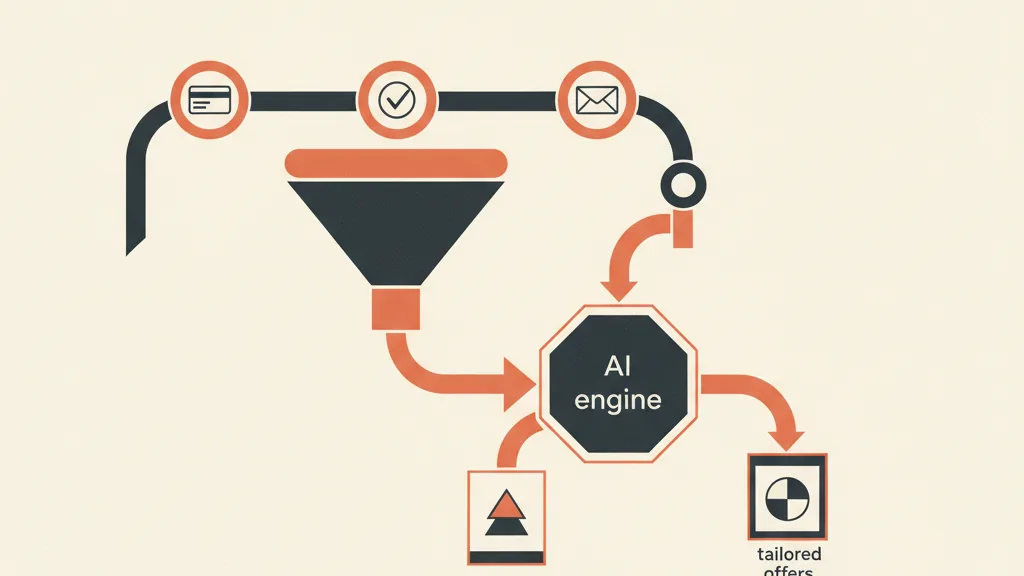
This is where a recommendation engine changes everything. Instead of fixed rules, an AI system looks at what that specific customer has in their cart, what they've bought before, what similar profiles tend to buy together, and picks in real time the pairing with the highest purchase probability and the best margin. The same product page shows different offers to different people. It's not magic: it's the same principle behind AI use cases in e-commerce, applied at the moment of sale.
The fuel for all of this is data you already own. Order history, viewed products, support tickets, on-site behavior. This is first-party data, yours, the kind no privacy shift can take away. A well-fed recommendation engine simply reads this asset and turns it into relevant offers. It's the real competitive edge of companies that use their own data well: not a generic algorithm, but one that actually knows your customers.
Post-purchase automations that run on their own
The second half of the work happens downstream of the order, and that's where automation pays off the most. A few sequences you build once and let run:
- Timed repurchase. The system knows how long a consumable product typically lasts and resurfaces the refill a few days before it runs out. Pure cross-sell over time.
- Post-delivery complement. Five days after delivery, the right accessory suggestion arrives, right when the product has been tried and satisfaction is high.
- Tiered upgrade. Customers showing high-value signals get the premium version or the higher bundle pitched to them, not the same message sent to everyone.
- Behavioral segmentation. Frequent buyers, big spenders, and dormant customers each get different offers, in line with an RFM analysis that segments the customer base by value and frequency.
All of this lives where customer data actually sits: the CRM. That's why a CRM that automates sales isn't just for organizing contacts: it's the control center that sends out the right recommendations at the right time. If you sell on Shopify, for instance, a CRM integrated with your store connects order history and automations without manual steps. The same logic behind automated sales follow-up, normally used to warm up cold leads, applied to existing customers becomes a machine for average order value and repeat purchases.
Where to actually start
You don't need an enterprise-grade AI system to get going. The sensible sequence looks like this:
- Measure your current average order value and purchase frequency. Without a baseline you can't tell if you're improving.
- Add a relevant order bump at checkout. It's the change with the best effort-to-result ratio, and you can test it in a few days.
- Add a one-click upsell to the thank-you page. Zero risk to the order, near-full margin.
- Build a first repurchase sequence around consumables or obvious complementary products.
- Once volume and SKU count grow, move from fixed rules to a recommendation engine that personalizes per customer.
Upsell and cross-sell aren't cart tricks: they're the cheapest way you have to grow. Traffic keeps getting more expensive, acquisition is under pressure everywhere. The margin, on the other hand, is sitting right there, inside customers who've already chosen you. Using it well, with the right offers at the right moment and automation carrying them forward on its own, is what separates an e-commerce business that holds steady from one that scales.
Frequently asked questions
What's the difference between upsell and cross-sell?
Upsell moves the customer to a higher-tier or more complete version of the same product (from the base plan to the pro plan, from the small size to the large one). Cross-sell adds a complementary product to what they're already buying (socks with shoes, capsules with a coffee machine). Upsell generally raises the single order value more, cross-sell converts more often because the add-on is small and logical.
Where should you place an upsell for it to actually work?
The three most profitable spots are: the order bump at checkout (a checkbox right before payment, minimal friction), the one-click upsell on the thank-you page right after purchase (when trust is at its peak and the risk is nil), and post-purchase sequences via email or WhatsApp for repurchases. The moment matters more than the product offered.
How much can cross-sell and order bumps actually raise average order value?
These are orders of magnitude, not promises, and they depend on your industry. Typically a well-built "frequently bought together" block adds +5-15% to average order value, a checkout order bump gets adopted by 10-30% of customers, and a post-purchase upsell by 4-15% at near-full margin. The real value is the compounded effect on AOV and purchase frequency, not any single rate.
What is an order bump?
It's an additional purchase offered as a checkbox right before payment, for example "Add protection for €4.90." It works because friction is minimal: one click, no new page, no new payment. Practical rule: the add-on should cost a fraction of the cart (under 25-30% of the total) and be genuinely relevant.
How does an AI recommendation engine improve upsell and cross-sell?
Instead of fixed rules that treat everyone the same, an AI system reads what that specific customer has in their cart, their purchase history, and what similar profiles tend to buy together, then picks in real time the pairing with the highest purchase probability and best margin. The same product page shows different offers to different people, fed by the first-party data you already hold in your CRM.
Do you need a complex system to start with upsell and cross-sell?
No. Start by measuring your current average order value and purchase frequency, then add a relevant order bump at checkout and a one-click upsell on the thank-you page, both high-return, low-effort moves. Only once volume and SKU count grow does it make sense to shift from manual rules to a recommendation engine that personalizes per customer.
If you want to turn upsell and cross-sell from manual rules into an AI system that offers the right deal to the right customer and runs it automatically, let's talk: we'll analyze your data together and show you where the hidden margin is.