AI Agents for Lead Generation: What They Are and How We Put Them to Work
8 min read · AstraLoop Studio
AI agents for lead generation is the most overused phrase of 2026. Half the people saying it mean a chatbot that spits out FAQ answers. The other half are selling "agentic" smoke without a single process actually running in production.
We use them every day. So let's cut through it: what they are, what they're not, where they work, and where they'll burn your budget. No conference slides.
If you need the basics before this, start with our guide to what lead generation is. Here we go straight to the practical part.
What an AI agent is (and why it isn't a chatbot)
A chatbot waits for a question, answers it, and closes. It lives inside a conversation. It's useful for first contact on your site, capturing a lead, triage. But that's where it stops.
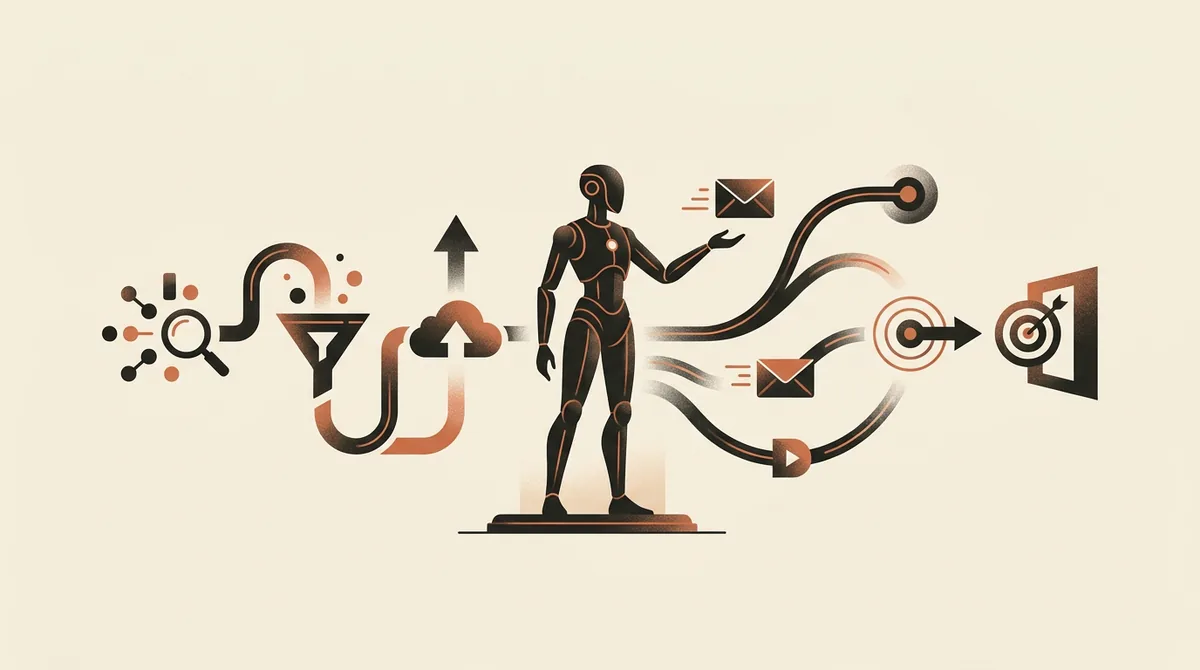
An AI agent doesn't wait for anything. It's given a goal, say "find 200 companies that fit our target and reach out to the ones that match the criteria", and it breaks that down into actions. It reads data, decides on a sequence, uses external tools, updates systems, and checks whether it reached the result. Then it starts again.
The difference in one line:
A chatbot talks. An agent moves a process forward.
This is the huge gap in almost every article on the topic: they call "agent" anything that replies in natural language. That's wrong. An agent has three ingredients a chatbot doesn't: decision-making autonomy, access to tools (CRM, email, databases, APIs), and a verification loop to self-correct.
The three parts that make up an agent
- The brain (LLM): reasons about the goal, interprets the data, decides the next move.
- The tools: the hands. Scraping, data enrichment, sending emails, writing to the CRM, booking a calendar slot.
- The memory: remembers what it's already done, who it's already contacted, what worked. Without memory, an agent repeats the same mistakes forever.
What an AI agent actually does in lead generation
Enough theory. Here are the real tasks an agent handles in a customer acquisition system, start to finish:
- Prospecting: builds the list of target contacts starting from your ideal customer profile, not from some file bought at random.
- Enrichment: for every contact it pulls role, company, revenue, tech stack, buying signals. The sales rep doesn't get a blank card, they get a dossier.
- Qualification: scores every lead and drops the ones not worth your time. To understand the criteria, read MQL, SQL and how to spot a contact that buys.
- Personalized first contact: writes the message based on the recipient's actual context, not a template with {name} pasted in.
- Reply handling: sorts who replies, understands intent, handles simple objections, and passes to sales only the ones that are hot.
- Booking: proposes slots, confirms, updates the CRM. Zero manual admin work.
Until yesterday, every one of these steps was a person with a spreadsheet. That's why the topic exploded.
And it's not just B2B. A car dealership can use an agent to catch someone who just configured a model on the site and left no contact details, call them back with the right offer, and book the test drive. A real estate agency uses it to filter incoming requests from listing portals, work out budget and area, and hand off to a human agent only the ones ready to visit. An e-commerce store uses it to win back abandoned carts with a message built around the product the shopper actually viewed, not the same generic email for everyone. A gym or a local services business runs it on requests coming in from social media, qualifies by need and proximity, and books the first session. The context changes, the logic stays the same.
The real 2026 numbers (good and bad)
Most articles only show you the numbers that shine. We give you all of them. That's how you make an adult decision.
The good. In 2026, outbound volume per rep went from a human average of 1,150 messages a month to 7,400 with AI support, a 6.4x multiplier. An agent's time-to-first-meeting is 24 days versus 142 for a newly hired sales rep. And cost per qualified opportunity drops from $487 to $224 in hybrid teams, a 54% decrease.
The bad. Over the same period, reply rate fell from 4.7% to 2.9%. In other words: you send far more, but each individual message converts less, because everyone's playing with the same toys. And there's worse: 47% of outbound agent deployments get shut down by domain reputation collapse within the first 90 days. Send too much, too fast, and you land in spam. Game over.
The lesson few people mention
Volume alone gets you nowhere. An agent sending 7,400 emails a month that torches your domain in three months has done you damage, not a favor.
The real advantage isn't "send more." It's sending better, to the right people, without breaking your infrastructure. Everything else is theater. If you want the economics behind these numbers, check what a lead really costs by industry in Italy.
Want to know if a system of AI agents actually makes sense for your market, or if you should fix your data and infrastructure first? Let's talk about it, concretely.
Agent, chatbot or automation: which one do you actually need
Not everything needs an agent. Paying for the most autonomous AI where a simple flow would do is one of the fastest ways to waste budget. Here's how to choose:
| You need to… | Right tool |
|---|---|
| Answer FAQs and capture the lead on your site | Chatbot |
| Move data from A to B with fixed rules | Automation / workflow |
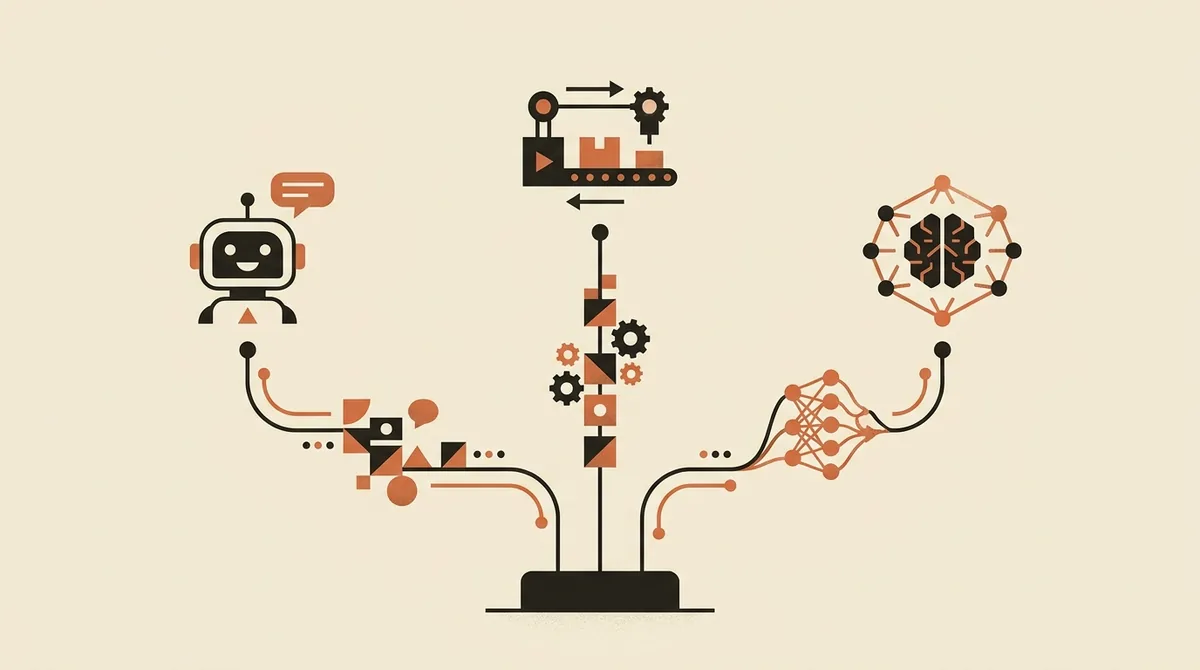
| Search, decide, personalize and adapt case by case | AI agent |
The practical rule is this: if the task has a predictable, always-the-same answer, you don't need an agent. If it requires deciding based on context (who to contact, how, when, with what message), then you do. An e-commerce store answering "where's my order?" is fine with a chatbot; the same store trying to re-engage the right customers at the right time with the right offer needs an agent.
The same goes for the rest of the stack: half the tools sold to you as "essential" aren't. We separated the wheat from the chaff in the lead generation tools that are actually worth it. And for the full picture, there's our guide to lead generation with AI.
Where agents fail (and how to avoid it)
Nobody talks about this, so we will. The ways an AI agent project crashes are always the same:
- Dirty data going in. An agent run against a bad list produces bad leads, just faster. Garbage in, garbage out, accelerated.
- Zero human oversight. The agent hallucinates, sends something absurd to an important prospect, and nobody notices. You need a human in the loop on the sensitive steps.
- Over-sending. The domain collapse mentioned above. Avoided with warm-up, gradual volumes, and deliverability monitoring.
- No measurement. If you don't measure by funnel stage, you don't know where the agent is losing people. And you can't fix it. The numbers that matter are in our lead generation funnel guide.
- Fake personalization. "Hi {name}, I saw your company" isn't personalization, it's spam with extra steps. The agent has to say something true and specific, or it might as well not write at all.
Why the winning model is hybrid, not "AI-only"
Here's the data point that kills the dream of "sales team replaced by robots." In 2026, hybrid pods (one human rep per two agents) book 1.9 times more meetings per dollar than AI-only setups, and 2.4 times more than human-only ones.
That's no accident. The agent does the heavy, repetitive work: searching, enriching, qualifying, opening the conversation. The human steps in where judgment is needed, meaning the actual negotiation, the complex objection, the relationship. That's true for a software seller just as much as a real estate consultant closing the sale in person, or a gym owner convincing someone who's still on the fence.
Cut the person out entirely and you get high volume and low conversion. Cut AI out entirely and you stay slow and expensive. The balance point is clear in the numbers, and it's why at AstraLoop we don't sell "a robot that does everything." We build the system that makes AI and people work together, each where they're strongest.
How we put agents to work at AstraLoop
Our differentiator is simple: we don't treat the agent as an isolated toy. We embed it inside a complete lead generation system, where the technology serves a measurable commercial goal. AI and automation combined with lead generation and marketing, not three disconnected things.
In practice, a typical path looks like:
- We define the real target. Ideal customer profile, not "everyone who breathes." Everything else depends on this.
- We get the data and infrastructure in order. Domains, warm-up, CRM. Without a foundation, even the smartest agent sinks.
- We build the agent on top of the existing process. Prospecting, enrichment, qualification, first contact, with human checks at the right points.
- We start with a pilot, then scale. Low volumes, we measure, we correct, then we open the tap. Never the other way around.
- We hand hot leads to sales, not cold lists. With a full dossier and priority attached.
The numbers speak for themselves: 370K+ qualified leads generated, 140+ automated systems, 60+ companies served, 4.9/5 satisfaction. We don't share these to brag, but because they're the difference between people who've actually run these systems and people who just write about them.
Want the concrete tactics that come before the agent? You'll find them in how to generate qualified B2B leads. Want to see the full method? Look at how our AI lead generation agency works. And for the overall strategic picture, our guide to B2B lead generation is the place to start.
In short
AI agents aren't a fad and they aren't magic. They're powerful operational tools that, used well, cut costs and time. Used badly, they burn domains and reputation in 90 days.
The dividing line isn't the technology. It's who's steering it: clean data, human oversight, measurement by stage, a hybrid model. Get these four things right and the agent works for you. Skip them, and you're the one working for the agent.
Frequently asked questions
What's the difference between an AI agent and a chatbot for lead generation?
A chatbot converses: it waits for a question, answers, and closes. It lives inside a single interaction. An AI agent moves a process forward: it's given a goal, decides on a sequence of actions, uses tools (CRM, email, databases), updates systems, and checks the result. In one line: the chatbot talks, the agent works.
Do AI agents replace sales reps?
No, and the numbers confirm it. In 2026, hybrid teams (one rep per two agents) book 1.9 times more meetings per dollar than AI-only setups. The agent handles the repetitive research and qualification work, the human handles negotiation and relationships. Cut the person out and you get lots of contacts but few conversions.
What are the main risks of AI agents in lead generation?
Three, mainly: domain reputation collapse from over-sending (hits 47% of deployments within the first 90 days), dirty input data that produces bad leads faster, and hallucinations without human oversight. They're avoided with gradual warm-up, clean data, and a human in the loop on the sensitive steps.
Does an AI agent generate more leads than a human sales rep?
In volume, yes: in 2026 outbound per rep went from 1,150 to 7,400 messages a month with AI, a 6.4x increase. But the reply rate per message dropped from 4.7% to 2.9%. The real advantage isn't sending more, it's sending better and to the right people.
How much does it cost to put an AI agent to work acquiring customers?
It depends on infrastructure, volume, and the level of personalization. The number that matters is cost per qualified opportunity, which drops 54% in hybrid teams (from roughly $487 to $224). The best way to estimate your own case is to start from your ideal customer profile and channels, not a fixed list price.
If you want to put AI agents to work on your funnel, the right way, hybrid and measurable, write to us at astraloopstudio@gmail.com and let's see where you stand today.