Custom CRM Pricing: What to Pay for Development, Modules, and Fees
9 min read · AstraLoop Studio
When you ask for a quote on a custom CRM, the answer you almost always get is "it depends." That's true, but it's also a lazy answer. Behind that "it depends" are precise numbers you can know in advance. In this article we put a concrete tiered price list on the table, walk through what pushes the price up or down line by line, and give you the parameters to tell whether a quote in your hands is honest or inflated.
Here we focus on price: the upfront development cost, the modules that weigh the most, integrations, and the recurring fee. If you're after a broader overview of the total investment and the return, you'll find a complementary angle in how much a custom CRM costs.
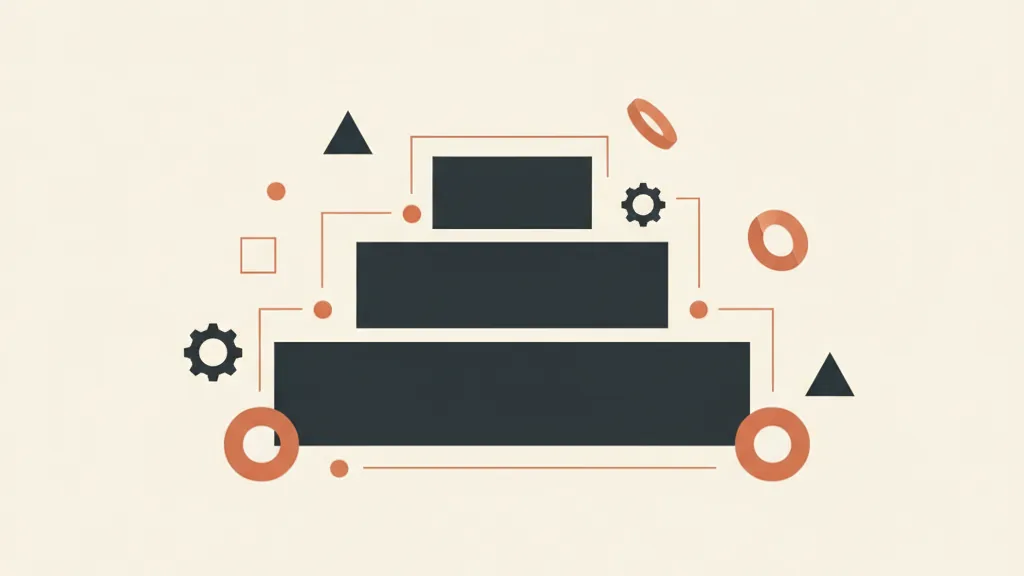
The three line items that make up a custom CRM's price
Before looking at numbers, let's clarify the structure. The cost of a custom CRM isn't a single block: it splits into three components that need to be read separately, because they follow different logic.
- Upfront development (one-shot): designing and building the system. Paid once, usually by milestone. It's the most visible line item and the one negotiations tend to focus on.
- Modules and integrations: add-on features like a connected funnel, automations, AI agents, connectors to external tools. They can be included in the build or added later, and they shift the quote significantly.
- Recurring fee: maintenance, hosting, updates, support, and any software license. Paid monthly or yearly, and it should be calculated over at least 24-36 months to get the real total cost of ownership.
The most common mistake is comparing two quotes by looking only at upfront development. A system with a lower build cost but double the monthly fee can end up costing you more over three years. The number that matters is the total cost of ownership, not the "turnkey" price on day one.
Tiered price list: what it really costs in 2026
These ranges reflect the Italian market for SMEs and professional practices. They're indicative figures meant to orient you, not to replace a written quote for your specific case. The tiers assume a structured agency or software house, not a solo freelancer (cheaper, but with some continuity risk).
| Tier | What it includes | Upfront development | Monthly fee |
|---|---|---|---|
| Basic | Customer records, sales pipeline, notes and activities, essential dashboard, 1 integration (e.g. email or calendar) | €4,000 - 9,000 | €150 - 400 |
| Intermediate | Basic + follow-up automations, lead scoring, roles and permissions, 2-3 integrations, connected inbound funnel | €10,000 - 25,000 | €400 - 900 |
| Advanced | Intermediate + AI agents (qualification, voice, WhatsApp), advanced reporting, multi-location, ERP/back-office integrations | €25,000 - 60,000+ | €900 - 2,500+ |
A couple of practical takeaways. If you're an SME with 2-5 salespeople and you want to organize the pipeline and automate follow-ups, you'll almost always land in the intermediate tier: it's the sweet spot between cost and return. The basic tier makes sense as a first step or for very small teams, but be careful not to build something you'll have to redo in six months. The advanced tier is justified when the CRM becomes the company's commercial engine, with high lead volumes and processes that need orchestrating.
Why the ranges are so wide
The gap between the low and high end of the same tier depends on three things: the number of entities and screens to model, how "messy" your current process is (a clear sales flow builds fast, one full of exceptions doesn't), and the quality of the data you need to migrate. Migrating from disorganized spreadsheets or an old system alone can be worth several thousand euros.
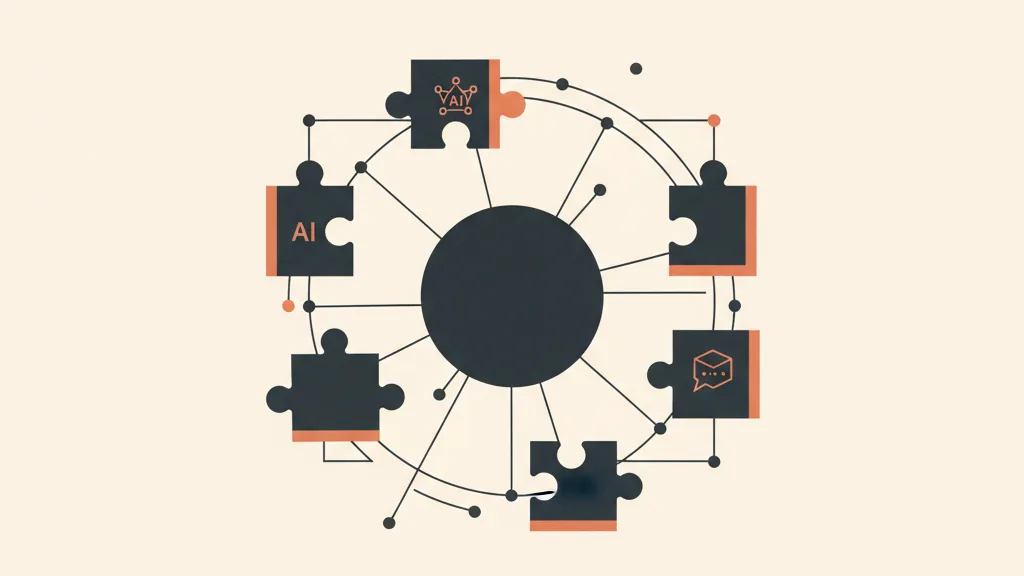
The modules that move the quote the most
Here's where the price grows, in typical order of impact. Knowing them serves two purposes: understanding why a quote is high, and deciding what to activate now versus later.
- AI agents (from +€3,000 per module). An AI agent that qualifies leads via WhatsApp or a voice assistant that books appointments into the CRM are the modules with the highest return, but also the ones that raise the bill the most. They're not a cosmetic add-on: they replace repetitive human work.
- Connected acquisition funnel (+€2,000 / +€8,000). A CRM's value explodes when it's fed by a steady stream of contacts. See how to design the integration between CRM and sales funnel: landing pages, forms, tracking, and automatic lead entry into the pipeline.
- Integrations with external systems (€500 - 4,000 each). Every connector to a back-office system, invoicing, e-commerce, or marketing tool is dedicated work. Clean APIs cost little; undocumented legacy systems cost a lot.
- Automations and workflows (included, or +€1,500 / +€5,000). Sequences of automated sales follow-up, reminders, automatic lead assignment. A few well-built automations are worth more than twenty that never get used.
- Lead scoring and segmentation (+€1,000 / +€3,000). A lead scoring system that tells salespeople who to call first. Useful only if your volumes justify the prioritization.
- Advanced reporting and multi-location: custom dashboards, granular access control, management of multiple branches. Grows with organizational complexity.
The rule we repeat to clients is simple: pay for the modules you'll use in the first 90 days, design the architecture to accommodate the rest later. A good custom CRM is modular precisely for this reason. Paying today for features you'll "maybe" activate a year from now is the fastest way to inflate a quote with no return.
What drives the cost of development (the real levers)
If you want to understand where a number comes from, look at these factors. They're the levers an agency uses to calculate the quote, and on some of them you can act yourself to bring it down.
1. Complexity of the sales process
A linear flow (lead, contact, offer, close) is cheap to model. A process with multiple approvals, conditional discount rules, and agents on different commission structures multiplies the hours. Before asking for a quote, map your actual process: clarity upstream means lower cost downstream.
2. Number of users and roles
It's not so much the headcount as the variety of permissions. Five salespeople with the same profile are simple. Five different profiles (sales, back office, manager, external agent, management) require a more elaborate role system.
3. Volume and quality of data to migrate
Migrating 500 clean contacts is an hour of work. Migrating 15,000 records scattered across spreadsheets, an old CRM, and the inbox of a salesperson who's left is a project on its own. The quality of your current data is a price factor that depends on you.
4. Required integrations
Every system the CRM needs to talk to adds cost. A connector to a modern tool with documented APIs is cheap. Integrating with a proprietary Italian back-office system from the 2000s can require reverse engineering. Always ask the agency whether they've already integrated with that system: the first time costs, the next times cost much less.
5. Design and usability
Nobody uses a CRM salespeople hate, and an unused CRM is money down the drain. Investing in a polished interface looks like a luxury, but it's what determines adoption. It's not the line item to cut first.
Want a real number instead of "it depends"? Tell us about your process and your data: we'll prepare a free analysis with a quote broken down line by line.
The monthly fee: the line item everyone underestimates
Everyone looks at upfront development. Almost nobody looks at the monthly fee, and that's the mistake that costs the most over time. A custom CRM's monthly fee typically covers:
- Hosting and infrastructure: servers, database, backups. From a few dozen to a few hundred euros a month depending on volume.
- Corrective maintenance: bug fixes, security updates, compatibility with the systems changing around it.
- Support: response time and channel (email, phone, priority) make the price difference.
- Evolution: small changes and new features included in the fee, or billed on usage.
- Third-party API costs: if you use AI agents, there are model costs and conversation minutes that scale with usage. Budget for them upfront, don't discover them on the invoice.
A fee that's too low is as much of a red flag as one that's too high: it often means maintenance and support aren't really covered, and you'll pay per call-out when something breaks. Always ask, in writing, what's included in the fee and what's extra. For calculating the return on these recurring costs, the reference parameters are in acquisition unit economics (CAC, CPL, LTV).
Custom or off-the-shelf: when the price is justified
A mainstream CRM SaaS starts at €20-90 per user per month, apparently cheaper. But the math changes with scale and with how much you need to bend the tool to your process. With 15 users on an advanced plan you're at €1,000-1,500 a month, i.e. €12-18,000 a year, never owning anything and dealing with the hidden costs of SaaS (add-ons, contact limits, features locked behind higher-tier plans).
A custom CRM pays for itself when you have a process that off-the-shelf tools don't model well, when per-user costs become significant beyond a certain threshold, or when data is a strategic asset you need to control. We've broken down the comparison in custom CRM vs. SaaS: when it pays off and in the make-or-buy logic applied to CRM. If you're still deciding between the two paths, start there.
How to read a quote without getting fooled
With the numbers above in hand, here's the checklist to apply to any quote you receive:
- Are development and the recurring fee separate and clear? If they're bundled into a single number, ask for the breakdown.
- What happens if I want to switch agencies? Is the code yours? Can you take it with you? Total lock-in is a hidden cost.
- Are payment milestones tied to verifiable deliverables? Paying everything upfront is a risk; paying by progress is healthy.
- How many days of training and onboarding are included? A CRM without adoption is a cost, not an investment.
- Is there a warranty period for post-launch bugs? The standard is 1-3 months.
- Are the timelines realistic? An intermediate CRM doesn't get built in two weeks. You'll find the benchmarks in how long it takes to implement a CRM.
An honest quote is detailed, explains the reasoning behind every line item, and isn't afraid to tell you where you can save. If all you get is a round number with no breakdown, that's not transparency: it's a black box.
In summary
The price of a custom CRM isn't a mystery: basic tier €4-9,000 in development, intermediate €10-25,000, advanced from €25,000 up, with monthly fees ranging from a few hundred to a few thousand euros. What moves the bill are the modules (especially AI agents and a connected funnel), the complexity of your process, and the quality of the data to migrate. The rule for not wasting budget is one: pay for what you'll use in the first three months, design the rest for later. And always read the cost over 36 months, not just the starting price.
If you want to turn these ranges into a real number for your case, the right next step is an analysis of your process and your data. From there comes a broken-down, honest quote, not an "it depends." You'll find the full picture of the system in our deep dive on a custom CRM with an integrated funnel and on the turnkey CRM and acquisition funnel system.
Frequently asked questions
How much does a custom CRM cost on average for an SME?
For most Italian SMEs the project falls into the intermediate tier: €10,000-25,000 in upfront development plus €400-900 a month. This includes pipeline, follow-up automations, lead scoring, and 2-3 integrations. The basic tier (€4-9,000) works for very small teams or as a first step.
Is the monthly fee mandatory, or can I just pay for development?
You can negotiate it, but we don't recommend dropping it. The fee covers hosting, security maintenance, support, and ongoing evolution. Without it, you'd pay per call-out for every intervention and be exposed on critical updates. A fee that's too low often means these services aren't really included.
Which modules push the price up the most?
AI agents (lead qualification, voice assistant, WhatsApp) from +€3,000 per module, a connected acquisition funnel (+€2,000/+€8,000), and integrations with legacy systems lacking documented APIs. They're also the modules with the highest return when they genuinely match your workload.
Why can two quotes for the same CRM differ so much?
Because the complexity of the modeled process changes, along with the number of roles and permissions, the quality of the data to migrate, and the degree of interface customization. A clear sales flow and clean data lower the cost; a process full of exceptions and 15,000 disorganized records raise it substantially.
Is a custom CRM better than a per-user SaaS plan?
It depends on scale and process. Below a handful of users with standard needs, SaaS costs less. Beyond a certain user threshold, or when the standard tool doesn't model your process and data is a strategic asset, custom pays for itself within 24-36 months and avoids the hidden costs of higher-tier plans.
How do I know if a CRM quote is honest?
It must separate development and the recurring fee, break down every line item, clarify whether the code is yours, tie payments to verifiable milestones, and include training and a post-launch warranty. A round number with no breakdown isn't transparency. And it should always be read as total cost over 36 months, not the starting price.
If you're weighing the budget for your custom CRM, talk to us: an analysis of your case gives you a clear quote and an honest estimate of the return, with no commitment.