Reactivating Dormant Clients and Leads in B2B: A Method With Documented ROI
9 min read · AstraLoop Studio
Almost every B2B company we work with is sitting on the same hidden treasure: a CRM full of contacts who once raised their hand — a quote request, a demo, a download, a trade show lead — and then went quiet. In sales jargon they get filed under "lost" or "not interested." In reality, they're the cheapest source of pipeline you have.
The problem is that almost everything you read about reactivation is written for fashion ecommerce: abandoned cart, 15% off, "you forgot something" emails. B2B doesn't work that way. The sales cycle runs weeks or months, a buying committee makes the decision, there's no cart to recover, and a flash discount rarely moves the needle. You need a different method, built for a long buyer journey. This article lays out that method, with the numbers to justify it internally.
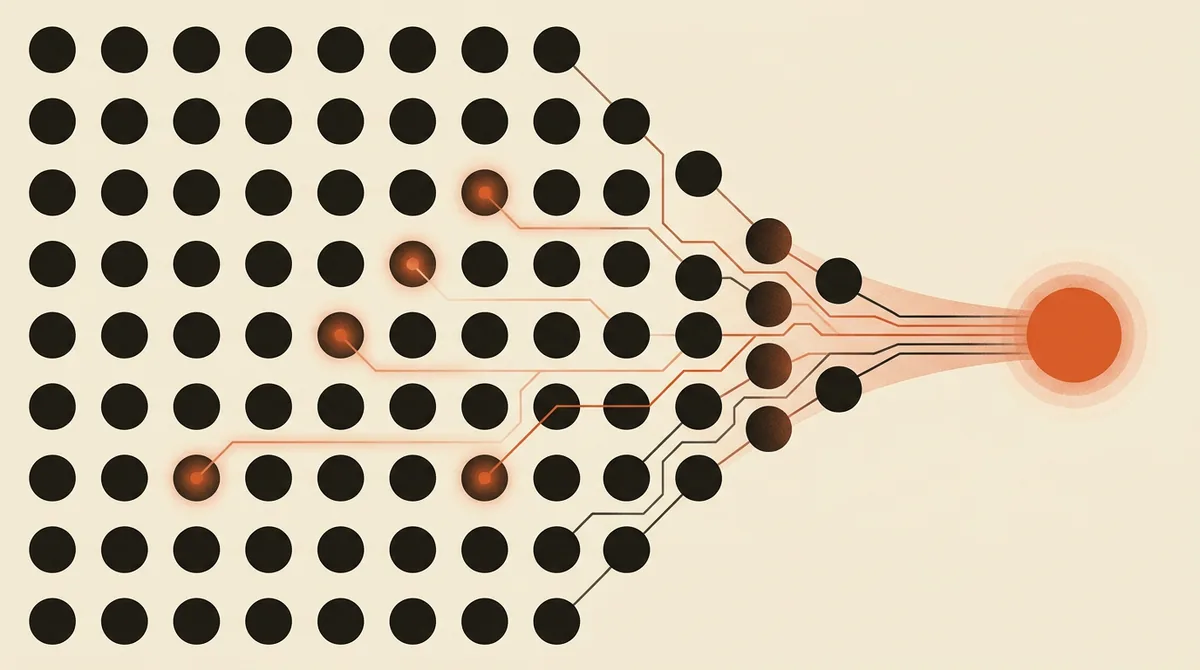
Why a "dormant" B2B contact isn't a lost contact
A B2B lead stops responding for reasons that, 90% of the time, have nothing to do with you. Budget got cut at the last minute. The contact person changed roles. The project got frozen pending a reorg. Priority dropped because something more urgent came up. If you dig into why customers stop buying, you'll notice most causes are temporary and cyclical.
That changes everything: in B2B, the contact isn't dead — it's on pause. And the reopening window is tied to the client's budget cycle, not yours. A quote rejected in March can become highly relevant again in September, when next half-year's budgets open up. The right question isn't "is this lead burned?" but "when they're receptive again, am I the first one they think of?"
The economics nobody puts on the balance sheet
Here's the angle sales teams systematically underrate. Reactivating a contact already in your database costs 5 to 7 times less than acquiring a new client through advertising. That's not an opinion — it's CAC and unit economics arithmetic. With acquisition, you pay the ad platform to capture the attention of a total stranger and then have to educate them from zero. With reactivation, you start with someone who already knows you, has already had a conversation with you, and has already expressed a need.
In B2B the gap is even wider than in B2C, because the cost per qualified lead in advertising is high (often tens or hundreds of euros depending on the vertical) and the nurturing cycle is long. Treating reactivation as a financial lever to lower your average acquisition cost, rather than as a "promotion," changes how you pitch it to management.
The 5-step method (repeatable across long sales cycles)
B2B reactivation isn't a mass blast. It's a sequential process. Here's the framework we apply, regardless of industry.
Step 1. Database cleanup and diagnosis
Before you write a single line of copy, you need to know what you're working with. A B2B database neglected for years contains dead addresses, contacts who've left the company, duplicates, and people who were never really on target. Blasting a dirty list is the fastest way to torch your deliverability and land in spam. This step, often skipped, is the most important one — we cover it in detail in the compliance section below.
Step 2. RFM segmentation adapted for B2B
RFM segmentation (Recency, Frequency, Monetary) was built for ecommerce, but it adapts well to B2B once you swap the variables. Instead of purchases, you count commercial interactions: last reply, number of calls made, value of the quote issued, the deal stage where things stalled. You mainly need two segments:
- About to Sleep: contacts who interacted recently but are slowing down. Reactivation cost here is minimal and the odds of success are high. Catch them before they go cold.
- Hibernating: contacts inactive for months with high potential value. These are worth a human touch after the first automated outreach.
Not every dormant contact deserves the same effort. A €30,000 quote left hanging justifies a personalized sequence and a phone call; a lead who downloaded an ebook deserves nothing more than an automated email. Segmentation is about spending your energy where the return is actually there.
Step 3. Churn prediction: talk only to contacts who can come back
The step after RFM is predictive scoring. Machine learning models like Random Forest or Gradient Boosting, trained on your historical contact data, estimate the probability that a dormant contact will become active again. You don't need to be a data scientist to use them: the output is a simple 0-100 score per contact. You focus outbound effort (especially anything with a human cost) on the high scores and leave the rest to near-zero-cost automated sequences. That's what pushes campaign ROI up — you stop wasting phone calls on people who will never come back.
Step 4. Multichannel orchestration (not one channel at a time)
This is where most content out there gets it wrong: it talks about email OR SMS OR voice. In B2B that actually works, channels operate together inside a single orchestrated funnel. We cover this in detail in the next section.
Step 5. Handoff to sales and measurement
Reactivation doesn't close the sale — it reopens it. The automated system's job is to produce a warm signal (a positive reply, a booked meeting, a "call me back") and hand it to sales at the right moment. Then you measure everything: reactivation rate, opportunities generated, pipeline value reopened, cost per opportunity. Those numbers are what you build the internal case on.
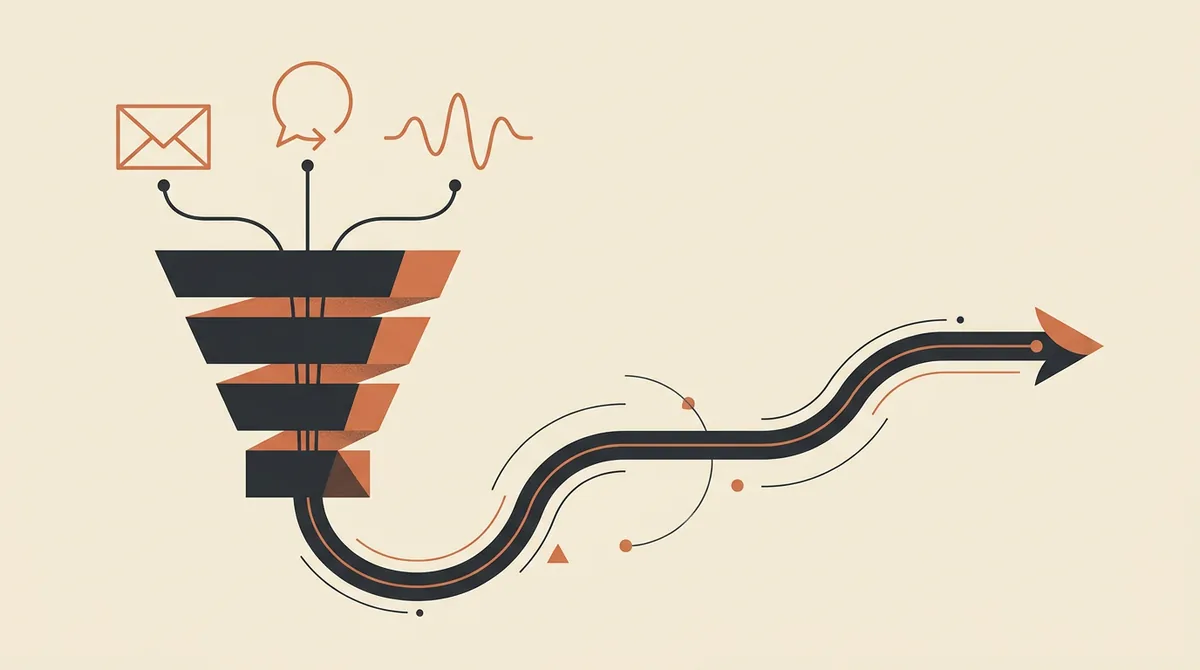
B2B reactivation channels, orchestrated in a funnel
The real value isn't in any single channel — it's in the sequence. Here's how we combine them for a cold B2B contact.
Win-back email as the first touch
Email remains the natural entry channel in B2B because it's asynchronous and non-intrusive. Automated win-back sequences generate up to 320% more revenue than a plain broadcast send, precisely because they respect the recipient's time and repeat the message without being pushy. In B2B the angle isn't "come back and buy" but "has anything changed since our last conversation?" — an update, a case study from their industry, a concrete piece of news. If you want a starting point for the copy, you'll find ideas in our Italian win-back email templates.
SMS and WhatsApp for the contact who doesn't open email
Many B2B contacts have an overflowing inbox and no longer open commercial emails. This is where SMS becomes valuable: it has an open rate above 98% and an ROI on dormant databases that can exceed 1,000%. Use it sparingly and never on a completely cold contact, but on someone who already knew you it's an effective wake-up channel. In parallel, WhatsApp Business with AI enables automated two-way conversations integrated with your CRM, with direct appointment booking. If you're weighing which to use, we've compared WhatsApp and SMS for reactivation.
AI voice agents: the economics that change the math
The channel that makes large-scale B2B reactivation economically sustainable is the AI voice agent. A reactivation call with an outbound AI agent costs around €0.40, versus €7-12 for a human operator. On well-segmented cold databases, positive response rates land between 15% and 35%. The agent isn't there to sell: its job is to qualify, figure out whether the window has reopened, and book the appointment for the human sales rep. The handoff from machine to human needs to be designed carefully, as we explain in our piece on human operator handoff. Keep in mind that, starting in 2026, Legge 132/2025 requires disclosing the use of AI on phone calls.
A concrete numerical example
Picture a B2B services company with 8,000 dormant contacts in its CRM. After cleanup, that leaves a usable database of 6,500. An orchestrated funnel (email, plus SMS for non-openers, plus AI calls on the high-scoring segments) that reactivates even just 10% produces 650 reopened conversations. If 20% turn into real opportunities, that's 130 sales opportunities at zero ad spend. Even with a modest average B2B deal size, the reopened pipeline value pays back the entire project many times over. These are the numbers you bring to management — not the discount.
Have a B2B database full of stalled contacts and no idea where to start? Request an analysis: let's work out together how much pipeline you can reopen, and with what method.
Deliverability and GDPR: where B2B reactivation is won (or burned)
This is the part generic content ignores, and in B2B it's the difference between a project that brings in pipeline and one that gets your domain blacklisted.
Don't burn your domain
Reactivating badly is worse than not reactivating at all. If you take an old list and blast it, you generate bounces and spam complaints that poison the reputation of the domain you send from, damaging your everyday commercial email too. The 2026 standards raise the bar: you need properly configured SPF, DKIM, and DMARC authentication, a spam rate kept under 0.3%, and one-click unsubscribe. That's why Step 1 (list cleanup) isn't optional: you start with low volumes, warm up gradually, and immediately exclude contacts who don't open. If you want to understand the mechanics, read why emails end up in spam.
Reactivating old contacts without risking fines
On the regulatory front, B2B has some room to maneuver, but it isn't a free-for-all. The GDPR (EU Regulation 2016/679) allows, in many B2B cases, the use of legitimate interest as the legal basis for recontacting business contacts you already have a relationship with, provided you've done a balancing test and always offer an opt-out. The EDPB's guidelines and established practice indicate that collected data shouldn't be kept and used indefinitely: a reasonable window of around 24 months since last contact is the prudent benchmark, beyond which reactivation becomes risky. This is a delicate matter that should be built into the marketing process, not left solely to legal: you'll find an operational deep dive at how to reactivate old clients in compliance with GDPR. This isn't definitive legal advice: always check your specific situation, including with the Garante Privacy (Italy's data protection authority) as an official source.
How to build all this into your process
Done right, B2B reactivation is a system, not a one-off campaign. It makes sense to treat it as a permanent flow inside your AI-powered sales follow-up automation: RFM recalculates segments every week, new "About to Sleep" contacts automatically enter the sequence, and warm signals reach sales reps. That way the database stops being a graveyard and becomes a self-regenerating source of pipeline.
If you want the full picture of the method, the channels, and the economics, start with our complete guide to reactivating dormant clients from your database. From there you can reach every deep dive, from specific channels all the way to managed reactivation services.
Frequently asked questions
When is a B2B contact considered dormant?
There's no single threshold — it depends on your sales cycle. Generally, a contact is considered dormant when there have been no commercial interactions (replies, calls, opens) for a period equal to 2-3 times the industry's typical buying cycle. In B2B with long cycles, that can mean 4-9 months of silence.
How much does it cost to reactivate a dormant client compared to acquiring a new one?
Reactivating a contact already in your database costs 5 to 7 times less than acquiring a new client through advertising. In B2B the gap is often even wider, because the cost per qualified lead in a campaign is high and nurturing takes months.
Can I recontact old B2B contacts without violating GDPR?
In many B2B cases you can use legitimate interest as the legal basis for recontacting business contacts you already have a relationship with, provided you always offer an opt-out and have carried out a balancing test. The prudent benchmark is a window of about 24 months since last contact. Check your specific situation: this isn't definitive legal advice.
Does an AI voice agent actually help with B2B reactivation?
Yes, especially for scale. An AI call costs around €0.40 versus €7-12 for a human operator, with positive response rates of 15-35% on well-segmented cold databases. Its job isn't to sell but to qualify and book the appointment for the sales rep.
Why can sending to an old list be dangerous?
Blasting a dirty list generates bounces and spam complaints that damage your domain's reputation, pushing your everyday commercial emails into spam too. You need to respect SPF, DKIM, DMARC, keep spam rate under 0.3%, and offer one-click unsubscribe, starting with low volumes and scaling up gradually.
Why don't ecommerce reactivation methods work in B2B?
Because in B2B the cycle is long, a buying committee makes the decision, there's no cart to recover, and a flash discount rarely moves the needle. You need a method tuned to the client's budget cycle, with adapted RFM segmentation, orchestrated channels, and handoff to sales.
If you want to turn your dormant contacts into real opportunities, let's talk: we'll build a compliant, orchestrated reactivation funnel tuned to your sales cycle.