Win-Back Email Templates: 8 Ready-to-Use Models You Can Copy
9 min read · AstraLoop Studio
The most expensive thing you can do with a database of stalled contacts isn't ignoring it. It's reactivating it badly. A generic template, blasted out to everyone at once, with the wrong subject line and the unsubscribe link buried: in one afternoon you burn the domain reputation you spent years building. And burned reputation can't be bought back. It's earned back slowly.
Here are 8 ready-written win-back email templates, organized by industry, with subject line variants and personalization placeholders. They're not magic formulas. They're tested structures that work because they respect three principles: relevance, one goal per email, an easy exit. Copy them, swap in the placeholders, match the tone to your brand, and send them in a sequence, not a broadcast.
One number to frame the stakes. Automated win-back sequences generate up to 320% more revenue than a single broadcast send, and reactivating a dormant contact costs 5 to 7 times less than acquiring a new one from scratch. The templates are the easy part. The method is what makes the difference.
Before the templates: the 3 rules that save your domain
Before copying any text, keep in mind that deliverability changed in 2026. Gmail and Yahoo enforce clear thresholds, and if you don't meet them you land in spam no matter how good the copy is.
- Spam rate under 0.3%. If you go above a 0.3% spam complaint rate, providers start filtering you. On an old database the risk is high: start from a small, warm segment, not all 10,000 contacts at once.
- One-click unsubscribe. Since 2024, one-click unsubscribe (the List-Unsubscribe-Post header) has been mandatory. Making it hard to leave drives up spam complaints, which are worse than an unsubscribe.
- Authentication in order. SPF, DKIM, and DMARC need to be configured. If you don't know what those are, start with this explanation of SPF, DKIM, and DMARC before you hit send.
A contact that's been inactive for more than 24 months should be handled carefully on the regulatory side too. The 24-month window is the practical benchmark that comes out of EDPB guidance, and it's worth reading how to reactivate old customers without risking GDPR penalties before you send. And if a lot of addresses are bouncing, the problem isn't the template. It's the list. In that case, the first step is cleanup, not sending.
The base 4-block template (applies to all of them)
Every effective win-back email, in any industry, has the same skeleton. The content changes, not the structure.
- Honest acknowledgment: admit that time has passed. No fake urgency.
- A reason to reopen: a concrete update, an incentive, or simply an "are you still there?".
- One single call to action: one CTA, one link, one goal.
- An easy exit: a visible unsubscribe closes the loop and protects your domain.
1. Fashion and lifestyle ecommerce
Subject line variants:
- {{NAME}}, we saved something for you
- It's been a while... shall we get back together? (there's something inside)
- Your {{DISCOUNT}}% discount expires in 72 hours
Body:
Hi {{NAME}},
it's been a while since we've seen you, and we're sorry about that. In the meantime we've refreshed the collection, and some of the pieces you looked at are back in stock.
To help you pick up where you left off, here's {{DISCOUNT}}% off your next order with code {{CODE}}, valid until {{EXPIRY_DATE}}.
{{CTA_LINK}} See what's new
If you'd rather not receive our emails anymore, {{UNSUBSCRIBE_LINK}} in one click. No hard feelings.
For ecommerce, segmentation logic matters more than copy. Before writing, it's worth reading the full method for reactivating dormant ecommerce customers: it makes a big difference whether the contact bought once or ten times.
2. B2B and professional services
Subject line variants:
- {{NAME}}, shall we pick up where we left off on {{TOPIC}}?
- A quick question about your {{PROCESS}}
- I thought of you while reading this
Body:
Hello {{NAME}},
a few months ago we talked about {{TOPIC}}, then things stalled. It happens.
I'm writing because in the meantime we've {{CONCRETE_UPDATE}}, and I thought it could be useful for {{COMPANY}}, given your {{SPECIFIC_CONTEXT}}.
If you have 15 minutes next week, I'll send over two slots: {{CTA_LINK}}.
If this isn't a priority anymore, just let me know in a line. No pressure.
In B2B, the template matters less than the follow-up. B2B reactivation runs on different timing and tone than B2C: dig deeper with the guide on how to reactivate dormant B2B contacts and on how to automate sales follow-up with AI without sounding robotic.
3. Gyms and expired memberships
Subject line variants:
- {{NAME}}, your locker is waiting for you (kidding, but we really do miss you)
- Getting back is easier than you think
- We're reopening the door for you: first week free
Body:
Hi {{NAME}},
your membership expired on {{EXPIRY_DATE}} and we haven't seen you since. No judgment: life gets in the way.
If you want to come back, we're offering {{INCENTIVE}} to restart worry-free, plus a session with {{TRAINER_NAME}} to get you back on track.
{{CTA_LINK}} Reactivate now
Prefer not to receive our emails anymore? {{UNSUBSCRIBE_LINK}}.
Gyms have a very specific reactivation cycle tied to seasonality. Find vertical-specific tactics on how to reactivate gym members with expired memberships.
4. Restaurants and local businesses
Subject line variants:
- {{NAME}}, your favorite table is free
- We have a new menu and would love your opinion
- From {{VENUE_NAME}}: we've missed you
Body:
Hi {{NAME}},
it's been a while since you stopped by {{VENUE_NAME}}. We've changed the menu and added {{UPDATE}}, and we'd love for you to try it.
Book by {{EXPIRY_DATE}} and we'll offer you {{INCENTIVE}}.
{{CTA_LINK}} Book a table
If you'd rather not receive our messages anymore, one click is all it takes: {{UNSUBSCRIBE_LINK}}.
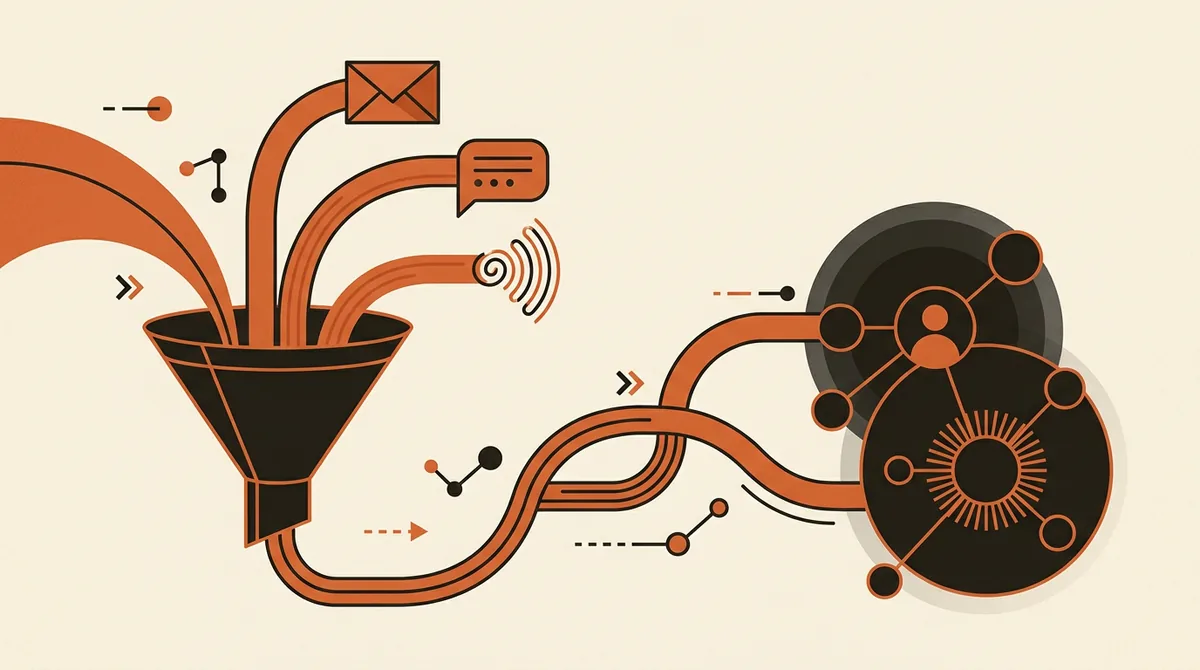
For a restaurant, email is often just one channel in the mix: SMS and WhatsApp perform better with local customers. See how to reactivate restaurant customers by combining multiple channels.
5. Medical and dental practices (recall)
Subject line variants:
- {{NAME}}, it's time for your annual checkup
- Reminder: your last visit was on {{DATE}}
- Shall we book your recall visit?
Body:
Dear {{NAME}},
our records show your last visit was on {{DATE}}. For {{PREVENTION_TYPE}} health, we recommend a checkup every {{FREQUENCY}}.
You can book directly here: {{CTA_LINK}}, or reply to this email with your availability.
If you'd prefer not to receive our reminders anymore, {{UNSUBSCRIBE_LINK}}.
Here the tone is more institutional and the lever is prevention, not discounts. Read more on how to reactivate dental practice patients: the sensitivity of health data calls for extra attention to consent.
6. Real estate
Subject line variants:
- {{NAME}}, something matching your search just came up
- The market in the {{AREA}} area has moved: want an update?
- Still looking for a home? I have three options for you
Body:
Hi {{NAME}},
a while back you were looking for {{PROPERTY_TYPE}} in the {{AREA}} area. The market has moved, and {{NUMBER}} new listings matching your criteria have come up.
Want me to send them over? Just reply with a couple of lines, or book a call here: {{CTA_LINK}}.
If your search is closed, just let me know: {{UNSUBSCRIBE_LINK}}.
7. Software and SaaS (recent churn)
Subject line variants:
- {{NAME}}, what can we do to get you back?
- We fixed {{ISSUE}} (the thing that was bothering you)
- Your account is waiting for you, with a few updates
Body:
Hi {{NAME}},
you stopped using {{PRODUCT}} on {{DATE}}, and we'd honestly like to understand why.
In the meantime we shipped {{NEW_FEATURE}}, which fixes {{ISSUE}}. If you want to give it another shot, we'll reactivate your account with {{INCENTIVE}}.
{{CTA_LINK}} Pick up where you left off
Or, if it's not for you, {{UNSUBSCRIBE_LINK}}. No hard feelings.
8. Training and courses
Subject line variants:
- {{NAME}}, you left the {{COURSE_NAME}} course halfway done
- Pick up where you left off: you were almost there
- One last push to complete {{COURSE_NAME}}
Body:
Hi {{NAME}},
you started {{COURSE_NAME}} and stopped at {{PERCENTAGE}}. You were really close.
To get you moving again, we're offering {{INCENTIVE}} and access to the support group.
{{CTA_LINK}} Resume the course
If you're no longer interested, {{UNSUBSCRIBE_LINK}} in one click.
Want to turn these templates into an automated sequence that reactivates your contacts across multiple channels without burning your domain? Request an analysis of your database.
How to combine the templates into a sequence
A single template isn't worth much on its own. The sequence is what makes the difference: a series of 3-4 emails spread out over time, with a rising incentive and a clear exit point. Here's the typical structure.
| Timing | Goal | Lever | |
|---|---|---|---|
| 1 | Day 0 | Soft re-contact | "Are you still there?", no discount |
| 2 | Day 4-5 | Value | Concrete update or useful content |
| 3 | Day 9-10 | Incentive | Discount or time-limited offer |
| 4 | Day 14-15 | Last call | "We'll remove you from the list if you don't respond" |
Email 4, the last call, isn't cruel: it's list hygiene. Anyone who hasn't opened after four attempts should be removed, because continuing to send to them lowers deliverability for everyone else. Find the full sequence with examples in this collection of win-back sequences with examples and the reasoning behind why a win-back email works.
Placeholders and personalization: how far to push it
The placeholders in double braces ({{NAME}}, {{DISCOUNT}}, {{EXPIRY_DATE}}) are the bare minimum. The personalization that really moves open rates is behavioral: which product they looked at, when they last bought, how much they've spent in total.
This is where RFM segmentation (Recency, Frequency, Monetary) comes in, letting you send a strong incentive only to contacts worth it and a light re-contact to those who've just entered cooling-off. If you want to understand how it works without being a data scientist, start with what RFM analysis is. An "About to Sleep" contact needs different handling than a "Hibernating" one: the first just needs a reminder, the second needs a real offer.
Mistakes that burn your domain (and your results)
- Broadcasting to everyone at once. On an old database, sending to 10,000 addresses in one shot spikes bounces and spam rate. Warm up gradually.
- A misleading subject line. "Re: your request" when there was never a request gets your email opened once and marked as spam forever.
- No clear exit. Hiding the unsubscribe link generates spam complaints, which weigh far more than a clean unsubscribe.
- A single channel. Email is powerful but not enough. The real leap comes from orchestrating email, SMS, and AI voice in the same reactivation funnel.
On that last point: email handles the informational part, but for contacts who don't open anything, a call from an outbound AI agent for reactivation costs about €0.40 versus €7-12 for a human operator, with positive response rates between 15% and 35% even on cold databases. The email template is the first building block. The full machine is a different story.
In summary
You now have 8 ready-made templates, the 4-block structure they share, the sequence to slot them into, and the deliverability rules that get them delivered. The rest is discipline: segment, warm up, give an exit, and measure. If you want the complete picture, the guide to reactivating dormant customers in your database lays out method, channels, and economics. Reactivating costs little and pays off a lot: the database you've already paid for is your most underrated asset.
Frequently asked questions
How often can I send win-back emails to the same contact?
In a reactivation sequence, spread 3-4 emails over two weeks (days 0, 4-5, 9-10, 14-15). After the fourth with no response, remove the contact from the list: continuing to send lowers deliverability for everyone else.
What subject line works best for a reactivation email?
Honest, contact-specific subject lines beat generic ones. What works: acknowledging the time that's passed ("It's been a while"), a concrete update, and a time-limited incentive. Avoid misleading subjects like fake "Re:" lines: they get opened once and marked as spam forever.
Can I reactivate contacts who've been inactive for years without GDPR issues?
The practical benchmark is the 24-month window that comes out of EDPB guidance. Beyond that, consent can be considered no longer current. Check your legal basis, always provide a one-click unsubscribe, and for sensitive data like health information, raise your caution even further. This is informational, not legal advice.
Is a single email better, or an automated sequence?
The automated sequence, without a doubt: it generates up to 320% more revenue than a single broadcast send, because it persists with timing and a rising incentive instead of betting everything on one shot.
How do I keep win-back emails from landing in spam?
Meet the 2026 thresholds: spam rate under 0.3%, one-click unsubscribe active, SPF/DKIM/DMARC configured. Start from a small, warm segment to warm up the domain, not the whole list at once, and clean out bouncing addresses before you send.
Are placeholders like {{NAME}} enough for personalization?
They're the bare minimum. The personalization that really moves results is behavioral: last purchase, product viewed, total spend. With RFM segmentation you send a strong incentive only to contacts worth it and a light re-contact to those who've just entered the cooling-off phase.
You have a stalled database worth more than you think. Talk to us: we'll tell you how many contacts are recoverable and which sequence to start with.