Why Customers Stop Buying: 9 Real Causes (and How to Fix Them)
9 min read · AstraLoop Studio
When revenue drops, the reaction is almost always the same: "we need new customers." You raise the budget on Google and Meta, push harder on acquisition, hire another salesperson. Then the bank statement arrives and you realize you're spending more to grow less.
That's exactly the blind spot. In most Italian companies, the problem isn't that new customers aren't coming in. It's that the old ones stopped buying and nobody noticed. A customer who bought once and then vanished isn't a lost customer: they're a paused customer. And in most cases that pause has a precise cause you can actually do something about.
In this article we map out the 9 real reasons customers stop buying, separating the ones you can act on from the ones you should let go. For each one you'll find the matching reactivation lever, with hard numbers where it matters.

Before hunting for the cause: is the customer "lost" or just "dormant"?
There's a distinction that changes everything. A dormant customer hasn't said no. They simply haven't bought in a while. That's a different animal from the unhappy customer who's shut the door. You win the first one back with the right message at the right time; the second one needs a different approach, if it's even worth attempting.
The problem is almost nobody tracks this distinction. Most company databases are a graveyard of contacts who bought once or twice and then slid into silence, with nobody ever figuring out why. Which is a shame, because reactivating a dormant customer costs 5-7 times less than acquiring a new one.
So before you blame the market, ask yourself: how many of these 9 causes apply to your business?
The 4 "rational" causes: price, product, experience, timing
1. Price (but rarely the way you think)
Price is the most quoted excuse and the most misunderstood cause. When a customer says "it's too expensive," 70% of the time they're really saying something else: "I never understood why I should pay this much." What's collapsing is the perception of value, not the actual value.
Price becomes a real cause in three situations: you raised your prices without explaining why, a competitor is offering the same thing for less, or your customer's budget bracket has changed. In these cases a flat discount often isn't enough, because it also devalues the customers who are happy to pay full price.
How to fix it: anchor the incentive to a reason ("welcome back," an anniversary, a complementary product) instead of slapping on a generic discount. Win-back sequences with a targeted incentive convert far better than an across-the-board price cut.
2. The product is no longer needed (or wasn't really needed)
Sometimes the customer stops buying because the problem you solved has been solved. They bought the mattress; they won't need another one for ten years. In that case you don't have a reactivation problem, you have a repeatable offer problem: what do you sell them next?
How to fix it: build a logical second purchase (accessories, refills, upgrades, service, referrals). If none exists, your model runs entirely on continuous acquisition, which is exactly why your customer acquisition cost always feels too high.
3. The experience was mediocre (and nobody told you)
An unhappy customer rarely complains. They simply don't come back. A late delivery, a badly handled issue, a reply that took three days: these are micro-frictions that never turn into a bad review, but they do kill the urge to buy again.
The worst case is silence on the phone. If your line rings out or leaves people on hold, you're losing customers who had already decided to buy. It's worth quantifying what every missed call actually costs you: for many local businesses the number is startling.
How to fix it: patch the service leaks before you reactivate. Reactivating badly on top of a broken experience only speeds up the final goodbye.
4. Timing: you asked at the wrong moment
Many "lost customers" are simply customers you reached at the wrong moment. Anyone selling B2B knows this well: the budget wasn't there, the project got pushed back, the right person was on vacation. It's not a no, it's a "not now." But without a system that circles back, that "not now" turns into "never."
How to fix it: an automated sales follow-up that reconnects at sensible intervals recovers a chunk of opportunities that would otherwise evaporate in the CRM.
The 3 "silent" causes: forgetting, competitors, channel switch
5. They simply forgot about you
This is cause number one, and also the least dramatic. The customer has nothing against you. They just aren't thinking about you. Their attention is elsewhere, life goes on, and next time they need what you sell, they'll go to whoever comes to mind first. Which often isn't you.
Forgetting is countered with rhythmic, non-intrusive presence. An occasional touchpoint that brings value, not just a pitch. This is where automated win-back campaigns make the difference: sequences like "Still with us?" paired with a well-calibrated incentive can generate up to 320% more revenue than a single broadcast send.
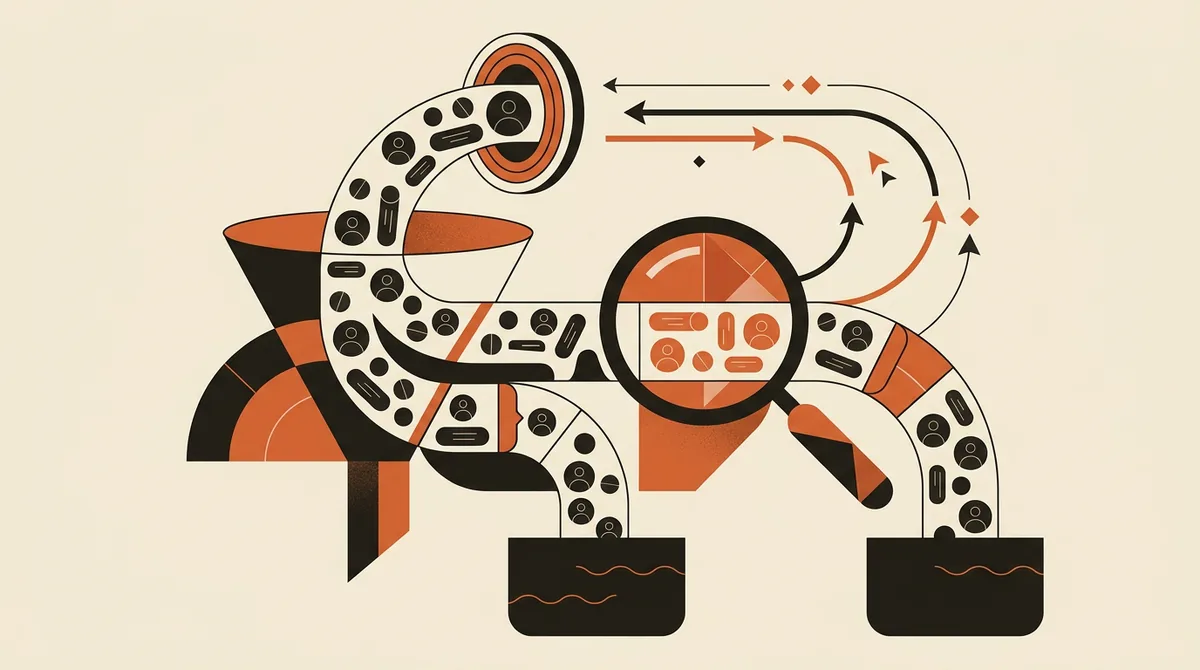
6. A competitor took them (quietly)
The customer didn't disappear: they moved on to someone else. Maybe because of a better offer, maybe simply because the other company reached out and you didn't. Competitors rarely "steal" customers with some dramatic move. They win by occupying the mental space you left empty.
How to fix it: you don't need a price war. You need to get back in front of them with a credible reason. A good win-back message doesn't pretend nothing happened, but it does give a fresh reason to give you another shot (something new, an improvement, an exclusive condition).
7. The customer switched channels, you didn't
You were sending emails, the customer stopped opening them. Not because they hate you: because by now they read everything on WhatsApp and nobody opens promotional emails anymore. If you keep insisting on a dead channel, you'll read the silence as rejection when it's really just a matter of address.
How to fix it: it's worth orchestrating multiple channels. SMS, for instance, has an open rate above 98%, and on dormant databases the ROI can top 1,000%. WhatsApp Business enables conversations and automatic bookings. The rule isn't "pick the best channel," it's "find the one where the customer still is."
Want to know how many of your inactive contacts are still recoverable? Request an analysis of your database: we'll show you where the revenue you're leaving on the table is hiding.
The 2 "invisible" causes: your list is dirty and you don't know it
8. Your emails aren't arriving anymore (deliverability)
Here's the cause nobody talks about. Maybe customers haven't stopped wanting you: it's that your messages never reach them. If your domain has a poor reputation, emails land in spam or get blocked upstream, and you're left thinking the customer is ignoring you.
In 2026 this is a real risk. Gmail and Yahoo's rules require proper SPF, DKIM, and DMARC authentication, a spam rate under 0.3%, and one-click unsubscribe. If you reactivate badly, blasting an old list that's never been cleaned, you don't just fail to convert: you burn your domain's reputation and hurt delivery even to the people who still want to hear from you.
How to fix it: before any reactivation campaign, clean the list (remove hard bounces and contacts inactive for years) and warm up the domain with gradual volumes. It's tedious work, but it's the difference between reactivating and self-sabotaging.
9. You never had permission (or you lost it)
The last cause is regulatory, and needs to be stated precisely because it touches sensitive ground. Reactivating an old contact isn't automatically lawful. The GDPR (EU Regulation 2016/679) requires a valid legal basis for marketing processing. EDPB guidance (Opinion 1/2024 on legitimate interest) and the practice of Italy's Data Protection Authority (Garante Privacy) both flag the age of consent as something to watch: a commonly cited window is 24 months since the last contact, beyond which collected consent tends to be considered "weakened."
This isn't a definitive legal opinion (for that, talk to your DPO or a lawyer), but the operational message is clear: before writing to a contact who's been silent for years, check what legal basis you're contacting them on. Reactivating without a valid title exposes you to fines and complaints. We covered this in depth in how to reactivate old customers while staying GDPR-compliant.
How to actually fix it: from diagnosis to method
Once you've identified the cause, the next step is to stop treating every dormant contact the same way. There's no point sending the same message to someone who bought three times last month and to someone who's been silent for two years.
The method that works starts with simple segmentation: RFM analysis (Recency, Frequency, Monetary), which classifies customers by how recently they bought, how often, and how much they spent. It lets you catch the "About to Sleep" and "Hibernating" segments before they become unrecoverable, and focus your effort where the return is most likely.
On that foundation you build the sequence. A well-built win-back sequence isn't a single send: it's a series of orchestrated messages that test different channels and raise the incentive only where needed. If you want to start from the copy, these win-back email templates give you a concrete starting point.
All of this fits into a precise economic logic. Reactivation isn't "a promotion": it's the most efficient lever for lowering your average customer acquisition cost, because it works on contacts you've already paid to acquire once. A dormant database is locked-up capital: monetizing it is often the highest-return move a company can make in a quarter.
If you want the full picture, from segmentation to channels to compliance, start with our complete guide to reactivating dormant customers in your database: it's the hub that ties every piece of this together.
In short
Customers rarely stop buying for one dramatic reason. In most cases it's forgetting, bad timing, a mediocre experience nobody ever flagged, a dead channel, or, worse, messages that never even arrive. All of these are causes you can act on, provided you diagnose them first.
The good news is you don't need more ad budget to do it. You need a method to figure out who's still recoverable and a system to reach back out to them properly, on the right channel, within the rules. That's where the cheapest growth you have access to is hiding.
Frequently asked questions
How do I know if a customer is lost or just dormant?
A dormant customer hasn't shown any dissatisfaction: they've simply stopped buying for a while. A lost customer had a negative experience or explicitly said no. You make the distinction with RFM analysis, which classifies contacts by the date of their last purchase, frequency, and spend. Most 'lost' customers are actually recoverable dormant ones.
Is it better to offer discounts or send reactivation messages?
A flat discount often devalues customers who'd pay full price and mostly attracts deal hunters. A win-back sequence with an incentive tied to a reason (welcome back, an anniversary, something new) converts better and protects margins. Price is rarely the real cause of churn; forgetting usually is.
How much does it cost to reactivate a customer versus acquiring a new one?
Reactivating a dormant contact costs on average 5-7 times less than acquiring a new customer, because you're working with people who already know you and whom you've already paid once to acquire. It's the most efficient lever for lowering a company's average acquisition cost.
Can I email customers who've been inactive for years without risking GDPR fines?
It depends on the legal basis for the processing. The GDPR and EDPB guidance require a valid basis for marketing; a commonly cited window is 24 months since the last contact, beyond which consent tends to be considered weakened. Always check with your DPO before reactivating very old lists.
Why have my customers stopped opening my emails?
It can be one of two things. Either they've switched channels (they read WhatsApp and ignore promotional emails), or your emails simply aren't arriving anymore because of a domain deliverability issue. Check your SPF, DKIM, and DMARC authentication and clean your list before blaming disinterest.
What's the first step to winning back customers who've stopped buying?
Segment your database with RFM analysis to see who's still recoverable, then clean the list of dead contacts before sending anything. Only then do you build the win-back sequence on the right channel. Reactivating in bulk on a dirty list backfires and risks burning your domain.
If you have a database of customers who've stopped buying, let's talk: we'll build a custom reactivation system together, from method to channels to compliance.