AI-Powered Dormant Customer Reactivation Service: How It Works and What It Costs
8 min read · AstraLoop Studio
You have a list. Contacts collected over years of business: customers who bought once and never came back, leads who asked for a quote and then vanished, newsletter subscribers who haven't opened a message in months. They sit there, untouched in your CRM or in an Excel sheet, and you treat them as if they didn't exist. Yet that list is probably the most underrated marketing asset you own.
An AI-powered dormant customer reactivation service exists for exactly this: to get those contacts moving again with a structured system, instead of hoping they come back on their own. And with AI, doing it at scale and at near-zero marginal cost is no longer a privilege reserved for big companies. In this article I'll explain how the AstraLoop method works, what numbers to expect, which 2026 tax incentives can cover the investment, and what it really costs.
Why reactivating pays off far more than acquiring
Let's start with the number that should get your attention: reactivating a dormant customer costs 5-7 times less than acquiring a new one. The reason is simple. The contact already knows you, has already bought or shown interest, you don't have to pay for ads to reach them, and you don't have to build trust from scratch. The customer acquisition cost (CAC) for a new customer at an Italian SME easily ranges between 50 and 300 euros depending on the industry. Reactivation, by contrast, starts from a base you've already paid for once.
Let's run real numbers. Picture a database of 10,000 dormant contacts. With a well-orchestrated AI reactivation campaign, a 10% recovery rate is realistic on lists that haven't been burned. That's 1,000 sales opportunities reopened at zero ad spend. Even if only 20% of those close, you get a volume that no ad campaign could deliver at that price. This is the economic core of the whole thing: reactivation isn't a promotion, it's a financial lever that lowers your company's average acquisition cost.
If you want to dig into the numbers, we've dedicated a whole article to comparing reactivation cost versus acquisition cost, and a more hands-on one on what it costs to reactivate a customer. To see how these numbers fit into your company's financial health, check out the unit economics KPIs like CAC, CPL and LTV.
How the AstraLoop method works, step by step
A serious service isn't "send a few discount emails and see what happens." It's an orchestrated funnel, where every stage follows precise logic. Here's how we work.
1. RFM analysis and database segmentation
Before writing a single line of copy, the database needs to be read. We use RFM segmentation (Recency, Frequency, Monetary) to understand who you're dealing with. Not all dormant contacts are equal: some bought a lot until recently and are slipping away (the "About to Sleep"), others haven't shown any sign of life in a year (the "Hibernating"). Catching the first group before they become unrecoverable is where the game is won or lost.
On top of this, when data volume allows, we layer a churn prediction model using machine learning algorithms (Random Forest, Gradient Boosting). In plain terms for a business owner: instead of blasting everyone, we identify the contacts with a high probability of returning and focus effort (and incentives) where they pay off most.
2. List cleaning and domain protection
This is the part almost nobody tells you about, and it's what separates a campaign that works from a disaster. Reactivating badly burns your domain. If you send email to 10,000 cold contacts all at once, spam traps and bounces tank your reputation with Gmail and Outlook, and from that point on even emails to your active customers land in spam.
That's why the technical phase is non-negotiable: properly configured SPF, DKIM and DMARC authentication, gradual domain warm-up, one-click unsubscribe (a Gmail and Yahoo requirement since 2024), and a spam rate kept under 0.3%. Deliverability isn't a technical detail: it's the condition without which everything else is pointless.
3. Multichannel funnel orchestration
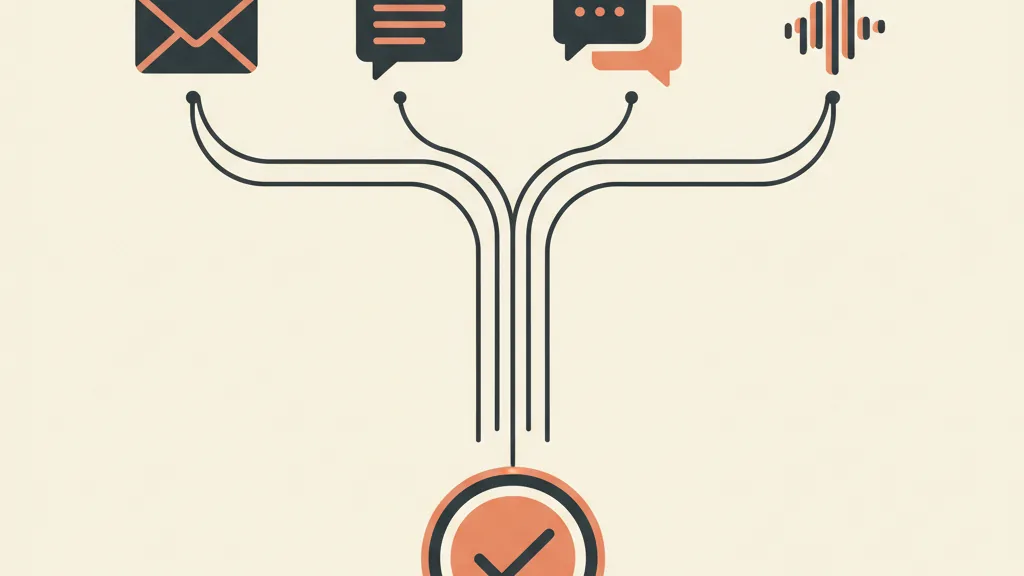
This is where the real difference lies compared to players who only talk about one channel at a time. We don't do "just email" or "just SMS." We build a win-back sequence that coordinates multiple channels based on how the contact reacts:
- Email: the "Are you still with us?" sequence with a progressive incentive. Automated sequences generate up to 320% more revenue than a single broadcast.
- SMS: open rates above 98% and ROI on dormant contacts that can exceed 1,000%. Perfect as a reminder shot for those who haven't opened the emails.
- WhatsApp Business: automated conversations integrated with the CRM and landing pages, to handle replies and book appointments right inside the chat.
- AI Voice Agent: for higher-value segments, an AI voice agent that calls. It costs around €0.40 per call versus €7-12 for a human operator, with positive response rates of 15-35% on cold databases.
The funnel decides the next channel on its own: whoever opens the email but doesn't click gets an SMS, whoever replies on WhatsApp is routed to booking, the hottest leads move on to the AI call. One single system, not four disconnected campaigns. If you want to see how the channels combine, read more on AI outbound for contact reactivation and on how an agent that answers and makes phone calls works.
4. GDPR compliance built in, not an afterthought
Reactivating old contacts without following the rules isn't clever, it's a fining risk. The topic needs to be handled inside the method, not delegated to lawyers in the abstract. The three operational points we keep fixed are: the legal basis (consent or legitimate interest depending on the case), a reasonable time window for contact (the EDPB 1/2024 guidelines on legitimate interest help frame it), and an unsubscribe option that's always clear and one click away.
We don't give you definitive legal advice, that's up to your DPO or privacy consultant. We give you a system built to stay within the rules. We've dedicated an operational guide to reactivating old customers in compliance with GDPR: read it before you start, because this is where many go wrong.
What results to expect (and how soon)
No inflated promises. But realistic ranges, for lists in normal condition, that you can use as a benchmark.
| Metric | Realistic range |
|---|---|
| Contact recovery rate | 8-15% of the dormant database |
| Win-back email open rate | 15-30% |
| SMS open rate | above 98% |
| Positive AI call response rate | 15-35% |
| SMS campaign ROI on dormant contacts | up to over 1,000% |
| Cost per reopened opportunity | a fraction of CAC (often 5-7 times less) |
The first signals arrive within the first 2-3 weeks of the sequence. The bulk of the recovery settles in over the first month and a half. Two variables matter a lot: how "dirty" the list is at the start and how strong an incentive you can afford to offer. We calibrate the strategy with you around these two factors.
You have a stagnant contact database that could be worth far more than you think. Request a free analysis of your list: we'll tell you how many opportunities you can recover and with what method.
2026 incentives: reactivation can cost you (almost) nothing
Here's the part that makes the decision even easier. The Transizione 5.0 plan and other tools supporting business digitalization include investments in AI-based software and systems. An AI-powered multichannel reactivation project, if structured correctly, can qualify as an eligible expense.
The framework of 2026 AI incentives for SMEs changes in the details and needs to be checked case by case with your accountant on the active calls and windows, so it's not an automatic guarantee. But the strategic point is this: adding the tax credit to the zero-ad-spend ROI of reactivation, in many scenarios the investment pays for itself before it's even fully spent. It's not accounting magic, it's simply leveraging an asset you already own with a tax lever that already exists.
What does a dormant customer reactivation service cost
The real question. The cost depends on three factors: database size, number of channels activated, and the complexity of compliance and list cleaning. Here are some indicative benchmarks to orient you, then we build the exact quote around your situation.
- Base project (win-back email plus SMS, database up to a few thousand contacts): contained setup investment, monthly fee for managing and optimizing the sequence.
- Multichannel project (email, SMS and WhatsApp integrated with the CRM): more elaborate setup, with automations and dedicated landing pages.
- Full-funnel project with AI Voice (all channels plus a voice agent on high-value segments and churn prediction): the most complete option, designed for large databases where every percentage point of recovery is worth a lot.
The right way to evaluate it isn't "how much does it cost" in absolute terms, but "how much does every euro invested return." With per-contact costs in the range of cents (€0.40 per AI call, fractions of a cent for email and SMS) and an avoided CAC worth tens or hundreds of euros per customer, the math almost always tips clearly in your favor. If you want the reasoning on technology pricing, see what a business AI agent costs.
Do it yourself, with an agency, or with AstraLoop?
You can try it on your own with a marketing automation tool and some patience. It works for small, simple lists. But once technical deliverability, multichannel orchestration, voice agents and compliance come into play, DIY becomes a risk: it only takes one badly sent sequence to burn the domain and lose your active customers too.
The value of relying on people who do this for a living isn't "they write better emails." It's that they integrate predictive segmentation, domain security, four orchestrated channels and compliance into a single system that runs on its own. At AstraLoop we build this funnel tailored to you, connect it to your CRM, and keep it in continuous optimization. If you want to see how it fits into a broader acquisition strategy, the link with AI-powered lead generation is direct: reactivation is often the first step, the cheapest one, even before spending on new traffic.
For the complete picture of the method, from the fundamentals to industry verticals, the starting point is our complete guide to dormant customer reactivation and database monetization.
Frequently asked questions
What exactly is a dormant customer reactivation service?
It's a structured system that reconnects your business with customers and leads who haven't bought or responded in a while, using automated multichannel sequences (email, SMS, WhatsApp, AI calls) to bring them back to purchase. It's not a single promotional campaign, but an orchestrated funnel with segmentation, progressive incentives and built-in compliance.
How much does it cost to reactivate a customer compared to acquiring a new one?
On average, reactivating costs 5-7 times less than acquiring a new customer. The contact already knows you, so you don't have to pay for advertising to reach them or build trust from scratch. With per-contact costs in the range of cents, the ratio compared to a CAC of tens or hundreds of euros is heavily in your favor.
What recovery rate can I expect from a dormant database?
On lists in normal condition that haven't been burned, a recovery rate of 8-15% is realistic. On a database of 10,000 contacts, that means about 1,000 sales opportunities reopened at zero ad spend. The first results arrive within 2-3 weeks, with the bulk settling in over the first month and a half.
Is reactivating old contacts legal under GDPR?
Yes, if done correctly. You need a valid legal basis (consent or legitimate interest depending on the case), a reasonable time window, and an unsubscribe option that's always clear and one click away. The EDPB 1/2024 guidelines help frame legitimate interest. Always check the specific case with your DPO or privacy consultant.
Do I risk landing in spam if I reactivate the whole list at once?
Yes, and it's one of the most costly mistakes. Sending email to thousands of cold contacts all at once tanks your domain reputation and sends emails to your active customers into spam too. That's why you need SPF, DKIM and DMARC authentication, gradual warm-up, and a spam rate under 0.3%. Domain security comes before the copy.
Does an AI reactivation project qualify for 2026 incentives?
It can qualify as an eligible expense under plans like Transizione 5.0 when it includes AI-based software and systems, but it needs to be checked case by case with your accountant on the active calls and windows. Combined with the zero-ad-spend ROI of reactivation, the incentive can substantially cut the net cost of the investment.
Want to turn your dormant contacts into revenue without spending on advertising? Let's talk: together we'll build the reactivation funnel tailored to your business.