Winning Back Dormant Ecommerce Customers: Strategy and Case Studies
7 min read · AstraLoop Studio
Your ecommerce store doesn't have a traffic problem. It has a problem with customers who bought once and never came back. Look at your database and chances are 60-70% of your contacts haven't purchased in over six months. That's money you already spent (you paid to acquire them through ads) just sitting there, doing nothing.
Here's the counterintuitive part. You keep pouring ad budget into new visitors, while the people who already handed you their credit card, who know your brand and your shipping times, get ignored. Winning back a dormant customer costs 5-7 times less than acquiring a new one. And in ecommerce, where purchases are often recurring and predictable, this lever is even more powerful than elsewhere.
In this article we'll cover the win-back strategy built specifically for ecommerce: how to segment with RFM, what sequence to build for repeat-purchase products, and a case study with real numbers. If you want the full picture, this guide fits into the complete guide to reactivating dormant customers.
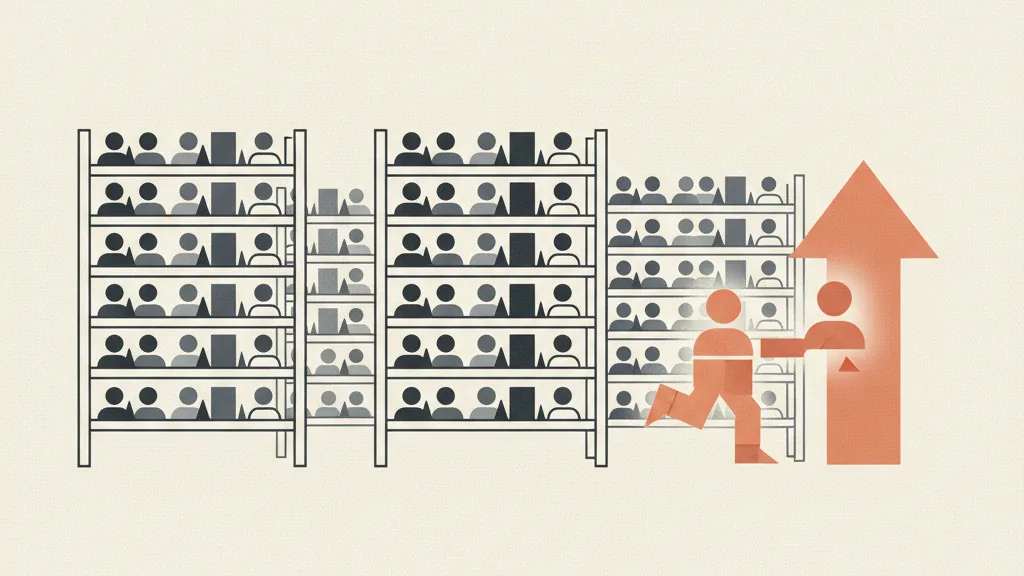
Who actually counts as a "dormant" customer in ecommerce
Before you can win someone back, you need a definition. A common mistake is treating anyone who hasn't bought in 30 days as dormant: in most ecommerce stores that customer is simply in their normal purchase cycle. The right threshold depends on your average repurchase cycle.
The practical rule is simple. Calculate the average interval between two orders for your regular customers, then multiply it by 2 or 3. If your customers typically reorder every 45 days, a customer becomes "at risk" at 90 days and "dormant" at 135. A supplement, a skincare line, or pet food has very short cycles (30-60 days). A furniture or shoe store has long cycles (6-12 months). Don't copy someone else's thresholds.
For more on the time boundaries and definitions, see what dormant customers actually are. And if you're wondering why they stop buying, the answer is almost never "they don't like you anymore": read why customers stop buying.
Segmenting with RFM: where the easy money is
Blanket reactivation, the same message to your whole database, is the most expensive mistake you can make. You burn deliverability, annoy people who aren't ready, and hand out discounts to the wrong customers. RFM segmentation (Recency, Frequency, Monetary) solves this by scoring every customer on three axes:
- Recency: how long since they last bought.
- Frequency: how many times they've bought in total.
- Monetary: how much they've spent overall.
Cross these three values and you get actionable segments. For ecommerce win-back, the two that make you the most money are:
- About to Sleep: good customers who are slowing down. Recency is climbing, but frequency and monetary are still decent. These are the easiest to recover because the brand is still fresh in their mind.
- Hibernating: bought little, a long time ago. Harder to win back, but the volume is high, so even a 5-8% reactivation rate delivers real numbers.
The operational priority is clear: catch the "About to Sleep" customers before they become "Hibernating." Waiting means letting a still-warm customer go cold. If this concept is new to you, start with what RFM analysis is: it's simpler than it sounds and you don't need a data scientist.
| RFM segment | Profile | Win-back priority | Typical incentive |
|---|---|---|---|
| About to Sleep | Good customer slowing down | Highest | Reminder plus a small incentive (free shipping) |
| At Risk | Used to spend well, now inactive | High | Mid-tier discount plus a related product |
| Hibernating | Little spend, long time ago | Medium (volume) | Strong "we want you back" offer |
| Lost | Cold for 18+ months | Low (test) | Last call before list cleanup |
The win-back sequence for repeat purchases
This is where ecommerce differs from a generic business. If you sell repeat-purchase products (consumables, supplements, cosmetics, food) you don't need to "convince" the customer: you need to remind them it's time to reorder, at the right moment. An automated sequence beats a single broadcast by a wide margin, because orchestrated sequences generate up to 320% more revenue than a one-off send.
Here's a reference win-back sequence, calibrated to the repurchase cycle. Call T0 the moment the customer enters the "at risk" segment.
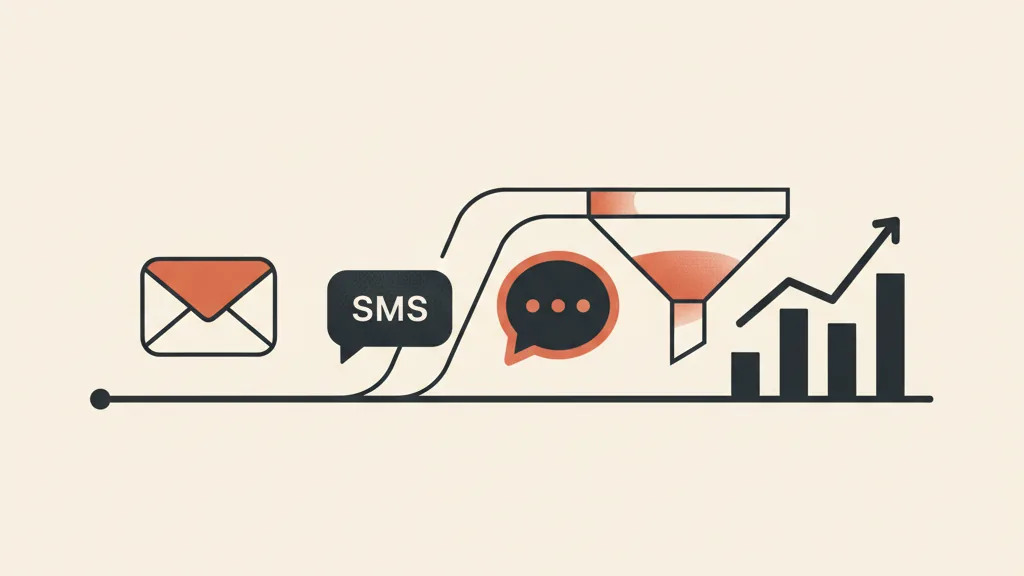
- Email 1 (T0), soft reminder, zero discount. "It's been a while. Your [product] might be running low." Service tone, not sales tone. Reorder in one click. Many customers repurchase right here without costing you a cent of margin.
- Email 2 (T0 +4 days), value and social proof. If they haven't opened it or bought yet: useful content (how to get the most out of the product, a recommended bundle) and reviews. Still no heavy discount.
- SMS (T0 +7 days), light incentive. SMS has an open rate above 98%: use it for a short message with free shipping or 10% off. Ideal for the "About to Sleep" segment.
- Email 3 (T0 +14 days), a real win-back offer. "We miss you. Here's 15% off to come back." Raise the incentive here because the customer is cooling off.
- WhatsApp or final email (T0 +21 days), last call. For "Hibernating" customers: "Still with us?" with a strong offer and a deadline. Anyone who doesn't respond goes on the list to be cleaned.
Strategic note: the discount grows over time, it doesn't start at its highest. Lead with 20% off and you teach customers to wait it out to save money, destroying margin on people who would have repurchased at full price anyway. For concrete copy examples, see the win-back sequence with examples and the win-back email templates.
Case study: skincare ecommerce store, 8,400 dormant customers
Here are the numbers from a typical project for an Italian skincare ecommerce store (average repurchase cycle of about 50 days, average order value €42). Total database: 21,000 customers, of which 8,400 were inactive for over 120 days.
RFM segmentation applied:
- About to Sleep: 2,900 contacts
- At Risk: 3,100 contacts
- Hibernating: 2,400 contacts
Multichannel sequence (email plus SMS plus WhatsApp for the warmer segments) over 3 weeks. Aggregate results:
| Metric | Value |
|---|---|
| Contacts worked | 8,400 |
| Average reactivation rate | 9.2% |
| Orders recovered | 773 |
| Average order value, win-back orders | €39 |
| Direct campaign revenue | about €30,100 |
| Campaign cost (sends plus automation setup) | about €1,900 |
| ROI | about 15x |
Most of the revenue comes from the first two steps of the sequence, the ones with little or no discount. That's where the real margin sits: customers who come back at the soft reminder cost you nothing in promotions. One more detail: make the sequence always-on, so it kicks off automatically the moment a customer slips into the at-risk segment, instead of you having to launch one-off campaigns.
One thing that's often overlooked. Mass-recontacting people who've been inactive for years can damage your email domain's reputation. Ramp up volume starting with the warmest segments, and handle the legal side of recontacting carefully: if you're unsure about consent, read how to win back old customers under GDPR.
Do you have a database full of customers who bought once and vanished? Request an analysis of your reactivation potential: we'll show you how many orders you can recover and with what sequence.
Frequently asked questions
After how many days is an ecommerce customer considered dormant?
It depends on your average repurchase cycle. Calculate the typical interval between two orders and multiply it by 2 or 3. For consumables like supplements and skincare that's 90-135 days; for long-cycle products like furniture and shoes it can be 6-12 months. Avoid generic thresholds like 30 days.
How much does it cost to win back a customer compared to acquiring a new one?
On average, winning back a customer costs 5-7 times less than acquiring one. The customer already knows you, has their payment details saved, and requires no ad spend to reach. With automated sequences, ROI often exceeds 1,000%.
What discount should I offer in a win-back sequence?
Don't start at the top. Begin with a reminder that has no discount, or a small incentive like free shipping, then raise the offer as the customer cools off. Leading with 20% off teaches customers to wait, and destroys margin on people who would have repurchased at full price.
Can winning back customers who've been inactive for years damage my email domain?
Yes, if done poorly. Sending to thousands of cold contacts at once raises bounce and spam rates. You need to stay under a 0.3% spam rate, have DMARC configured and one-click unsubscribe in place, and ramp up volume gradually, starting with your warmest segments.
Is it legal to recontact old customers under GDPR?
Generally yes, on the basis of legitimate interest and a prior commercial relationship, as long as consent isn't too stale. The EDPB treats contacts inactive for 24+ months as a red flag. Always offer immediate unsubscribe and never recontact anyone who withdrew consent. Always check your specific case with a lawyer.
Is a single campaign better than an automated sequence?
An automated sequence clearly beats a single send: orchestrated sequences generate up to 320% more revenue than a one-off broadcast. The added benefit is making it always-on, so it fires automatically as soon as a customer enters the at-risk segment.
Let's talk: together we'll build an always-on reactivation system for your ecommerce store, from RFM segmentation to the multichannel sequence. Request your free analysis.