How to Win Back Restaurant Customers: SMS, WhatsApp and Targeted Offers
9 min read · AstraLoop Studio
You've got a database of numbers that built itself up over the years: reservations, delivery orders, people who left their contact for a promo. Then that database just sits there while you spend on advertising to bring in new customers who might show up once and never come back. It's the paradox of the restaurant business. Your most valuable customer isn't the one you still have to win over — it's the one who's already eaten at your place and simply forgot to book again.
Winning back a dormant customer costs on average 5-7 times less than acquiring a new one. In food service, where margins are thin and every seat counts, that difference is what separates an empty Tuesday night from a full dining room. In this guide we walk through a concrete method for bringing back people who haven't booked in months, using SMS, WhatsApp and time-slot events tuned to your own dead hours.
Why customers stop coming back (and it's not about the food)
The first mistake is assuming that if a customer doesn't return, they didn't like it. In most cases that's not what happened. The customer simply forgot about you. Their life is full of options: delivery apps, chains, the new place that just opened around the corner. You dropped off their radar, not off their list of places they like.
And that changes everything. If the problem were quality, a campaign wouldn't fix anything. But if the problem is memory and habit, then a well-timed, well-crafted reminder brings back a substantial share of people. It's the same dynamic we cover in detail in why customers stop buying: it's rarely an active rejection, almost always inattention.
In restaurants, there are typically three reasons customers drift away:
- One-off occasion: they came for a birthday or a work dinner, they were never regulars. These need to be converted into repeat visitors.
- Changed habits: they used to eat at your place every Friday, then their routine changed. They need a new reason to come back.
- Slow drift: they used to come every month, then every two months, then stopped altogether. These are the easiest to win back if you catch them before they go completely cold.
Segment before you write: who to contact and who to leave alone
Sending the same message to your entire list is the fastest way to burn through it. Someone who came in last week doesn't need a discount to return — you'd just be giving money away. Someone who hasn't been in for a year needs a real push. You need minimal segmentation based on three variables: how long since their last visit, how many times they've visited in total, and how much they spend on average. It's the same logic behind RFM analysis, applied to a restaurant.
You don't need complex software. Even a spreadsheet with the date of last visit lets you build three groups:
| Segment | Last visit | Strategy |
|---|---|---|
| Lukewarm | 2-4 months ago | Gentle reminder, new menu items, no aggressive discount |
| Cold | 4-9 months ago | Offer with a concrete incentive and a deadline |
| Frozen | 9+ months | Last attempt, strong incentive, then let it go |
Lukewarm customers need to be caught before they slide into the cold group. That's where winning them back is cheapest and most likely to work. Step in too late and you'll have to offer more to get less.
SMS: the channel nobody can ignore
SMS has one advantage no other channel gives you: it gets read. SMS open rates exceed 98%, almost always within minutes of arrival. No email comes close. For a restaurant, it's the ideal tool for short, timely messages tied to a specific date.
Rules for a win-back SMS that actually works:
- Short: one idea, one offer, one way to book. No storytelling.
- Recognizable: put your restaurant's name up front, so the person knows immediately who's texting.
- With a deadline: a "valid through Sunday" creates real urgency.
- With a clear action: a number to call or a link to book.
Example for a cold customer: "Trattoria Da Marco: we miss you! Come back by Sunday and dessert's on us, for you and whoever you bring. Book here: [link]". Notice that the incentive (dessert) costs you very little but reads as a gift, and there's a built-in social multiplier ("whoever you bring") that pushes the customer to bring someone along.
On the ROI side, SMS campaigns run on dormant databases regularly clear a 1,000% return, because the cost per message is a few cents and the read rate is close to total. If you want to know when SMS makes more sense than other channels, we've compared them in detail in WhatsApp vs. SMS in win-back marketing.
WhatsApp: the conversation that leads to a booking
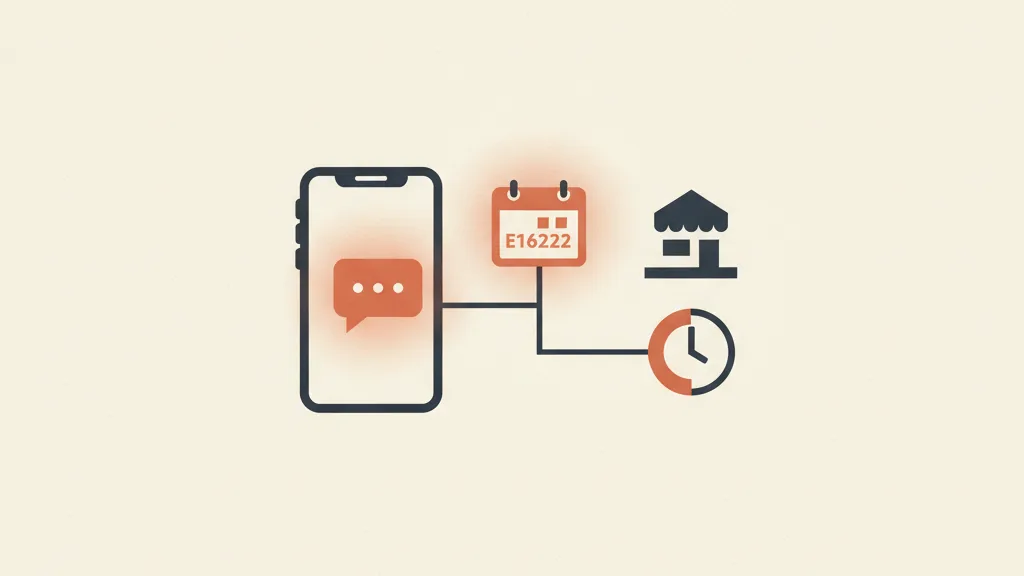
If SMS is the megaphone, WhatsApp Business is the conversation. Here you can send photos of today's special, the event menu, and — most importantly — handle the booking right inside the chat. The customer doesn't have to switch apps or hunt for a phone number: they just reply and book.
The real leap forward comes when you automate WhatsApp Business with AI. A conversational assistant handles replies, suggests open time slots, confirms the booking and logs it, without anyone in the kitchen having to stop and answer messages mid-service. For a restaurant this is decisive, because the moment messages come in is often the exact moment you have the least time to respond.
A win-back WhatsApp funnel works roughly like this:
- A message with a reason to come back (new menu, event, limited-time offer).
- Whoever replies enters an automated conversation: the assistant suggests a date and time.
- The booking is confirmed and saved, and the customer gets a reminder the day before.
One detail that matters: on WhatsApp you can only message people who gave you their number and their consent. It's not a channel for purchased lists or contacts collected without permission. The discipline here is the same as with email or SMS win-back campaigns, and it's worth reading how to win back old contacts without risking GDPR fines before you launch anything.
Time-slot offers: fill the gaps, don't discount the packed nights
This is the most underrated strategy among restaurant owners. Not every seat is worth the same. Saturday night you're full regardless, you don't need a promotion. Tuesday lunch or Wednesday night your dining room is half-empty, and that unused capacity is money you lose every single week and never get back.
Smart win-back campaigns don't offer the same discount all the time. They offer the incentive only during dead hours, shifting demand toward the moments when you have room. In practice, you turn a customer who would have come on Saturday (when you were already full) into a customer who comes on Wednesday (when you were empty) — or you win back someone who wouldn't have come in at all.
- Weekday lunch: fixed-price menu for office workers, announced by SMS on Monday morning.
- Tuesday or Wednesday evening aperitivo: a special deal reserved for people who book on the slow nights.
- Sunday evening: usually a huge gap, great for families with a kids' offer.
The message needs to be explicit about the time window: "Tuesday and Wednesday evenings only". That way you don't train customers to expect a discount all the time, and you don't devalue your service during peak moments.
Have a customer database sitting idle and a couple of nights that never fill up? Request a free analysis: let's find out together how many extra covers you can recover with an SMS and WhatsApp sequence built around your restaurant.
Events and recurring occasions: the reason to return isn't always the price
Not everything comes down to a discount. In fact, for higher-spending customers a discount can backfire. What brings them back is a reason: a themed evening, a limited tasting menu, a seasonal ingredient just arriving, a dinner with the winemaker. An event creates a specific date and an exclusivity that "come whenever" simply doesn't have.
Event-based win-back works because it combines three levers: a deadline (the date), scarcity (limited seats) and content (the experience). You reach the right segment — the lukewarm and the cold — and turn a stagnant database into bookings. It's the same principle behind strategies for winning back lost customers in any industry: give them a new reason, don't repeat the old one.
A sequence beats a single message
A common mistake is sending one message and concluding that "it doesn't work." Win-back campaigns structured as a sequence (several spaced-out touches, not one single broadcast) can generate up to 320% more revenue than a single send. In food service, a sensible sequence looks like this: a first message with the offer, a second one 5-7 days later to anyone who didn't respond with a reminder of the deadline, a third only to the frozen segment as a last call. Then you stop, so you don't annoy the people who really aren't interested anymore.
How much it actually returns, and how to measure it
The risk with restaurants is running a campaign "on a hunch" without knowing whether it worked. But the math is on your side. Picture a database of 800 dormant numbers. With a well-built SMS and WhatsApp sequence, a 10% recovery rate means 80 customers coming back. If the average check is €35 and they bring one other person on average, that's thousands of euros in revenue generated from a negligible sending cost.
This is the core of the economic argument: win-back isn't a "promotion," it's the most efficient lever you have to lower your average acquisition cost. Every customer you win back is a customer you didn't have to pay advertising to acquire. In an industry with tight margins, that changes your numbers at the end of the month.
The metrics worth tracking are few and simple:
- Recovery rate: how many dormant customers return out of how many were contacted.
- Revenue per message sent: the true indicator of a campaign's profitability.
- Dead-hour fill rate: how many of the recovered customers show up on the slow days.
If you want the full picture of the method, from segmentation to orchestrating channels, check out the complete guide to winning back dormant customers from your database, which covers the strategy across every industry.
Where to start tomorrow
You don't need a platform that costs thousands of euros to get started. You need order and consistency. In practice:
- Gather the contacts you already have: reservations, delivery, WhatsApp, the notebook by the register.
- Add the date of each customer's last visit, even as an estimate, and build the three segments.
- Prepare a time-slot offer tuned to your weakest day.
- Launch a first SMS sequence to the cold segment, and measure the recovery rate and how the slot fills up.
- Automate WhatsApp to handle bookings without stealing time from service.
The database you've already built is probably the most underrated asset in your restaurant. The difference between the places that make money from it and the ones that let it sit dormant isn't the nicer dining room or the better chef. It's whoever makes the effort to talk — consistently, at the right moment — to the people they've already won over.
Frequently asked questions
How much does it cost to win back a customer compared to acquiring a new one?
Winning back a dormant customer costs on average 5-7 times less than acquiring a new one. You already have the contact, you already have their consent, and they already know you — so you skip all the advertising cost of acquisition. For a restaurant with tight margins, it's the most efficient lever for lowering your average acquisition cost.
Is SMS or WhatsApp better for bringing restaurant customers back?
They serve different purposes. SMS is unbeatable for short, timely messages tied to a specific date (open rates above 98%). WhatsApp is better when you want to show photos of your dishes and handle the booking inside the conversation itself, especially if you automate it. Combining the two — SMS to open, WhatsApp to close — gives the best results.
Can I text or WhatsApp customers I already have in my reservation system?
Only if you collected those contacts with proper consent and you use them consistently with what you told people when you collected them. GDPR applies to restaurants too: no purchased lists, no numbers gathered without permission. Before launching a campaign, check your legal basis for processing and always include an easy way to opt out.
How often can I send win-back messages without being annoying?
For dormant customers, think in sequences, not blasts: a first message, a reminder after 5-7 days to anyone who didn't respond, and possibly one last call for the frozen segment. Then you stop. Once someone comes back, they move into your regular communications, where two or three messages a month is usually well tolerated if they offer real value.
How do I use offers to fill empty days without discounting my full ones?
Apply the incentive only to your dead time slots, and say so explicitly in the message (for example, "Tuesday and Wednesday evenings only"). That way you shift demand toward the moments when you have empty seats, without training customers to expect a discount even on Saturday night, when you'd be full anyway.
Do I need expensive software to start winning back customers?
No. You can start with a spreadsheet to segment contacts by last visit date and an SMS service that costs a few cents per message. The real step up comes when you automate WhatsApp to handle bookings, but that's not a requirement for your first campaign — what matters is order, segmentation and consistency.
Talk to us: we'll build your win-back funnel, from segmenting your contacts to automated bookings on WhatsApp, without stealing time from service.