How to Increase Your E-commerce Conversion Rate: 12 Proven Levers
9 min read · AstraLoop Studio
There's a problem you know well: traffic shows up, campaigns run, but order volume isn't climbing the way it should. Before pushing your ad budget any higher, look at the other side of the equation. If your store converts at 1.5% and you push it to 2.2%, you've grown sales by 47% without spending an extra euro on traffic. That's the whole logic of CRO (Conversion Rate Optimization): work on the share of visitors who buy, not just the number of visitors.
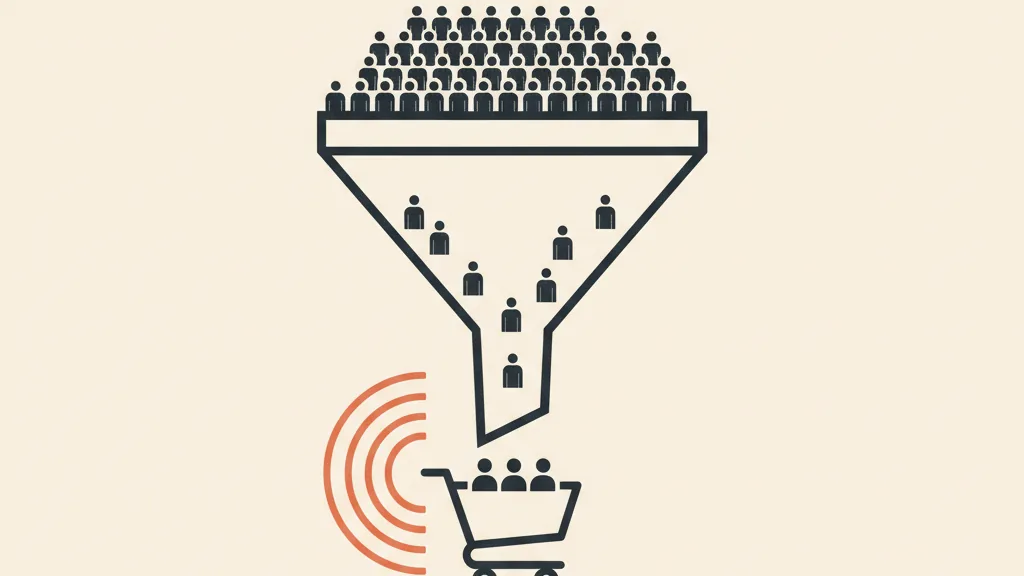
The average conversion rate for an Italian e-commerce store today sits between 0.9% and 2.3% depending on the sector (fashion around 1.2%, beauty closer to 2%, food higher still). These are low numbers, and there's a structural reason for it. According to the Baymard Institute, which aggregated 50 studies on the topic, on average roughly 7 out of 10 customers abandon their cart before paying. On mobile, the figure gets worse. Every point of that gap is money you've already spent to attract the visitor, and you're losing it in the final stretch.
In this guide you'll find 12 proven levers for increasing your e-commerce conversion rate, laid out along the real customer journey: product page, checkout, social proof, real-time support and recovery. No theory: these are interventions that move the number. At the end you'll also see how AI automation, a chatbot that qualifies leads and recovers carts while the visitor is still on your site, ties it all together.
First things first: do you actually know your conversion rate?
The formula is trivial: conversion rate = (orders / sessions) × 100. If you have 20,000 sessions in a month and 400 orders, you're converting at 2%. The problem isn't the formula, it's that almost nobody segments it. An aggregate number hides everything you need in order to improve.
Always segment by at least:
- Device: the gap between desktop and mobile is typically huge (desktop can convert at double the mobile rate). If 70% of your traffic is mobile and it converts at half the rate, you already know where to act first.
- Traffic source: traffic from your brand and from email converts far better than cold advertising traffic. A low average rate can be hiding one excellent source and one terrible one blended together.
- New vs. returning: returning customers convert far better. If you don't have many, your problem is retention, not the product page.
Without this foundation you're not optimizing, you're guessing. To set up tracking correctly on Shopify and GA4, start with our guide to Shopify tracking with GA4 and our GA4 e-commerce events checklist. If you're not measuring every step of the funnel properly, the 12 levers below get applied blind.
Product page: where most sales are decided
The product page is where intent turns into a purchase. Or doesn't. This is where the biggest share of lost conversions is at stake.
1. Photos that answer questions, not just "show the product"
The product on a white background isn't enough. You need photos that pre-empt doubts: scale (the product worn or next to a reference object), macro detail shots, the product in real-world use, color variants. For physical products, a 10-15 second video showing the item in motion cuts uncertainty more than ten lines of text. The goal is to remove every excuse the customer has to “think it over”.
2. An “Add to cart” button that's always visible and never ambiguous
On mobile, the button needs to stay reachable as the user scrolls (sticky at the bottom). Clear copy, contrasting color, one single primary button. Avoid placing other buttons next to it with the same visual weight: every extra choice is friction. One dominant call to action per screen.
3. Defuse purchase anxiety with the right micro-copy
Around the button, a few lines that neutralize objections before they form: free shipping over €49, free returns within 30 days, secure payment, ready to ship. These are exactly the items Baymard lists among the top causes of abandonment: unexpected costs, doubts about returns, security concerns. Addressing them on the product page stops you losing the customer further down the funnel.
Want the operational detail, section by section? We have a dedicated deep dive on how to build an effective product page, with the ideal structure field by field.
Checkout: the final stretch where 70% of carts are lost
If there's one place where CRO pays off the most, it's checkout. Baymard estimates that a mid-to-large e-commerce store can increase its conversion rate by roughly 35% just by improving checkout UX. That's not marketing talk: it's removing friction from a process almost everyone builds badly.
4. Eliminate surprise costs
The number one cause of abandonment, 39% according to Baymard, is extra costs that only appear at the very end (shipping, taxes, surcharges). The customer feels misled and leaves. Show the total cost as early as possible: a “€12 away from free shipping” bar inside the cart converts far better than a surprise at the payment step.
5. Enable guest checkout (purchase without registration)
Being forced to create an account is among the top five causes of abandonment (roughly 19-26% depending on the study). Nobody wants to open an account to buy a pair of shoes. Let people complete the purchase as a guest, then offer to create the account on the order confirmation page, once the transaction is already closed and the customer is satisfied: “Want to save your details for next time?”. It converts far better.
6. Cut down the form fields
The average checkout has around 15 fields when 7 or 8 would do. Every extra field is friction. Use address autocomplete, merge first and last name where possible, don't ask for the same information twice (billing same as shipping by default). Less typing, especially on mobile where every tap has a cost.
7. Offer the payment methods Italian shoppers expect
PayPal, cards, and above all “buy now, pay later” options (Klarna, Scalapay), which in Italy move a lot of mid-to-high value carts. A missing payment method is a lost order. Full stop.
Social proof and trust: convincing the undecided
Visitors coming from cold traffic don't know you. Trust has to be built into the page itself, because there's no sales assistant there to reassure them.
8. Real, visible reviews, not buried at the bottom
Reviews with customer photos are among the strongest conversion factors there are, because they show the real product on real people. Put the average rating high up on the product page, near the title, and leave lukewarm reviews readable too: a profile with only 5 stars looks fake. If you want to set up structured collection, see our guide to a customer review collection strategy.
9. Trust signals at the decisive steps
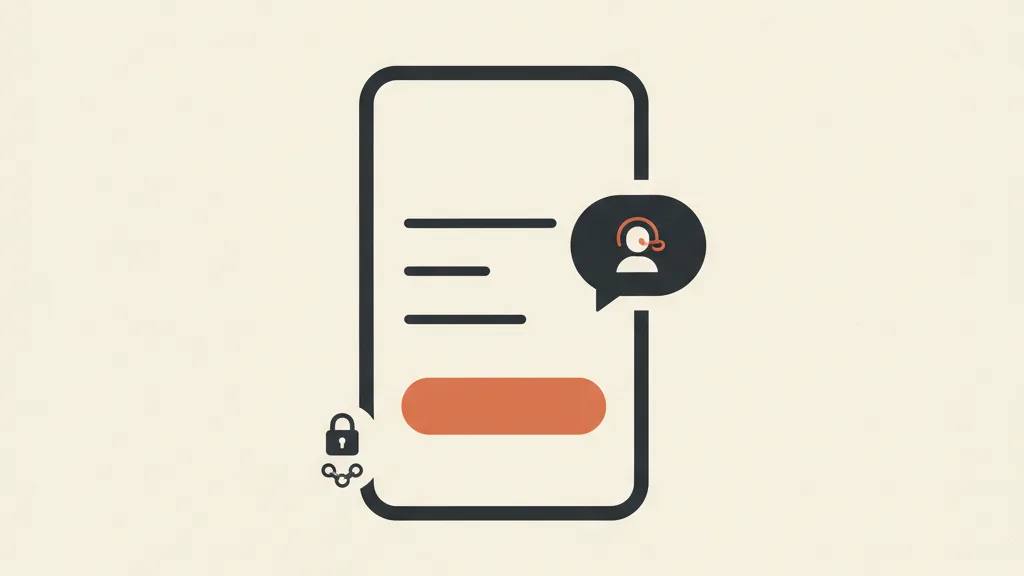
Secure payment badges, a clear returns policy, real company contact details, any certifications. They sound like details, but the moment a customer enters their card information, 19% abandon specifically over security concerns. A padlock icon and the words “encrypted payment” cost nothing and recover sales.
10. Urgency and scarcity, but honest
“Only 3 left in stock” or “12 people are viewing this product” work, but only if they're true. Invented scarcity is easy to spot and it burns trust. A real deadline (promo ending, actual stock level) beats a fake countdown that resets on every refresh.
Real-time support: the digital sales assistant you've been missing
Here's the lever almost no small e-commerce business really uses, and it's exactly where AI changes the rules. In a physical store, when a customer hesitates in front of the shelf, an assistant walks over. Online, that customer is alone, and if they have an unresolved doubt, they leave without a word.
11. Live chat and AI chatbots that answer at the moment of doubt
Most abandonment starts with an unanswered question: “does this size run small?”, “when will it arrive if I order today?”, “can I return it?”. A classic live chat needs an operator always on hand, which a small business doesn't have. An AI chatbot connected to your catalog answers around the clock with the right information (stock, sizes, delivery times, returns policy), recommends the right product and guides the visitor all the way to the cart. That's exactly what a good sales assistant does, available on every product page at the same time.
The difference from a scripted chatbot is huge: an AI agent understands the question in natural language and draws on your store's real data, not a menu of pre-set replies. We've covered this in more depth in our tips for an e-commerce sales chatbot and our concrete AI use cases for e-commerce.
Want a digital sales assistant that qualifies visitors and recovers carts in real time on your store? Ask us for an analysis of your funnel and let's see together where you're losing sales.
12. Abandoned cart recovery: automatic and in real time
With 70% of carts abandoned, recovery isn't a nice-to-have, it's one of the highest-yield levers there is, because you're talking to people who had already decided to buy. Two layers:
- On-site, real-time recovery: the visitor is about to leave, or has been stuck on checkout for minutes. An AI chatbot can step in while they're still on the site, identify the obstacle (shipping cost, product doubt, payment method) and resolve it before they close the tab. You recover the sale while intent is still warm, not hours later.
- Post-abandonment recovery: the classic email or WhatsApp sequence that brings the visitor back to their cart. It works, but it acts cold, hours or days later. See our guide to automated abandoned cart recovery to set up the sequence.
Combining the two, immediate chatbot interception plus automated follow-up if they leave anyway, is what really moves the number. You'll find the same automated follow-up logic used for sales explained in our piece on automating sales follow-up with AI.
The method: test, don't guess
A recurring mistake is changing ten things at once and never knowing which one worked. Real CRO is iterative. Start from the data (where the funnel drops off), form a hypothesis (“checkout is too long and it's losing mobile users”), make one single change, measure over a statistically valid period, then move to the next. A/B testing is the tool, but discipline is the real lever.
Here's a practical order of priority for a small business starting today:
- Fix your tracking (without data, you're flying blind).
- Tackle checkout (highest ROI: transparent costs, guest checkout, fewer fields).
- Strengthen the product page (photos, objection-handling micro-copy, the button).
- Add social proof at the decisive steps.
- Introduce an AI chatbot that assists and recovers in real time.
You don't need to do everything in a month. You need to do things in the right order and measure them. The first two items alone, on Baymard's numbers, account for a good chunk of that potential +35%.
In summary
Increasing your e-commerce conversion rate isn't magic, and it isn't a single “trick”. It's removing friction all along the journey: a product page that answers doubts, a checkout that doesn't betray you with surprise costs, social proof that reassures, and real-time support that, thanks to AI, you can now afford even as a small business with no customer care department. Every percentage point you gain here is worth more than every extra euro spent on traffic, because you capitalize on it across every single session, forever.
Frequently asked questions
What's a good conversion rate for an e-commerce store in Italy?
It depends a lot on the sector. The Italian average ranges between 0.9% and 2.3%: fashion around 1.2%, beauty closer to 2%, food higher still. Consistently beating 2-3% is a good result, but the real benchmark is your own historical data segmented by device and source, not the generic average.
Why does my e-commerce store get traffic but few sales?
Almost always the problem is friction along the funnel: a product page that doesn't answer doubts, a checkout that's too long or has surprise costs, a lack of social proof. Before raising your ad budget, check where the funnel drops off with GA4 and work on the drop-off points. 70% of carts get abandoned, that's where the most immediate recovery opportunity is.
How much can improving checkout increase conversions?
According to the Baymard Institute, a mid-to-large e-commerce store can increase its conversion rate by roughly 35% just by improving checkout UX: transparent costs from the start, guest checkout, fewer form fields and the right payment methods. It's the single highest-ROI intervention there is.
Do reviews really help increase conversions?
Yes, they're among the strongest trust factors, especially ones with photos from real customers. They should be featured prominently on the product page (average rating near the title) and not filtered down to show only 5 stars: a profile that's too perfect looks fake and hurts credibility.
Does an AI chatbot help sell more on an e-commerce store?
Yes, it acts as a digital sales assistant available around the clock on every page. An AI chatbot connected to your catalog answers the questions that cause abandonment (sizing, stock, delivery times, returns), recommends the right product, and can intercept an undecided visitor before they leave, recovering the cart in real time while intent is still high.
Is it better to recover abandoned carts with email or with a chatbot?
They complement each other. The AI chatbot acts on-site in real time, catching the obstacle while the visitor is still on the site and intent is warm. Emails or WhatsApp messages recover cold, hours or days later. Combining the two, immediate interception plus automated follow-up, delivers the best results.
If your e-commerce store gets traffic but converts poorly, let's talk: we'll analyze your funnel and show you where an AI chatbot and a few CRO interventions can really move the number.