AI for E-commerce: Use Cases from Agentic Personalization to Dynamic Pricing
11 min read · AstraLoop Studio
If you run an e-commerce business in Italy, AI gets pitched to you in two opposite ways: either as the magic wand that doubles your revenue, or as just another chatbot that annoys your customers. The truth sits in between, and it's far more interesting. In online retail, AI already has mature, measurable use cases with documented returns. But they're not all equal: some move revenue by real percentage points, others just waste your time.
In this guide we cover the AI use cases for e-commerce that actually matter in 2026, grouped by area: personalization, dynamic pricing, sales chatbots, and customer operations. For each one you'll find what it does, roughly what it costs, which KPIs to track, and where the catch is. This piece supports our broader guide on AI consulting for businesses: if you want the full strategic picture, start there. Here we go deep on retail specifically.
An honest starting point, because it's the tone we always keep: roughly 85% of generative AI pilot projects fail when it's time to scale them into production. Not because the technology doesn't work, but because teams start from the tool instead of the business problem. That applies to e-commerce too. Read these use cases thinking "which number on my P&L do I want to move," not "which feature do I want to have."
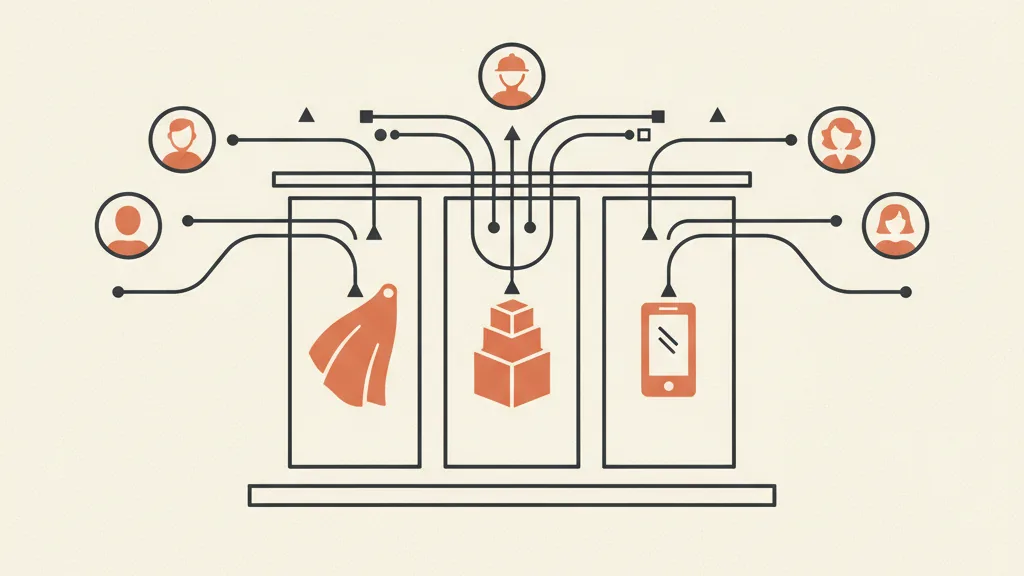
1. Agentic personalization: beyond "customers who bought X also bought Y"
Product recommendation personalization has been around for twenty years. What's new in 2026 is that it stops being a static rule ("related products") and becomes agentic: a system that reasons about each individual user's context in real time and decides what to show, in what order, with what message.
What changes with the agentic approach
Traditional recommendation looks at purchase history and finds co-occurrence patterns. It works, but it's blind to the moment. An agentic personalization system, instead, cross-references multiple signals: what the user is looking at right now, which channel they arrived from, weather and season, stock availability, product margins. It then assembles a dynamic storefront that optimizes not just click probability, but also margin and stock turnover.
A concrete example for a clothing e-commerce: two users open the same "jackets" category. One who arrived from a discount campaign is shown sale items with a "last 3 left" badge. The other, a repeat customer with a high average cart value, is shown the premium line with complete outfit pairings. Same page, two experiences, both generated with no human involved.
KPIs to track
- Segmented conversion rate: compare conversion between users with personalization active and a control group (a rigorous A/B test, not an eyeball estimate).
- Average order value (AOV): good personalization raises it through targeted cross-sell.
- Revenue per visitor: the most honest composite metric, since it captures both conversion and basket size together.
Realistic ranges seen when the implementation is done properly: 5 to 15% more revenue per visitor on the treated segments. Anyone promising you 40% is selling you an edge case, not the average.
Where the catch is
Personalization needs clean data and volume. If you're doing 50 orders a month, the system doesn't have enough signal to learn, and you end up with recommendations worse than a hand-written rule. Below a certain traffic threshold, it's better to invest in acquisition: if that's your situation, look at how to set up lead generation for e-commerce before thinking about advanced personalization.
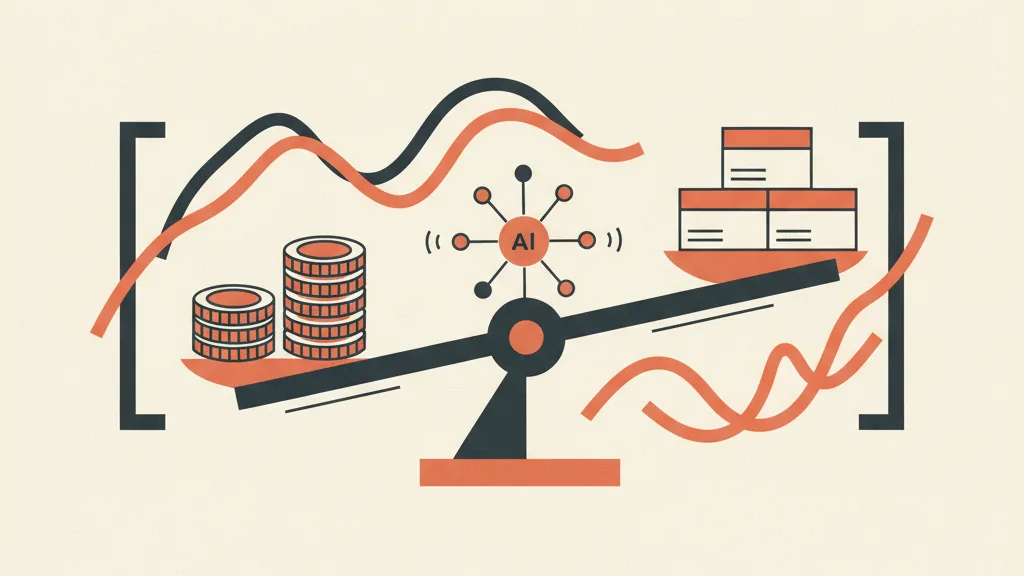
2. Dynamic and agentic pricing: the most underrated use case
If personalization is the use case everyone talks about, dynamic pricing is the one that moves the most margin and that almost nobody talks about. The reason is it's scary: changing prices automatically sounds risky. Done right, with the proper guardrails, it's probably the AI lever with the fastest ROI for an e-commerce business.
From dynamic pricing to agentic pricing
"Classic" dynamic pricing follows rules: if the competitor drops their price, you drop yours. If stock is high and the expiry date is close, you discount. Agentic pricing adds a layer of reasoning: the agent monitors competitor prices, demand elasticity by product tier, margins and turnover targets, then proposes (or applies) adjustments to optimize a goal you define, for example "maximize margin while keeping volume within a 5% drop."
The operational difference is huge. With rules, you have to anticipate every scenario. With an agent, you define the goal and the constraints, and it explores the pricing space. But precisely for that reason you need human-in-the-loop on sensitive products: no agent should be able to wipe out margin on a best-seller without someone approving it first.
Non-negotiable guardrails
- Price floors and caps: minimum thresholds (never below cost plus target margin) and maximums per product.
- Change limits: a maximum % swing per day, to avoid fluctuations that unsettle customers.
- Human approval for top sellers and for changes above a certain threshold.
- Regulatory compliance: watch out for prices personalized to a single individual, which can raise transparency and discrimination issues. Pricing by segment or context stands on much firmer ground than pricing by individual identity.
KPIs and typical magnitudes
The main KPI is gross margin, not revenue: dynamic pricing can even lower revenue slightly while raising margin, and that's exactly what you want. A second KPI is sell-through (stock clearance speed), useful for seasonal categories. On serious projects, margin improvements typically run in the 2-8% range, which becomes real money on an e-commerce with volume, because it falls almost entirely to the bottom line.
3. Sales chatbots: from responder to salesperson
This is where the biggest misunderstanding lives. The "old school" chatbot was a decision tree that frustrated customers. The modern conversational agent, connected to the catalog, order history, and the company knowledge base, is a different animal: it acts as a shopping assistant, answers product questions, handles returns and tracking, and in the best cases closes sales.
Chatbot vs. AI agent: the distinction that matters
It's worth clarifying the difference, because it changes everything in terms of results and costs. A chatbot answers questions. An agent acts: it queries the order management system to check availability, opens a return, applies a discount code, updates the CRM. If you want to go deeper, we have a piece dedicated to the difference between a chatbot and an AI agent that explains when you need one versus the other.
For an e-commerce business, the real value shows up when the agent is connected to the underlying systems. An assistant that says "check the returns section" is worth little. One that opens the return, generates the label, and confirms the refund right in chat cuts customer care costs and raises satisfaction. That's genuine customer care automation with AI, not a facelift on the old ticketing system.
Cart recovery and pre-purchase assistance
Two high-yield sub-cases:
- Pre-purchase assistance: the agent answers objections the moment they come up ("does this size run small?", "is it compatible with model X?"). Answering the doubts that block a purchase in real time recovers conversions that would otherwise be lost.
- Conversational cart recovery: instead of the usual cold email, a message on WhatsApp that addresses the actual reason for abandonment. If it's shipping, the agent says so. If it's price, it offers an alternative. This ties directly into WhatsApp Business automation with AI, a channel that converts far better than email in Italy.
The real cost and the human factor
A basic chatbot starts at a few hundred euros a month. An agent connected to the underlying systems with custom integrations is an entirely different price bracket. For the actual figures, we have a dedicated article on how much an AI chatbot costs. But the cost almost nobody accounts for is oversight: an agent in production needs to be monitored, needs guardrails, and needs an escalation path to a human operator when it steps outside its boundaries. Without that, the first public mistake costs you more than you saved.
Want to know which AI use case would actually move your e-commerce revenue, with numbers based on your own data? Request an analysis: we start from your bottleneck, not from a tool.
4. Other use cases: forecasting, catalog, content
Beyond the three main pillars, there are less flashy use cases with solid ROI:
| Use case | What it does | Main KPI |
|---|---|---|
| Demand forecasting | Estimates future sales to manage stock and reorders | Stockouts / dead stock |
| Catalog enrichment | Generates descriptions, tags, and attributes from images and product sheets | Hours saved / product page coverage |
| Semantic search | Finds products even with vague or natural-language queries | Zero-result search rate |
| Content and ads | Produces copy and creative variants for campaigns | CTR / cost per creative |
| Fraud detection | Flags suspicious orders and returns | Chargebacks / false positives |
Demand forecasting deserves a note: for many e-commerce businesses it's more profitable than personalization, because every euro tied up in stock or every sale lost to a stockout is margin burned. It's not a "sexy" use case, but it's the one operations directors put at the top of the list when they have to choose where to invest.
How to choose where to start (without burning through budget)
The right way to read this list isn't "how many can I implement," but "which one moves the most critical number for me right now." Here's a practical three-question framework:
- Where's the bottleneck? If you convert poorly but have traffic, think personalization and sales chatbots. If traffic is the problem, it's further upstream and it's an acquisition issue. If margin is being eroded by competitors, look at pricing.
- Do I have the data? Personalization and demand forecasting need volume and clean data. Sales chatbots and pricing can start with smaller datasets.
- Do I have the oversight? Every agentic use case needs monitoring and guardrails. If you don't have someone to own it, start with a low-risk case with a human in the loop.
This reasoning is the core of a four-phase AI adoption roadmap: assessment, a pilot project on a quick win, scale-up, and continuous monitoring. Skipping the assessment phase is the number one reason pilot projects never make it to production, as we detail in our analysis of why AI projects fail.
ROI: how to actually calculate it
No use case is worth pursuing without doing the math. The formula we use is simple and honest: (hours freed up times hourly cost) plus the extra revenue generated, minus setup, maintenance, and licensing costs. For e-commerce, the "extra revenue" part is the trickiest to isolate: without a control group, you don't know how much credit belongs to the AI versus seasonality or a parallel campaign.
That's why we insist on A/B testing as a method, not an option. The typical payback period for a well-set-up project is between 4 and 12 months. If after three months you don't see even a signal on the target KPI, that's not a patience problem: it's a sign that the use case or the implementation needs to be revisited. We've dedicated a full guide to how to measure AI ROI if you want the formula applied step by step.
Governance and the AI Act: a necessary reminder
An e-commerce business using personalization, dynamic pricing, and chatbots is processing personal data and making automated decisions. Two implications worth keeping in mind, presented for information only, not as legal advice.
The first is GDPR: profiling and pricing personalized to an individual's identity are sensitive areas. Italy's data protection authority (Garante Privacy) actively monitors these issues, and transparency toward the user is a requirement, not a courtesy.
The second is the AI Act (EU Regulation 2024/1689), which is being phased in progressively: from August 2, 2026, further obligations kick in, and Article 4 already requires an adequate level of AI literacy for anyone who develops and uses these systems. In plain terms: if your team manages AI agents, they need to know what those agents do and where they can go wrong. We have a piece dedicated to the AI Act 2026 obligations for SMEs and another on the phenomenon of Shadow AI, meaning employees who use AI tools without authorization: a real risk even in an e-commerce marketing department.
In summary
AI for e-commerce isn't a single block, it's a menu of use cases with very different returns. Agentic personalization raises revenue per visitor on the right segments. Dynamic and agentic pricing is the most underrated margin lever, but it demands serious guardrails. Sales chatbots become valuable only once they're agents connected to the underlying systems, with human escalation. And underneath it all sits the discipline of ROI and governance.
You don't need to do everything at once. You need to pick the use case that moves your most critical number, test it with method, and stay on top of it. The rest is a matter of priority, not urgency.
Frequently asked questions
Which AI use case should an e-commerce business start with?
It depends on the bottleneck. If you convert poorly but have traffic, start with personalization or a sales chatbot. If margin is being eroded by competitors, dynamic pricing gives the fastest return. If traffic is the issue, the problem is further upstream and it's about acquisition. Pick the case that moves the most critical number on your P&L, not the trendiest one.
How much does it cost to implement AI in an e-commerce business?
It varies a lot. A basic chatbot starts at a few hundred euros a month, while a conversational agent connected to the catalog, order management system, and CRM is a much higher tier because of the integrations involved. Pricing and personalization depend on volume and platform. Beyond setup, always budget for maintenance and oversight: those are the costs almost everyone forgets.
Is AI-managed dynamic pricing legal and safe?
Dynamic pricing by context or segment is established practice. It becomes sensitive when personalized to a single individual's identity, which raises transparency and discrimination issues under GDPR. You need caution, guardrails (floors, caps, change limits), and human-in-the-loop on sensitive products. For information only: for specific cases, get a legal review.
What's the difference between a chatbot and an AI agent for e-commerce?
A chatbot answers questions following a script. An AI agent acts: it queries the order management system for availability, opens a return, applies a discount, updates the CRM. For an e-commerce business, the real value shows up when the agent is connected to the underlying systems and closes concrete actions, not when it just points you to a page.
How do I measure whether AI is really generating revenue?
With a rigorous A/B test, comparing a treated group against a control group. Without a control group you can't separate the AI's contribution from seasonality or parallel campaigns. The most honest composite KPI is revenue per visitor for personalization, and gross margin for pricing. Typical payback runs between 4 and 12 months.
Do I need AI Act compliance to use AI in my e-commerce business?
Yes. The AI Act (EU Regulation 2024/1689) applies progressively, and from August 2, 2026 further obligations kick in. Article 4 already requires adequate AI literacy for anyone using these systems. In practice, your team needs to know what the agents do and where they can go wrong. If you process personal data for profiling or pricing, GDPR applies too.
Personalization, agentic pricing, or a sales chatbot: talk to us and let's build the roadmap together, with KPIs and guardrails, without burning budget on a pilot that never scales.