The Stages of the Sales Funnel: From Awareness to Close
10 min read · AstraLoop Studio
The sales funnel describes the journey a person takes from the moment they discover you exist to the moment they sign or buy. It's called a funnel because many contacts enter at the top, and at each step some drop out: in the end, only the people who truly need you, trust you, and have the budget make it to the close. Understanding the stages of the sales funnel serves one very practical purpose: knowing where you're losing people and what to do at each stage so they don't slip away.
In this guide we'll go through each stage one by one, with concrete actions, the right content, and the metrics to keep under control. No abstract theory: by the end you should be able to map your own funnel on a single page and spot which step is limping.
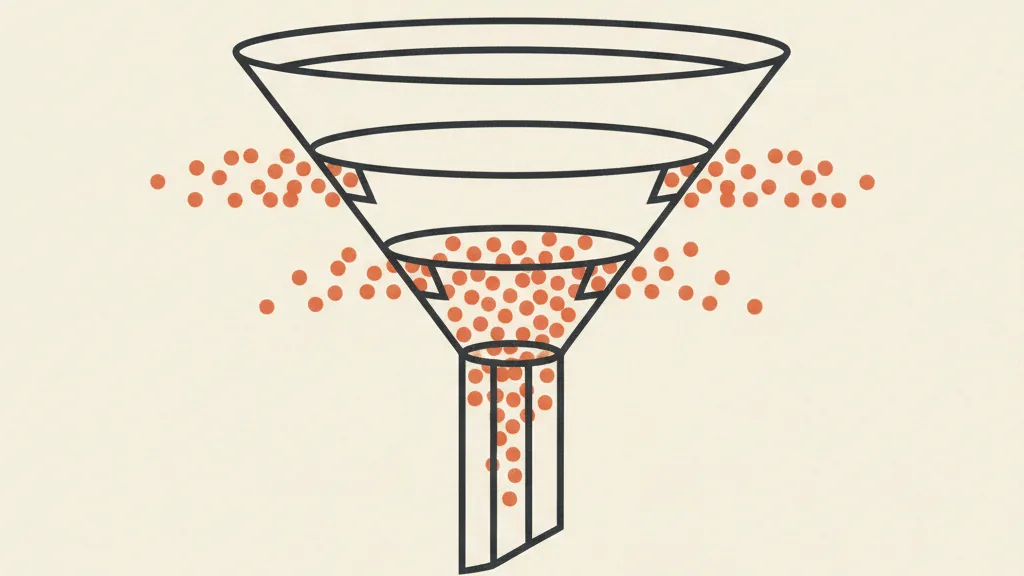
What Are the Stages of the Sales Funnel
The funnel stages are the moments the buying journey is split into. They're not carved in stone: some models use three, others seven. The most common and manageable model uses five, which we list here in order and then unpack one by one:
- Awareness: the person realizes they have a problem — and discovers you.
- Interest: they start looking into it and begin to see you as a possible solution.
- Consideration: they compare options, you included, and weigh pros and cons.
- Decision (intent): they're ready to choose — they ask for a quote or a demo.
- Close (action / purchase): they buy, sign, and become a customer.
Many people overlay a three-tier classification on top of these five stages, useful when you're talking about content and traffic: TOFU (top of the funnel), MOFU (middle of the funnel) and BOFU (bottom of the funnel). If this acronym confuses you, we've written a piece specifically on what TOFU, MOFU and BOFU mean and how they translate into content. For now, just know that awareness and interest sit at the top, consideration in the middle, and decision and close at the bottom.
Another useful distinction: the funnel is not your CRM. The funnel is the journey and the content that feeds it; the CRM is where you track the people moving through it. If that difference isn't clear, it's worth reading the difference between a funnel and a CRM, because confusing the two is the number one reason funnels look like they're working but don't produce customers.
Stage 1: Awareness
At this point the person doesn't know you and, often, hasn't even pinpointed the problem yet. Your goal isn't to sell: it's to be findable the moment they search for information or feel a pain point. If you sell custom CRMs, your potential customer probably isn't typing "custom CRM" — they're typing "I'm losing too many leads", "my sales rep never follows up", "how do I keep track of quotes". Those are the entry points.
What to Do at This Stage
- Informational content: articles, guides, videos that answer questions and problems, not that push the product. This is the moment to educate, not to close.
- Discovery channels: SEO, organic social, reach campaigns, word of mouth. If you want to understand how to build a steady flow at the top, read how to get a steady flow of customers.
- No invasive forms: asking for too much data this early scares people off. At most, a downloadable resource in exchange for an email.
Common mistake: talking only about yourself ("we've been the best since 1998") to an audience that doesn't even know it has a problem yet. At the top of the funnel, the winner is whoever is useful, not whoever brags.
Metric to watch: traffic volume and reach, cost per click or cost per visit, and above all how many of those visits turn into contacts at the next stage.
Stage 2: Interest
The person has realized they have a problem and starts researching in earnest. They follow you, open your emails, read more than one of your pieces of content. They're not ready to buy yet, but they're weighing you up as a possible partner. Here the game is turning occasional attention into a relationship.
What to Do at This Stage
- Targeted lead magnets: checklists, calculators, case studies, mini-guides that dig deeper into the problem. In exchange, you get a qualifiable contact.
- Nurturing: email or message sequences that build trust and perceived expertise over time. A well-built sales follow-up automation keeps contacts from going cold while you're busy elsewhere.
- In-depth content: webinars, comparisons, concrete examples. The person wants to see whether you really know what you're talking about.
Metric to watch: email open and click rates, number of leads collected, and cost per lead. For a benchmark on how it's measured and what's normal to expect, see cost per lead.
Stage 3: Consideration
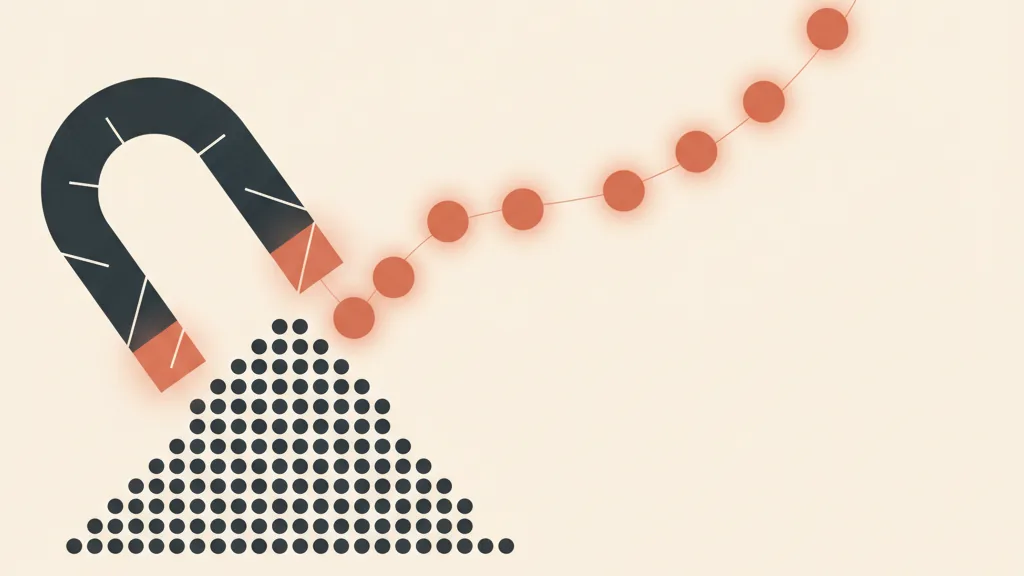
Now the person genuinely considers you, but they're comparing. They look at competitors, ask for opinions, read reviews, weigh up prices and features. It's the trickiest stage because the lead is "warm" but undecided, and a poorly handled hesitation makes them slip away.
Not every contact is worth the same here, and you need to work out who deserves the sales team's attention and who still needs nurturing. This is where lead qualification comes in: telling apart someone who's just curious from someone with a real problem, budget, and urgency. The classic distinction between MQL and SQL qualified leads is born exactly here, between the interest and consideration stages.
What to Do at This Stage
- Concrete proof: case studies with numbers, testimonials, demonstrations. The person wants reassurance before taking a risk.
- Objection handling: FAQs, comparison materials, a human contact who answers doubts.
- Lead scoring: assigning a score to contacts based on behavior and profile, so sales reps work the most ready ones first. We cover this in what lead scoring is.
Metric to watch: conversion rate from qualified lead to opportunity, average time spent at this stage, and the percentage of leads sales reps consider "ready." If a lot of them get stuck here, you're usually missing social proof or your qualification is too loose.
Want to find out at which stage of your funnel you're losing the most contacts? Tell us how you sell today and we'll give you a free analysis of your journey, with the points to fix first.
Stage 4: Decision
The person has chosen you, or is one step away from it. They ask for a quote, book a call, want to see a demo, negotiate terms. This is the moment not to add friction: the easier it is to say yes, the better.
What to Do at This Stage
- Clear offer: a readable quote, explicit timelines and terms, no surprises. Ambiguity makes people put off the decision.
- Speed of response: replying to a quote request after three days often means you've already lost it. Speed at the decision stage is a competitive edge, not a nice-to-have.
- Removing friction: simple payments, lean contracts, guarantees that reduce perceived risk.
Common mistake: treating the decision stage as "in the bag" and slowing down. A lead at this stage has stopped reading articles: they want to talk to a person and get a proposal. Every hour wasted is margin you're handing to the competition.
Metric to watch: time to respond to a quote request, ratio of quotes sent to requests received, and the quote-to-order conversion rate.
Stage 5: Close
The contact becomes a customer: they sign, pay, and the work begins. But the close isn't the end of the funnel — it's the start of the relationship. A customer handled well after the sale buys again, refers you, and feeds the top of the funnel with word of mouth, which is the cheapest traffic there is.
What to Do at This Stage
- Careful onboarding: the first few weeks decide whether the customer stays satisfied. A good start cuts down on returns and lost renewals.
- Upsell and cross-sell: someone who just bought is the audience most receptive to a complementary offer.
- Reactivation: someone who's bought once is easier to bring back than a cold contact. More on that shortly.
Metric to watch: final close rate (win rate), average order value, and upstream of all that, the whole chain of acquisition unit economics — CAC, CPL, and LTV. This is where you find out whether the funnel is sustainable or whether you're spending more than each customer is worth.
A Funnel Isn't a Straight Line
The staged model is useful, but reality is messier. People enter halfway through the funnel (already informed), backtrack (ask for a quote and then vanish for two months), or drop out and come back. The funnel works as a map, not as a fixed track.
Two practical implications follow. First: not all your contacts are at the same stage, so you can't send everyone the same message. Second: the funnel doesn't end at the close. A huge chunk of revenue is hiding in the contacts who stalled halfway and in people who've already bought from you before. That's why it's worth staying on top of reactivating dormant customers: they've already made it through every stage once, and bringing them back costs a fraction of acquiring new ones.
Stages Don't Work Without a Container: the CRM
You can design the most elegant funnel in the world, but if you have nowhere to track which stage each contact is in, it stays a drawing. Funnel stages only become operational once you connect them to a tool that logs every lead's status, remembers follow-ups, and tells you where the machine is jamming.
That container is the CRM. A funnel that feeds a well-structured CRM turns the five stages from a concept into a repeatable process: you know how many contacts are in consideration, how many quotes are stalled, who you haven't followed up with in three weeks. If you want to see how the two pieces fit together, read how to integrate a CRM and a sales funnel and the overview on the funnel that feeds the CRM.
The real leap happens when you stop forcing a generic CRM to fit your stages and switch to one built around your actual process. A custom CRM with an integrated funnel mirrors your exact stages, your qualification rules, and your follow-up automations, instead of forcing you to adapt your sales process to the software. That's usually the point where the funnel stops losing contacts in the cracks.
How to Map Your Funnel in Practice
Before you optimize, measure. Here's a reference table for pinning down, stage by stage, what to watch and where you typically lose ground.
| Stage | Goal | Key metric | Typical loss |
|---|---|---|---|
| Awareness | Get found | Traffic and reach | Content that's too self-referential |
| Interest | Collect contacts | Leads and conversion rate | No lead magnet, forms too long |
| Consideration | Qualify and convince | MQL -> SQL, social proof | Zero case studies, unqualified leads |
| Decision | Make saying yes easy | Time to respond to a quote | Slow or unclear quotes |
| Close | Close and retain | Win rate, LTV | Neglected onboarding, zero follow-up |
Fill in this table with your own real numbers. In most cases, a clear bottleneck shows up: lots of traffic but few leads (a stage 2 problem), or lots of quotes but few closes (a stage 4 problem). Fix that one step and the whole funnel improves, often without spending an extra euro on advertising.
From Funnel to Acquisition System
The funnel stages are the "what." Making them work continuously and predictably is a different matter: it means building a customer acquisition system where every stage is backed by content, automation, and a CRM that keeps everything in order. Funnel theory explains the direction; the system makes it repeatable month after month, without depending on whichever salesperson happens to be having a good week.
If you're starting from scratch and want to understand the bigger picture, a good place to start is the guide on what a customer acquisition funnel is: it explains how the five stages translate into an engine that brings in customers systematically, not just in spurts.
In Short
The stages of the sales funnel — awareness, interest, consideration, decision, and close — are a map for understanding where people enter and exit your sales journey. Each stage has its own actions, content, and metrics. But the map alone isn't enough: it only turns into revenue once you connect it to a CRM that tracks every contact and a system that watches every step. Measure first, fix the bottleneck, then automate. In that order.
Frequently asked questions
What are the stages of the sales funnel?
There are five main stages: awareness (the person discovers the problem and discovers you), interest (they research and consider you), consideration (they compare options), decision (they ask for a quote or demo), and close (they become a customer). Some models group them into the three tiers TOFU, MOFU, and BOFU.
What's the difference between a sales funnel and a marketing funnel?
In practice they're two stretches of the same journey. The marketing funnel covers the top and middle (awareness and interest, where the contact is generated and nurtured), while the sales funnel covers the bottom (consideration, decision, and close, where the sales team steps in). In small teams they overlap.
How many stages does a sales funnel have?
It depends on the model. The most common one has five, but there are three-stage versions (awareness, consideration, decision) and more granular versions with up to seven. The number matters less than the principle: identifying the moments where you lose contacts and staying on top of them.
Is the sales funnel the same thing as a CRM?
No. The funnel is the journey and the stages a contact moves through; the CRM is the tool where you track which stage each person is in, along with follow-ups and history. A funnel without a CRM stays a drawing; a CRM without a clear funnel is just a glorified address book.
How do I know at which stage of the funnel I'm losing customers?
Measure the conversion from one stage to the next. If you have a lot of traffic but few leads, the problem sits between awareness and interest. If you collect leads but close few, the bottleneck is in consideration or decision. The stage with the sharpest drop is the one to fix first.
How long does it take to move from one stage to the next?
It varies enormously by industry and price point. A B2C impulse purchase can go through every stage in minutes; a complex B2B sale can take weeks or months. What matters isn't the absolute time, but whether a contact is stuck in a stage longer than usual — that's the signal a follow-up is needed.
If you want to turn the funnel stages into a CRM that tracks every contact and never lets a quote slip away, talk to us: we build the system tailored to your sales process.