How to Get a Steady Flow of Clients (Without Relying on Word of Mouth)
10 min read · AstraLoop Studio
Some months you can't keep up with demand, and some months the phone just doesn't ring. You close three projects in March, put your head down to deliver them, and by May you realize the pipeline is empty. You start hunting for clients from scratch, with that knot in your stomach. This is the feast-or-famine cycle, and it's the most stressful, least profitable way to run a business.
The cause is almost always the same: you're relying on word of mouth and referrals. They're excellent channels (pre-qualified clients, low acquisition cost, short sales cycle), but they have one fatal flaw. You don't control them. They show up when they show up, not when you need them. And when you need them most, i.e. during the dry spells, by definition fewer of them arrive, because you're working less and less visible.
In this article we'll look at what it actually takes to build a steady flow of clients: not a single magic tactic, but a multi-source system that keeps feeding itself regardless of your mood or your workload. With real numbers, real timelines, and no promises of "guaranteed clients".

Why word of mouth isn't enough (even when it works)
To be clear: this isn't about abandoning word of mouth. A client who arrives through a referral converts far better and costs next to nothing. The problem isn't word of mouth itself, it's using it as your only source of clients.
Three structural limits:
- It's not predictable. You can't say "this month I'll get 4 referrals". There's no lever you can pull to increase them when you need revenue.
- It doesn't scale. It grows at the pace your network of satisfied clients grows, and that pace is slow and largely outside your direct control.
- It's countercyclical to your needs. In busy months you're visible and active, so you generate more word of mouth. In quiet months you drop off the radar and the flow dries up exactly when you need it most.
The real step up isn't "quit word of mouth", it's adding sources you can turn on and off yourself. If you want to dig deeper into building a business that doesn't depend on referrals, we've dedicated a guide to how to find clients without relying only on word of mouth.
The difference between scattered tactics and a system
Here's the most common mistake. One month you try cold email, get tired of it, quit. Then you try LinkedIn for two weeks. Then you throw 500 euros at Meta Ads without a decent landing page. Then you open a TikTok profile and abandon it. Four tactics started and dropped, zero results, and the conviction that "nothing works".
The problem was never the tactics. It was the lack of a system holding them together. A steady flow of clients comes from a complete acquisition engine, not from a pile of disconnected, intermittent activities. It's the difference between "I go jogging every once in a while" and "I follow a training program".
A system has three traits an isolated tactic doesn't:
- Continuity. It runs every week, whether you're in a busy month or a quiet one. It doesn't depend on your motivation.
- Measurability. You know how many contacts come in, how many qualify, how many become clients. You have numbers, not feelings.
- Redundancy. If one channel underperforms, the others hold up. You're never at zero.
If the distinction feels subtle, it's worth clarifying once and for all the difference between an acquisition system and simple lead generation: buying leads on a pay-per-use basis leaves you dependent on the supplier, a system stays your own asset.
The three sources you need to combine
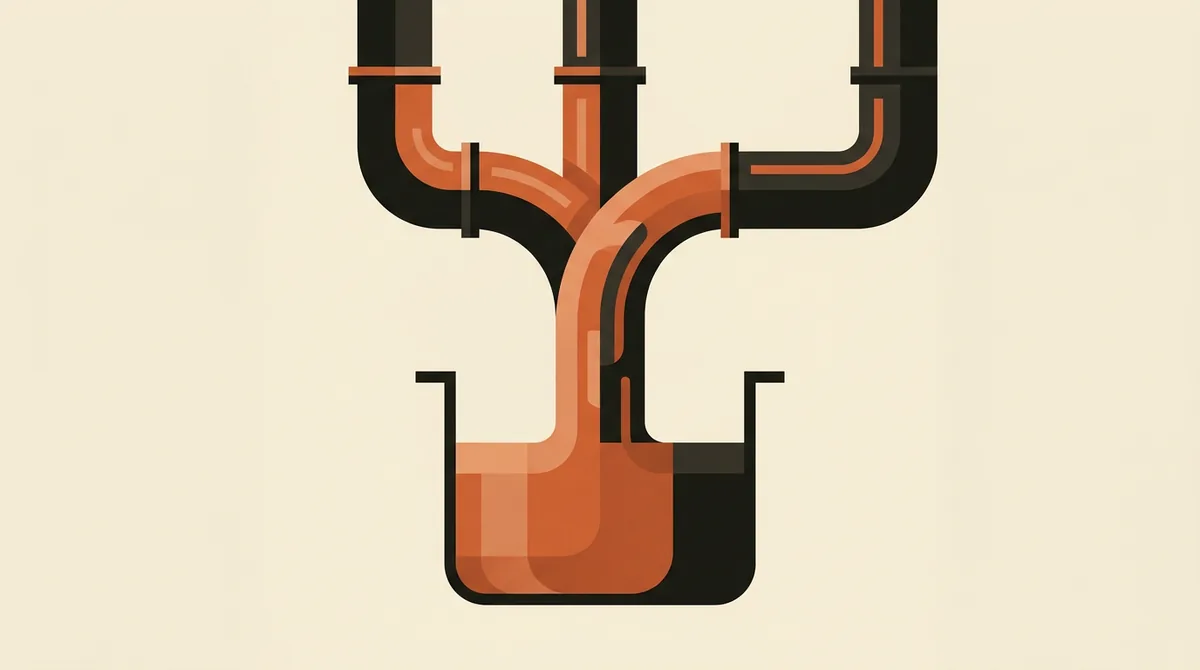
A stable flow rests on three legs. With just one, you're fragile. With all three, you have a table that won't tip over.
1. Outbound: you go find them
You proactively reach out to companies or people in your target market, instead of waiting to be found. Cold email, LinkedIn messages, calls. It's by far the most controllable source: you decide how many contacts go out each week, so you decide (within certain limits) how many appointments you generate.
In 2026, smart outbound isn't the mass "cold blast" to ten thousand addresses. It's signal-based selling: you only contact people showing buying signals (they just hired a key role, received funding, visited your site multiple times). Less volume, a much higher response rate. If you don't know where to start with outbound, our guide on how to generate qualified leads goes into the operational detail.
A technical issue almost every Italian agency ignores: deliverability. If you don't correctly configure SPF, DKIM, and DMARC and don't warm up the domain, your emails land in spam and the entire engine jams upstream. Since 2024 and 2025, Google, Yahoo, and Microsoft have enforced strict rules for bulk senders: spam rate under 0.3%, bounce rate under 2%, one-click unsubscribe mandatory. Ignoring them means burning your domain. If you're wondering why your emails are landing in spam, the answer almost always starts here.
2. Inbound: they find you
Content, SEO, LinkedIn presence, your online reputation. Here clients arrive already warmed up because they've read you, seen you, listened to you. The sales cycle is shorter and the client is less on guard.
Inbound is slower to get going (we're talking months, not days), but it's what makes the flow truly steady over time, because it builds an asset that keeps producing. A well-ranked article brings in contacts for years. The difference between the two logics is well explained in the comparison between inbound and outbound marketing in B2B: they're not alternatives, they're complementary.
A 2026 development not to be underestimated: over 30% of searches now go through AI assistants (ChatGPT, Perplexity, Google's AI Overviews). Getting found and cited by these tools (what's called GEO or AEO) is becoming an acquisition channel in its own right. Whoever gets there first locks in a lasting advantage.
3. Paid: you accelerate by spending
Meta Ads, Google Ads, LinkedIn Ads. Paid has a huge advantage for your specific problem: it's immediate and adjustable. You increase the budget and leads increase, almost in real time. It's the perfect lever to fill the gaps while inbound and outbound mature.
The flip side: stop paying, it stops coming. That's why paid should never be your only source, but the multiplier of the other two. A landing page built for lead generation is what separates a campaign that burns budget from one that converts.
The funnel: what happens after the first contact
Generating contacts is half the work. The other half is turning them into clients systematically, without letting them slip through your fingers. This is where you need a structured acquisition funnel: a defined path that moves a stranger from "first contact" to "paying client" through precise stages.
The typical stages:
- Raw contact: someone enters the system (fills out a form, replies to an email, clicks an ad).
- Qualification: you check whether they're really in your target, whether they have budget, whether they have a problem you solve. This is where you tell a marketing-qualified lead apart from a sales-ready one.
- Appointment: you book a call with whoever clears the qualification stage.
- Close: the actual sale.
The most overlooked point is follow-up. Most clients don't buy on first contact: you need to call back, remind them, answer their doubts. Automating sales follow-up with AI keeps contacts from being forgotten, which is the dumbest way to throw away leads you paid for.
The role of AI: the AI SDR (without the hype)
In 2026, there's a lot of talk about AI SDRs, AI agents that handle prospecting autonomously: they find contacts, send multi-channel sequences, qualify replies, and book appointments. It's a real, useful technology, but the market is full of inflated promises. It deserves an honest look.
What an AI agent does well: it handles repetitive volume (sending, following up, sorting) tirelessly and at low cost. It frees you from the mechanical work. You can go deeper into what AI agents for lead generation are and how they work.
What it does NOT do well (yet): the relationship, the complex conversation, reading the nuance when a lead is lukewarm but recoverable. This is where the human touch still wins. The model that works best is hybrid: AI handles the volume, a human setter acts as the quality filter on replies and brings home the real appointments. AI gives you scale, the human gives you conversion.
One concrete risk to keep in mind: AI agents, if poorly configured, can send volumes that burn your email domain. That's why the deliverability point above matters so much. More volume is worthless if it all lands in spam.
Want to understand which acquisition sources make the most sense for your business and in what order to activate them? Request a free analysis of your situation: we'll tell you where to start, with realistic numbers.
The numbers: what to actually expect
Be wary of anyone promising "30 guaranteed clients in the first month". A serious acquisition system has a ramp-up period and precise unit economics. Here are the realistic ranges to keep in mind.
| Metric | What it measures | Typical range, B2B services |
|---|---|---|
| Ramp-up | Time to reach full speed | 60-90 days |
| CPL (cost per lead) | What one contact costs you | 15-80 euros (paid), variable on outbound |
| CAC (customer acquisition cost) | Total spend per closed client | Should stay well below LTV |
| LTV/CAC | Client value vs. acquisition cost | 3:1 or better to be sustainable |
The golden rule: a client's lifetime value (LTV) should be at least three times what you spend to acquire them (CAC). If the ratio falls below 3:1, the system isn't healthy and needs revisiting. To understand how these figures are calculated and what they really mean, read our guide on CAC, CPL, and LTV in client acquisition.
The point about the 60-90 days is crucial and needs to be said plainly: an acquisition system isn't a light switch. In the first weeks you're collecting data, testing messages, adjusting your target. Whoever quits on day 20 because "it's not working" gives up right before the engine starts paying off. Patience here is a competitive advantage, because most of the competition quits.
From one-off sales to a predictable pipeline
The end goal isn't "more clients". It's predictability. Moving from "let's see how this month goes" to "I know that by the end of the quarter I'll close between X and Y clients, with a fair degree of reliability".
This changes everything about how you run the business: you can hire with confidence, you can turn down the wrong projects, you can raise your prices because you're not backed into a corner. Revenue predictability is what separates a business that's at the mercy of the market from one that runs it.
The way to get there is to keep a minimal dashboard of numbers, updated every week:
- How many new contacts came in per channel
- How many qualified
- How many appointments were booked
- How many clients closed, and at what value
With these four numbers, after two or three months, you start to see patterns. And once you see the patterns, you can forecast: if you know it takes 100 contacts to close 3 clients and you want 6, you know how many contacts to generate. Feast-or-famine disappears not by magic, but because you finally hold the levers. For the full picture of available options, our overview of client acquisition strategies is a good starting point.
Where to actually start
You don't need to build everything at once. The sequence that makes the most sense for most service businesses:
- Month 1: define your precise target and sort out deliverability (domain, SPF/DKIM/DMARC, warmup). Start with signal-based outbound at modest volumes.
- Months 1-2: build the basic funnel (landing page, qualification, automated follow-up). Without this, the contacts you generate just scatter.
- Months 2-3: add paid as an accelerator to fill pipeline gaps, and start seeding inbound (content, LinkedIn) for the medium term.
- From month 3: measure, cut the channels that underperform, double down on the ones that work.
The important thing is not to start all channels at once, and not to drop any of them after two weeks. One channel at a time, given time to mature, inside a system that holds them together. That's how the flow of clients stops being a lottery and becomes a function of your business.
Frequently asked questions
How long does it take to get a steady flow of clients?
Typically 60-90 days to reach full speed. The first weeks are for testing messages, adjusting the target, and gathering data. Whoever quits early gives up right when the system is about to start paying off. Sticking with it over the medium term is what makes the flow stable.
Can I have a steady flow of clients with word of mouth alone?
No, not reliably. Word of mouth is excellent (pre-qualified clients, low cost), but you don't control it: it arrives when it arrives, not when you need it. And it's countercyclical to your needs. Keep it, but pair it with sources you can turn on and off yourself, like outbound, inbound, and paid.
Is outbound, inbound, or paid advertising better?
It's not an either-or choice: a stable flow rests on all three. Outbound is the most controllable, paid is the most immediate, inbound is the slowest but builds an asset that pays off over time. Together they offset each other: if one channel dips, the others hold up.
How much should I spend to acquire a client?
There's no fixed number, but there is a rule: a client's lifetime value (LTV) should be at least three times the acquisition cost (CAC). Below a 3:1 ratio, the system isn't sustainable. CPL in B2B services with paid typically ranges from 15 to 80 euros, varying widely by industry.
Can an AI agent generate clients for me on its own?
Partly. An AI SDR handles repetitive volume well (sending, follow-up, sorting replies) at low cost. But complex conversation and reading nuance remain human work. The model that works is hybrid: AI provides scale, a human setter acts as the quality filter and closes the appointments.
What does signal-based selling mean?
It means contacting only people who show concrete buying signals (they hired a key role, received funding, visited your site multiple times) instead of sending mass cold messages. Less volume, a much higher response rate, and less risk of burning your email domain.
If you're tired of the feast-or-famine cycle and want to build a predictable flow of clients, let's talk. We'll analyze your pipeline together and show you exactly what your specific case needs.