The Hidden Treasure: How to Monetize an Underused Customer Database
9 min read · AstraLoop Studio
You spent thousands of euros building it. Every contact on that list cost you advertising, sales time, a quote written up, a phone call, maybe an order. Then that contact stopped buying, and you stopped thinking about them. You moved on to the next lead to acquire.
And here's the paradox: you keep paying to bring new people through the front door, while out the back door hundreds of customers who already know you are quietly leaving. Your database isn't an archive, it's an asset. And in most companies it's the single most undervalued asset there is.
This article isn't about "sending a few more emails." It's about putting a euro figure on your inactive database (your dormant revenue), understanding why that value stays locked up, and walking through the method to unlock it. With real numbers, not slogans.
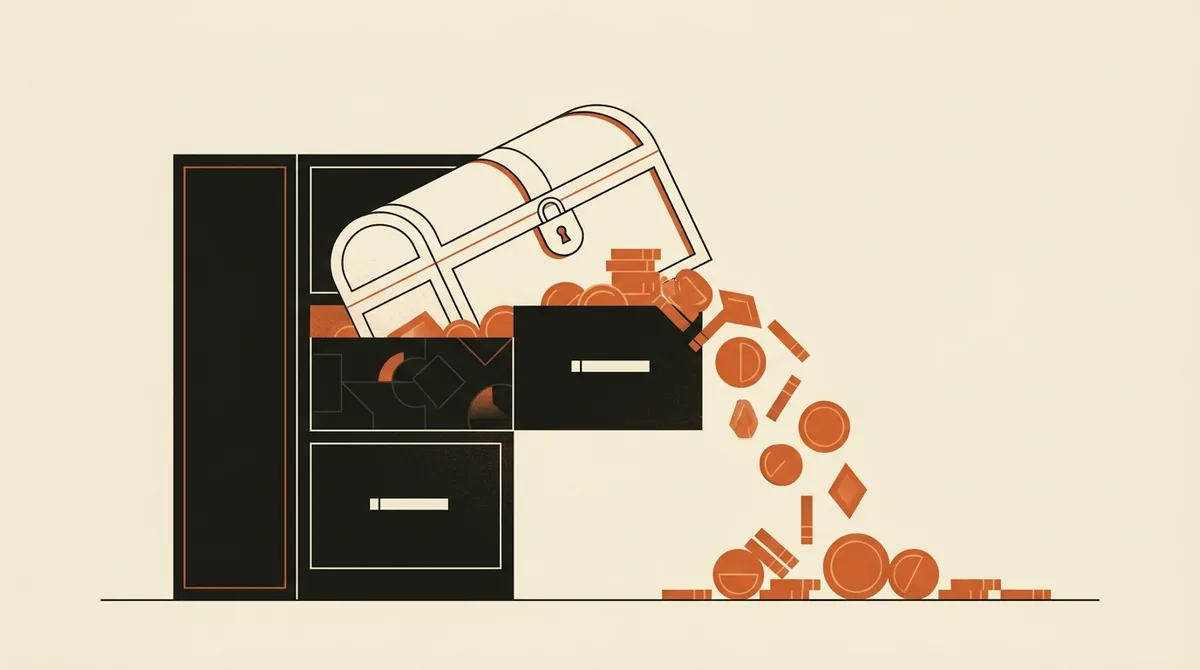
The number nobody tells you: 40% of revenue is already in the house
Companies build their entire commercial strategy around acquisition. Ad budgets, lead-gen agencies, funnels, campaigns. All fair enough. But there's a structural imbalance: 90% of the energy goes toward people who don't know you yet, and almost none toward people who have already given you money at least once.
Look at the industry averages. In a healthy e-commerce business, the share of revenue coming from returning customers (not new buyers) sits around 40%, and in more mature brands it can go higher. In B2B services the number is even higher: closing a customer you already have a relationship with costs a fraction of what you spend on a cold contact. The odds of selling to an existing customer typically fall between 60% and 70%. The same odds on a new prospect? Between 5% and 20%.
Translation: the cheapest lever you have for growing revenue isn't at the top of the funnel. It's already sitting in your CRM, your management software, your customer spreadsheet. It's just sitting still.
What "dormant revenue" actually is (and how to calculate it)
Dormant revenue is the potential income locked inside contacts who no longer buy but would come back with the right sequence. It's not a motivational metaphor — it's a number you can estimate today, using data you already have.
Here's the operating formula, explained without data-science jargon.
- Count your dormant contacts. These are people who haven't purchased in over 6-12 months (the threshold depends on your repurchase cycle: weeks for a restaurant, possibly years for a consultant). If you're not sure what counts as a dormant contact, start with the working definition in what dormant customers are.
- Take the average order value (AOV) or average ticket. How much a customer typically spends when they buy.
- Estimate a realistic reactivation rate. On a database that isn't burned out, a well-run campaign wins back between 5% and 15% of dormant contacts in the following months. Use 10% as a conservative baseline.
The formula is:
Dormant revenue = Number of dormant contacts x Reactivation rate x Average customer value
Let's run a concrete example. Picture a services company with 4,000 dormant contacts, an average customer value of €600, and a conservative reactivation rate of 10%:
| Variable | Value |
|---|---|
| Dormant contacts | 4,000 |
| Reactivation rate (conservative) | 10% |
| Reactivated customers | 400 |
| Average customer value | €600 |
| Unlockable dormant revenue | €240,000 |
€240,000. At zero advertising cost, because you've already paid for those contacts. Even if you halve every estimate and assume a 5% reactivation rate, that's still €120,000 left on the table. Run this calculation with your own numbers, right now. The result will tell you exactly how much you're losing every year that database sits idle.
Why that treasure stays buried
If it's this obvious and this profitable, why does almost nobody do it? For three very concrete reasons.
1. The database isn't "readable"
Contacts are scattered across management software, CRM, inboxes, invoices, old spreadsheets. Nobody actually knows how many dormant contacts there are, let alone who's worth recontacting. Without a clear picture, the value stays invisible — and so it gets ignored.
2. There's no method, just "broadcast"
When companies do try, they send the same email to everyone and hope it works. It's the fastest way to burn your domain's reputation without getting anything in return. Automated, segmented sequences generate up to 320% more revenue than a single mass send. The difference isn't in the message, it's in the structure.
3. Fear of doing damage (spam, GDPR, a burned domain)
A legitimate concern, but often used as an excuse to do nothing. Reactivating badly really does cause damage: you land in spam, you get flagged, your domain loses deliverability. But reactivating well, within the rules, is one of the highest-return moves a company can make. The problem isn't reactivation — it's improvised reactivation.
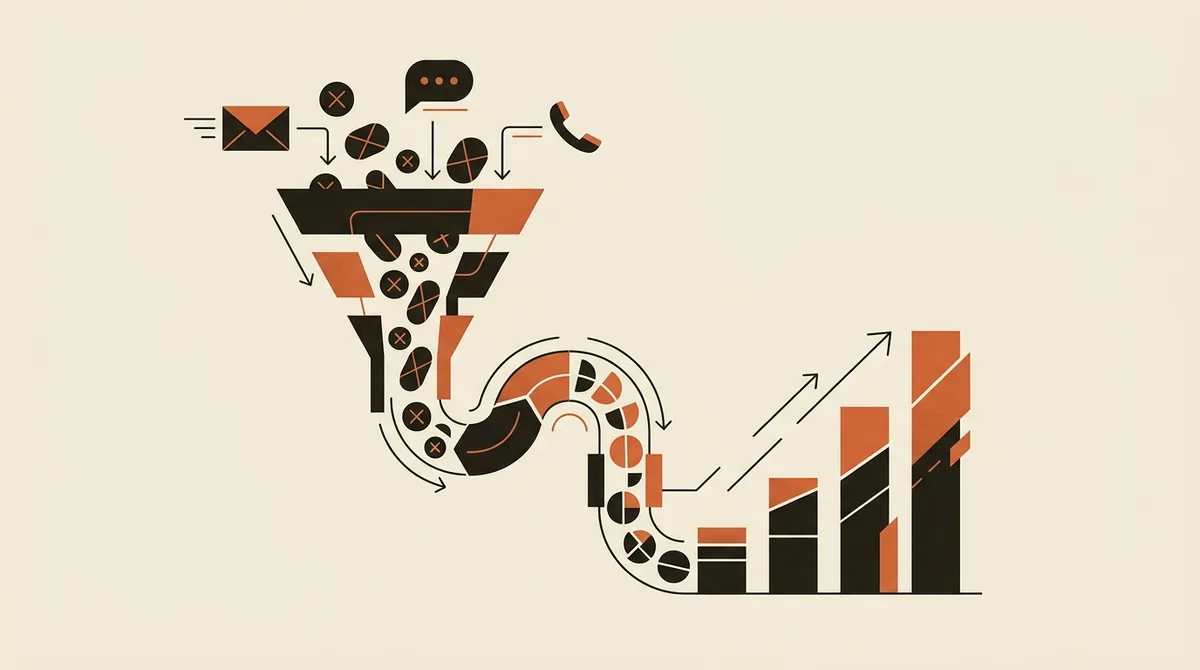
The economics of reactivation: 5-7x cheaper than acquisition
This is where the real shift in perspective happens. Stop seeing reactivation as "a promotion" and start seeing it as a financial lever that lowers your average customer acquisition cost.
Reactivating a dormant customer costs, on average, 5 to 7 times less than acquiring a new one. The reason is simple: the work of educating, building trust and brand recognition has already been done (and paid for) the first time around. You're not starting from zero — you're restarting a relationship that already exists.
Compare the two worlds side by side.
| Acquiring a new customer | Reactivating a dormant one | |
|---|---|---|
| Relative cost | Baseline (100%) | 15-20% of acquisition cost |
| Trust to build | From scratch | Already exists |
| Odds of a sale | 5-20% | 60-70% |
| Dependence on ad budget | High | None or minimal |
If you think in terms of unit economics like CAC and LTV, reactivation is the cleanest lever you have for improving the numbers: it raises the lifetime value of customers you already own, without inflating your acquisition cost. For a deeper breakdown of the economics, there's a dedicated piece on reactivation cost versus acquisition cost, and if you want a straight number on what you're spending, start with how much it costs to reactivate a customer.
From a stalled list to a revenue machine: the 4-step method
Monetizing your database isn't a stroke of luck. It's a repeatable process. Here are the four phases.
1. Map and segment (RFM)
Before you write a single email, you need to know who's on your list. The standard method is RFM analysis: you group contacts by Recency (how long since they last bought), Frequency (how often they bought) and Monetary value (how much they spent). This separates the "About to Sleep" and "Hibernating" segments (contacts falling asleep or already dormant) from active customers. The goal is to catch them before they become unrecoverable. If the term is new to you, the article on what RFM analysis is walks through it step by step.
2. Clean and protect your domain
This is the step 90% of people trying this skip, and it's exactly what separates a result from a disaster. Before reactivating at volume, you need to check the technical health of your sending: authentication records in order, spam rate under 0.3%, one-click unsubscribe. In 2026, providers like Gmail and Yahoo penalize anyone who doesn't meet these thresholds heavily. If you're not sure where to start, read what SPF, DKIM and DMARC are and why emails end up in spam. Reactivating an old database without cleaning it first is the fastest way to burn your domain.
3. Orchestrate the channels (not one at a time)
The real leap in quality is to stop thinking channel by channel. A modern reactivation funnel combines win-back emails, SMS (open rates above 98%), WhatsApp Business for direct conversations, and, on larger databases, an AI voice agent for outbound calls. Each channel catches whoever didn't respond to the previous one. This is where AI automation flips the cost structure: a call handled by an AI voice agent for outbound reactivation costs around €0.40, against €7-12 for a human agent, with positive response rates of 15-35% even on cold lists.
4. Follow the rules (GDPR and the time window)
Reactivating a contact doesn't mean you can email anyone forever. The legal basis matters: if the processing rests on legitimate interest or on commercial consent, it needs to be handled carefully. As a practical reference, the 24-month window from last contact (also referenced in the EDPB 1/2024 guidelines on legitimate interest) is a useful line for figuring out who you can safely recontact. Beyond that window, more caution is needed. For a practical, not just theoretical, framework, see how to reactivate old customers while respecting GDPR. This section is informational only: for specific cases, consult the Italian Data Protection Authority or a lawyer.
Want to know how much dormant revenue is really sitting in your database? Request a free analysis: we'll calculate the potential together and show you how to unlock it.
A complete numerical example
Let's put the pieces together. Take the same company as before (4,000 dormant contacts, €600 average value) and compare the P&L of reactivation against acquisition, with the same target: bringing 400 new active customers.
| Scenario | Via paid acquisition | Via database reactivation |
|---|---|---|
| Customers to activate | 400 | 400 |
| Average cost per customer | €150 (typical services CAC) | ~€25 (automated channels) |
| Total investment | €60,000 | €10,000 |
| Revenue generated | €240,000 | €240,000 |
| Margin over activation cost | €180,000 | €230,000 |
Same revenue, but €50,000 saved in activation cost and zero dependence on an ad budget. And the numbers from SMS campaigns on dormant contacts (with documented ROI exceeding 1,000%) make the right-hand scenario even more conservative than it looks.
Where to actually start
You don't need to rebuild your entire stack. You need a sequence of operations.
- Export contacts from every source (CRM, management software, e-commerce, spreadsheets) and unify them.
- Apply RFM segmentation to isolate recoverable dormant contacts.
- Check deliverability and clean the list before any volume send.
- Build a multichannel win-back sequence, not a single broadcast. You'll find ready-made examples in the email win-back sequence.
- Measure by segment and reinvest in the groups that respond best.
If you want the full picture of the method, from theory to execution, the starting point is the complete guide to reactivating dormant customers in your database. From there you can drill into the vertical that applies to you (e-commerce, B2B, gyms, professional practices) and the channel you prefer.
Your database isn't a sunk cost. It's the most profitable warehouse you own. The question isn't "is it worth it?" The question is: how much dormant revenue did you leave sitting still last year?
Frequently asked questions
What does it mean to monetize a contact database?
It means turning your list of existing customers and contacts into new revenue by winning back people who stopped buying through targeted campaigns. It's the cheapest lever you have, because you've already paid for those contacts — there's no acquisition cost to pay again.
How do you calculate dormant revenue?
With a simple formula: number of dormant contacts multiplied by a realistic reactivation rate (conservative: 10%) multiplied by average customer value. Example: 4,000 dormant contacts at 10% with a €600 average value equal €240,000 in potential revenue unlockable at zero advertising cost.
How much does it cost to reactivate a customer compared to acquiring a new one?
On average, 5 to 7 times less. Trust and brand awareness were already built the first time around, so you're not starting from zero. The odds of selling to an existing customer are 60-70%, versus 5-20% for a cold contact.
Can I recontact old customers without violating GDPR?
It depends on the legal basis and the time elapsed. As a practical reference, the 24-month window from last contact (referenced in the EDPB 1/2024 guidelines) is a useful line to draw. Legitimate interest, consent and unsubscribe options need to be handled correctly. For specific cases, consult the Italian Data Protection Authority or a lawyer.
Why isn't it enough to send one email to my entire contact list?
Because a mass broadcast burns your domain reputation and converts poorly. Automated, segmented sequences generate up to 320% more revenue than a single identical send to everyone. The difference isn't the message, it's the structure: segmentation, clean deliverability and multichannel execution.
Which channels work best for reactivating a database?
The best results come from combining multiple channels into a single funnel: win-back emails, SMS (open rates above 98%), WhatsApp Business for direct conversations, and AI voice agents for outbound calls (around €0.40 per call). Each channel catches whoever didn't respond to the previous one.
Every month your database sits idle is revenue you're leaving on the table. Talk to us: we'll build your multichannel reactivation system and put it to work.