Do Lookalike Audiences Still Work in 2026? What's Changed
8 min read · AstraLoop Studio
Direct question, direct answer: yes, lookalike audiences still work in 2026, but not the way you were taught three years ago. The old playbook (build a 1% lookalike from your customers, load it into an ad set, let it run, and watch it deliver your lowest cost per acquisition) is in structural decline. Not because Meta broke something, but because the algorithm deciding who sees your ads got so much better that your targeting suggestion matters far less than the signal you feed it.
In this article you'll get the honest verdict, without the doom-and-gloom tone of people who claim lookalikes are dead, and without the nostalgia of people still running them like it's 2021. We'll explain what actually changed with Advantage+, how to use lookalikes today (as an input, not a fence), and why the thing worth investing your time in isn't the audience, but the quality of the data you feed the system.
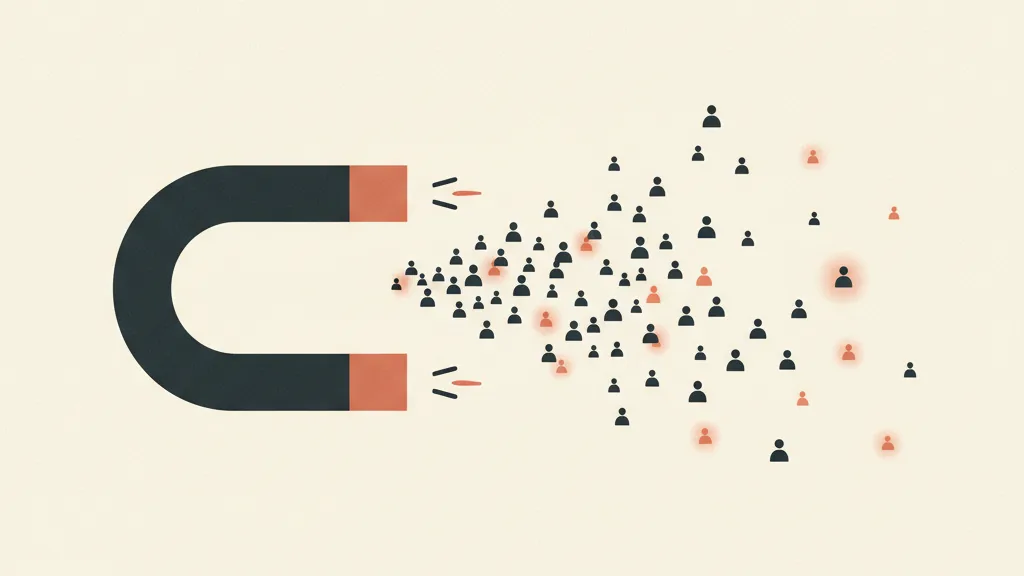
Why classic lookalikes lost their weight
Lookalikes start from a simple principle: you give Meta a seed audience (people who bought, people who signed up, people who watched a video), and the platform finds behaviorally similar users. For years this was the best way to break out of remarketing and find new people likely to convert.
Then three things changed the landscape.
- Post-privacy signal loss. With iOS 14.5, the decline of pixel tracking, and the end of third-party cookies, the seed audience you upload is often smaller and noisier than before. If the source list is noisy, the lookalike built from it is even noisier.
- The algorithm got better than your targeting. With today's machine learning, manually narrowing your audience often hurts results instead of helping them. Meta finds conversions in pools you'd never have selected by hand.
- Advantage+ changed the rules. On many accounts, broad campaigns with automatic targeting beat tight lookalikes. The audience you define went from lead role to supporting cast.
That said, losing weight doesn't mean becoming useless. It means the role changed. Lookalikes used to be the wall the algorithm had to stay inside. Today they're a suggestion you hand it, one it can follow or ignore depending on what it sees.
What changed with Advantage+ (and how to work with it)
Here's the crux of it: Advantage+ Audience doesn't use your audience as a boundary — it uses it as a suggestion. When you set interests, behaviors, or a lookalike, Meta treats them as a starting point. If it finds conversions outside that perimeter, it goes there anyway. In broad-campaign logic, manual targeting is no longer the steering wheel — it's more like a GPS you tell your preferred destination to, but that picks its own route.
The practical consequence is clear. Uploading a closed 1% lookalike and expecting the algorithm to stay inside that boundary is a 2021 expectation. In 2026, a lookalike makes sense as a directional signal inside a campaign that stays broad. If you want the full mechanics, we've dedicated a separate guide to how Meta's Advantage+ works and another to targeting in the AI era, where we explain why control over the audience has shifted from your hands to the system's.
The operating rule we give our clients is a single one: don't fight the algorithm, feed it. Your job is no longer to design the perfect audience, but to give the system the cleanest possible conversion signals and the right creative to speak to whoever it finds.
The honest verdict: when a lookalike still makes sense
There are situations where a lookalike remains a useful tool, and it isn't nostalgia.
- Small or new accounts, with little conversion data. When the algorithm has little to learn from, giving it a lookalike from a real customer list acts as an initial accelerator. It's a crutch for the learning phase, not a permanent choice.
- Very specific niches. If you sell a vertical, niche product, pure broad targeting can waste budget on irrelevant audiences. A lookalike from real customers gives a sharper direction.
- As a suggestion inside Advantage+. Setting it as a starting audience (not a boundary) helps Meta start from the right point, then let it expand.
And when does it no longer make sense? If you have a mature account with hundreds of conversions a month and you're still building ten ad sets with lookalikes at different percentages (1%, 2-3%, 5-10%), you're micro-managing something the algorithm handles better than you. In those cases broad with Advantage+ wins almost every time, and all you're doing is fragmenting the budget and slowing down learning.
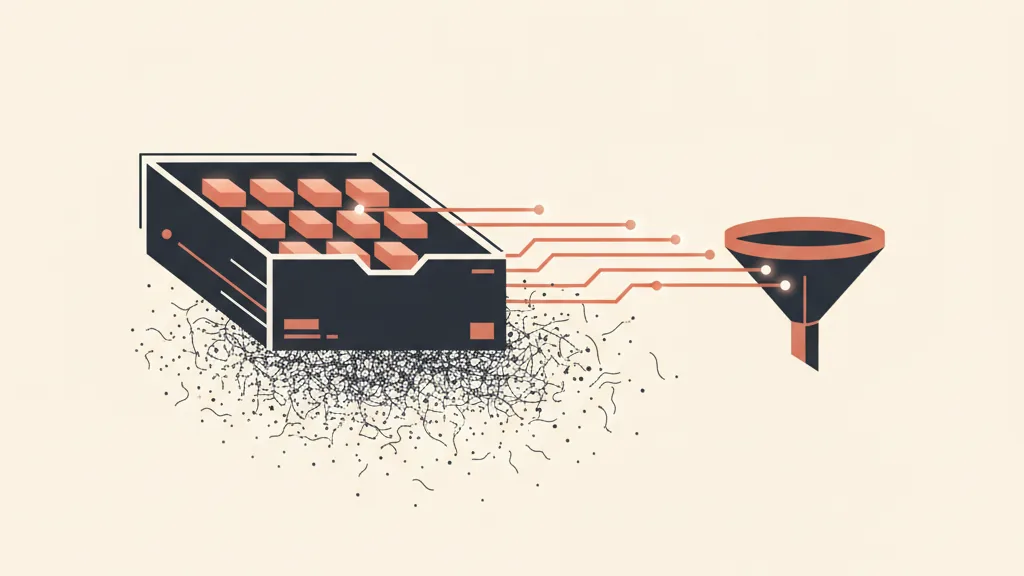
Lookalike vs. customer list: the real signal hierarchy
Here's the point few people state clearly: a clean customer list from your CRM beats any lookalike and any interest. And it beats them twice over.
First, as a remarketing and exclusion audience. Uploading real customers via a Custom Audience lets you exclude them from acquisition campaigns (so you're not paying to reach people who already bought) and build targeted upsell campaigns. Second, as a lookalike seed: the quality of a lookalike depends 100% on the quality of the source list. A list of 5,000 real customers, with purchase value and clean data, generates a far better audience than a list of 50,000 cold, unqualified leads.
The signal ranking, strongest to weakest, in 2026 looks roughly like this.
| Signal | Quality | Recommended use in 2026 |
|---|---|---|
| Customer list from CRM (real customers + value) | Highest | Custom Audience for exclusions + lookalike seed + upsell |
| Conversions via CAPI (server-side) | High | Primary signal for optimization |
| Lookalike from clean list | Medium-high | Suggestion inside Advantage+ |
| Lookalike from noisy pixel data | Medium-low | Only during account start-up phase |
| Generic manual interests | Low | Avoid as primary targeting |
Look at the second row. Today's real optimization engine isn't the audience, it's the conversion signal you send back to Meta. If tracking loses events, no lookalike will save you. That's why the game is won on Conversions API and, further upstream, on offline conversions uploaded from your CRM. It's how you tell Meta that this lead became a €2,000 customer and this one didn't — information the pixel alone never had.
This is why we push so hard on first-party data. In a post-cookie world, your CRM is no longer just a contact archive: it's the most valuable advertising signal source you own. A tidy, segmented database connected to Meta is worth more than any targeting hack.
Want to know if your campaigns are still optimizing on the right signal, and whether your CRM is properly connected to Meta? Request an analysis of your account.
How to set up audiences today: a practical workflow
Translating all this into action, here's the setup we recommend for an account that wants to scale in 2026.
- Clean and upload your customer list. Export real customers from your CRM with normalized email and phone and, if possible, purchase value. Upload it as a Custom Audience.
- Set up CAPI and offline conversions. Before touching audiences, make sure the signals arriving are clean. A good Event Match Quality score is worth more than ten lookalikes.
- Start broad with Advantage+, using the lookalike from your clean list as an audience suggestion, not a rigid boundary.
- Exclude existing customers from acquisition campaigns with the Custom Audience, so budget only goes toward new people.
- Move your energy to creative. In the Advantage+ era, the lever you actually control isn't who, it's what: the message and the format. That's where campaigns are won or lost.
If you notice cost per lead climbing despite all this, the problem is often not the audience but downstream lead quality: read how to lower CPL on Facebook Ads and check whether you're optimizing for the right event. A common mistake is optimizing on raw leads instead of value-based conversions, and there are others we see often among the most common mistakes in Meta Ads.
The mindset shift: from audience to data
The real change in 2026 isn't technical, it's a shift in perspective. For years, the good marketer was the one who could build the smartest audience. Today, the good marketer is the one who feeds the system the cleanest, most complete signals, then lets it work.
Lookalikes remain a piece of the puzzle, but a smaller one. The bigger piece sits upstream: the quality of your customer database, the solidity of your server-side tracking, the ability to tell Meta not just that a contact converted, but for how much and at what margin. Whoever treats their CRM as a source of signal, not just a contact book, is the one paying less per customer in 2026. If you want to frame all of this inside a broader strategy, our strategic guide to Meta Ads 2026 lays out the pieces.
So here's the final verdict: don't throw away lookalikes, but stop treating them as your main lever. Use them as a suggestion, invest in data hygiene, and in the connection between your CRM and the platform. That's where a hard-to-copy advantage gets built today.
Frequently asked questions
Are lookalike audiences dead in 2026?
No, but their role has changed. They're no longer the boundary of your targeting, but a suggestion you give Advantage+. They work best on small or newly launched accounts, while on mature accounts automatic broad targeting often beats them.
Is a lookalike or a customer list uploaded from the CRM better?
The customer list from your CRM is stronger. It's used both to exclude existing customers from acquisition campaigns and as a high-quality seed for the lookalike itself. A lookalike is only as good as the list it's built from.
What lookalike percentage should I use today?
Micro-managing percentages (1%, 2-3%, 5-10%) has lost its point on mature accounts. With Advantage+ it's better to start from a lookalike built on a clean list as a suggestion and let the algorithm expand, instead of fragmenting budget across many ad sets.
Why do lookalikes perform worse than a few years ago?
Three reasons: post-privacy signal loss (iOS 14.5, the end of third-party cookies), an algorithm that got better than manual targeting, and the arrival of Advantage+, which treats the audience as a suggestion rather than a fence.
What matters more than targeting on Meta in 2026?
The quality of the conversion signal. Solid tracking via Conversions API and offline conversions uploaded from your CRM matter more than any lookalike: they tell Meta not just who converted, but at what value.
How do I use a lookalike inside an Advantage+ campaign?
Set it as a starting audience (a suggestion), not a rigid boundary. Meta will use it as an initial address and then expand wherever it finds conversions. Your job shifts to clean signals and excluding existing customers.
We connect your CRM to Meta and fix your tracking so every euro goes toward new, valuable audiences: talk to us about it.