AI-UGC: Creating UGC-Style Content with Artificial Intelligence
10 min read · AstraLoop Studio
In 2026 you've seen dozens of ads follow the same template: a person front and center, front-facing bedroom lighting, a friend-to-friend tone of voice, big captions. Until recently, that creative meant booking a session with a creator, writing a brief, going through a round of revisions and waiting a few days. Today, a good chunk of those videos were never filmed by anyone: the avatar, the voice and the scene are all generated by an AI model. This is AI-UGC, and for anyone running acquisition at volume, it has changed the economics of production.
The point isn't "AI replaces creators." The point is more useful, and more uncomfortable: at certain positions in the funnel, AI-UGC holds up brilliantly and lets you test ten angles in an afternoon; in others, it reads as fake from a mile away, and it burns trust exactly where you need it most. Here we look at where that line sits, with concrete examples, and how to make AI-UGC and real UGC coexist instead of picking a side.
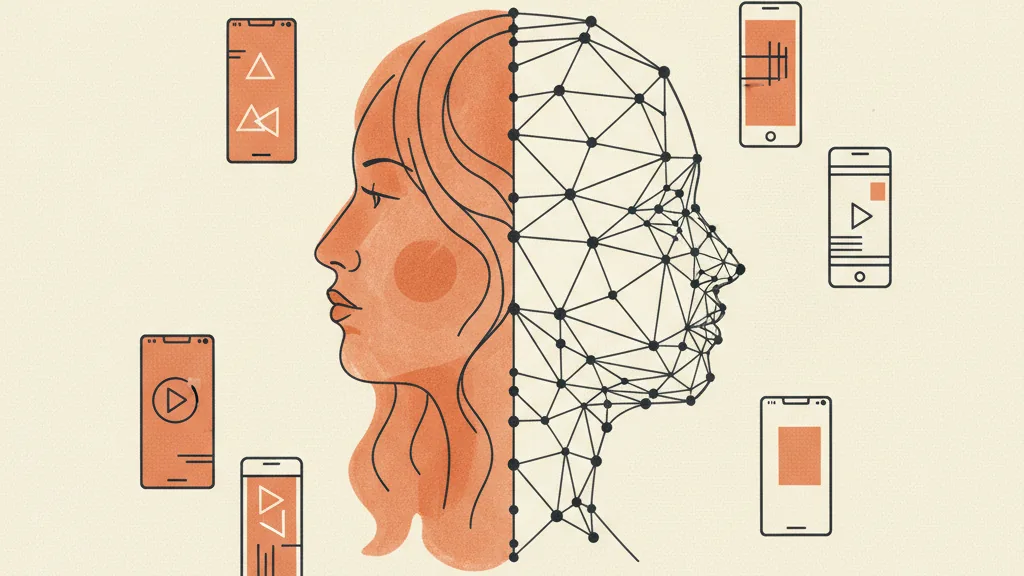
What AI-UGC actually is (and what it isn't)
UGC stands for user-generated content: content that looks like it was made by a real user, not a marketing department. It's not "good-looking video," it's "believable video." The deliberately imperfect aesthetic (a shaky hand, a real home in the background, a conversational tone) is the substance of it: it signals that there's a person behind the camera like the one watching, not a brand trying to sell something. If you're not clear on why this format converts, start with what UGC ads are and why they work before layering AI on top.
AI-UGC tries to reproduce that credibility synthetically. In 2026 the typical stack combines three pieces:
- Avatar: a digital presenter (sometimes licensed from a real actor's likeness, sometimes fully generated) who delivers the script with moving lips and expressions.
- Voice: text-to-speech that, in the space of two years, has gone from robotic to nearly indistinguishable, with control over tone, pacing and emphasis.
- Scene: background, product in hand, contextual b-roll, generated or composited around the avatar.
Be careful not to conflate two different things. One is generating an entire fake-UGC video with a synthetic avatar. The other, far more solid, is using AI to enhance real footage: cutting hooks, generating caption variants, creating cutaway b-roll, testing twenty different openings on the same footage. In the first case, AI is the on-screen protagonist; in the second, it's an invisible multiplier. The second path, almost always, is the one that pays off without the risk.
Why this topic has exploded right now
Three forces arrived at once. The first is quality: the uncanny valley (that "something's off" feeling when watching a synthetic face) has shrunk considerably, especially on 15-30 second vertical formats watched on a small mobile screen. The second is cost: an avatar video costs a fraction of a creator production, and you generate it in minutes. The third, the most strategic one, is the shift in platform paradigm.
With Meta's Andromeda era and increasingly automated targeting systems, the creative has become the new audience: it's no longer you telling the platform who to show the ad to — it's the ad itself that determines who it gets shown to. If you want the full picture of how this changes the work under this logic, we covered it in Meta Andromeda and what it changes for creative. The operational consequence is clear: you need more creatives, more often, more different angles. And this is where AI-UGC becomes appealing, because it's the only way to feed that volume without blowing up the production budget. If you're wondering how much volume you actually need, the practical answer is in how many creatives per month you need on Meta.
When AI-UGC works well
There are contexts where AI-UGC isn't a fallback, it's the right choice. You recognize them when these conditions line up.
1. Testing phase, many angles, budget still to be validated
You need to figure out which promise lands: price, speed, results, a reframed objection. Filming ten real variants costs too much for an exploratory phase. With AI you generate twenty openings, run them through a structured test and let the data tell you which angle scales. Only then, on the winner, do you invest in a quality real production. It's a funnel use case: AI for breadth, human for depth. For how to set up those tests without fooling yourself with weak numbers, see how to test creatives on Meta.
2. Products and categories with low emotional stakes
A home accessory, an office gadget, a generic supplement: here the trust required from the user is modest, and a well-made synthetic presenter doesn't feel out of place. The viewer's brain isn't looking for a human bond, it's evaluating practical usefulness.
3. Localization and multilingual scale
You have a creative that works in Italian and you need it in Spanish, French, German. Reshooting it with native-speaking creators in every market is a whole project. With AI you swap the voice track and captions while keeping the same avatar and edit, and you're live the same day. This is one of the cases where AI-UGC wins hands down.
4. Industrial-scale volume on proven formats
When you already have a structure that converts (hook, problem, demonstration, proof, call-to-action) and you just need to vary the surfaces, AI produces the iterations without you having to assemble a crew every time. The framework stays human, the execution gets automated. If your skeleton isn't solid yet, fix that first: start from the structure of a video ad that converts.
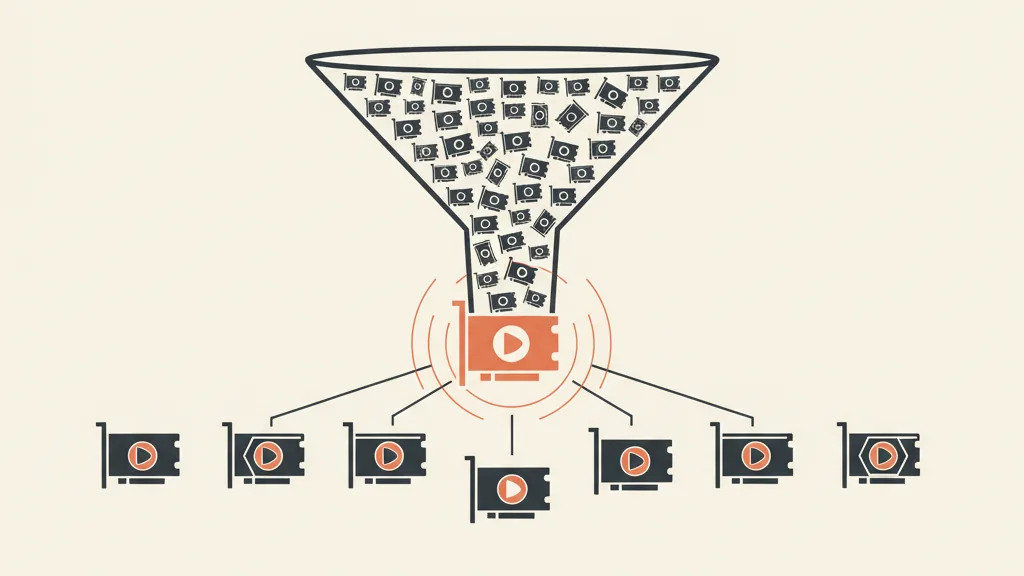
When AI-UGC doesn't hold up (and costs you dearly)
Here's the part nobody tells you while they're selling you the tool. There are areas where the fake shows through, exactly where it matters most.
High-trust or high-ticket products
Health, finance, facial skincare, high-value services — anything that asks the user to trust you with their money or their body. If the person in the video doesn't exist, the testimonial is worth zero the moment the user suspects it. And they suspect it more and more often: the 2026 audience is trained to spot the avatar. A "genuine" review from someone who is clearly not a real person is worse than no review at all.
Physical demonstration of the product
If your product needs to be used on camera (the texture of a cream, the motion of assembling something, a before-and-after on a real body), AI still improvises today and it shows. Synthetic hands handling objects remain the weak link: fingers that merge, a product that "floats," unnatural movement. In a demo, that one detail kills the credibility of the entire creative.
When the person IS the brand
Coaches, professionals, founders who sell with their own face and voice. Here UGC isn't a format, it's identity. Replacing yourself with an avatar doesn't save you money, it loses you the one lever you had.
Reputational and regulatory risk
There's also a transparency issue. Passing off a synthetic avatar as a real person giving a testimonial is slippery ground: platforms are tightening policies on generated content, and the AI Act (EU Regulation 2024/1689) introduces transparency obligations for synthetic content and deepfakes. This section is informational, not legal advice, but the direction is clear: disclosing when content is AI-generated is becoming the norm, not the exception. Design as if you had to say it out loud without the creative falling apart.
AI-UGC + real UGC: the model that actually works
The right question isn't "AI or creator?" It's "how do I run both through the same engine?" The model we see performing best is hybrid, in three layers.
| Layer | Who produces it | What it's for |
|---|---|---|
| Exploration | AI-UGC + generated variants | Testing 15-20 angles and hooks at minimal cost |
| Validation | Real UGC on the winning angle | Producing the credible version that scales |
| Multiplication | AI on the real footage | Cuts, captions, b-roll, multilingual versions, endless iterations of the winner |
Put this way it sounds obvious, but it changes everything: AI doesn't replace the creator, it takes away the low-value work (the twenty variants, the localizations, the cuts) and lets them do the one thing only a human does well — being believable on camera on the angle that matters. The real creator becomes a scarce resource you invest only where it counts. And to find good ones without wasting them, this guide on where to find UGC creators will save you time.
On the AI side, you don't need a synthetic avatar to multiply real footage: tools that generate visual variants, b-roll and compositions do the heavy lifting. We cover this in practical terms in how to produce ad creatives with AI, and for static images, in AI image generation tools for marketing.
Want to figure out where AI-UGC makes sense for your business and where you actually need a real creator? Request an analysis of your creative workflow: we'll show you how to set up the test-winner-multiplication cycle.
How to set it up in practice: a repeatable workflow
Understanding the theory is one thing, having a process that runs every week without reinventing it is another. Here's the operational skeleton we recommend.
- Start from angles, not videos. Write 8-12 different promises (objection, price, speed, result, fear, desire). These, not the aesthetics, are what determine performance.
- Generate the AI-UGC batch. An avatar consistent with your target audience, short scripts for each angle, a strong hook in the first 2 seconds. If you need a library of openings, see examples of hooks for ad creatives.
- Always add captions. 80% watch without sound: without on-screen text, even the best synthetic voice in the world is useless. The why is in captions in video ads.
- Test cleanly. Don't watch the likes, watch the signal that matters for your goal. How to read it in how to tell if a creative is performing.
- Isolate the winner and move it to real UGC. Only now do you spend on the creator, on real footage, on the physical demo.
- Multiply the winner with AI. Versions, cuts, languages, formats (feed, reel, stories). A winner should be squeezed into twenty surfaces before it wears out.
The value isn't in any single tool, it's in getting this cycle to run on autopilot. This is where AI stops being a toy and becomes infrastructure: a workflow that turns one angle into a batch of creatives ready to publish, inside a process that doesn't depend on anyone's spare time. The real step-change in scale comes when you connect it to the rest of your business process automation with AI machine, not when you buy yet another avatar generator.
Mistakes to avoid
- Thinking AI-UGC is free. The video costs little, but the strategy (angles, hooks, testing, reading the data) costs exactly the same as before. Skip that part and you'll produce a hundred useless creatives very quickly.
- Using an avatar where you need a real face. High-ticket, health, physical demos: here the fake costs you the conversion.
- A single avatar for everything. Repetition tires out both the algorithm and the audience. Vary faces, tones, contexts.
- Ignoring transparency. Platform policies and EU regulation are both moving toward mandatory disclosure. Design honest creatives.
- Confusing volume with a system. Producing a lot isn't the same as having a process. Without a test-winner-multiplication cycle, volume is just noise.
If you want the full picture of how to build a creative production machine that leverages AI without losing quality, our complete guide to ad creative ties together format, testing and production. AI-UGC is a powerful piece of that puzzle, not the whole puzzle.
In summary
AI-UGC in 2026 is a real, useful tool, not hype. It wins in exploration, at scale, in multilingual rollout, on low-emotional-stakes products, and in multiplying real footage. It loses where you need high trust, physical demonstration, or the face of a real person. The right way to use it isn't choosing between AI and creators: it's making them work on the same engine, with AI widening and speeding things up and the human closing on the angle that matters. Whoever sets up this cycle, and automates it, produces more, better creatives while spending less. Whoever just buys an avatar generator produces nothing but noise.
Frequently asked questions
Does AI-UGC work better than real UGC?
It depends on where you are in the funnel. AI-UGC wins during testing, for scale and multilingual rollout, and on low-emotional-stakes products. Real UGC remains unbeatable where you need high trust (health, high-ticket), physical demonstration of the product, or when the person is the brand. The best model combines both.
Are AI avatars noticeable in ads?
In 2026, on short vertical formats watched on mobile, the quality is high and often goes unnoticed. The weak points remain hands handling objects, physical demos, and prolonged close-ups on the face. Audiences, however, are increasingly trained to spot the avatar.
Is it legal to use AI avatars in ads in Italy?
Yes, with care around transparency. The AI Act (EU Regulation 2024/1689) introduces disclosure obligations for synthetic content and deepfakes, and platforms have their own policies on generated content. This is informational, not legal advice: it's worth designing creatives that won't fall apart if you have to disclose the AI use.
How much does it cost to produce AI-UGC compared to a creator?
An AI avatar video costs a fraction of a creator production and is generated in minutes. But the savings only apply to the production side: the strategy (angles, hooks, testing, reading the data) costs the same as before. Skip that part and you'll produce a lot of useless creatives very fast.
Can I use AI without synthetic avatars?
Yes, and it's often the more solid choice. AI can multiply real footage by generating cuts, caption variants, b-roll and multilingual versions from genuine footage. In this case AI is an invisible multiplier and preserves the credibility of real UGC.
Where should I start with AI-UGC?
Start from the angles, not the videos: write 8-12 different promises, generate a batch of openings with AI, test by watching the signal that matters and not the likes, isolate the winner and only then invest in real UGC. Then multiply the winner with AI. The value is in getting this cycle to run automatically.
If you want to turn your creative production into an engine that runs itself, combining AI and real UGC, let's talk: we'll build the process tailored to your acquisition needs.