Customer Acquisition Copywriting: The Complete Guide (2026)
9 min read · AstraLoop Studio
You can have the best product in your category, but if the words you use to describe it don't convince anyone to hand over their contact details or pay, you don't exist for the market. Customer acquisition copywriting is exactly that: writing text that turns cold readers into qualified leads and real customers. It isn't creative writing, and it isn't fine prose. It's word engineering with a measurable goal.
The difference from a school essay is simple: here, every sentence answers a single question, "does this move the reader closer to converting, or further away?" An extra adjective that adds no clarity gets cut. A headline that doesn't promise a concrete benefit gets rewritten. Copy that acquires customers is measured in open rates, clicks, replies, and booked calls, not in compliments.
This guide lines it all up: the frameworks behind copy that sells, how to study your customer before you write, the levers of persuasion, copy specific to email, cold email, ads, and landing pages, and how artificial intelligence is changing copy production in 2026. Think of it as a starting point — every section links out to a deeper dive if you want to go further.
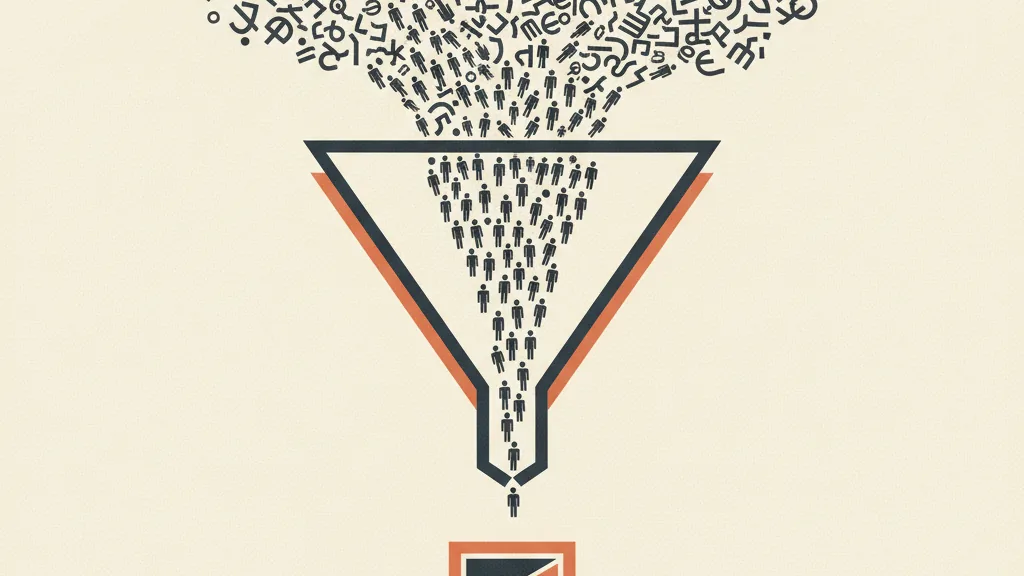
What "customer acquisition copywriting" actually means
There are two broad families of copy. The first is brand copy: it builds perception, recognition, and image over time. The second is acquisition copy (direct response): it asks for an action right now — leave your email, book a call, buy. This guide is about the second, because that's the copy that fills the sales pipeline.
Acquisition copy has three non-negotiable traits. It's built around a single action at a time, because a page that asks for three things gets none of them. It's built around the reader, not the company, because the customer isn't buying your product — they're buying the outcome it gives them. And it's measurable: if you don't know which version converts better, you're writing blind.
In this guide you'll find:
- The AIDA, PAS, and BAB frameworks and when to use each
- The five levels of customer awareness
- How to define a recognizable tone of voice
- The persuasion techniques that actually move the numbers
- Copy for email, cold email, ads, and landing pages
- AI-assisted copywriting and its limits
- How to fit copy into a complete acquisition system
Frameworks: structure before words
The blank page is every writer's real enemy. Frameworks exist to get rid of it: they're proven structures that order ideas in the sequence a reader's mind accepts them. They're not cages, they're shortcuts. Three of them carry most acquisition copy.
| Framework | Structure | When to use it |
|---|---|---|
| AIDA | Attention, Interest, Desire, Action | Landing pages, sales pages, longer-form ads |
| PAS | Problem, Agitation, Solution | Emails, ads, short copy with a clear pain point |
| BAB | Before, After, Bridge | Storytelling, case studies, social posts |
AIDA grabs attention with a strong headline, builds interest with relevant information, builds desire by showing the benefit, and closes with a clear call to action. PAS is more direct: it names the problem, makes it urgent by showing the cost of ignoring it, then presents the solution as the way out. BAB paints the current situation, life after the change, and positions your product as the bridge between the two.
There's no single best framework, only the right one for the context. If you want concrete examples and ready-to-copy templates, we've dedicated a full guide to the AIDA, PAS, and BAB frameworks applied step by step.
Knowing your customer: the five levels of awareness
The exact same product needs to be told differently depending on how much the reader already knows. Eugene Schwartz, in the classic "Breakthrough Advertising," described five levels of awareness. Getting the level wrong is the most expensive mistake in copywriting: talk price to someone who doesn't even know they have a problem, and you lose all of them.
- Unaware: doesn't know they have a problem. You need to start from the symptom, not the solution.
- Problem-aware: feels the pain but doesn't know the solutions exist. Talk about the problem and earn trust.
- Solution-aware: knows solutions exist, just not yours. Explain why your approach works.
- Product-aware: knows you and is comparing options. Here, proof, guarantees, and differentiators matter.
- Most aware: ready to buy. All that's needed is the offer and the final push.
The practical rule: cold traffic, people discovering you now, sits at the early levels; warm traffic, people who already know you, sits at the later ones. Copy that ignores this scale converts poorly no matter how well it's written. We go deeper on this in the five levels of customer awareness.
Tone of voice: the voice that makes you recognizable
Tone of voice is how your brand talks, and it stays consistent whether it's an email, an ad, or a support reply. It's not a stylistic flourish: it's what makes your copy read like it was written by one company, not ten disconnected contributors. A consistent tone lowers friction, builds trust, and makes copy faster to produce, because the rules are already decided.
Defining it means picking a handful of concrete coordinates: formal or informal, technical or plain-spoken, direct or cautious, first-name or last-name basis. And above all, it means writing it down in black and white, with examples of "say it like this" and "never say it like this." We have a hands-on guide on how to define your company's tone of voice without getting lost in theory.
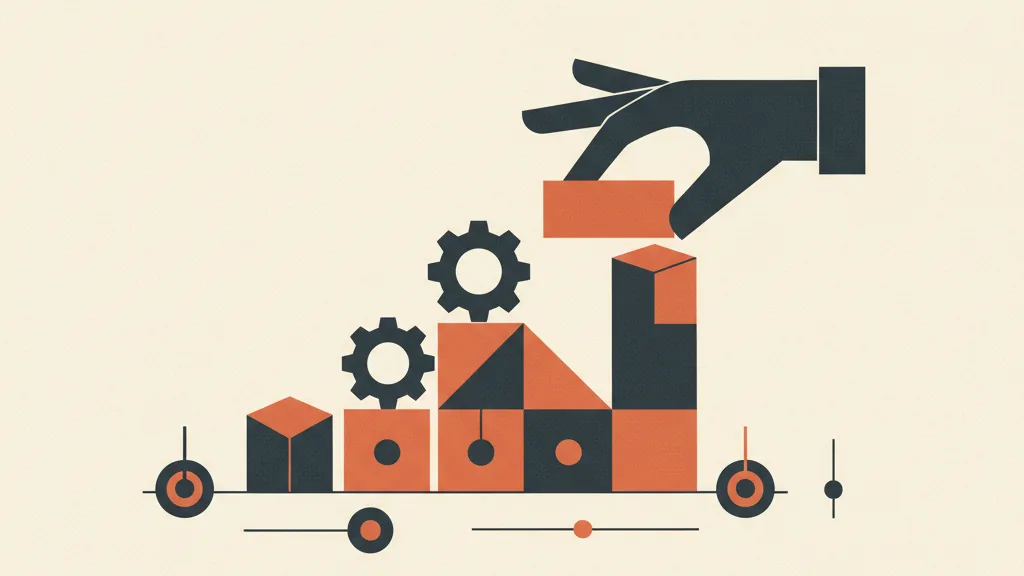
The persuasion techniques that move the numbers
Honest persuasion doesn't manipulate, it clarifies. It makes a value that's already there obvious. Here are the levers that, applied well, make the difference between copy that gets skimmed and copy that converts.
- Specificity: "reduce response times" is fluff; "reply to leads in under 5 minutes instead of 3 hours" is credible. Concrete numbers beat adjectives.
- Social proof: reviews, customer counts, logos, measured results. People do what people like them do.
- Benefit before feature: nobody buys "CRM integration"; they buy "every lead lands in your system without you touching a key."
- Real urgency and scarcity: deadlines and limited spots only work if they're real. Fake scarcity shows, and it burns trust.
- Objection handling: get ahead of the reader's "yes, but..." and answer it before it becomes a no.
Individual words matter too. Action verbs, sensory language, and emotionally loaded words change the temperature of a sentence. You'll find ready-to-use material in our list of power words and in our guide to persuasive copywriting techniques. But all of this rests on one foundation: the offer. Brilliant copy on a weak offer saves nothing. Before you write, work on building an irresistible offer — the words will do the rest.
Want your copy to bring in real customers, not just compliments? Tell us about your business and let's see how to fit it into an acquisition system that runs on its own.
Copy for each acquisition channel
The principles stay the same, the form changes. Every channel has its own rules because the context in which the reader meets you changes.
Email marketing
In email, everything starts with the subject line: if it doesn't get opened, nothing else matters. Then structure matters — one idea per email, one call to action, copy stripped of anything unnecessary. Automated sequences (welcome, nurture, win-back) are where email pays off the most. We have a complete guide to email marketing copywriting.
B2B cold email
Cold email is a world of its own: you're writing to someone who doesn't know you and isn't expecting you. Here, relevance wins — a credible reason you're writing to that specific person — along with brevity and a small ask. Well-built campaigns get double-digit reply rates; generic ones go straight to the trash. See how to build B2B cold emails that get replies.
Ads and social
In ads, you have one second to stop the scroll. The hook, the first words, does most of the work; everything after has to back up the promise. No subtlety: brutal clarity about the benefit. Here's how to write Facebook Ads copy that sells.
Landing pages
The landing page is where the click becomes a lead. One goal, total consistency between the ad and the page, visible social proof, a short form. Every extra element that distracts is a lost contact. Learn how to build high-converting landing pages.
AI-assisted copywriting in 2026
AI has changed how copy gets produced, not the strategy behind it. A language model can generate ten variants of an email subject line in seconds, rewrite a piece of copy in three different tones, and kill the blank page. But it doesn't know your customer, doesn't know what worked yesterday, and, left on its own, produces mediocre copy that reads like a thousand others.
The right way to use it is as an accelerator under human control. You bring the strategy (offer, awareness level, angle of attack), AI brings production speed. Two levers make the difference: well-built ChatGPT prompts and a model trained on your own voice, so the copy doesn't sound generic. We've gathered the method in a guide on how to use AI in copywriting without losing quality.
The golden rule: AI writes the first draft, the human decides. Whoever flips those roles gives themselves away fast — and sooner or later, so does the market.
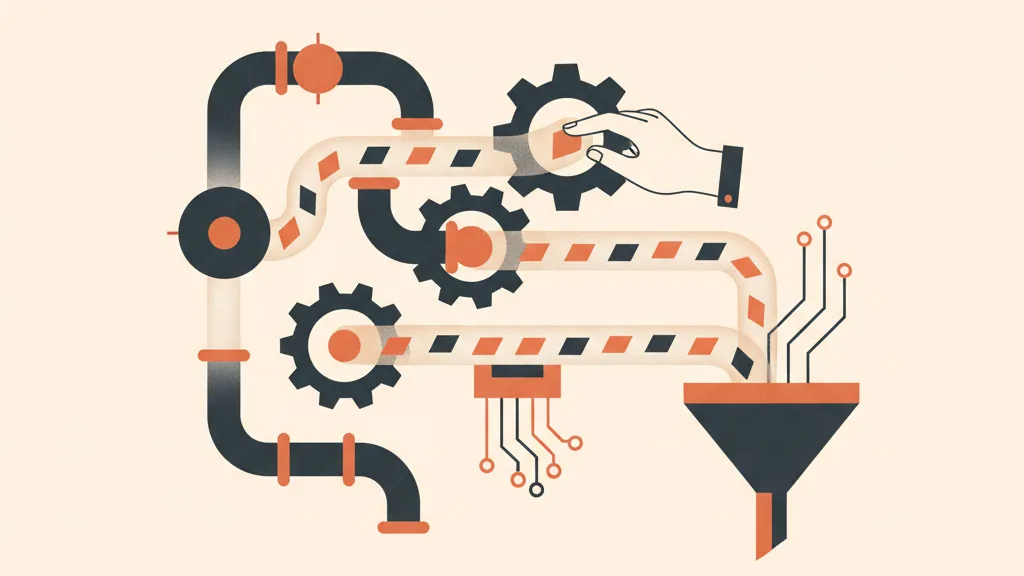
From copy to acquisition system
Here's the line that separates people who write well from people who acquire customers: copy alone isn't enough. Great copy inside a broken process delivers little. Words are one gear in a bigger machine, made of traffic, offer, follow-up, and CRM.
Copy feeds B2B lead generation, but what happens afterward is what closes the deal: follow-up sequences, qualification, booked calls. That's where automating sales follow-up with AI multiplies the value of every contact that comes in. The best copy in the world on a lead that never gets called back is worth zero. That's why we treat copy as part of a customer acquisition system, not as an isolated exercise.
The mistakes that kill conversion
Most copy that doesn't convert makes the same mistakes: it talks about the company instead of the customer, promises too much or too little, stacks three calls to action where one would do, uses jargon the reader doesn't understand, and forgets to bring any proof. And, above all, it goes live without a second read.
Before you publish anything, run it through a copy review checklist: is there one clear goal? Is the benefit in the headline? Does the reader know what to do next? Does every sentence earn its place? We've also put together the main advertising copy mistakes to spot, before they cost you budget.
Where to start
You don't need to become a professional copywriter. You need a method. Start from the customer and their awareness level, pick the framework that fits the channel, write with the benefit in mind, cut everything that doesn't move the reader toward action, test two versions, and keep the one that converts. Then plug that copy into a process that captures and nurtures contacts — otherwise you're just writing well.
Customer acquisition copywriting isn't talent, it's discipline applied to a system. The techniques in this guide are the starting point. The difference comes from putting them to work together, every day, while measuring results.
Frequently asked questions
What is customer acquisition copywriting?
It's action-oriented (direct response) writing that turns cold readers into leads and customers. It's measured by opens, clicks, replies, and conversions, not by how good the text sounds.
What are the most-used copywriting frameworks?
AIDA (Attention, Interest, Desire, Action), PAS (Problem, Agitation, Solution), and BAB (Before, After, Bridge). Which one to use depends on the channel and the reader's awareness level.
Can AI replace a copywriter?
No. AI speeds up production — drafts, variants, rewrites — but strategy, customer knowledge, and final judgment stay human. Left alone, it produces generic copy that reads like a thousand others.
How do you write a cold email that gets a reply?
With a credible, specific reason for writing to that exact person, short copy, one small call to action, and no salesy tone. Relevance beats volume.
How much does copywriting matter compared to the offer?
The offer comes first. Brilliant copy on a weak offer converts poorly; honest copy on a strong offer converts well. Words amplify value, they don't create it out of thin air.
Where do I start if I have no copywriting experience?
Start from the customer and their awareness level, pick a framework, write toward the benefit, cut anything unnecessary, and test two versions. Always plug the copy into a process that captures contacts.
If you want to stop writing one-off copy and build a machine that generates leads every day, request a free analysis — we'll start with your copy and your channels.