The 5 Customer Awareness Levels Applied to Meta Ads
11 min read · AstraLoop Studio
Ever launched a creative that crushes it with one audience and burns budget with another for no obvious reason? In most cases, the creative itself isn't the problem. You're saying the right thing to the wrong person. Or rather, to the right person at the wrong point in their awareness journey.
Eugene Schwartz, the legendary copywriter and author of Breakthrough Advertising (1966), put into words an idea that still holds today, and holds double on Meta: before you write a single line of copy, you need to know how much your prospect already knows about their problem and about your solution. Everything hinges on this. The angle, the hook, the creative, the offer, even the campaign type.
In this article we take Schwartz's 5 awareness levels and translate them into concrete choices for your Meta Ads. No theory for theory's sake: for each level you'll see what message to use, what creative to pair it with, and what mistake to avoid.

What the 5 customer awareness levels are
Schwartz argued that everyone, in relation to a product, sits in one of five mental states. It isn't a "how hot is this lead" scale like the classic funnel. It's a scale of how much information the person already has. These are different things, and confusing them is the fastest way to waste budget.
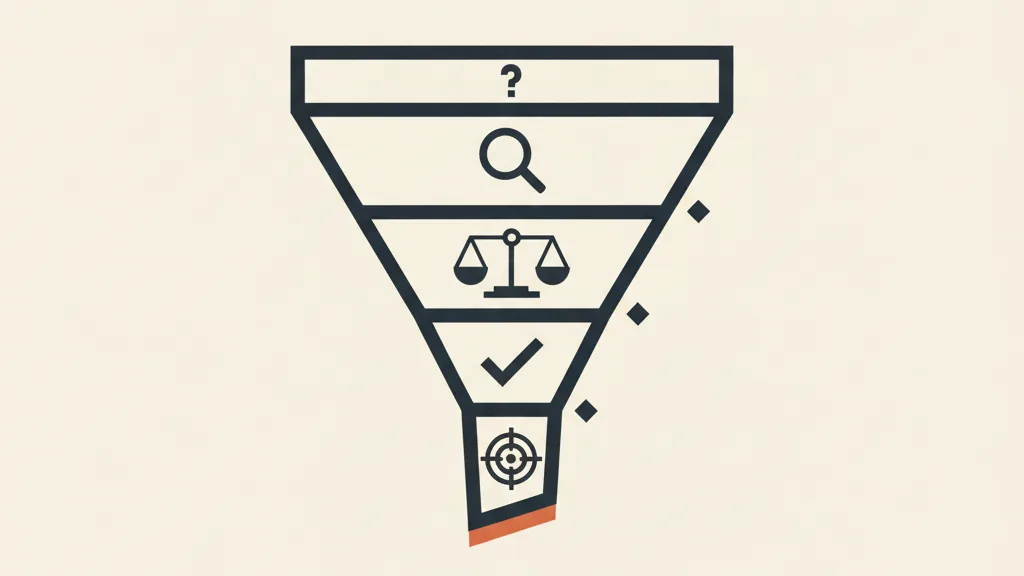
Here are the five levels, from least to most aware:
- Unaware: doesn't even know they have a problem. Isn't searching for anything.
- Problem aware: feels the pain but doesn't know a structured solution exists.
- Solution aware: knows a category of solutions exists, but doesn't know your specific product.
- Product aware: knows your product, but isn't convinced yet or hasn't decided.
- Most aware: knows you, wants you, is just waiting for the right occasion (an offer, urgency, one last doubt to clear up).
The golden rule is simple: the more aware the person is, the less you need to explain and the more directly you can sell. The less aware they are, the more you need to educate, spark curiosity, and build the problem before you even name the solution. Skip this step and you end up pitching discounts to people who don't even know they have a need. Or, at the other extreme, explaining the problem to someone who already has their credit card in hand.
Why this framework matters especially on Meta
On Google you intercept demand: someone searches "anti-pronation running shoes" and you already know where they stand in their journey. On Meta the logic is reversed. The person isn't looking for you, they're scrolling. You're the one interrupting them. This means most of Meta's cold traffic sits in the first two or three awareness levels, not the last ones.
And this is where the most common, and most expensive, mistake is born. Many businesses treat their whole Meta audience as if it were "most aware": direct copy, price, "buy now", "20% off today only". It works on the small slice that already knows you (retargeting, customers, engagement) and burns money on everyone else, which is 80-90% of spend. In the Advantage+ era, with targeting handed over to the algorithm, the audience you reach is less and less controllable upstream: selection now happens downstream, through the message. The creative is the filter. For more context, we wrote an updated strategic guide to Meta Ads.
In practice: in 2026 you no longer set the awareness level only through targeting. You set it by choosing what to say. Which is exactly why mastering these five states has become more important, not less.
Level by level: message, creative, mistake to avoid
1. Unaware
The person doesn't know they have a problem. Talk to them about a solution and it's noise. The only way in is to surface the problem starting from something they already recognize: a symptom, a daily frustration, a fact that surprises them.
- Message: storytelling, curiosity, "did you know that...", educational content. Zero selling. The goal is to trigger a "wait, this is about me".
- Creative: native-feeling video, formats that look like content rather than ads, UGC. At this level, formats that resemble organic posts perform far better than polished ads. It's worth understanding why UGC works so well right at the top of the funnel.
- Mistake to avoid: naming the product in the first three seconds. An unaware viewer scrolls right past it.
Practical note: on Meta, unaware audiences are worked almost entirely in TOFU, with traffic, engagement, or video view objectives used as a signal rather than a vanity metric. If you're unclear on how to structure the stages, our piece on the TOFU MOFU BOFU funnel on Meta walks through it step by step.
2. Problem aware
Now the person feels the pain. They know something's wrong, but haven't yet framed that a precise solution, or a category of products, solves it. This is the level where empathy beats persuasion.
- Message: name the problem better than the customer themselves could. "If you wake up tired even after eight hours, it's not your mattress's fault." The person needs to think "exactly, that's it". Only then introduce the fact that a solution exists.
- Creative: hooks that describe the painful situation, emotional before-and-afters, testimonials that start from the problem. The hook is everything here: if you don't nail the problem in the first few seconds, you've lost them.
- Mistake to avoid: jumping straight to product features. Someone who's problem aware doesn't yet know why those features should matter to them.
3. Solution aware
The person knows solutions to their problem exist. They're evaluating the category, but don't know you yet. The question in their head is just one: "why this solution and not another?", followed by "why you?".
- Message: differentiation. Unique mechanism, proof, demonstration. Why your approach is better or different from other ways of solving the same problem.
- Creative: demos, "how it works" explainers, comparisons (without trashing a specific brand), data and results. Comparative formats work well here, if done right.
- Mistake to avoid: assuming they already know why you're different. If you don't say it, to them you're interchangeable with any competitor.
This is also the level where building the offer starts to matter: not the discount yet, but the value stack that makes the choice obvious.
4. Product aware
They know you. They've seen your ads, maybe visited the site, maybe added something to cart. They haven't bought because they still have a doubt, an objection, or need one last push. This is the realm of retargeting.
- Message: dissolve objections. Guarantee, free returns, reviews, FAQ, social proof, perceived-risk management. "What if it doesn't work?", "what if it's not for me?". Answer before they ask.
- Creative: featured reviews, numbers (customers served, ratings), concrete details, guarantees. Less emotion, more reassurance.
- Mistake to avoid: reusing the exact same message from cold traffic. Product-aware people have already seen it: repeating it burns frequency and annoys them. Retargeting needs fresh angles, as we explain in our Meta remarketing strategies.
5. Most aware
They already want you. They just need a reason to do it now instead of "later". Here you can, and should, be as direct as possible.
- Message: a straight offer, real urgency, a deadline, a bonus, last spot. "Your cart is waiting, 15% off until midnight." Zero education: it would be wasted time.
- Creative: product front and center, price, a strong CTA, urgency badges. Simple, clean, direct.
- Mistake to avoid: retelling the problem or explaining how it works. They already know. Every second of "education" is wasted budget.
The summary table
| Level | What they know | Message | Creative | Where on Meta |
|---|---|---|---|---|
| Unaware | Nothing | Educate, spark curiosity | Native video, UGC | Cold TOFU |
| Problem aware | The problem | Name the pain | Problem-led hooks, testimonials | Cold TOFU/MOFU |
| Solution aware | The category | Differentiate, demonstrate | Demos, comparisons, data | MOFU |
| Product aware | Your product | Dissolve objections | Reviews, guarantees | Retargeting |
| Most aware | Everything | Offer and urgency | Product + price + CTA | Warm retargeting, customers |
Keep this table handy when planning campaigns. Before writing a creative, ask yourself: which level am I speaking to? If the answer isn't clear, the creative will be too.
How to actually apply this to your Meta account
The theory is simple. Putting it into practice comes down to three points that make the difference.
1. Map your creatives, not just your audiences
Take inventory of your active creatives and assign each one an awareness level. You'll almost certainly spot an imbalance: too many "most aware" ads (offer, discount) and very few "problem aware" or "unaware" ones. That's why you're struggling to scale: you've saturated the warm audience and aren't feeding the cold one. If saturation is hitting close to home, it's worth reading about incremental reach and audience saturation.
2. Use the creative as a filter, not just the targeting
With Advantage+ and broad targeting, you're the one "calling" the right level through the hook. A video that opens with "If you also hate losing hours to Excel every Monday..." self-selects problem-aware viewers. An ad that says "20% off today only" self-selects most-aware viewers. The algorithm optimizes from there, but the message decides who stops scrolling. This is the core idea behind targeting in the AI era: it shifts from the ad panel to the creative.
3. Build a staircase, not isolated ads
The real shift is thinking in sequence. Cold traffic educates (unaware and problem aware), MOFU differentiates (solution aware), retargeting closes (product and most aware). Each level hands off the baton to the next. A person shouldn't see the offer on first contact: they should reach it after being walked up the staircase. This is also the glue between ads and the sales system: ads generate awareness, the rest of the machine converts it. If your acquisition is still a collection of disconnected campaigns, our pillar piece on the customer acquisition system explains how to tie it all together.
Want to know if your Meta Ads are speaking to the right awareness level? Request a review of your campaigns: we'll map your creatives and audiences and show you where you're burning budget.
The mistake that burns more budget than any other
Let's recap the central mistake, because it's worth more than all the theory combined: speaking to the wrong level. Specifically, these are the two classic imbalances:
- Selling to the cold: offer and price shown to an unaware or problem-aware audience. Rock-bottom CTR, high CPC, poor conversions. The person hasn't yet grasped why they should care.
- Educating the warm: explaining the problem to someone who's already most aware. Frequency climbs, the person gets bored, and you miss the sale. You waste impressions and budget on people who were ready to buy.
The number one signal that you're targeting the wrong level is a low CTR on cold traffic combined with high time-on-landing-page but zero conversions: you sparked curiosity but asked for too much too soon. Or the opposite: high frequency in retargeting with flat conversions, meaning you're repeating an educational message to people who just wanted a reason to close. To read these signals you need your Meta Ads KPIs that actually matter in order, otherwise you're flying blind.
Awareness and the customer lifecycle
One last point that often gets missed: awareness isn't a fixed state. A customer who has already bought from you is "most aware" of your brand, but goes back to "problem aware" when a new need comes up that they don't yet connect to you. That's why the same person needs to be treated differently depending on the product or the moment.
This has real implications for retargeting and reactivation. A dormant customer isn't most aware: they've forgotten about you, they've slipped back to problem aware. Bombard them with offers as if they're still waiting for you, and it often doesn't work. They need to be re-engaged starting from value. It's the same principle behind reactivating dormant customers: rebuild relevance first, then sell.
Integrating this logic with your CRM lets you know, for every contact, what awareness level they're at relative to each of your offers, and automatically serve them the right message. That's the point where Meta Ads stop being an isolated channel and become part of a system. If this direction interests you, our take on AI-powered lead generation starts from exactly here.
In summary
Schwartz's 5 awareness levels aren't a theoretical copywriter's flourish. They're the most practical lens there is for deciding what to say, to whom, and when in your Meta Ads. Before launching your next campaign, ask yourself three questions:
- What awareness level is this creative speaking to?
- Does that message match the audience I'm actually reaching?
- Do I have a creative for every level, or just for the warm ones?
If the answers are clear, you'll stop burning budget on an audience that isn't ready and start building a machine that walks people from curiosity to purchase, one level at a time.
Frequently asked questions
What are the 5 customer awareness levels?
They're the five mental states Eugene Schwartz defined in Breakthrough Advertising: unaware (doesn't know they have a problem), problem aware (feels the problem), solution aware (knows the category of solutions), product aware (knows your product), and most aware (ready to buy). The more aware the person, the less you need to educate and the more directly you can sell.
Why do awareness levels matter for Meta Ads?
Because on Meta you interrupt people while they're scrolling, you don't intercept a search. Most cold traffic sits at the first awareness levels. Treating it as if it were ready to buy, with offers and discounts, burns budget. The message has to match the audience's real level.
What message should I use for a cold audience on Meta?
For a cold audience, typically unaware or problem aware, the message should educate and surface the problem, not sell. Storytelling, pain-naming hooks, native-feeling content, and UGC formats outperform ads that lead with price and discounts.
How do I know which awareness level my audience is at?
Look at where you're intercepting the person and at your account signals. Cold traffic on Meta is almost always at the first levels. Retargeting and existing customers are product or most aware. A low CTR on cold traffic paired with a hard offer signals you're selling to people who aren't ready yet.
What's the most costly mistake related to customer awareness?
Speaking to the wrong level. The two typical cases are selling to the cold (offer and price shown to people who don't yet know the problem) and educating the warm (explaining the problem to people who were already ready to buy). Both waste budget and sales opportunities.
Does customer awareness change over time?
Yes. It isn't a fixed state. A customer who's most aware of your brand can slip back to problem aware when a new need comes up that they don't yet connect to you. Even a dormant customer should be treated as problem aware, rebuilding relevance before pitching an offer.
If you want to build an acquisition machine that walks people from curiosity to purchase, one level at a time, let's talk: we'll look at your case and tell you where to start.