5 Ad Copy Mistakes That Are Burning Your Ad Budget
7 min read · AstraLoop Studio
When a campaign underperforms, the first instinct is to blame the platform: wrong audience, algorithm, rising cost per click. Almost always, though, the money leaks out much earlier. It leaks out in the ad copy itself, in the two lines a customer reads or skips in half a second.
Copy is the cheapest lever you have: changing it costs nothing, yet it can move your cost per acquisition by 30-50%. That's exactly why copy mistakes are the most expensive of all. Below are the five slip-ups that burn budget most consistently, and for each one the fix to apply before you hit "publish."
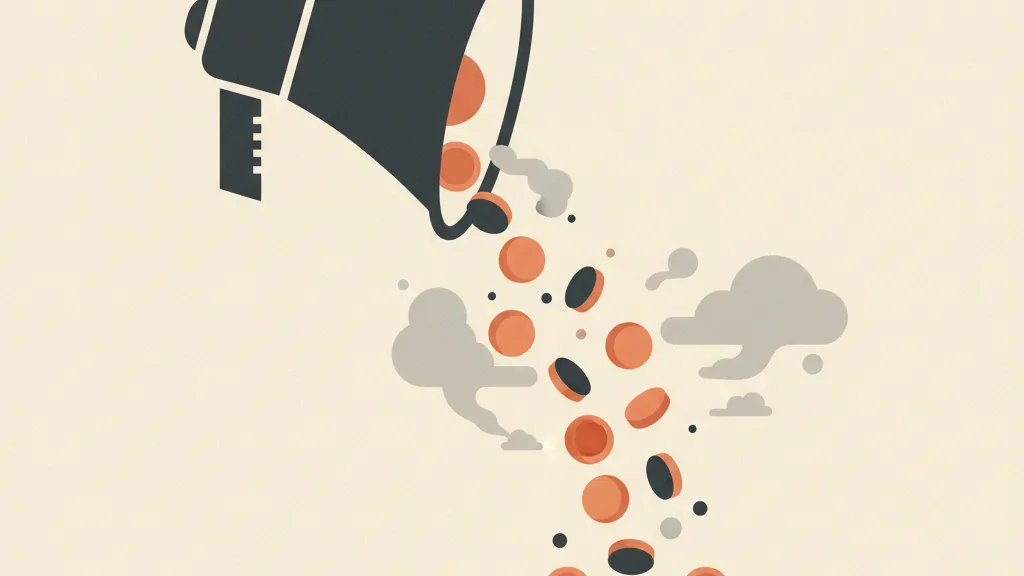
Copy is the line item nobody puts on the budget
You can have flawless targeting and the most polished creative, but if the message doesn't do its job you still pay for every impression and every click. Copy touches every other element: it decides who stops scrolling, who understands the offer, and who acts. Improving it is the zero-cost lever with the highest return, and it's the first chapter of any serious work on copywriting for customer acquisition.
The mistakes below aren't a matter of style. They're holes in the message that let the audience slide through without reacting. The practical rule is simple: fix what you say before you optimize who you say it to. Let's go through them one by one, with the tell that gives each one away and the fix to apply right now.
Mistake 1: writing without knowing who you're talking to
Generic copy talks to everyone and hits no one. "Quality and value for every need" could be the tagline for an insurance company, a shoe e-commerce store, or management software. If the copy works for any product, it isn't selling yours.
The problem isn't just tone. Without a precise reader, you don't know which problem to name, which objection to pre-empt, which language to use. A restaurant owner and an IT manager don't stop on the same words, and an ad that tries to please both ends up speaking to neither.
The warning sign: if you could paste the same ad under any product and it would still hold up, the copy has no reader in mind.
How to fix it: before you write, pick a single reader and understand their level of awareness. Someone who doesn't even know they have the problem needs a different approach than someone already comparing quotes. Thinking through the five levels of customer awareness tells you how much you need to explain before you can ask for the click. Write for that one person, not for the whole audience.
Mistake 2: no clear offer, just the product name
Many ads describe what you sell, but not what the buyer gets today and under what terms. "Management software for SMBs" is a category, not an offer. The offer is the concrete promise: what you get, how fast, with what guarantee, at what price or incentive.
Without an offer, the reader has no reason to act now. They put it off. And in paid traffic, "later" means you paid for the click without bringing home the lead.
The warning sign: your ad explains what you are, but the reader couldn't tell you what's in it for them right now, or why.
How to fix it: make the value and the reason to move now explicit. You don't need to discount anything: a free trial, a no-commitment audit, 48-hour delivery, or a time-limited bonus are enough to give the ask a shape. If you don't know where to start, the guide on how to build an irresistible offer covers the ingredients that turn a description into a proposal that's hard to refuse.
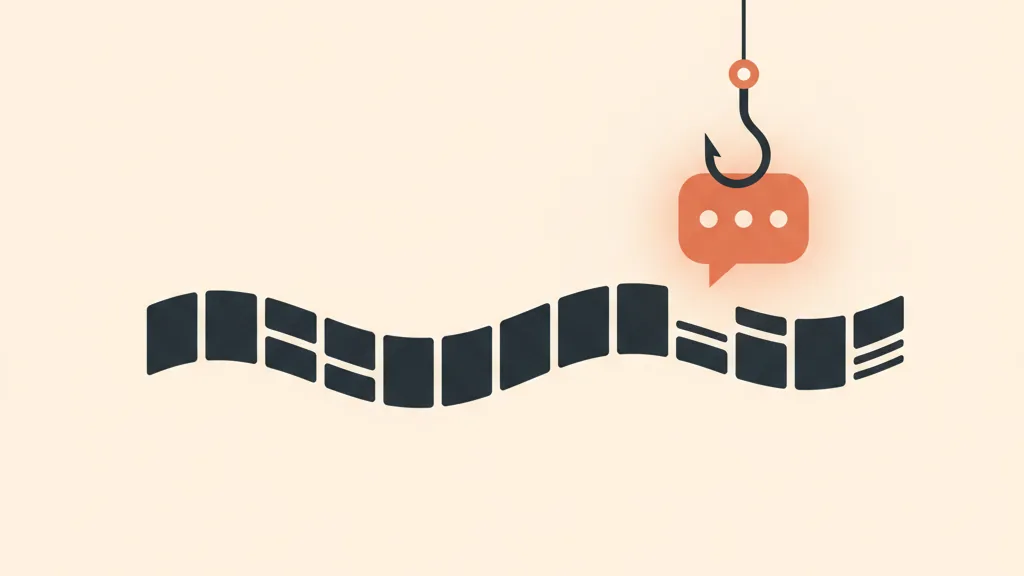
Mistake 3: a weak hook that nobody reads past
The first line, or the first second of a video, decides whether the rest gets read at all. If you open with "We've been an industry leader for 20 years" you've already lost: you're talking about yourself while the reader is thinking "and what does that change for me?"
Compare two openings for the same service. Weak: "Our agency offers full-service marketing." Strong: "Paying for Google Ads but the leads never call back?" The second one names a precise pain point and forces the reader to stop. A weak hook never shows up as a line item in your reports, but that's exactly where the budget gets eaten: you pay for the impression and get no attention in return.
The warning sign: you could delete the first line and nothing would change.
How to fix it: open in the customer's world, not yours. A specific question, a counterintuitive number, a recognizable tension. The hook has to promise something the reader wants badly enough to stop scrolling for. You'll find proven templates and real examples in these ad creative hook examples.
Mistake 4: listing features instead of benefits
This is the most common mistake, and the sneakiest, because it looks like useful information. But the customer doesn't care what the product does; they care what changes for them. Features describe the object, benefits describe their life after buying it.
| Feature (what you say) | Benefit (what the customer hears) |
|---|---|
| CRM with built-in automations | Stop losing leads: follow-up happens on its own |
| 5000 mAh battery | Make it to evening without hunting for an outlet |
| 24/7 active support | If something breaks at night, someone answers |
The warning sign: the ad is full of numbers and specs, but never names a result the customer actually wants.
How to fix it: for every feature, ask yourself "so what?" until you land on the concrete result in the customer's life. Features still matter, but as proof: state what changes first, then use the spec to show it's true. The method for making that translation sits at the core of these persuasive copywriting techniques.
Not sure your ads avoid these five mistakes? Send us the copy from your live campaigns and we'll tell you exactly where the budget is leaking.
Mistake 5: no call to action, or a confusing one
The ad explains, persuades, and then leaves the reader with no instructions. Or it gives too many: "Learn more, contact us, visit the site, follow us." When you ask for three things at once, the brain picks the easiest one, which is none of them.
A vague CTA costs double: you paid to get the person this far, then lose them on the very last step, the one thing you were actually supposed to control.
The warning sign: by the end of the ad, the reader doesn't know what the next step is, or sees too many options.
How to fix it: one single action, explicit and matched to the customer's stage. "Get a quote," "Book a call," "Download the guide." The verb tells them what happens after the click and lowers friction. If the audience is still cold, don't ask for the purchase: ask for the micro-yes that moves them closer, like downloading a resource or answering a question.
What it actually costs: mistakes multiply, they don't add up
The trouble is that these five slip-ups don't act alone, they multiply down the funnel. Here's an example with simple numbers. Say you have a €2,000 budget and a €1 cost per click: 2,000 clicks. With a weak hook you lose half the audience before they even read the offer, leaving 1,000 readers. A vague offer converts on the landing page at half the rate of a clear one: instead of 4% you're stuck at 2%. From 40 potential leads you drop to 10.
Same budget, same product, same audience: your cost per lead goes from €50 to €200, purely because of the copy. You didn't spend an extra euro, you simply burned four out of every five. That multiplication effect is exactly why copy is the first thing worth fixing, before you raise the budget or rework the targeting.
The pre-publish checklist to catch every mistake
Before sending a campaign for approval, re-read the copy against these five questions. If even one answer is "no," the budget is at risk.
- Who am I talking to? I can picture a single reader and their level of awareness.
- What am I offering? There's a concrete promise and a reason to act now.
- Do I open strong? The first line is about the customer, not about me.
- Am I selling the result? Every feature is translated into a benefit.
- What should they do? One single CTA, clear and matched to the stage.
To make the copy more solid, build it on a proven structure: the AIDA, PAS, and BAB frameworks give you the right order for presenting the problem, the tension, and the solution. And before you publish, run everything through a copy review checklist, so nothing is left to chance.
From the ads to the system that captures the leads
Fixing these five mistakes lowers your cost per lead without touching the budget: same spend, more leads. But a good ad is only the beginning. The attention you generate has to be captured, qualified, and followed up on, or you're back to wasting money, just one step further down the line. This is where copy connects to the rest of the B2B lead generation machine: the message brings people in, the system turns them into customers. Whoever takes care of both sides stops chasing clicks and starts building a predictable flow.
Frequently asked questions
Which ad copy mistake costs the most money?
Writing without a precise reader in mind. Generic messaging fails to name the right problem, has no hook that stops the scroll, and never lands on a convincing CTA — almost every other mistake starts here.
How do I know if my ad has a clear offer?
Have someone outside your team read the copy and ask them what they should do, what they'd get, and why right now. If they hesitate on any of those three answers, the offer isn't clear.
Should I cut technical features from my copy entirely?
No. Features work as proof, but they belong after the benefit. State what changes for the customer first, then use the spec to show the promise is true.
How many copy versions should I test per campaign?
Start with 2-3 variants that change one lever at a time (hook, offer, or CTA), not everything at once. That way you know which element is moving the results instead of crediting it to chance.
How do you write an effective hook in just a few words?
Open in the customer's world with a specific question, a counterintuitive number, or a recognizable tension. The hook has to promise something the reader wants badly enough to stop scrolling.
Can AI write copy without making these mistakes?
It can speed up the drafting a lot, but only if you give it the right context: audience, offer, and goal. Without that information it produces smooth, generic copy — mistake number one, at industrial scale. Human review is still essential.
Want to turn your ads into a steady stream of qualified leads? Tell us what you're promoting and we'll build the message and the system that captures it, together.