Power Words That Convert: A Working List for B2B Copy
7 min read · AstraLoop Studio
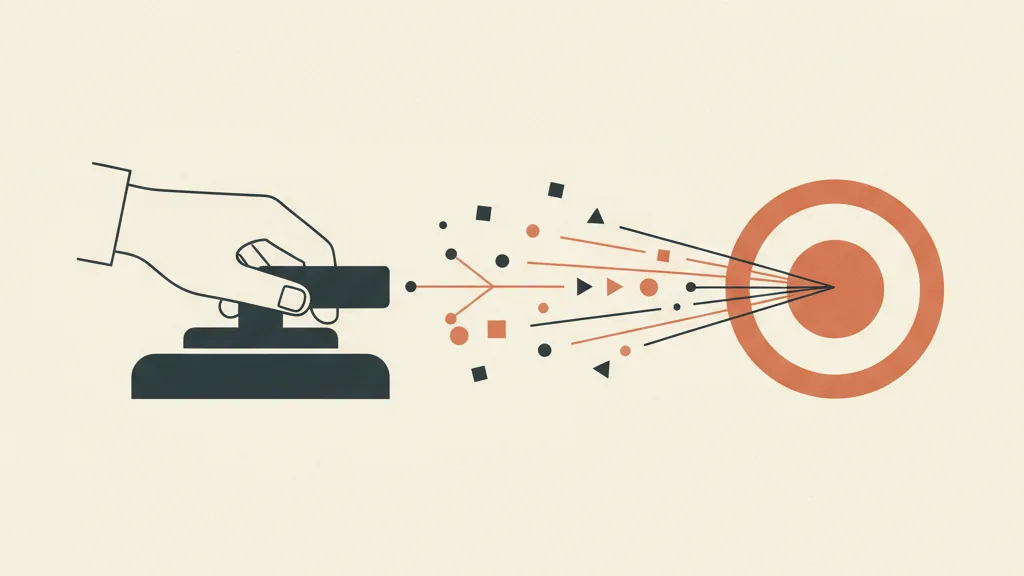
A power word isn't magic. It doesn't create a desire that wasn't there and it won't convince someone with no problem to solve. It does something simpler and more useful: it takes an emotion or a decision the reader already has inside them and gives it a nudge at the right moment. "Free," "guaranteed," "last spots" work because they hook into something already happening in the reader's head.
The problem is that most lists you find online are generic and recycled, and plenty of the entries sound hollow the moment you drop them into a real sentence. "Unlock your potential" or "supercharge your results" have the rhythm of a badly dubbed subtitle, not something you'd actually say to a client. Here you'll find a list of power words organized by psychological trigger, with real B2B email and ad usage examples. And an important closing section on when these words stop converting and start smelling like spam.
What a power word actually does
A power word is a term that triggers a fast emotional or cognitive response. It doesn't work alone: it works inside a sentence that already promises something relevant. If the underlying message is weak, no adjective saves it; if it's strong, the right word makes it sharper and more urgent. These are a subset of emotional words: the ones that, beyond evoking a feeling, push the reader to act.
Most of the work is done by the offer and the positioning. Power words are the finishing touch, and they only make sense once you've nailed the persuasive copywriting techniques and the message structure with a framework like AIDA or PAS. Sprinkling power words over copy with no backbone is like bolting a turbo onto a car with no wheels.
Why translated lists don't work
Some power words carry over perfectly across languages: "free" stays free, "now" stays now, "guaranteed" stays guaranteed. Others, forced word-for-word from another language, come out sounding like plastic: "unlock," "supercharge," "revolutionize," "game changer." In B2B, an inflated tone burns credibility instead of building it. The practical rule is simple: if you wouldn't say it out loud to a client sitting across from you, don't write it in an email. The list below starts from that filter.
The list, grouped by psychological trigger
Eight triggers, the words that activate them, and a concrete B2B example for each.
Urgency and scarcity
Now, today, last, remaining, expires, by [date], closes, only (only 3 spots). They push into action people who would otherwise put it off, and delay is the real enemy of every B2B deal. They only work under one condition: the scarcity has to be real.
Email: "We have two onboarding slots left for October." Ad: "Free funnel audit: only 5 companies a month."
Trust and risk reduction
Guaranteed, no commitment, no strings attached, concrete, tested, transparent, no hidden fees, verified. In B2B, the brake on a purchase is often not the price, it's perceived risk. These words lower it.
Email: "First call, no commitment: if it's not a fit, we'll both know within twenty minutes." Ad: "No annual contract, no hidden fees."
Exclusivity and status
Reserved, tailored, curated, access, preview, custom, for select clients only. Even a company buys the feeling of dedicated treatment, not an off-the-shelf package.
Email: "I've reserved a tailored review of your sales process for you." Ad: "A system built for you, not a repurposed template."
Curiosity
Discover, here's, why, how, the reason, what, behind. They open a loop the brain wants to close. They're the best weapon for the email subject line, where you have only a few characters to earn the open.
Subject line: "Why your funnel loses leads between the form and the first call." Ad: "Here's what the top 40% closers do differently."
Simplicity and speed
Simple, just takes, automatic, plug-and-play, zero, ready, step by step, effortless. They lower perceived effort, which is often the exact reason a project gets pushed to "after summer."
Email: "It takes thirty minutes to see where you're losing customers." Ad: "Plug-and-play acquisition system, zero setup."
Tangible gain
Free, save, get, boost, recover, results, edge. They make the benefit tangible. And they land much harder when paired with a precise number.
Email: "Recover the quotes that are currently dying in your CRM." Ad: "More qualified appointments, without raising your ad budget."
Loss aversion
Stop, quit, avoid, you're losing, before, mistake, risk, tired of. The fear of losing something weighs more than the pleasure of gaining it: it's one of the strongest triggers and needs a light hand.
Email: "Every lead not called back within five minutes is a customer you're handing to a competitor." Ad: "Stop paying for leads you never call back."
Authority and social proof
Method, proven, chosen by, recommended, real case, in the field, the numbers. They shift the weight of the decision onto external evidence, so you're not the one doing the bragging.
Email: "The same method that took a company like yours from 8 to 22 appointments a month." Ad: "The method used by over 30 companies in our sector."
Want to turn these words into email sequences and campaigns that bring in customers while you focus on other things? Tell us how you're acquiring customers today: we'll tell you where to start.
A B2B email, before and after
The same power words, inside a real message. On the left, the flat version; on the right, the one with the right triggers (curiosity, risk reduction, soft urgency), without ever raising its voice.
| Before (flat) | After (with the triggers) |
|---|---|
| "Hi, we handle customer acquisition systems. Would you be open to a call to see if we could work together?" | "Hi Mark, in twenty minutes I'll show you where your funnel is losing leads between the form and the first call, that's usually where budget gets burned. No commitment: if it's not a fit, we'll know right away. I have two slots open Thursday." |
The "after" version doesn't use more words, it uses more targeted ones: it names where you're losing leads (curiosity), removes the risk ("no commitment"), and adds credible scarcity ("two slots"). It's the same principle behind B2B cold emails that actually get replies.
In ads, only the dosage changes
An ad has far less room than an email, so the rule gets even stricter: one dominant power word in the hook, not three. The hook has to stop the scroll with a single clear trigger, then the rest of the copy delivers on the promise. "Stop paying for leads you never call back" (loss aversion) works far better than "Free! New! Revolutionary!", which together say nothing at all.
When power words turn into spam
This is where most lists leave you hanging. Power words come at a cost, and if you overuse them, you pay it twice.
- Stacking. "FREE!! NOW!! LAST SPOTS!!" in a row doesn't multiply the effect, it kills it. The reader stops believing you by the third exclamation point.
- Promises you don't keep. "100% guaranteed" or "double your revenue" thrown around carelessly erode trust the moment the reader realizes it isn't true. And a burned power word doesn't come back.
- Deliverability. Words like "free" and "earn" in all caps, with too many exclamation points and links, raise your spam score with filters and knock you out of the inbox. If you want the mechanics, we wrote a guide on why emails end up in spam.
- Tone mismatch. A serious company that writes like a late-night infomercial loses credibility. The power word has to fit inside your tone of voice, not replace it.
The golden rule: one, at most two power words per message, and they have to be true. It's the same principle behind the list of ad copy mistakes to avoid.
Quick checklist before you hit send
- Is the word true? Is the promise deliverable?
- Is it natural English, or a stiff, translated-sounding calque?
- Is there one dominant word, not a row of them?
- Does it hook into a real emotion the reader has, not just your urge to sell?
- Does it still hold up without capital letters and without three exclamation points?
Power words are the last five percent of the copy, not the first. The offer comes first, then the structure, then the tone; if that foundation is solid, the right word at the right moment really does move the numbers. To see how it all fits together, from the email subject line to the automated sequence, start with the guide to copywriting for customer acquisition.
Frequently asked questions
What are power words?
They're words that trigger a fast emotional or cognitive response (urgency, trust, curiosity) and push the reader to act. They don't create desire: they give a nudge to someone who already has a problem to solve.
Do power words actually work, or are they just theory?
They work, but only as a finishing touch on a message that's already solid. On a weak offer or unstructured copy, they change nothing. The offer and clarity come first, then the right word amplifies it.
How many power words should you use in an email or ad?
One, at most two per message. In an ad hook, one dominant trigger is best. Stacking them (free, now, last spots) kills the effect and trips spam filters.
Do power words make emails land in spam?
Some do, if used carelessly: words like free or earn in all caps, with lots of exclamation points and links, raise a filter's spam score. Used sparingly, in lowercase and within normal text, the risk is low.
Are native English power words better than literal translations?
Words written natively in the target language. Many literal translations (unlock, supercharge, revolutionize) sound artificial and cost you credibility in B2B. The test: if you wouldn't say it out loud to a client, don't write it.
Do power words matter in B2B, or only in B2C?
They matter in B2B too, but with different triggers: less hype, more risk reduction, authority and concreteness (no commitment, method, real case). B2B decision-makers fear the wrong choice more than the price tag.
If you want an acquisition system where the copy works inside an automated funnel, request a free audit of your process.