Persuasive Copywriting: Techniques and Principles That Actually Work
8 min read · AstraLoop Studio
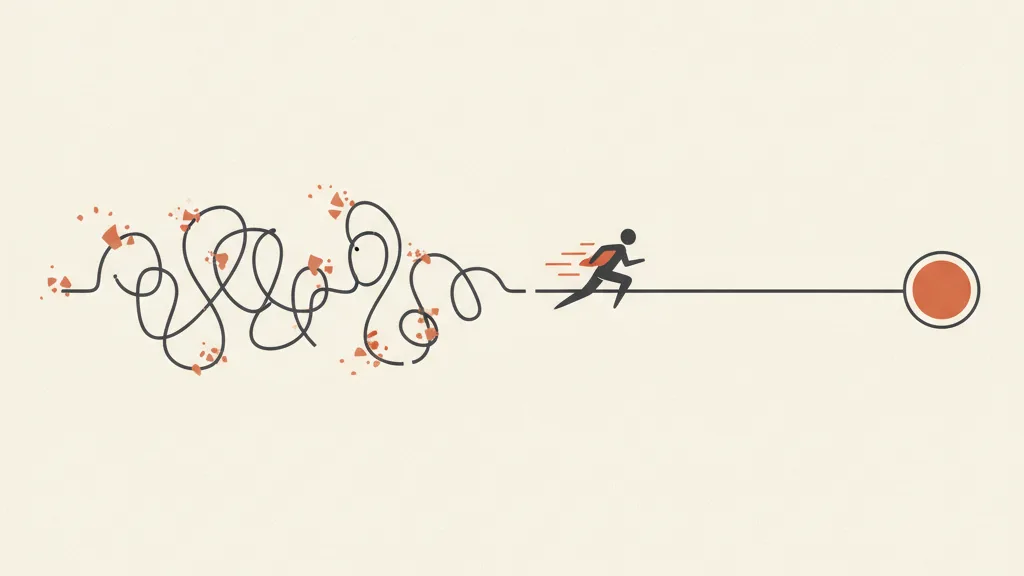
"Persuasive copywriting" conjures up magic formulas and words that hypnotize the reader. The reality is more boring, and far more useful: persuading through copy means making a decision your prospect was already weighing feel obvious. You're not forcing anything, you're removing friction, ambiguity and doubt. Nobody buys a B2B service because of a clever adjective. They buy because they understood, in a few seconds, what they get, why they should trust you, and why it makes sense to act now.
Here we look at the techniques that hold up under scrutiny: Robert Cialdini's principles of persuasion, the weight of social proof, and specificity as an antidote to skepticism. Everything is calibrated for B2B client acquisition, with concrete examples and a method for making copy repeatable even when part of the work is delegated to AI. If you want the full picture, this article expands on one piece of our guide to copywriting for client acquisition.
What persuasive copywriting really means
A clear distinction is needed before we get to the techniques. Manipulation pushes someone toward a choice that isn't in their interest, using fake urgency or inflated promises. Persuasion aligns a real offer with a real need and communicates it without noise. This isn't a philosophical nuance: manipulation produces sales that turn into refunds, negative reviews and churn. Persuasion produces customers who stick around.
In B2B, that distinction matters twice as much. The buying cycle is long, more than one person is involved in the decision, and nobody risks the company budget over a snappy line. Here copy works on three levers: clarity (it's immediately clear what you do and for whom), credibility (why you should be trusted) and relevance (why now). The techniques below amplify these levers, they don't replace them. Beautifully written copy for a weak offer is still copy that doesn't convert.
Cialdini's principles applied to client acquisition
In his book "Influence," Robert Cialdini codified seven mechanisms that drive decisions. Let's look at how they translate into B2B copy that generates contact requests, not just likes. They work even better when built on top of a framework like AIDA, PAS or BAB, which gives the message structure.
Social proof
This is the most powerful lever in acquisition, because it answers the implicit question every prospect asks: "has this already worked for someone like me?". "Happy customers" isn't enough. You need to show companies similar in industry and size, actual result numbers, real names and faces. A testimonial that says "we cut cost per lead by 40% in four months" is worth more than ten adjectives. To use it systematically, rather than leaving it to chance, it helps to have a structured strategy for collecting and using reviews.
Authority
People trust those who demonstrate competence. In copy this means proprietary data, a method with a recognizable name, detailed case studies, presence on authoritative sources. Not "we're experts," but "we've managed €4.2 million in ad spend over the last two years." Authority is shown through proof, not declared.
Scarcity
Scarcity only works if it's real. Fake countdowns burn trust. In B2B, genuine, credible scarcity does exist: a service delivered by people has limited capacity. "We take on four new clients a month to protect the quality of our work" is real scarcity that qualifies rather than pressures.
Reciprocity
Giving value before asking for anything creates a positive psychological debt. A free audit, a useful template, a personalized analysis: the prospect receives something concrete, and this lowers resistance to the contact request. In B2B, reciprocity also acts as a filter, since whoever accepts the first step is a warmer lead.
Commitment and consistency
People tend to stay consistent with the small commitments they've made. In copy this translates into micro-conversions: a question to answer, a short quiz, a low-friction first step before the bigger ask. Every small yes makes the big one more likely.
Liking and unity
We buy more readily from people who resemble us and who we feel are "one of us." A consistent tone of voice and language that reflects the customer's world (same industry, same problems, same words) builds affinity. Unity goes further: it's the sense of belonging to the same category, "agencies like yours," "manufacturing SMEs like yours."
| Principle | How it's used in B2B copy | Concrete signal |
|---|---|---|
| Social proof | Cases from similar clients with numbers | "40% lower cost per lead in 4 months" |
| Authority | Proprietary data and a named method | "€4.2M in ad spend managed" |
| Scarcity | Real, limited capacity | "4 new clients a month" |
| Reciprocity | Free value before the ask | Audit or personalized analysis |
| Commitment and consistency | Progressive micro-conversions | Short qualifying quiz |
| Liking and unity | The client's own industry language | "SMEs like yours" |

Specificity beats generic persuasion
If I could keep only one technique, it would be this: be specific. The brain discards vague claims because it can't verify them, while a concrete detail is credible precisely because it's verifiable. "We increase your sales" is noise. "We take consulting firms from an average of 12 to 18 qualified appointments a month" is information. Specificity does three things at once: it boosts credibility, it differentiates you from competitors who all sound the same, and it helps the reader picture the outcome.
Here's how the difference sounds:
- "Fast service" becomes "a working first draft within 5 business days."
- "Many companies trust us" becomes "37 SMEs served over the last 3 years."
- "We improve your results" becomes "we cut lead response time from 8 hours to 5 minutes."
Specificity isn't just about numbers. It also means naming the customer's exact problem in their own words. Before you write, understanding where the person stands (do they already know they have a problem? are they already looking for a solution?) changes everything: that's the logic behind the five levels of customer awareness. Word choice matters too, since some words are more concrete and sensory than others, as this list of Italian power words shows.
If you want these principles to become a repeatable copy system inside your client acquisition, let's talk. We start with an analysis of your positioning and the materials you already have.
Making persuasive copy repeatable with AI
The limit of persuasive copy, inside a company, is that it often lives in one person's head. When that person is busy, quality drops. The solution isn't "have ChatGPT write everything," but turning the principles into a repeatable system. Three elements make that possible.
A codified brand voice. Tone, allowed and forbidden words, examples of right and wrong copy: if you document your voice, AI can replicate it consistently instead of producing generic text. This is the precondition for using AI in copywriting without losing identity.
A bank of proof. Gather testimonials, numbers, case studies and proprietary data in one place. Many of these already live in your CRM: a well-built client acquisition system continuously generates fresh social proof (results, reviews, metrics) that copy can reuse.
Prompt templates per principle. One prompt that explicitly asks for specific social proof, another for genuine scarcity, another for reciprocity: you guide the model toward the right principles instead of hoping it guesses them. That way AI becomes a multiplier of your expertise, not a substitute for it.
The mistakes that kill persuasion
- Talking about yourself instead of the customer. "We've been the leader since 1998" matters to you, not to someone looking for a solution to their problem.
- Stacking techniques. Scarcity, authority and urgency all at once sound like a late-night infomercial. Better to use a few levers, and use them well.
- Unverifiable promises. Without proof behind it, the bigger the promise, the less credible it is.
- No clear action. Persuasive copy that doesn't say what to do next wastes all the work that came before it.
Most of these are avoided with a final check before publishing: here are the most common advertising copy mistakes and how to catch them in time.
A five-step method
- Define the reader and their level of awareness. What they already know, what they fear, what words they use.
- Write the specific promise. A concrete, verifiable outcome, not an adjective.
- Pick two principles, not six. Usually social proof plus one of authority or genuine scarcity.
- Add the proof. Every strong claim sits next to a number, a case, or a testimonial.
- Close with a low-friction action. A simple step, consistent with the rest of the message.
Persuasion that lasts isn't born from tricks, but from the honest meeting of a valid offer and the right way to tell it. The techniques exist to get that message across without dilution, in a way that's repeatable and scalable. That's how copy stops being an unpredictable art and becomes an asset of your acquisition system.
Frequently asked questions
What's the difference between persuasive copywriting and manipulation?
Persuasion aligns a real offer with a real need and communicates it clearly. Manipulation pushes people toward choices that aren't in their interest, using fake urgency or inflated promises. The first creates customers who stick around; the second generates refunds and negative reviews.
What are Cialdini's principles of persuasion?
There are seven: social proof, authority, scarcity, reciprocity, commitment and consistency, liking, and unity. In B2B copy, the most effective for acquisition are social proof, authority and genuine scarcity, ideally used two at a time rather than all together.
How is social proof used in B2B copy?
By showing clients similar in industry and size, with concrete result numbers, real names and faces. "Happy customers" doesn't convince; "40% lower cost per lead in four months for a company like yours" does. It needs to be collected systematically.
Why is specificity so important in copywriting?
Because the brain discards vague claims it can't verify, while a concrete detail is credible precisely because it's verifiable. Specificity builds trust, sets you apart from competitors, and helps the reader picture the outcome.
Can AI write persuasive copy?
Yes, as long as you don't ask it to improvise. You need a documented brand voice, a bank of real proof (numbers, testimonials, cases), and prompt templates built on the principles of persuasion. That way AI amplifies your expertise instead of producing generic text.
Where should I start to improve my acquisition copy?
Start with the reader and their level of awareness, write a specific and verifiable promise, choose two persuasion principles, add proof to every strong claim, and close with a low-friction action. It's a repeatable method, not inspiration.
Ready to make your copy a real acquisition engine, not just a stylistic exercise? Request a free analysis of your messaging and your funnel.