Custom CRM development cost: MVP, modules, and integrations
9 min read · AstraLoop Studio
Ask "how much does a custom CRM cost" and you usually get two useless answers. On one side, the enterprise consultant who throws out €200,000 without explaining what's in it. On the other, the freelancer who promises everything for €3,000 and vanishes at the first integration. Neither helps you decide.
Here we do something different: we take the quote apart piece by piece. MVP, add-on modules, integrations, data migration, maintenance fee. Each line item with a realistic range for the Italian market in 2026, and the logic behind what pushes it up or down. By the end, you should be able to read a development quote and spot where you're being overcharged, and where corners are being cut that will cost you later.
We're talking about building, the "make" option: a CRM tailored to your processes instead of you adapting to off-the-shelf software. If you're still torn between the two paths, we've covered the make-or-buy reasoning elsewhere. Here we assume you're seriously evaluating custom-built and want to understand the bill.
Why there's no single price (and that's fine)
A custom CRM isn't a product, it's a project. The cost depends on how many entities you need to manage, how many workflows to automate, how many data sources to connect, and how many people will use it, with what permission levels. Two companies in the same industry can get quotes that differ by a factor of five and both be correct.
International benchmarks are consistent. A full custom CRM sits in a wide range (from $30,000 to $300,000 in 2026 US estimates), with most mid-market companies landing between $75,000 and $150,000. In Italy, the real brackets we see for SMEs are narrower, because enterprise-level complexity is rarely needed: a solid project often starts at €15,000-25,000 for an MVP and grows from there based on modules and integrations. The difference isn't the country, it's the ambition of the scope.
The most powerful lever on cost, then, isn't negotiating the developer's hourly rate. It's clearly defining what goes into the first version and what waits. And that's where the MVP comes in.
Item 1: the MVP, the heart of the quote
MVP stands for Minimum Viable Product: the leanest version that solves the core problem and is already usable by your team every day. It's not a throwaway prototype, it's the foundation everything else gets built on. Get this wrong and you pay twice.
A well-built CRM MVP usually includes:
- Contact and company management with the fields your industry actually needs (not 80 generic fields)
- Deal pipeline matching the real stages of your sales process
- Activity history: calls, emails, notes, appointments linked to the contact
- Basic user and permission management (who sees what)
- A handful of reports on the numbers you check every week
Realistic range for an MVP of this kind in Italy: €15,000-40,000, with 2-4 months of development. It lands closer to the low end if you build on an already-proven modular base and the customization is mostly about fields, workflows, and interface. It climbs higher (and beyond) if you're truly starting from scratch with custom architecture, complex business logic, and serious scalability requirements.
The single most important cost tip in this article: resist the urge to cram everything into the MVP. Every feature you push to phase two is a feature you'll be able to define better once you've seen the system running in the field. "I absolutely need this right now" requests that nobody ends up using are the number one source of waste in these projects.
Item 2: add-on modules
After the MVP, cost grows through additions. Each module is a functional block that adds capability to the system. The convenient part: with the base already in place, each module has a fairly predictable cost.
| Module | Indicative range | What drives the price up |
|---|---|---|
| Quotes and proposals | €3,000-8,000 | Complex price lists, rule-based discounts, branded PDFs |
| Lead scoring / qualification | €2,500-7,000 | AI logic, many variables, real-time updates |
| Automation and follow-up | €3,000-10,000 | Number of workflows, conditions, channels (email, WhatsApp, SMS) |
| Advanced reporting / dashboards | €2,500-8,000 | Custom metrics, role-based views, automatic exports |
| Customer portal / private area | €5,000-15,000 | Authentication, granular permissions, self-service |
| Dedicated mobile app | €8,000-25,000 | Native iOS+Android vs responsive web |
A common mistake is buying a module because it "looks cool," not because it fixes a real bottleneck. Before approving a module, ask yourself which manual task it eliminates and how many hours a week it gives back. If you can't answer, it's not ready for the quote. The same discipline you apply when designing a sales funnel connected to the CRM applies to every module you add.
One module deserves its own discussion: automatic lead qualification. If you get a lot of contacts and work through them by hand, a scoring engine or an agent that pre-qualifies leads before the sales rep touches them changes the math for the whole sales team. We explain how it works in detail in AI lead scoring for SMEs.
Item 3: integrations, where quotes lie the most
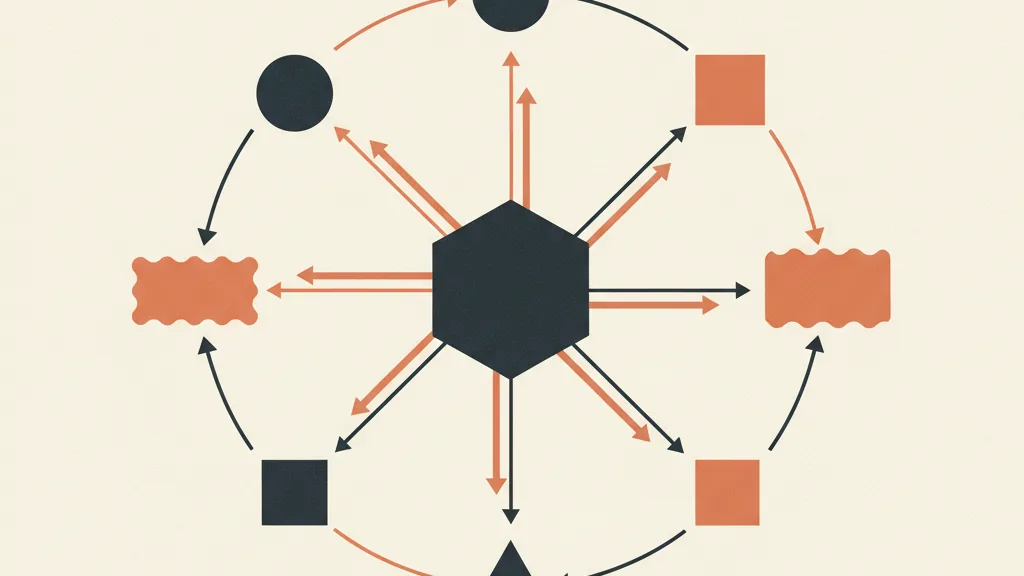
This is the most underestimated line item, and the one that blows project budgets. An isolated CRM isn't worth much: it has to talk to your email, your ERP, your website, your marketing tools, your phone system, WhatsApp. Each connection is a mini-project of its own.
The cost of an integration depends almost entirely on how open and well-documented the other system's API is and on whether the data flow runs one way or both ways:
- Simple, one-directional integration (e.g. syncing contacts from a website form or hooking up a calendar): €1,500-5,000 each.
- Two-way integration with marketing automation or email: €4,000-8,000 each.
- Deep integration with an ERP (SAP, Oracle, closed Italian management software): €8,000-25,000, sometimes more if the ERP doesn't expose decent APIs and a middleware is required.
Two practical warnings. First: if your management software is an older Italian product with no API, the integration cost can exceed that of an entire module. Ask before signing, not halfway through the project. Second: integrations with channels like WhatsApp also carry recurring costs (platform fees), not just development. We cover the right way to connect messaging to a CRM in WhatsApp-CRM integration for leads.
A smart way to contain costs: not every integration needs to be hand-coded. For less critical workflows, app-to-app automation tools do the job at a fraction of the price. If you're not familiar with the approach, it's worth understanding how a tool like n8n works before quoting everything as fully custom.
Want to know what a CRM built around your actual processes would really cost? Tell us how you work and we'll put together an analysis with the MVP scope and the integrations you need.
Item 4: the hidden line items nobody puts on page one
An honest quote includes these too. If you don't see them, ask, because they'll show up anyway.
- Data migration: bringing your contacts and history from the old system (or from Excel files) into the new one. €1,500-8,000 depending on how messy and fragmented the data is. Chaotic data means more hours of cleanup.
- UI/UX and design: if you want a polished interface instead of a bare technical skeleton, budget €3,000-15,000. A CRM the team doesn't use because it's clunky is money down the drain.
- Team training and onboarding: €1,000-5,000. It sounds optional, it isn't: adoption is the real driver of ROI.
- Scope-change buffer: set aside 15-20% of the total. Every project surfaces requests that only emerge once you see the system running. That's normal, not a failure of the quote.
Item 5: the maintenance fee, the cost that never ends
Development is a one-time investment. Owning a living piece of software is a recurring cost, and it's the line item SMEs underestimate the most because they only look at the starting price.
The industry rule of thumb: budget 15-20% of the initial development cost, every year, for maintenance. What that figure covers:
- Cloud hosting and infrastructure (the CRM has to stay up 24/7)
- Security updates and patches
- Integration upkeep (third-party APIs change and break connections: it's a matter of when, not if)
- Small improvements and bug fixes
- Technical support when something breaks
In practice: on a CRM developed for €30,000, expect €4,500-6,000 a year in upkeep. This number is crucial when comparing to "buy": a SaaS-subscription CRM has no development cost, but charges you per user, forever. The break-even point between the two paths depends on the number of users and the time horizon, and it's exactly the kind of math you should do before deciding. For the structured comparison, see when a custom CRM pays off over a SaaS.
A worked numerical example
Take a B2B SME with a small sales team that wants a CRM tailored to its processes. Here's how the quote might come together over a realistic horizon:
| Item | Cost |
|---|---|
| MVP (contacts, pipeline, activity, basic reports) | €22,000 |
| Quotes module | €5,000 |
| Follow-up automation module | €6,000 |
| Email + calendar integration | €3,500 |
| ERP integration (API available) | €9,000 |
| Data migration + training | €4,500 |
| 15% buffer | about €7,500 |
| Total development | about €57,500 |
| Annual fee (maintenance + hosting) | about €7,000/year |
Illustrative numbers, not a price list: they're meant to show you the structure of the cost. Notice how integrations and modules together weigh almost as much as the MVP. And notice the maintenance fee: it's the cost that will follow you for the entire life of the system.
How to keep the cost under control
Three principles that, applied consistently, cut spend without cutting value:
- Phases, not a big bang. MVP first, modules after, non-critical integrations last. Each phase funds the next, because the system is already producing results.
- A modular base, not a blank page. Building on a proven foundation and customizing it shaves months off development compared to full custom from zero. "Tailored" doesn't mean "reinvent the contacts database."
- Only integrate what moves the numbers. Every connection is development cost plus maintenance cost. You connect the ERP because you need it, not the tool a sales rep used once.
The point of a custom CRM isn't having the prettiest software. It's having the system that fuels your acquisition process without friction, where data is entered once and works everywhere. It's the technology piece of a customer acquisition system that runs on its own, and it's worth building right the first time.
If you're weighing custom development and want a quote built from your actual processes instead of a generic price list, the way forward is to define the MVP scope and the integrations you truly need together. Everything else is math that gets done to measure.
Frequently asked questions
How much does it cost to develop a custom CRM in Italy?
For an SME, a solid MVP typically starts at €15,000-40,000, while a complete system with several modules and integrations often falls between €40,000 and €100,000. Cost depends on scope: the number of modules, integrations, and workflow complexity matter more than the hourly rate.
What is a CRM MVP and why start there?
The MVP is the leanest version that's already usable every day: contacts, pipeline, activity history, and essential reports. You start there because it costs less, goes live in 2-4 months, and lets you define later modules better once you've seen the system running in the field, avoiding paying for features nobody ends up using.
How much does an integration between the CRM and other software cost?
A simple, one-directional integration (website form, calendar) costs €1,500-5,000; a two-way one with email or marketing automation runs €4,000-8,000; a deep one with an ERP costs €8,000-25,000. The deciding factor is how open and well-documented the other system's API is.
How much does it cost to maintain a custom CRM each year?
The industry rule of thumb is 15-20% of the initial development cost per year. It covers cloud hosting, security updates, integration upkeep, bug fixes, and support. On a €30,000 CRM, that's roughly €4,500-6,000 a year.
Is it better to build a CRM from scratch or on an existing base?
In most cases, SMEs are better off starting from a proven modular base and customizing it: it cuts months of development and lowers risk compared to full custom from zero. "Tailored" means fields, workflows, and integrations built around your processes, not reinventing the core infrastructure.
What are the hidden costs in CRM development?
The most common are data migration (€1,500-8,000), UI/UX design (€3,000-15,000), team training (€1,000-5,000), and a 15-20% buffer for scope changes that surface once the project is underway. If a quote doesn't mention them, ask: they'll show up anyway.
Talk to us: we start from your real workflows and define together an honest development quote, MVP and phased roadmap included.