What Is Agentic AI: the 2026 Leap from AI That Talks to AI That Does
9 min read · AstraLoop Studio
For years, artificial intelligence in business has meant one thing: a model that responds. You ask it a question, it gives you text back. Useful, sure, but the actual work (updating the CRM, sending the email, closing the ticket) still landed on a person's shoulders. 2026 breaks that pattern. Agentic AI is the category of systems that don't stop at a response: they carry out concrete actions, call external software, complete a process from start to finish, and decide the intermediate steps on their own.
In this guide we look at what agentic AI is in practical terms, how it works under the hood, how it differs from a traditional chatbot, what multi-agent systems are, and, above all, when it makes sense to adopt it in your business and when it's overkill, like using a cannon to swat a fly. It's one piece of business process automation with AI: if you want the full picture, that's the reference overview; here we go deep on the concept of an operational agent.
What agentic AI is, in one line
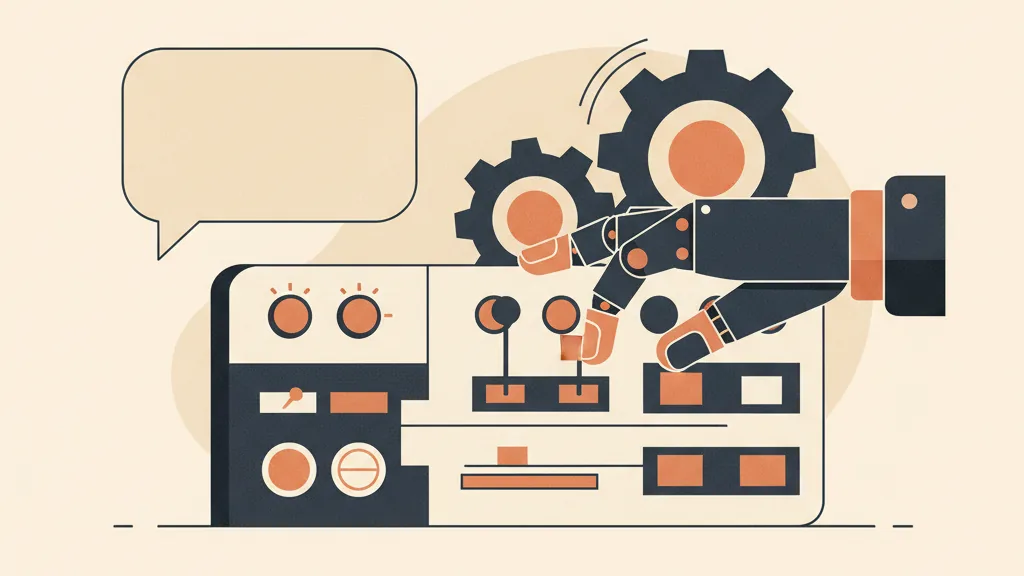
Agentic AI is artificial intelligence that receives a goal (not a single command), plans the steps to reach it, uses external tools to carry them out, and checks the result, iterating until the task is done. The key word is agency: the ability to act autonomously on the environment, not just to produce text.
An example makes it clear. Ask a classic chatbot: "How do I cancel order 4821?" and it explains the procedure. Tell an operational agent: "Cancel order 4821 and notify the customer," and it opens the management system, finds the order, cancels it via API, generates the credit note, writes the email to the customer, and reports back the outcome. The first one talks. The second one does.
From AI that talks to AI that does: what changed in 2026
The leap didn't happen overnight. Three things matured together and made agentic AI usable even for an SMB, not just for research labs.
- Reliable function calling. Models learned to call functions and APIs in a structured, predictable way. An agent doesn't "imagine" it updated the CRM: it actually invokes the right endpoint with the right parameters.
- Open integration standards. With the Model Context Protocol (MCP), which became a widespread standard in 2026, connecting a model to your business tools (management software, calendar, database) went from a custom project to a repeatable operation. More on that shortly.
- Accessible orchestrators. No-code platforms like n8n introduced a native AI Agent node, putting agent-building within reach of people who don't write code.
The result is that in 2026 "AI agent" stopped being a term for tech conferences and became a concrete operational choice. If you want the formal definition and the scope of the concept, we have a dedicated deep dive on what AI agents are and their components.
How an operational agent works: the perceive-plan-act loop
Under the hood, an AI agent works in a loop. It's not magic, it's a repeated cycle you can break down into four phases.
- It perceives the context. It receives the goal, reads the relevant data (a customer request, an order's status, a company knowledge base).
- It plans. It breaks the goal down into steps. "To cancel the order I need to: find it, check that it's cancellable, execute the cancellation, notify the customer."
- It acts with tools. This is where the difference lies. The agent has access to a set of tools (API calls, database queries, sending emails, writing to the CRM) and uses them to carry out each step.
- It observes and iterates. It checks the result of every action. If the order can't be cancelled because it's already shipped, it changes plan and offers a return instead of getting stuck.
The part that's often underestimated is the fourth. A good agent doesn't run a rigid sequence: it reacts to what happens. That adaptive ability is what sets it apart from simple linear automation of the "if A then B" kind.
Agentic AI vs. chatbots: the difference that matters
This is the most common confusion, because both "talk." But the substance is different. A conversational chatbot is designed to answer; an agent is designed to get things done. The table below sums up the practical distinctions.
| Aspect | Classic chatbot | Operational agent (agentic AI) |
|---|---|---|
| Main output | Text / answer | Action carried out in the real world |
| Access to systems | None or read-only | Reads and writes to CRM, management software, APIs |
| Planning | Single response | Breaks the goal into multiple steps |
| Handling the unexpected | Stops or hands off to a human | Changes plan and retries |
| Example | "Here's how you book" | Books, updates the calendar, confirms |
If you need this distinction applied to the world of phone reception and voice assistance, we've broken it down specifically in the difference between a chatbot and an AI agent and, for voice, in AI voice assistant vs. chatbot.
Multi-agent systems: the real trend of 2026
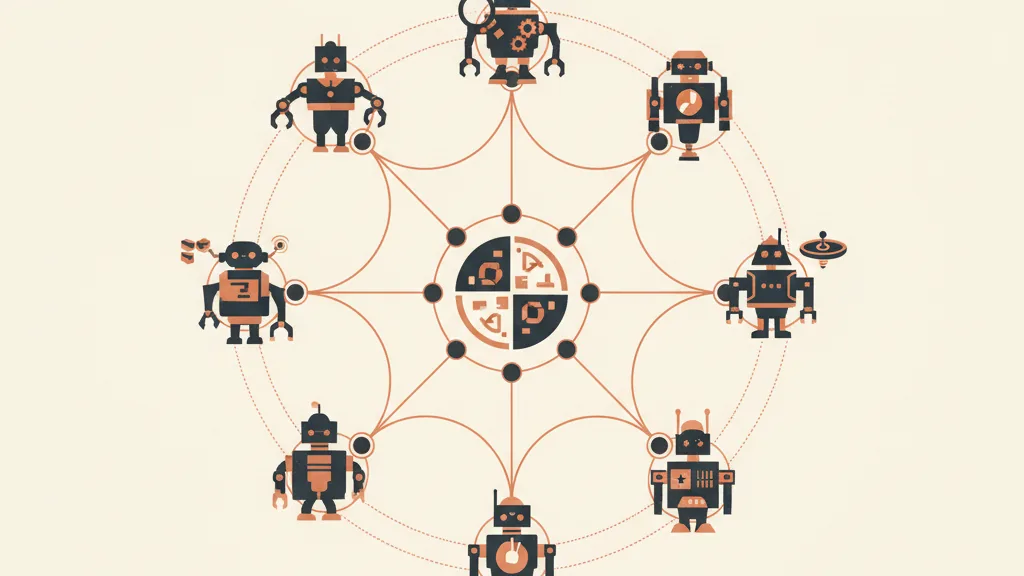
So far we've talked about a single agent. The 2026 frontier is something else: multi-agent systems. Instead of building one monolithic agent that tries to do everything (and ends up fragile and hard to maintain), you build several specialized agents that coordinate on a process.
Picture a sales cycle managed like this, from start to finish:
- A sales agent qualifies the incoming lead, asks the right questions, and figures out if it's a good fit.
- If the lead is qualified, it hands off to an appointment-setting agent that offers slots and books the meeting on the calendar.
- A support agent handles the follow-up technical questions and opens tickets.
- A finance agent generates the pricing proposal, issues the quote, and tracks the payment.
Each one does a single thing and does it well. An "orchestrator" agent decides who should step in and when, exactly like a project lead splitting work across departments. The advantage is concrete: small, specialized agents are more reliable, easier to test, and easier to improve one at a time, without having to rewrite the whole system. It's the same principle behind having separate departments in a company instead of one person doing everything badly.
This division-of-labor logic is what powers the most solid use cases we see in the field: from AI agents for lead generation to automated sales follow-up, where an agent chases contacts who haven't replied without anyone having to remember to do it.
Want to find out if an operational AI agent could take over a repetitive process in your business? Request a free analysis: together we'll identify where it truly makes sense to start.
MCP and n8n: how to connect an agent to your tools (explained for non-techies)
The historic problem with agents was practical: how do I give the AI access to my management software, my calendar, my customer database? Until 2025 that meant writing custom integrations for every single piece of software. Expensive and slow.
In 2026, two tools made this manageable even without an IT department.
MCP, the "universal connector"
The Model Context Protocol (MCP) is an open standard that works like a universal socket between an AI model (such as Anthropic's Claude or OpenAI's ChatGPT) and your business tools. Instead of building a different bridge for every piece of software, you expose your systems through an "MCP server" and the agent uses them in a standardized way. Since April 2026, n8n also has a native MCP server built in, so you can connect Claude or ChatGPT to your business workflows with far less work than before.
n8n, the no-code orchestrator
n8n has become the de facto standard for SMBs that want to build automations and agents without depending on a closed vendor. It has a native AI Agent node, can be self-hosted on your own servers (self-hosting, handy for staying on the safe side with GDPR), and is a self-hosted alternative to Make and Zapier. If these names don't mean much to you, start with what n8n is and how it works and the comparison n8n vs. Make vs. Zapier to figure out which tool fits your case.
What an agent actually needs to be useful (and not just a demo)
AI agent demos online are spectacular. Business reality requires three ingredients that demos skip.
- Clean, accessible data. An agent is only as good as the information it can access. If your CRM is a mess, the agent will make a mess faster. Often the first job isn't AI, it's putting your data in order.
- A reliable knowledge base. For an agent to answer correctly about products, prices, and policies, it needs a structured knowledge base to draw from. That's the role of RAG: if you want to understand it, see RAG and company knowledge base.
- A human handoff point. A serious agent knows when to stop and pass the ball to a person: an amount too high, an angry customer, a case outside its scope. That boundary needs to be designed, not left to chance.
When agentic AI makes sense (and when it doesn't)
Not everything should be turned into an agent. Here's a practical rule we use to guide clients.
It makes sense when the process is repetitive, has clear rules, touches several different systems, and has high volume (dozens or hundreds of cases a day). Examples: qualifying incoming leads, answering frequent support questions and opening tickets, updating order statuses, handling payment reminders. In these scenarios an agent pays for itself quickly and frees up hours of repetitive work.
It doesn't make sense when the process is rare, requires strong human judgment, involves high-risk decisions, or when the data is too messy to be reliable. In those cases a simple chatbot, or even a good linear automation without AI, does the job better and at a tenth of the cost. To figure out where to act first, it helps to think about what to automate in your business with AI starting from the real bottlenecks, not from enthusiasm for the technology.
Build vs. buy: a custom agent or a ready-made solution for 49 euros a month?
An honest question few people tackle. The 2026 market offers two paths.
- Ready-made SaaS solutions (voice AI agents, WhatsApp assistants, callbots) starting at around 49 euros a month. Fast to set up, standardized, ideal for common use cases like booking appointments or answering the phone. Not very customizable to your specific processes.
- Custom agents built on your systems, which can cost anywhere from a few thousand to tens of thousands of euros. These make sense when the process is central to your business and no standard product covers it well.
The rule is simple: start with ready-made SaaS if your case is common, move to custom only once you have proof that the process generates enough value to justify the investment. To get a sense of the real numbers, take a look at how much a business AI agent costs. And if you're wondering whether AI in business is actually relevant to your case, start with real examples of artificial intelligence in business to see verifiable applications.
A look at the rules: agentic AI and the AI Act
An agent that acts on its own raises accountability questions a chatbot never did. The European reference framework is the AI Act (EU Regulation 2024/1689), which classifies systems by risk level and introduces transparency obligations. In practice, if your agent interacts with customers or makes decisions that affect them, you need to make it declared and traceable. In Italy, for voice interactions, there's the additional requirement to disclose that the person is talking to an automated system. This isn't a topic to brush past quickly: for a practical checklist sized for SMBs, without alarmism or claims to definitive legal advice, see AI Act 2026 obligations for SMBs.
In summary
Agentic AI is the shift from AI that answers to AI that executes: systems that receive a goal, plan, use real tools, and complete the task. In 2026 the news isn't just the single agent, but multi-agent systems where several specialized agents (sales, support, finance) coordinate on a process, made possible by standards like MCP and no-code orchestrators like n8n. The practical advice remains the same as ever: don't start from the technology, start from a repetitive process that costs you hours every week and ask yourself whether an agent can take it on by itself.
Frequently asked questions
What's the difference between agentic AI and a normal chatbot?
A chatbot produces text in response to a question. An agentic AI receives a goal, breaks it down into steps, and uses real tools (APIs, CRM, calendar) to complete it. The chatbot explains how to cancel an order; the agent actually cancels it and notifies the customer.
Is agentic AI suitable for a small business too?
Yes, far more so from 2026 onward. Thanks to no-code orchestrators like n8n and integration standards like MCP, building agents no longer requires an IT department. There are also ready-made solutions starting at around 49 euros a month for common cases like appointments and support.
What are multi-agent systems?
They're architectures where several specialized agents coordinate on a process, instead of a single agent trying to do everything. For example, one agent qualifies the lead, one books the appointment, one handles support, and one issues the quote. They're more reliable and easier to improve one at a time.
What is MCP and why does it matter for AI agents?
The Model Context Protocol (MCP) is an open standard that connects an AI model to your business tools like a universal socket, without having to build a separate integration for every piece of software. Since April 2026, n8n also has a native MCP server built in.
When does it NOT make sense to use an AI agent?
When the process is rare, requires strong human judgment, involves high-risk decisions, or when your business data is too messy. In these cases a simple chatbot or a linear automation without AI does the job better and at a much lower cost.
Is an AI agent that acts on its own compliant with regulations?
It depends on how it's designed. The European reference is the AI Act (EU Regulation 2024/1689), which requires transparency and classifies systems by risk. In Italy, for voice interactions, it must be disclosed that the person is talking to an automated system. Traceability and a human handoff point need to be built in.
Let's talk: tell us about the process that costs you the most hours every week, and let's work out together whether an agent or a multi-agent system is the right answer for you.