Find Clients Without Referrals: How to Build a Predictable System
9 min read · AstraLoop Studio
If you're a freelancer, a consultant, or you run a service business, you probably know this scene: one month you have more work than you can handle, the next the phone goes quiet. The difference between the two months isn't the quality of your work. It's the fact that almost all your clients come from word of mouth, and word of mouth isn't something you control.
To be clear, referrals are a great channel. They bring in clients who are already warmed up, at a very low acquisition cost and a high close rate. The problem isn't that it works poorly: it's that it isn't predictable. You can't turn it on when you need it, you can't double it just because you've decided to grow, and you don't know how many clients it will bring you next quarter. Depending on it alone means revenue that comes in waves, and waves wear you down.
This guide explains how to find clients without relying on referrals by building something different: a system that generates appointments continuously, measurably, and repeatably. I won't promise you "guaranteed clients," because anyone who does is usually hiding the numbers from you. I'll explain how the machine works, what it takes to build it, and how long it really takes.
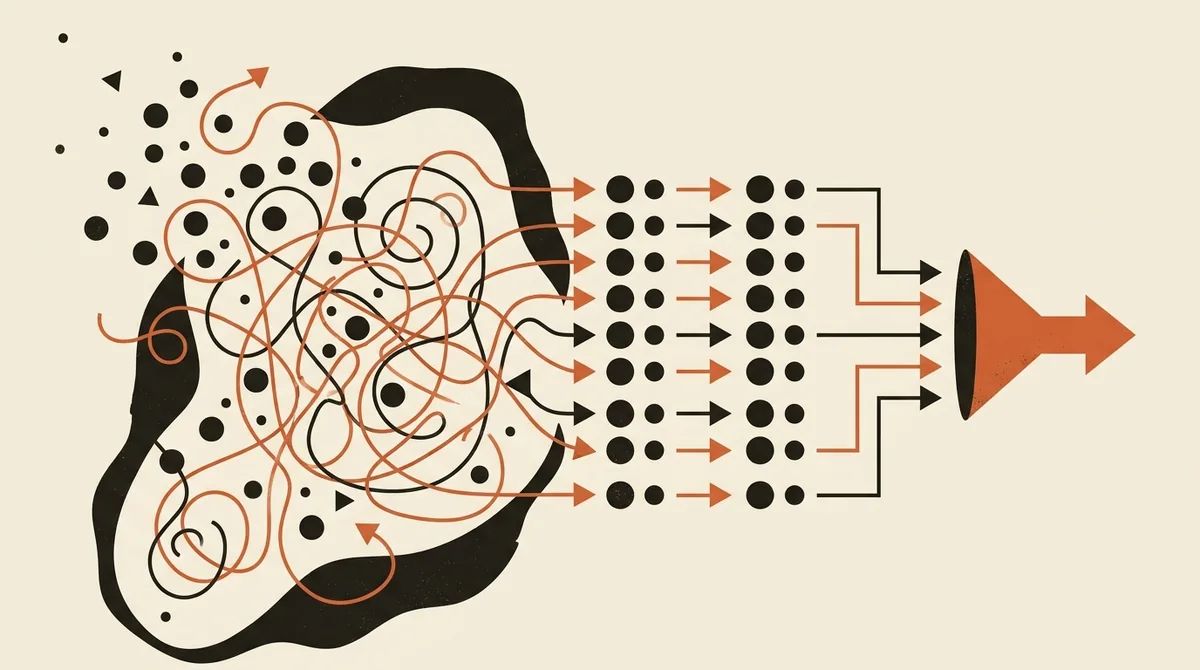
Why word of mouth isn't enough (even when it works)
Let's be clear about what "word of mouth works" actually means. It means a satisfied client speaks well of you, someone hears it, and reaches out. For that to happen, three things need to line up at once: a happy client, a person who at that exact moment has the same need, and a conversation where your name comes up. You control none of the three.
Here are the concrete limits of referrals when they're your only channel:
- It doesn't scale. The number of referrals grows slowly and randomly. If you want double the clients next year, there's no lever to pull.
- It isn't schedulable. It arrives when it arrives. In slow months there's nothing you can do to speed it up except wait.
- It exposes you to a plateau. Many freelancers stop growing at exactly the level their network can sustain, and stay stuck there for years.
- It makes you fragile. If your main source client closes shop or changes industry, a chunk of your pipeline disappears overnight.
The solution isn't to abandon word of mouth. It's to pair it with a channel you control. The goal is what we call a steady flow of clients: no more peaks and dry spells, just a pipeline that keeps filling because there's an engine feeding it.
What "predictable system" means (and what it doesn't)
Predictable doesn't mean "automatic" or "effortless." It means you know your numbers and can make reasonable forecasts. A predictable system looks like this.
If you reach out to 100 of the right potential clients, a certain percentage replies. Of those who reply, a portion books a call. Of those who take the call, a portion becomes a client. Once you know these ratios, the math tells you what happens if you double the first number. It's not magic, it's arithmetic applied to a process repeated enough times to produce stable averages.
The real difference is between a system you own and buying leads on a pay-per-lead basis from someone else. If you pay an agency per contact, the moment you stop paying, clients stop showing up, and you've learned nothing about how to generate them yourself. If instead you build a machine (lists, messaging, funnel, qualification process), it stays yours and gets better over time. We go deeper into this distinction in our guide to the client acquisition system, which is the reference point for everything that follows.
It's also worth clarifying the difference between this approach and lead generation treated as a standalone activity: generating contacts is only one piece. Without qualification, follow-up, and a sales process behind it, contacts stay numbers that never turn into revenue.
The four pieces of the machine
A complete acquisition system rests on four connected components. If one is missing, the others perform worse.
1. The right list (who you contact)
90% of the results depend on who you contact, not on what you write. A mediocre message to the right person beats a perfect message to the wrong one. Define your ideal client clearly: industry, size, decision-maker role, signals that show they have your problem right now.
This is where a concept still underused in Italy comes in: signal-based selling, meaning you contact only people showing buying signals instead of blasting a huge cold list. A few examples of signals: a company that just hired a sales role (a sign it wants to push growth), that just raised funding, that opened a new location, that visited your website. Reaching out to 30 companies with a hot signal beats 500 names pulled from a cold list.
2. Outreach (how you reach them)
This is where volume gets decided. The two main channels for B2B are cold email and LinkedIn, and they aren't alternatives: they work better together. If you want to know which to start with, we compared the two approaches in cold email versus LinkedIn.
A technical warning almost no one in Italy gives you, and one that in 2026 makes the difference between landing in the inbox and vanishing into spam, is deliverability. If you send cold emails from an unconfigured domain, nobody reads them. You need at least three things:
- Domain authentication with SPF, DKIM, and DMARC set up correctly (ideally with a p=reject policy).
- A domain warmup period before scaling volumes, to build reputation.
- Compliance with Google's and Yahoo's bulk sender rules: spam rate under 0.3%, bounce rate under 2%, one-click unsubscribe link.
If these numbers sound like fine print, know that they're the number-one reason cold email campaigns run by people who improvise produce nothing. We explained the mechanism in why emails end up in spam.
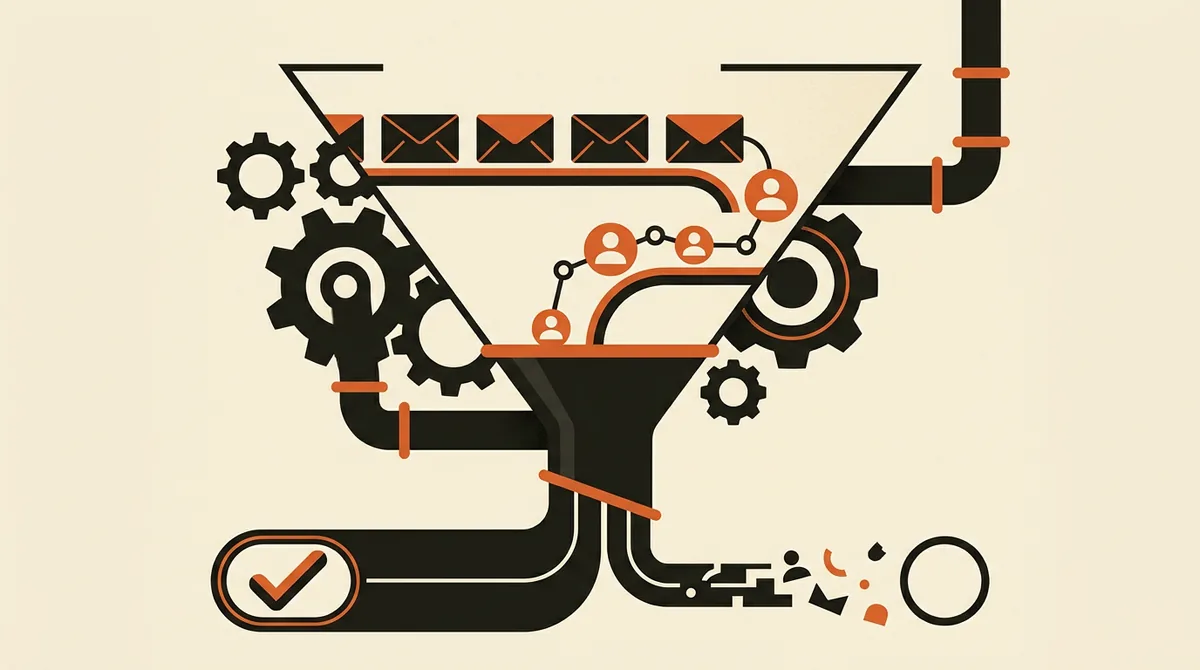
3. Qualification (who's worth your time)
Not everyone who replies is a client. In fact, a good chunk of your time gets burned on calls with people who will never buy. Qualification exists to filter: budget, decision-making authority, real need, timing. A lead who replies "interesting, let's talk about it next year" isn't a ready lead, and treating them as one costs you energy. On how to do this well, see how to qualify leads and the difference between MQLs and SQLs.
In many modern systems this filtering is done by a setter: a person (human or AI-assisted) who handles replies, qualifies, and books calls only with people who make sense. If you're not familiar with the role, what a setter does explains it in detail.
4. The funnel and follow-up (how you close them)
Someone who replies but doesn't buy right away isn't lost: they're in the queue. Most B2B sales close between the fifth and eighth touch, not the first. A serious system has a funnel built for consultants and service businesses and a structured follow-up, so no lukewarm contact falls through the cracks. Automating sales follow-ups with AI, as described in follow-up automation, keeps you from losing clients just because you forgot to call back.
Want to find out if an acquisition system makes sense for your business, with honest numbers instead of inflated promises? Request a free analysis and let's talk it through.
The real numbers: what to expect, and how long it takes
Be wary of anyone promising instant results. An outreach system has a ramp-up period: the first 30 days go into warming up domains and testing messaging, and stable results usually show up between 60 and 90 days. Anyone who tells you "guaranteed clients starting next week" either doesn't know how it works or is selling you smoke.
Here's a rough order of magnitude for B2B cold email on a well-targeted list. The numbers vary a lot by industry and offer, but they're useful for thinking things through:
| Metric | Typical range | What it means |
|---|---|---|
| Open rate | 40-60% | Depends on deliverability and subject line |
| Reply rate | 3-8% | On a targeted list; much lower on cold lists |
| Positive replies | 20-40% of replies | People showing genuine interest |
| Calls booked | 1-3% of contacts | The number that actually matters |
| Close rate from calls | 15-30% | Depends on your sales process |
Let's do the math: with 1,000 targeted contacts a month, at these rates you get roughly 10-30 calls, yielding 2-8 new clients. Sounds modest? Compare it to the total unpredictability of word of mouth. And above all: it's a lever you can pull. Want double the clients? Double the contacts (keeping list quality intact) and you already know in advance what's going to happen.
To think seriously about the economics, you need to look at three numbers: what it costs you to acquire a client, what that client is worth over time, and how long it takes to recoup the spend. We cover them in CAC, CPL, and LTV. If a client's value comfortably exceeds the cost of acquiring them, the system makes sense and is worth investing in; otherwise, fix the offer before the channels.
Where to actually start
You don't need to build everything at once. Here's a realistic path if you're starting from zero:
- Define your ideal client and their buying signals. One week of serious work here beats months of random outreach.
- Set up the technical side of email. Dedicated secondary domains, authentication, warmup. Don't skip this step.
- Build a first targeted list of 200-500 names and write 2-3 message variants to test.
- Launch small, measure, adjust. Look at the real rates, not your gut feeling. Change one variable at a time.
- Add follow-up and qualification only once the first channel is producing steady replies.
You can do this in-house, and for many freelancers starting out, that's the right call. The point where it's worth bringing in someone who does this for a living arrives when the time you're pulling away from billable work costs more than delegating the machine would. If you'd rather skip the 60-90 days of trial and error and start with a system that's already proven, an agency specialized in B2B client acquisition saves you the entire learning curve.
One mistake to avoid: the single-tactic trap
The most common mistake is treating acquisition as a series of disconnected tactics. "Let me try cold email." Doesn't work. "Let me try LinkedIn." Doesn't work. "Let me try ads." Doesn't work. The problem was never the individual tactics, it was the lack of a system connecting them.
A cold email campaign with no follow-up, no qualification, and no funnel behind it is like filling a bucket with a hole in it. The value lies in the integration: channels that feed each other, contacts that move from one stage to the next without falling through the cracks, numbers measured across the whole journey. That's why the reference point to keep coming back to is always the complete acquisition system, not whatever tactic is trendy this month.
Word of mouth will keep bringing you clients, and that's perfectly fine. But stop depending on it. Build a machine alongside it that you switch on when you want, and for the first time your revenue will stop moving in waves.
Frequently asked questions
Isn't word of mouth enough anymore to find clients?
Word of mouth remains a great channel, with low cost and a high close rate. The limit is that you don't control it: you can't turn it on when you need it, it doesn't scale, and it isn't predictable. The solution isn't to abandon it, but to pair it with a channel you manage yourself, so your pipeline keeps filling instead of moving in waves.
How long does it take to see the first results from an acquisition system?
An outreach system has a ramp-up period. The first 30 days go into warming up domains and testing messaging, while stable results usually show up between 60 and 90 days. Anyone promising guaranteed clients starting next week either doesn't know how it works or is selling you smoke.
How many clients can I expect from B2B cold email?
On a well-targeted list, with around 1,000 targeted contacts a month, a rough order of magnitude is 10-30 calls booked and 2-8 new clients. The numbers vary a lot by industry and offer, but the real advantage is that it's a predictable lever: double the contacts and you know in advance what to expect.
Is cold email or LinkedIn better for acquiring B2B clients?
They aren't alternatives: they work better together. Cold email delivers volume, LinkedIn adds relational touch and credibility. The starting point depends on your industry and where your ideal clients spend time, but a mature system integrates both channels into the same funnel.
Why do my cold emails end up in spam?
It's almost always a deliverability problem. You need to authenticate your domain with SPF, DKIM, and DMARC configured correctly, warm up the domain before scaling volumes, and comply with Google's and Yahoo's bulk sender rules (spam rate under 0.3%, bounce rate under 2%, one-click unsubscribe). Without these, nobody reads your emails.
Is it better to build the system myself or hire an agency?
Early on, many freelancers can build it in-house, and that's the right call. Bringing in help makes sense when the time pulled from billable work costs more than delegating the machine would, or when you want to skip the 60-90 days of trial and error and start with a system that's already proven.
If you're tired of revenue that comes in waves and want to build a predictable pipeline, talk to us: we'll look at your case and tell you plainly what it takes.