AI Lead Generation: How to Automate Customer Acquisition
8 min read · AstraLoop Studio
AI lead generation is marketing's most repeated promise: plug in a tool, hit a button, and customers show up on their own. That would be convenient. Unfortunately, it doesn't work that way.
Artificial intelligence doesn't generate leads. It removes the manual bottleneck that was stopping you from generating more of them. It's a boring distinction, and precisely for that reason almost every article on the topic ignores it.
Here we look at what AI actually automates in customer acquisition: where it helps, where it's just smoke, and how to avoid the mistake that's burning reputation and budget for half the companies that try it.
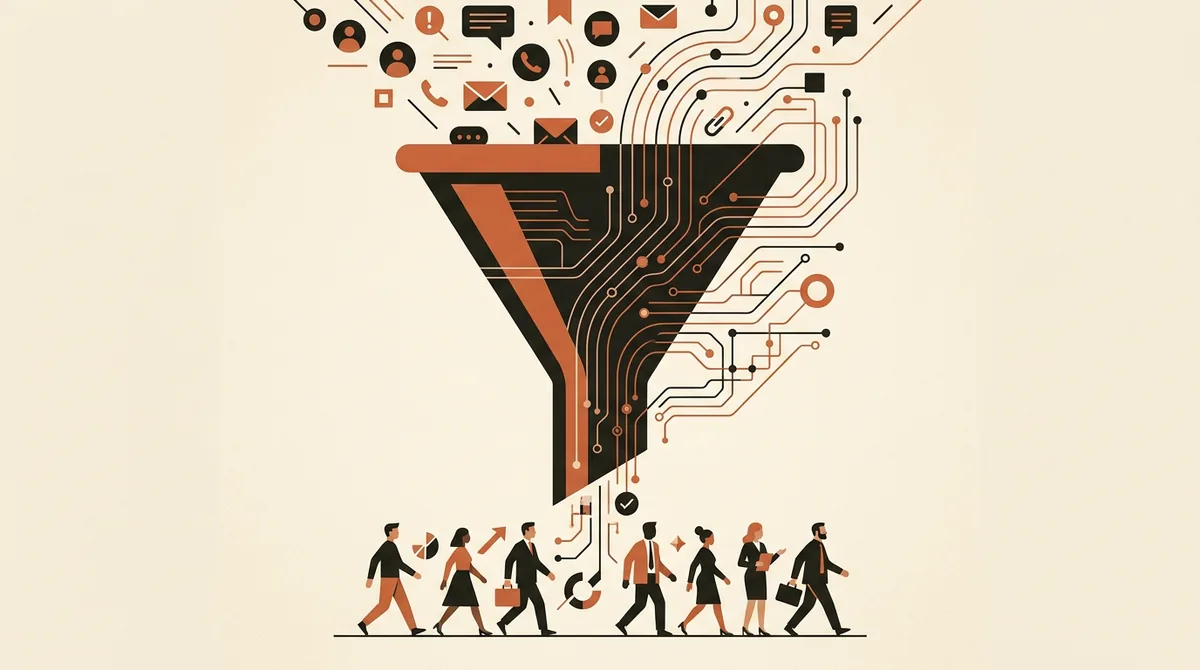
What "lead generation with AI" actually means
Let's start from the ground up. Lead generation is the process of attracting people interested in what you sell and turning them into qualified contacts. AI doesn't change the process — it changes who does the repetitive work inside it.
Before, a salesperson spent three hours searching for companies on LinkedIn, copying emails, and writing messages one by one. Today, an AI system does the same work in minutes, across thousands of contacts. Meanwhile, the salesperson talks to whoever's ready to buy.
It applies everywhere, not just in B2B. A car dealership chasing down people who requested a quote, a real estate agency sorting through hundreds of inquiries from listing portals, an e-commerce store trying to recover abandoned carts — these are all cases where AI in lead generation takes over the manual work and leaves the person with the part that matters. It's not predictive magic, it's intelligent automation applied to three things: finding the right contacts, understanding which ones matter, and engaging them the right way without manual work.
AI doesn't bring you customers you could never have reached before. It lets you reach the same customers ten times faster, with more relevant messages. Scale makes the difference, not magic.
The 5 stages where AI actually fits in
A B2B lead generation funnel has precise stages. Let's look at where artificial intelligence delivers real value and where a human mind is still indispensable.
1. Sourcing: finding the right contacts
This is where AI is unbeatable. It analyzes company databases and intent signals: who changed jobs, who's hiring, who opened a new location. Then it builds targeted prospect lists in real time. What a team used to do in days, the system now does continuously. The same principle applies to a gym chasing people who just moved into the neighborhood, or an e-commerce store segmenting people who already visited a product category.
2. Enrichment: enriching the data
A name and an email aren't enough. AI cross-references different sources and fills out the profile: role, company size, tech stack, estimated revenue. The richer the data, the harder the next message hits.
3. Lead scoring: knowing who's worth it
AI lead scoring is perhaps the most underrated application. The system assigns a score to every contact based on behavior and characteristics, so the salesperson calls whoever actually has a real chance of buying first. It also applies to a real estate agency that wants to call back the hottest inquiry first instead of the one that came in first chronologically. If you can't tell an MQL from an SQL, this changes everything: we cover it in the guide on qualified leads. And if wasted time on cold contacts is your problem, check out how to qualify leads without wasting effort.
4. Outreach: engaging at scale
Personalized emails, LinkedIn messages, follow-up sequences: AI generates and sends tailored communications to hundreds of prospects. Which channel should you prioritize? It depends on your target, and we broke it down in cold email vs LinkedIn. Careful here, though — this is where the costliest mistakes pile up. More on that shortly.
5. Nurturing: warming up those not ready yet
Most contacts don't buy right away. Chatbots and automations keep them warm with relevant content, answer questions around the clock, and pass along only the ready lead to sales. It's the classic case of an e-commerce store recovering an abandoned cart with the right sequence at the right moment.
Notice one thing: AI doesn't close the sale in any of these stages. Closing, the relationship, the negotiation — those stay human. AI fills the pipeline; people convert it.
Want to understand where AI can genuinely speed up customer acquisition in your specific case, and where it would just be a waste? Let's talk.
The mistake burning budgets: the AI slop trap
There's something nobody tells you while selling you the magic tool. The same AI that lets you contact 5,000 people in a day also lets you torch your reputation in a day.
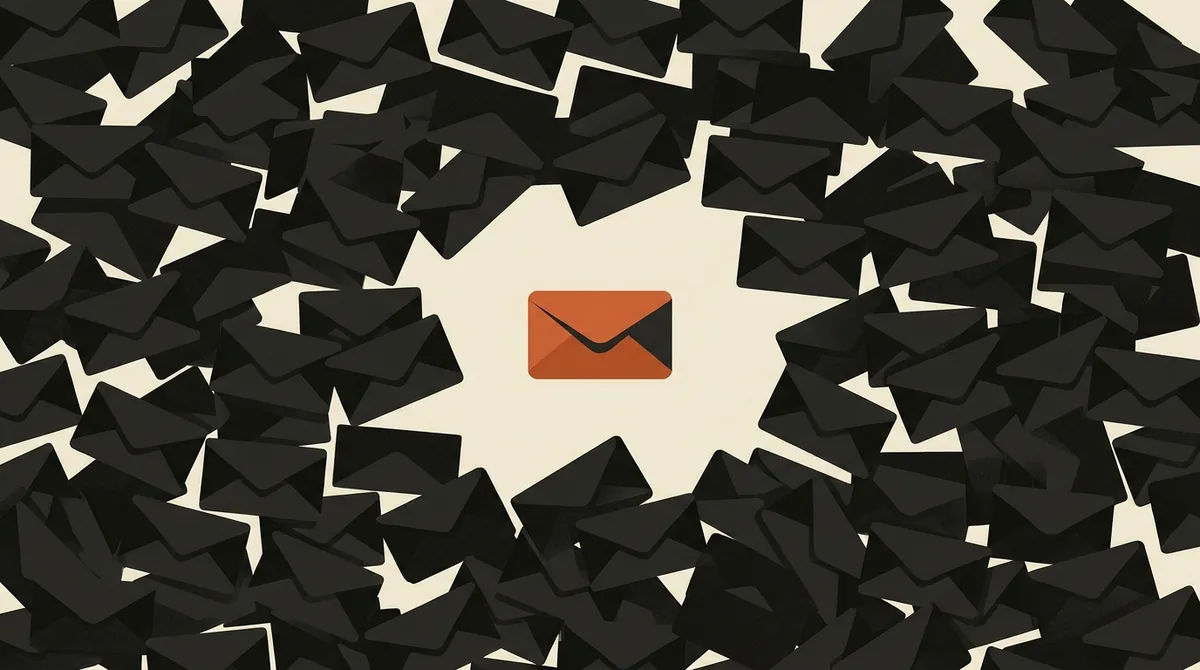
When everyone automates outreach the same way, your prospects' inboxes fill up with identical, fake-personalized, obviously mass-produced messages. The result:
- Deliverability tanks. Mass, poorly configured sends land in spam and can damage your domain.
- Reply rates collapse. A message that opens with "I noticed your interesting profile" gets ignored by anyone receiving ten a day.
- Brand damage. You get perceived as spam, and there's no easy way back from that.
The paradox is brutal: the worse you automate, the faster you fail. AI doesn't forgive a broken system — it amplifies it. If your lead generation funnel leaks, automating it just means leaking faster.
The solution isn't to automate less, it's to automate with judgment: controlled volumes, real personalization (not padded variables), clean email infrastructure, and a message a real person would actually want to read. AI writes the draft; the intelligence lies in the process around it.
What your stack actually needs (and what's really enough)
The market for automated lead generation tools is saturated. They'll tell you that you need fifteen pieces of software. That's not true: a working system needs four building blocks, not fifteen licenses.
- A data source to find and enrich prospects (B2B databases, intent signals).
- A scoring and qualification engine to rank contacts by priority.
- A multichannel outreach system (email plus LinkedIn) with AI personalization.
- A CRM where everything converges, so no lead gets lost.
Everything else (chatbots, conversational AI agents, advanced automations) gets added later, once the foundation holds. If you want to know which tools actually matter, we wrote a dedicated guide to lead generation tools.
A contrarian tip: don't start from the tool, start from the process. An AI tool inside a messy process produces automated chaos. A clear process makes even a mediocre tool effective.
Build vs. buy: do it in-house or hand it off
The question always comes up: should I build the stack myself, or bring in an agency?
Building it in-house makes sense if you have the time, the technical skills, and the patience to iterate for months. Setting up deliverability, integrating data sources, and configuring scoring and sequences isn't an afternoon's work — it's a project.
Handing it to specialists makes sense when you want results in weeks, not quarters, and when the cost of your time outweighs the savings of doing it yourself. The advantage of an AI lead generation agency is that the system arrives already battle-tested, with clean infrastructure and the traps already avoided.
At AstraLoop, we do this by combining AI, automation, and lead generation into a single system. That's how we've generated over 370,000 qualified leads for more than 60 companies, with an average growth of 210%. Not because we use some secret tool, but because the process built around the AI is solid.
What results to expect (and how soon)
Let's talk about realistic expectations, because that's where most of the disappointment comes from.
AI speeds up volume and speed almost immediately: within the first few weeks you'll see more contacts in the pipeline and fewer hours wasted on manual tasks. Quality and conversion rate, on the other hand, take longer to mature, because the system needs data to learn what works in your specific market.
Expect this timeline:
- Weeks 1-4: setup, first lists, first sends. Volume up, quality still rough.
- Months 2-3: the system tunes itself. Sharper scoring, messages that convert better.
- From month 4 on: predictable pipeline and continuous optimization.
Anyone promising a flood of customers from week one is selling you an illusion. AI lead generation is an engine that warms up, not a switch you flip. If you want to line up the upstream tactics, start with how to generate qualified leads.
Who it makes sense for (and who it doesn't)
Better to be honest: AI lead generation isn't for everyone.
It makes sense if: you have a defined target, a clear offer, and your problem today is already scale — too many contacts to manage by hand and too much time lost. That applies to a B2B company with a long sales cycle, but also to a car dealership or a gym chain getting more inquiries than they can keep up with.
It doesn't make sense yet if: you don't know who your ideal customer is, you don't have a validated offer, or you think AI will fix a positioning problem. In that case, you'd only be automating chaos. Fix the foundation first: take a look at the customer acquisition strategies that actually work.
The rule is simple: AI multiplies what already works. If you have a one, it turns it into a hundred. If you have a zero, it stays zero — just faster.
Where to start
If you want to automate customer acquisition without making the classic mistakes, here's the right order:
- Define your ideal customer. Without this, every tool is useless.
- Fix the manual funnel. It needs to convert by hand already, even at a small scale.
- Add AI where the bottleneck is. Usually that's sourcing and outreach.
- Measure, cut, iterate. Kill what doesn't convert, double down on what does.
Artificial intelligence is the most powerful tool marketing has ever seen. But it's still a tool. The competitive edge isn't having it — soon everyone will. It's knowing how to put it inside a system that converts.
Frequently asked questions
Can AI completely replace the sales team in lead generation?
No. AI automates the repetitive stages — finding contacts, enriching them, scoring them, and sending the first messages — but final qualification, negotiation, and closing stay human. AI fills the pipeline; people convert it into customers.
How long does it take to see results from AI lead generation?
Contact volume grows within the first 2-4 weeks already. Quality and conversion rate mature between the second and third month, once the system has gathered enough data to tune scoring and messaging to your market. Anyone promising results in week one is selling an illusion.
What's the most common mistake in AI-automated lead generation?
Poorly configured mass outreach. Sending thousands of identical, fake-personalized messages destroys deliverability, tanks reply rates, and damages your brand. The solution isn't to automate less, but to automate with judgment: controlled volumes, real personalization, and clean email infrastructure.
Is it better to build an AI lead generation system in-house or hire an agency?
In-house makes sense if you have time, technical skills, and months to spend iterating. An agency makes sense when you want results in weeks and when the cost of your time outweighs the savings of DIY: the system arrives already battle-tested, with the technical traps already avoided.
Does AI lead generation work for any company?
No. It works for companies with a defined target, a validated offer, and a scale problem, in both B2B and B2C (dealerships, real estate, e-commerce, local services). It doesn't make sense yet if you don't know who your ideal customer is or if your real problem is positioning — in that case you'd only be automating chaos. AI multiplies what already works; it doesn't create it.
If you want an AI lead generation system built right from the ground up, without the mistakes that burn budget and reputation, email us at astraloopstudio@gmail.com: we'll review your funnel together and tell you honestly if and where automation makes sense for you.