B2C Lead Generation: How It Works and How It Differs from B2B
7 min read · AstraLoop Studio
B2C lead generation is how a company selling to end consumers turns strangers into interested contacts, and then into paying customers. It sounds simple: run an ad, collect a phone number, call. In practice, it's where most ad budgets in Italy get burned, because almost nobody handles the two things that actually matter: speed of response and quality of the contact.
This is the B2C hub guide. I'll walk you through how it works, how it actually differs from B2B, what a lead costs in your industry, and how to set it up if you sell real estate, cars, insurance policies, solar installations, or professional services. If you sell to other businesses instead, start with the complete guide to B2B lead generation.

What B2C lead generation is, in plain terms
A B2C lead is a person who has left their contact details (name, email, phone) in exchange for something: a quote, a discount, a guide, a free consultation. They're not a customer yet. It's a raw intent.
Lead generation is the whole system that gets that person to leave you their contact: ad, landing page, form, offer. If you want the fundamentals of the concept, you'll find them in the guide what lead generation is and how it works.
The point almost everyone gets wrong: in B2C the lead is often at "cold temperature." The person clicked an ad while scrolling Instagram on the couch. They weren't looking for you. That changes everything that comes after.
How it works: the B2C funnel step by step
The flow is almost always this, and it needs to be built in this order.
- Offer. A concrete reason to leave their contact. "Free quote in 24h," "20% off your first order," "Bill savings simulation." Vague doesn't convert.
- Traffic. Where people come from: Facebook and Instagram Ads for latent demand, Google Ads for demand that's already conscious.
- Capture. A landing page or form that asks for the bare minimum. Every extra field drops conversions.
- Fast contact. This is where you win or lose. More on that shortly.
- Qualification and sale. Figure out if the person is truly ready and bring them to close.
If you want to go deeper on the general mechanism, read how to build a lead generation funnel.
The real differences between B2C and B2B lead generation
A lot of oversimplifications circulate here. The most common is "B2C is fast, B2B is slow." True only in part. Here are the differences that actually matter.
Who decides
In B2C, one person decides, often on a gut feeling, sometimes in minutes. In B2B, three or four people decide (the user, the payer, the signer) and the cycle can last months. That changes the type of content: B2C needs emotion and social proof, B2B needs material that reassures the buying committee.
Channels and volumes
B2C lives on paid social and high volumes: lots of leads, many to discard. B2B works on low volumes and high value, through cold email and LinkedIn. A blunt comparison: a B2C Meta campaign can generate 300 leads in a week, a B2B campaign might generate 15, but each one is worth ten times as much.
A qualified lead is defined differently
In B2B there's an entire theory around MQLs and SQLs. In B2C, qualification is blunter: the person has budget, timing, and real intent, or they don't. The B2C risk is drowning in curious contacts. That's why lead qualification stays crucial here too, just faster.
The number one operational difference isn't the sales cycle. It's response speed. In B2C, a lead called back after 5 minutes converts many times better than the same lead called back after an hour.
Selling to consumers and watching your leads go cold before anyone calls them back? Let's talk: we'll show you where you're losing contacts and how to recover them with an automated system.
Speed-to-lead: the factor almost nobody manages
Here's the data point missing from almost every article on this topic. In B2C the attention window is razor-thin. The person filled out three different forms in the same minute, on the couch. Whoever calls first tends to win.
Calling back within 5 minutes instead of within an hour can multiply the odds of a useful contact several times over. Yet most B2C companies call back the next day, when the lead is cold, distracted, or has already signed with a competitor.
This is where automation makes the real difference. A system that sends an automatic WhatsApp message within 60 seconds, routes the lead to the right salesperson, and queues the calls changes the numbers for an entire sales team. It's exactly the kind of system we build with AI agents and lead generation automation.
What a B2C lead costs: CPL by industry
Cost per lead (CPL) in B2C varies hugely by industry, channel, and offer quality. These are realistic orders of magnitude on the Italian market, useful as a reference point, not a promise.
| Industry | Indicative CPL | Note |
|---|---|---|
| Real estate | €30-120 | Varies a lot by area and price bracket |
| Insurance / finance | €10-150 | Lower on Meta, rises with selective funnels |
| Solar | think per project | Sustainable cost per project: €500-1,500 |
| Automotive | €15-60 | Depends on used vs. new and on brand |
Be careful not to fixate on CPL as your only metric. A €15 lead that never closes is more expensive than an €80 lead that buys. The real metric is customer acquisition cost. You'll find the full breakdown in what a lead costs by industry.
The B2C verticals: each one plays by its own rules
This is what makes generic guides useless. "B2C" doesn't exist as a single category. Selling an insurance policy is different from selling a sofa. Here are the main verticals and where to go deeper.
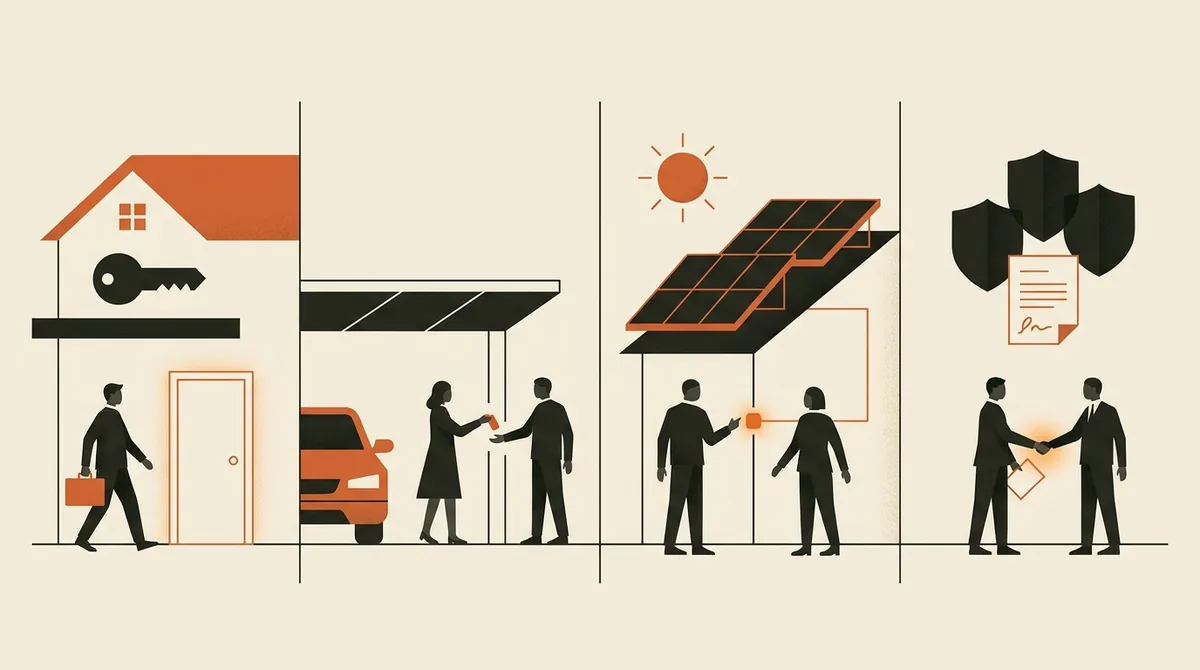
- Real estate. High ticket, a cycle that looks short but often runs weeks. Trust and response speed matter most. Dedicated guide: real estate lead generation for agencies and agents.
- Car dealerships. Lots of leads to filter, test drives as the intermediate conversion. See lead generation for car dealerships.
- Insurance. A regulated industry, needing proof of trust and orderly follow-up. Go deeper in how to find customers for insurance.
- Solar. Very high ticket, site visits, incentives as leverage. Guide: how to find customers for solar.
- Professional firms. Lawyers, accountants, architects selling to individuals. Details in lead generation for professional firms.
- E-commerce. Here the lead isn't just an order: it's the contact list that makes everything else profitable. See lead generation for e-commerce.
B2C strategies that work in 2026
No magic, just things that work if done well and in order.
- A strong, specific offer. A real discount, a fast quote, a simulation. A vague lead magnet doesn't convert with consumers.
- Meta and Google as the engines. Meta intercepts people who weren't looking for you, Google intercepts people already searching. You need both.
- A clean, mobile-first landing page. B2C is almost all from a phone. A form with too many fields kills conversions.
- Follow-up automation. Automatic WhatsApp and SMS within minutes, then the human call. This is where the game is won.
- Social proof everywhere. Reviews, numbers, real faces. The consumer decides on gut feeling, and other people's trust weighs more than any technical argument.
If you want the bigger picture on growth strategies, read customer acquisition strategies.
Who builds the system for you
Generating B2C leads isn't a problem of "running more ads." It's a systems problem: the right offer, clean traffic, a landing page that converts, real-time automated follow-up, and qualification that filters out the curious. If even one piece is missing, the budget scatters.
At AstraLoop Studio we combine AI and automation with lead generation. We've generated over 370,000 qualified leads, built more than 140 automated systems, and managed over €1.2 million in advertising spend, with an average 210% growth for our clients. If you want a system that responds to your leads in 60 seconds instead of the next day, see how an AI-powered lead generation agency works.
Frequently asked questions
What's the main difference between B2C and B2B lead generation?
In B2C, one person decides, often on gut feeling and quickly, across high volumes of contacts to filter. In B2B, multiple people decide over long cycles and low volumes at high value. The most concrete operational difference, though, is response speed: in B2C, calling back within a few minutes is worth a huge amount.
How much does a B2C lead cost?
It depends on the industry. Indicative orders of magnitude on the Italian market: real estate €30-120, insurance €10-150, automotive €15-60. In solar, it's better to think in terms of cost per project (€500-1,500). CPL alone is misleading, though: what matters is the real customer acquisition cost.
Which channels work best for generating B2C leads?
Facebook and Instagram Ads to intercept latent demand, Google Ads for people already searching for you. Most cases need both, paired with a mobile-first landing page and immediate automated follow-up.
Why is response speed so important in B2C?
Consumers have often filled out several forms in the same moment and are distracted. Whoever calls back first usually wins. Responding within 5 minutes instead of after an hour greatly increases the odds of a useful contact — that's why the first contact needs to be automated.
Does B2C lead generation work the same way across every industry?
No. Selling an insurance policy is different from selling a solar installation or a home. Ticket size, cycle, trust levers, and regulatory constraints all change. That's why dedicated vertical guides exist for real estate, car dealerships, insurance, solar, professional firms, and e-commerce.
Want a steady stream of B2C contacts, called back in real time and already filtered? Get in touch and we'll build the system tailored to your industry.