AI Training Courses for Businesses: Programs and Prices 2026
8 min read · AstraLoop Studio
An AI training course for businesses in 2026 is no longer an extra you evaluate "when there's time." Part of it is now a legal requirement, and for the rest, it's the difference between an AI project that delivers results and one that ends up in a drawer after the initial enthusiasm fades. The good news is that, between Joint Interprofessional Funds and tax credits, most of the cost can be recovered.
On this page you'll find the types of training paths available, real market prices, how funding through joint funds works, and what Article 4 of the AI Act requires in terms of literacy. If you're still working through the big picture, start with our complete guide to AI consulting for businesses. This page is the training piece of that journey.
The underlying message is simple: training isn't the icing on the cake of your AI adoption, it's the foundation. The number one reason pilot projects fail isn't the technology, it's the human factor. People who don't understand the tool, don't trust it, or use it badly.
Why AI training has become a priority (and partly mandatory)
Two forces are pushing Italian companies to put AI training at the top of the list.
The first is regulatory. The EU Regulation 2024/1689 (AI Act), in Article 4, introduces an obligation for "AI literacy," already applicable since February 2, 2025. In practice, every company that develops or uses AI systems must ensure an adequate level of competence among the staff who manage them. It's not a box-ticking exercise with a form to sign. It's the requirement that anyone using AI tools knows what they do, what their limits are, and what the risks are. Most of the deadlines and obligations for high-risk systems come into full force on August 2, 2026. For the complete picture, we've dedicated a page to the AI Act obligations for SMEs.
The second force is operational risk, and you already know it even if you don't have a name for it. It's called shadow AI: according to various surveys, between 68% and 76% of employees already use AI tools on the sly, without policies and without oversight. They paste company data into ChatGPT, generate quotes with unauthorized tools, share confidential information. A structured course doesn't just "teach AI." It moves usage out of the shadows and into shared rules.
Types of courses: which one your business needs
"AI training course" is a label that covers very different paths in terms of goal, duration, and audience. Before looking at prices, you need to figure out which category you actually need.
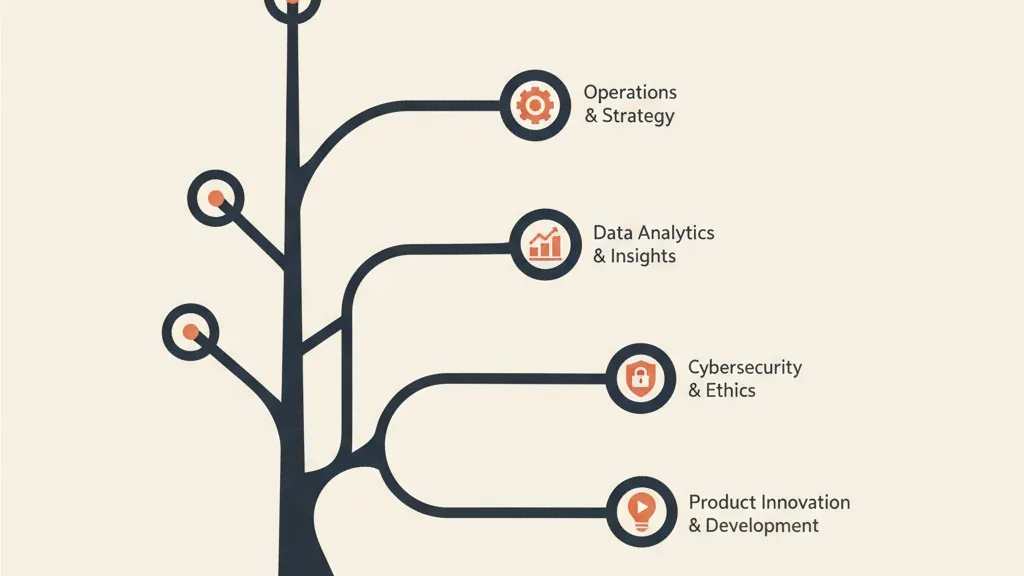
1. AI literacy (basic AI literacy)
This is the cross-functional course, aimed at every employee who touches AI tools. It covers what AI is (and isn't), how to write effective prompts, what data should never be entered, limitations like hallucinations and bias, and internal rules. It's also the path that directly satisfies the Article 4 obligation of the AI Act. Typical duration: 4 to 16 hours.
2. Hands-on course for specific teams
Vertical, focused on one function: marketing, sales, customer care, admin. Here you don't explain "AI in general" — you teach people to use the tools on that team's actual process. For example, how to set up AI-driven sales follow-up automation in the sales department, or how to manage AI-driven customer care automation in support. Duration: 8 to 24 hours, often with hands-on exercises on real company data.
3. Path for managers and decision-makers
This doesn't teach people to use the tools, it teaches them to decide. How to evaluate an AI project, how to measure AI ROI, when it makes sense to build in-house versus buy, how to build a four-phase adoption roadmap. It's the shortest course (4-8 hours) but the most strategic, because it's the decision-makers who determine whether the investment pays off or gets wasted.
4. Advanced technical training
For people who need to build, not just use: automations, integrations, agents. It covers tools like n8n, building knowledge bases with RAG, and early AI agents applied to business use cases. Duration varies, often modular. It's the most expensive segment, because it requires technical instructors and real working environments.
How much an AI training course for businesses costs
Prices vary enormously depending on format (in-person, online, on demand), customization, and level. Be wary of anyone who quotes a single figure without knowing how many people you're training or on what. Here are realistic market ranges in Italy in 2026.
| Type of path | Typical duration | Indicative cost | Notes |
|---|---|---|---|
| Online on-demand course (per person) | 4-12 hours | €200-800/person | Standardized, little customization |
| Company-wide AI literacy (in-house) | 4-16 hours | €1,500-4,000 per day | Covers the AI Act Art. 4 obligation |
| Vertical hands-on course for teams | 8-24 hours | €3,000-8,000 per path | Exercises on real processes |
| Path for managers and decision-makers | 4-8 hours | €2,000-5,000 | Focus on ROI and roadmap |
| Advanced technical training | 16-40 hours | €6,000-15,000+ | Technical instructors, real environments |
The key point is this: a turnkey course built around your own processes costs more than a standardized one, but it's the one that actually reduces the drop-off after the course. A generic €200 video that no one finishes watching is, proportionally to its value, more expensive than a €4,000 path that changes how the team works.
Worth a separate note is the difference between training and consulting. The course gives you the skills, but if you also need someone to design the adoption itself, look at how much an AI consultant costs. Often the two services go hand in hand.
How to fund the course with Joint Interprofessional Funds
Here's the lever that few companies use to its full potential. Employee AI training can be funded through Joint Interprofessional Funds (Fondi Interprofessionali), the joint funds that collect 0.30% of the total payroll (the so-called "mandatory 0.30% contribution") that your company already pays into INPS, Italy's social security agency.
In practice, it works like this: when you join a fund (Fondimpresa, Fondirigenti, Fon.Coop and others, depending on the sector and employee category), the contribution you already pay is redirected to the fund instead of the state. The fund then reimburses your employees' training through two main channels.
- Training Account (Conto Formazione): a "piggy bank" fed by your own contributions, which you draw on whenever you want to train staff. The bigger the company, the more it accumulates.
- System Account (Conto di Sistema, calls and tenders): additional funding awarded through periodic calls, often designed for SMEs that would otherwise accumulate little in their Training Account on their own.
The advantage is clear: you're using resources you're paying for anyway. Not joining a fund means giving away that 0.30% without ever recovering it as training. For a company with 20-30 employees, we're talking about amounts that, over a couple of years, cover a full AI training path.
Watch out for the practical constraints. Funded training requires reporting (attendance records, documentation), plans must be submitted and approved before starting, and there's real bureaucratic lead time. You need a training partner who can handle the administrative side, otherwise the savings get eaten up in wasted hours.
Other incentives worth considering
Beyond the funds, there are tax breaks for adopting AI technologies, such as tax credits tied to Transition 5.0 (Transizione 5.0) and related measures. Training can qualify when it's tied to an innovation project. The framework changes often, so it's worth checking the 2026 AI incentives for SMEs before setting your plan.
Want a training path built around your own processes and fundable through Joint Interprofessional Funds? Request a free analysis: let's figure out together what your team really needs.
The AI Act's literacy requirement, translated into practice
Let's go back to Article 4, because it's the point that causes the most confusion. Many think it only applies to large groups or big tech. That's not the case: the AI literacy obligation applies to any organization that uses AI systems, including the SME that has adopted a chatbot, a voice assistant, or a content-generation tool.
What it concretely requires, for informational purposes (this is not legal advice; for a definitive assessment, consult a professional):
- Staff managing AI systems must have skills appropriate to their role and to the risk level of the systems used.
- The level required is proportional: someone configuring a decision-making agent needs more training than someone using an assistant to write emails.
- The obligation must be documented. You need to be able to prove people were trained, so records, certificates, materials. This also protects you in the event of an inspection.
The real value, beyond compliance, is that literacy is the best insurance against mistakes. A trained employee doesn't paste sensitive data into a public tool, recognizes when the model is hallucinating, and doesn't send a client the wrong quote. Training reduces both regulatory risk and operational risk at once.
What separates a good course from one that leaves no mark
After seeing dozens of training paths in the field, the difference between the ones that work and the ones forgotten within a week is almost always the same. Here are the criteria that matter.
Training on your own processes, not abstract slides
A course that explains "what a large language model is" with generic examples doesn't stick. One that takes your quote-management process and shows how to speed it up with AI does. The number one criterion is: do people practice on the company's real data and workflows?
Change management included
Resistance to change is the number one reason AI projects fail, and it's the main reason around 85% of generative AI pilot projects never make it to production. A good course doesn't just teach the tools, it addresses the fears: "will AI take my job?", "I don't trust what it writes." If the training ignores the human factor, you'll end up with competent but distrustful people, which is almost worse than not training them at all. For more on this, we've written about why AI projects fail.
Follow-up and post-course support
Skills fade without practice. The best programs include support in the following weeks, when people try to apply what they've learned and inevitably get stuck. A one-off course with no follow-up wastes most of its value.
Instructors who actually use AI
Be wary of anyone who teaches AI but has never put it into production in a real company. You can find the theory for free on YouTube. What you're paying for is the experience of someone who has already seen what works and what wastes time and money.
Where to start: a three-step path
If you don't know where to begin, this is the order we recommend to Italian SMEs.
- Initial assessment. Before the course, understand where you stand: who's already using AI (even on the sly), which processes make the most sense to automate, what level of skill already exists in the company. Without this snapshot, the course risks being pitched above or below the real level.
- Cross-functional literacy. The baseline module for everyone, covering the AI Act obligation and creating a shared vocabulary. From here on, everyone knows what can and can't be done.
- Vertical paths for priority teams. Focus hands-on training on the departments where AI delivers the fastest ROI, usually sales, customer care, and admin.
This approach fits naturally into a broader adoption roadmap. If you want to understand how training fits into the overall adoption journey, read how to integrate AI into business processes and our guide on AI in business, where to start. There's also a page dedicated specifically to AI training for employees, if you want to dig deeper into that angle.
In summary
An AI training course for businesses in 2026 is three things at once: a compliance requirement (the literacy mandated by the AI Act), a risk reduction (against shadow AI and usage errors), and an investment (skills that free up hours and drive ROI). The cost, between €1,500 and €15,000 depending on the path, is largely recoverable through the Joint Interprofessional Funds you're already funding with 0.30% of your payroll. What decides the outcome isn't the price, it's how much the course is built around your actual processes and the people who live them every day.
Frequently asked questions
Is the AI training course legally required?
Partly, yes. Article 4 of the AI Act (EU Regulation 2024/1689), applicable since February 2, 2025, imposes an AI literacy obligation on every company using AI systems. It doesn't mandate a specific course, but it requires staff to have adequate skills and for this to be documentable.
How much does an AI training course for businesses cost?
It depends on the format. An online on-demand course starts at €200-800 per person, an in-house literacy path costs €1,500-4,000 per day, a vertical course for a team runs €3,000-8,000, and advanced technical training easily exceeds €6,000-15,000. Much of it can be funded through Joint Interprofessional Funds.
How do you fund AI training through Joint Interprofessional Funds?
By joining a joint fund (Fondimpresa, Fondirigenti, Fon.Coop, and others), you direct to it the 0.30% of payroll you already pay into INPS. The fund then reimburses training through the Training Account (built up from your own contributions) or through System Account calls, designed especially for SMEs.
How long does a corporate AI course last?
It varies a lot: basic literacy runs 4 to 16 hours, a hands-on course for a specific team 8 to 24 hours, a path for managers 4-8 hours, and advanced technical training 16 to 40 hours or more. The best programs add post-course support in the following weeks.
Is a standard online course better, or a customized one?
For basic literacy, a standard course can be enough. For hands-on training, a path built around the company's real processes is almost always better: people practice on their own workflows and the skills stick, while generic videos have a very high drop-off rate.
Is training enough to adopt AI, or is something else needed?
Training is the foundation, but on its own it doesn't make an adoption. You need an initial assessment, the right choice of processes, pilot projects, and ongoing monitoring. Training and consulting often go together, with the course preparing people and the consulting designing the concrete interventions.
We help you choose the right path, manage the funding, and get your company compliant with the AI Act. Talk to us and get a tailored proposal.