AI Automation Agency: How to Choose One and What It Should Deliver
9 min read · AstraLoop Studio
If you're evaluating an AI automation agency, you've probably already figured out the problem isn't a lack of tools. The market is flooded with them: n8n, Make, Zapier, dozens of €49-a-month SaaS products that promise to answer the phone, handle WhatsApp, or qualify leads. The real bottleneck is somewhere else. Who helps you decide what to automate, in what order, and how to fit it into the processes you already have, without breaking what already works?
This guide gives you concrete criteria for choosing. Not a list of good intentions, but the questions to ask on the call, the red flags that should make you close the quote, and the difference between an agency that sells you a tool and one that builds you a system. If you want the bigger picture first, start with our guide to business process automation with AI: this article is the operational spoke on how to choose the right partner.
What an AI automation agency actually does (and what it doesn't)
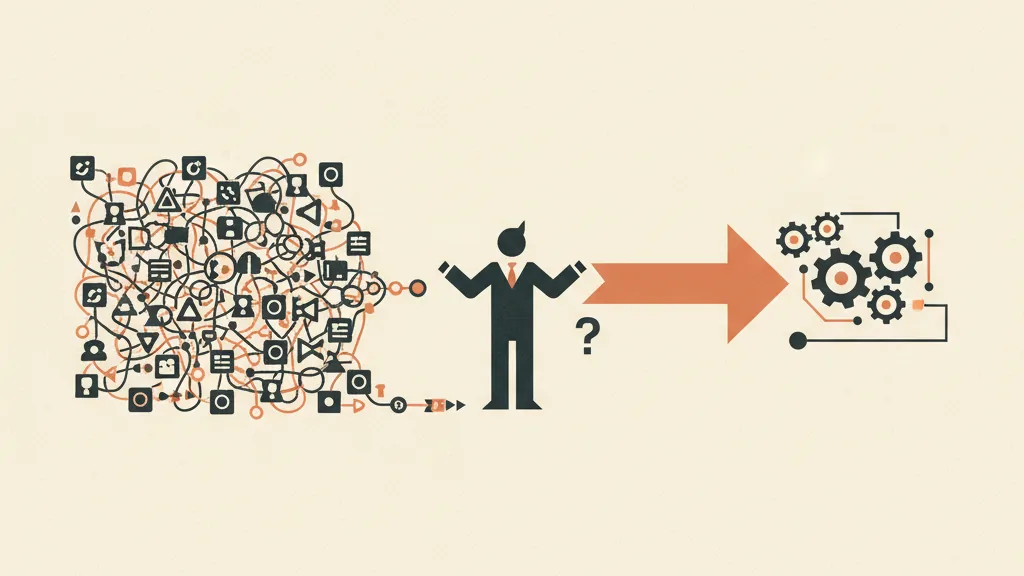
Let's get the scope straight, because the term gets thrown around too loosely. A serious AI automation agency isn't a software reseller, and it isn't a marketing agency that stuck "AI" onto its name. Its work breaks down into four levels.
- Process analysis. Mapping your flows (quotes, lead management, customer care, reporting) and pinpointing where time gets lost in repetitive tasks. Skip this step and every automation is a patch on a broken leg.
- Solution design. Deciding build vs. buy: when an off-the-shelf SaaS is enough, when you need a custom agent, when an n8n workflow makes more sense. An honest agency will also tell you "you don't need this."
- Implementation and integration. Connecting the tools to your CRM, your management software, your switchboard, your inbox. This is where 70 percent of the result is won or lost: an agent that doesn't talk to your systems is a demo, not a solution.
- Maintenance and optimization. AI agents need monitoring, fixing, updating. Whoever delivers and disappears leaves you with a system that degrades within a few months.
In 2026 the technological leap has a clear direction: from AI that talks (conversational chatbots) to AI that acts (agents that update the CRM, call APIs, handle a ticket from opening to closing). If you want the technical difference spelled out properly, read chatbot vs. AI agent: what's the difference and what agentic AI is. An agency that in 2026 still only pitches you an FAQ chatbot is two years behind.
The 7 criteria for choosing the right agency
Here's the grid we use ourselves when vetting a vendor on behalf of clients. Apply it exactly as it is.
1. Vertical specialization, not a generalist catalog
This is criterion number one, and it's counterintuitive. An agency that says "we automate anything in any industry" usually automates nothing particularly well. Domain knowledge matters: whoever has already built a voice assistant for restaurants knows where it trips up (background noise, dish names in dialect, table management), and whoever has worked with accounting firms knows the tax deadlines and the data constraints. Always ask: "Which industries have you already done exactly this in?"
2. Verifiable Italian case studies, with numbers
Be wary of recycled statistics ("AI boosts productivity by 40 percent"). Ask for a real, Italian case with before-and-after numbers: hours saved per week, response rate, reduction in no-shows, cost per lead. A serious agency will put you in touch with a client or show you a traceable figure. If all they hand you are slides with generic percentages, that's marketing, not a track record.
3. Honesty about build vs. buy
Every agency is tempted to push you toward the most expensive solution. A trustworthy partner helps you choose between a €49-a-month SaaS and a custom agent costing €15,000 or €25,000. Sometimes the right answer really is the cheap tool. If they never ask this question, they're selling, not advising. We go deeper into the reasoning in how much a business AI agent costs.
4. Command of open standards (n8n, MCP)
n8n has become the de-facto standard for SMBs: a native AI Agent node, self-hosting that's useful for GDPR compliance, a self-hosted alternative to Make and Zapier. Since April 2026 it also supports native MCP (Model Context Protocol) servers, the way you connect Claude or ChatGPT to your business workflows. An agency that has mastered these tools gives you independence; one that locks you into a proprietary platform holds you hostage. If you're not familiar with n8n, start with what n8n is and how it works and the comparison n8n vs. Make vs. Zapier.
5. Attention to compliance (AI Act, GDPR)
An automation that handles personal data or interacts with customers has real regulatory implications. The AI Act (EU Regulation 2024/1689) mandates transparency obligations: if a voice agent or chatbot is talking to a person, that person needs to know it. In Italy there's also Law 132/2025 requiring disclosure that AI is on the phone. A competent agency will talk to you about disclosure, about a DPA with the LLM provider, about where the data actually resides. If the topic never comes up, that's a warning sign. You'll find the practical framework in AI Act 2026: obligations for SMBs.
6. Focus on ROI, not on the technology
The right question isn't "which model do you use," it's "how long until I get my investment back." A results-oriented agency builds you a business case: project cost, expected savings or revenue, payback time. If all they talk about is features and never numbers, the piece that actually matters is missing. See how to measure AI ROI.
7. Post-launch support model
Ask what happens after go-live. Who fixes bugs? On what timeline? Is there a maintenance retainer? AI agents aren't "install and forget": they need monitoring and tuning. A contract with no maintenance phase is a contract that dumps the problem back on you six months down the line.
Why specialization beats the generalist tool
This is where the real choice lies. You can buy Zapier and connect a thousand apps yourself. You can subscribe to a voice AI SaaS and set it up in an afternoon. So why do you need an agency at all?
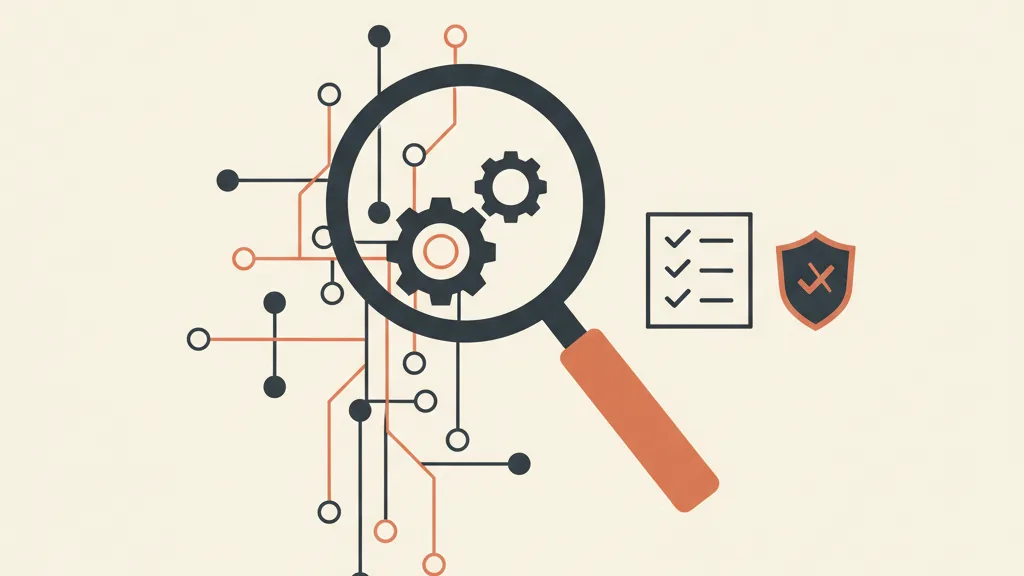
Because the value isn't in the tool, it's in the judgment. A generalist tool gives you 5,000 integrations and zero guidance on which ones to use. A specialized agency knows that for a car dealership the bottleneck is after-hours inquiries, that for a dental practice the problem is no-shows, that for an e-commerce store cart recovery beats cold acquisition. You won't find that knowledge in any dashboard.
| Aspect | DIY generalist tool | Specialized agency |
|---|---|---|
| What to automate | You decide, often by trial and error | Process analysis targeted to your industry |
| Integration with your stack | On you, often incomplete | CRM, back office and switchboard connected end-to-end |
| Regulatory compliance | Not handled | Disclosure, DPA, GDPR and AI Act included |
| Time to first result | Weeks or months of trial runs | Days, with a solution already validated in the industry |
| What happens when it breaks | Your problem | Ongoing maintenance and optimization |
The question isn't "tool or agency" in the abstract. For a simple, non-critical flow, DIY works just fine. But when the automation touches customers, revenue, or sensitive data, the cost of a mistake far outweighs the money saved on consulting. That's where specialization pays for itself.
Want to know which processes are worth automating first in your business, without wasting budget? Request a free assessment: we'll tell you what makes sense to do and what doesn't.
The questions to ask when you're getting quotes
Bring these questions to the first call. The answers will tell you who you're dealing with in five minutes.
- "Show me a real Italian case in my industry, with the numbers." If they don't have one, they're generalists in disguise.
- "In this specific case, is an off-the-shelf SaaS or a custom agent the better fit? Why?" Gauge whether they're thinking about your interests or their margin.
- "How does it integrate with my CRM and my back-office software?" If they gloss over this, integration will be the real problem.
- "Who owns the workflows and the data in the end? Can I take them with me?" Watch out for proprietary lock-in.
- "How do you handle AI disclosure and data processing?" This tests their regulatory competence.
- "What does post-launch support include, and at what cost?" After-sales is where projects go to die.
- "How long do you estimate for the investment to pay back?" If they can't answer, they haven't thought about your ROI.
Red flags: when to walk away from the quote
- Quantitative promises with no source ("guaranteed +300 percent leads"). Automation improves processes, it doesn't perform miracles.
- Zero questions about your processes. If they give you a quote before understanding how you work, they're selling a standard package.
- No mention of GDPR or the AI Act. On topics that touch data and customers, regulatory silence is dangerous.
- Just a conversational chatbot in 2026. If the offer stops at automated FAQs, they're stuck in 2024.
- Contract with no maintenance. Deliver-and-disappear guarantees a system that degrades.
- Closed platform, no export. If you can't take your workflows with you, you're a hostage.
What it costs and how a project is structured
Ranges vary quite a bit, but for a sense of scale: a vertical SaaS (voice AI, WhatsApp automation) starts around €49-200 a month. A custom automation project on n8n with CRM integrations typically runs €3,000 to €15,000 in setup, plus a maintenance retainer. A complex multi-agent system (sales, support, and finance coordinating with each other) can top €25,000. For the details, see how much it costs to automate business processes.
A serious agency structures the work in phases: first an audit and a pilot project on a single high-impact process, then the rollout. Be wary of anyone proposing to automate everything at once in a single move, it's the fastest recipe for a failed project. If you want to understand why so many AI projects never make it to production, read why AI projects fail.
Where AstraLoop stands
Our thesis is simple: in 2026, vertical specialization is worth more than any catalog of tools. We build automations on open standards (n8n, MCP, agents that execute real actions), integrate them into your systems, and tell you honestly when a €49 SaaS is enough and when you genuinely need a custom project. No lock-in, no fluff: the workflows stay yours, the numbers are verifiable, and compliance is part of the project rather than an afterthought. If you want to understand how to get started without wasting money, the place to begin is AI in your business: where to start.
Frequently asked questions
What's the difference between an AI automation agency and a marketing agency?
An AI automation agency designs and integrates systems that run operational processes (customer care, lead management, reporting, appointments) and connects them to your CRM and tools. A marketing agency, on the other hand, works on acquisition and communication. Some overlap exists, but the core of automation work is technical and process-driven, not advertising.
Is a tool like Zapier better, or a specialized agency?
It depends on how critical the process is. For simple, non-critical flows, DIY with a tool works fine. When the automation touches customers, revenue, or sensitive data, the cost of a mistake outweighs the savings on consulting: that's where a specialized agency, one that knows your industry and handles integration and compliance, pays for itself.
How much does it cost to work with an AI automation agency?
The ranges are wide: a vertical SaaS starts at €49-200 a month, a custom project on n8n with CRM integrations typically runs €3,000 to €15,000 in setup plus maintenance, and a complex multi-agent system can exceed €25,000. An honest agency helps you figure out which level you actually need.
How do I tell if an agency is competent and not just good at selling?
Ask for a real Italian case in your industry with real numbers (hours saved, ROI, before and after), check that they discuss build vs. buy without just pushing the pricier option, and make sure they address integration, GDPR, and the AI Act. If all they answer with is features and generic percentages, it's marketing.
Is AI automation compliant with GDPR and the AI Act?
It can be, but it has to be designed that way. The AI Act (EU Regulation 2024/1689) requires transparency: anyone interacting with an AI agent needs to know it. In Italy, Law 132/2025 adds the requirement to disclose AI use on the phone. You also need a DPA with the LLM provider and attention to where the data resides. A serious agency builds these into the project.
What is n8n, and why does it matter when choosing an agency?
n8n is an open-source automation platform, a self-hosted alternative to Make and Zapier, that has become the de-facto standard for SMBs thanks to its native AI Agent node and self-hosting that's useful for GDPR. An agency that works with n8n gives you workflows that stay yours and are exportable, avoiding lock-in to proprietary platforms.
If you're evaluating an AI automation agency and want an honest take on build vs. buy, talk to us: no hard sell, just a concrete assessment of your situation.