AI Voice Assistant for Restaurants: 24/7 Bookings, Fewer No-Shows, More Upsell
8 min read · AstraLoop Studio
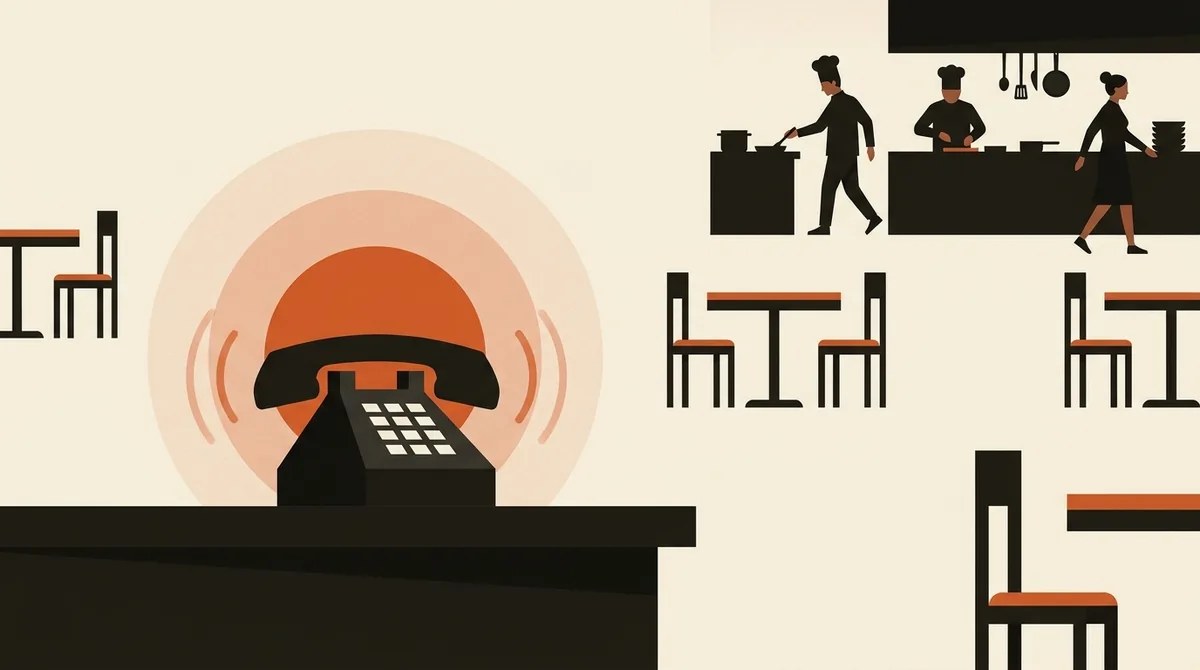
It's 8:45pm on a Saturday. The dining room is full, the kitchen is slammed, and the phone rings for the seventh time in half an hour. Nobody picks up: your hands are full serving tables. The caller wanted a table for eight on Thursday. They don't call back. They go to the restaurant next door.
This scene repeats itself every service in thousands of restaurants. The paradox is brutal: you lose bookings exactly when you're busiest, which is exactly when you're proving you're the right place to be. An AI voice assistant for restaurants exists precisely to close this gap: it answers every call, takes the booking, handles changes and no-shows, and when the moment is right, suggests an upsell too. All of it 24/7, even when the restaurant is closed, even during the rush.
In this article we look at how this works in practice for restaurants, what a missed call is really worth, how it plugs into your reservation system, and what you need to know about the regulatory side (which, as of 2026, is no longer a minor detail).
Why restaurants lose bookings on the phone
The problem isn't staff being lazy. It's structural. Calls to restaurants cluster into three windows that coincide with the moments the team is least available:
- During evening service (7:30-10pm): the floor is running flat out, nobody can spend four minutes on the phone handling a booking with special requests.
- In the afternoon, when the restaurant is closed: between shifts there's often nobody on site. Callers hit voicemail, or nothing at all.
- Late at night and early in the morning: whoever decides "let's just book for tonight" at 11pm gets no answer.
A recurring industry study estimates that between 20% and 30% of calls to a restaurant during peak hours go unanswered. If you run on reservations, every missed call is a table you don't fill, or one that someone else fills. We covered the mechanics of this problem in our article on why you're losing customers on the phone, but for restaurants the math is even more direct, because the value per cover is measurable down to the cent.
What a missed call is really worth
Let's run the numbers, because that's the only serious way to evaluate a tool like this. Assume a restaurant with an average spend of €35 per person and an average booking of 3 covers. Every missed booking is therefore worth roughly €105 in revenue.
| Scenario | Calls/week | Unanswered (25%) | Estimated lost bookings | Revenue lost/month |
|---|---|---|---|---|
| Neighborhood trattoria | 80 | 20 | ~8 | ~€3,360 |
| Mid-size restaurant | 150 | 38 | ~15 | ~€6,300 |
| High-demand venue | 300 | 75 | ~30 | ~€12,600 |
Not every missed call would have turned into a booking, sure. But even recovering half of them, the bill still runs into four figures a month. If you want the full method to calculate this for your own case, you'll find it in our guide on how much a missed call costs a local business. The point is simple: an AI voice assistant pays for itself with a handful of recovered tables a month.
How an AI voice assistant works for restaurants
Forget the "press 1 for reservations" IVR. That routes calls, it doesn't resolve them. A modern AI voice assistant talks. The customer calls, says "I'd like a table for four on Saturday evening around nine," and the AI replies in natural language, checks real-time availability, suggests the closest available time if 9pm on Saturday is full, and confirms. If you want to understand the core difference between the two technologies, we explained it in voice AI versus traditional IVR: containment (calls resolved without human intervention) goes from 30-40% with IVR to 60-80% with a well-configured voice AI.
Here's what it handles in a typical restaurant booking flow:
- New bookings: date, time, number of covers, name, phone number, any notes (high chair, allergies, outdoor table, birthday).
- Real-time availability check against your reservation system, so it never double-books the same slot.
- Changes and cancellations: the customer calls back and moves the time without anyone on the team needing to step in.
- Frequently asked questions: hours, menu, parking, whether you allow dogs, whether you have gluten-free options.
- Waitlist: if you're full, it collects the contact details and notifies the customer if a table opens up.
The voice isn't robotic anymore (which is exactly why it works now)
Every restaurant owner's number-one objection is: "my customers will hate talking to a robot, and a lot of them are elderly or speak in dialect." It's a legitimate concern, and it deserves a serious answer. The technical breakthrough of 2026 is called speech-to-speech (native audio-to-audio): the voice AI generates natural speech directly, with latency under 320 milliseconds, handles interruptions (so-called barge-in, when the customer talks over it) and sounds like a person, not a 2010-era GPS unit.
We dedicated a specific deep dive to understanding regional accents and elderly customers in voice AI, dialects, and elderly customers, because it's the point where vendors oversell the most: the technology is good, but it needs to be tested on your actual customer base before you trust it. Our practical advice: run a two-week pilot phase, listening to the call recordings, before going 100% live.
Cutting no-shows: the real hidden savings
The no-show (someone who books and doesn't turn up) is the silent plague of the restaurant business. A table held for four people who never arrive on a Saturday night is pure burned revenue, because you could have given it to someone else. Industry estimates put no-show rates between 10% and 20%, rising on high-demand nights.
An AI voice assistant attacks the no-show problem on three fronts, without adding any work for the team:
- Automatic reminders: it calls or texts 24 hours and 3 hours before, asking for confirmation. Anyone who doesn't confirm frees up the table in time.
- Proactive re-confirmation: if the customer doesn't respond to the reminder, the AI tries again, so you don't lose the table over a simple "I forgot."
- Waitlist management: when a cancellation frees up a slot, the system calls back whoever was waiting. The table doesn't stay empty.
Healthcare providers, using the same approach, report no-show reductions of up to 70%. In restaurants the numbers are more variable because the decision is more impulsive, but even cutting no-shows in half moves the bottom line in a visible way. Many systems also support WhatsApp messages for reminders: if that channel interests you, see how WhatsApp Business automation with AI works.
Upselling on the phone, without pushing
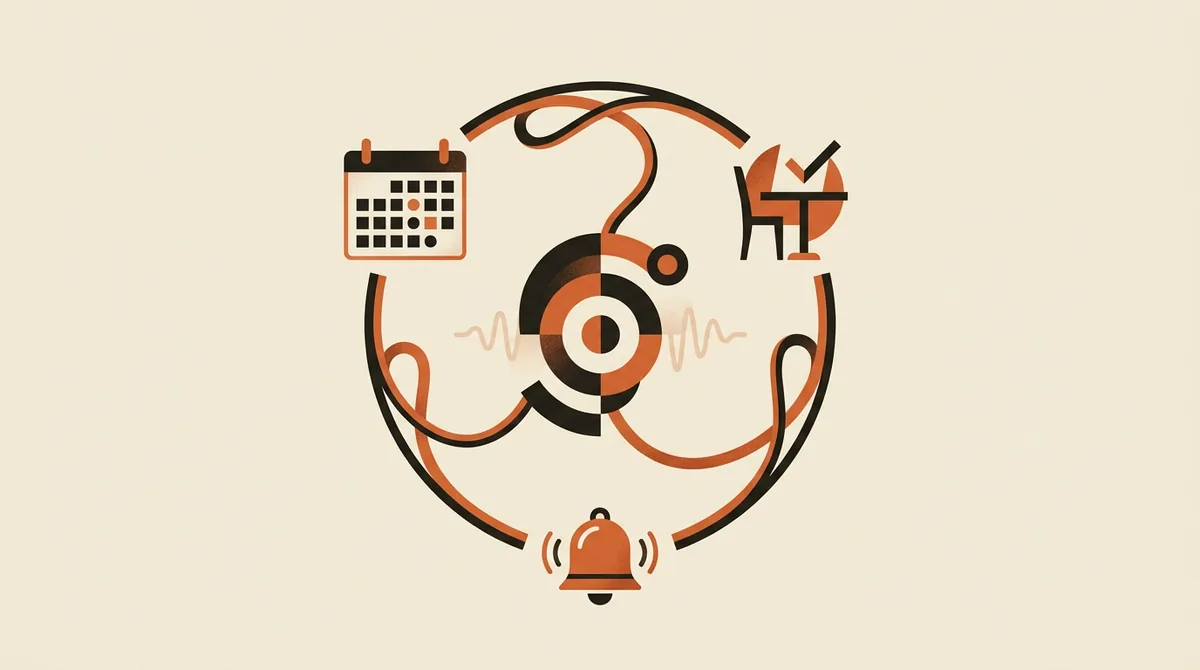
Here's something an AI voice assistant does that a silent phone never will: it raises the average spend before the customer has even walked in. We're not talking about aggressive selling, which backfires in Italian dining culture. We're talking about relevant, gentle suggestions, timed to the moment of booking:
- "I see this is for a birthday — would you like us to prepare a cake or a dessert with a candle?"
- "For groups of eight, we can offer the tasting menu — shall I reserve it for you?"
- "We have a wine list with pairings, if you'd like we'll have it ready at the table."
These are micro-opportunities that the floor team, under pressure, often can't catch on the phone. The AI raises them consistently on every eligible call. Even a 5-8% increase in average spend on booked tables, spread across a year, is a meaningful number.
Want to know how many bookings you're really losing on the phone, and what an AI voice assistant would be worth for your restaurant? Request a free analysis: we start from your real numbers.
Integration with your reservation system
A voice assistant that doesn't talk to your booking system is useless: you risk double bookings and chaos. The real lever here is integration. Serious systems connect to the most common restaurant reservation platforms (table booking platforms, CRMs, calendars) and read/write availability in real time.
What the integration needs to do, in practice:
- Read open slots so it never books a table that's already taken.
- Write the new booking directly into your reservation system, with all the notes attached.
- Update in real time on changes and cancellations.
- Sync with the team's calendar for hours, closures, and fixed-menu evenings.
This is the most technical point, and the one that separates a toy solution from one that holds up on a Saturday night. If you want to understand the logic behind connecting voice AI to your tools, we covered it in how to integrate an AI voice assistant with your CRM. Restaurants are among the most mature verticals for this, alongside healthcare and multilingual hotels and B&Bs, where phone-based booking management follows an almost identical logic.
What happens when the AI can't answer
A fair question, and one vendors often ignore. No AI answers everything. A group with complex requests, a complaint, a question outside the script: this is where you need a handoff to a real person, the so-called human handoff. A well-designed system recognizes when it's out of its depth and transfers the call (or collects the contact details for the team to call back). If this topic interests you — and it should — we explained it for small businesses in how a voicebot's human handoff works. The golden rule: the AI handles repetitive volume, the human handles the cases that require judgment.
The regulatory side: what you need to know in 2026
This section is informational, not legal advice, but it's a point you can't ignore. As of 2026, using voice AI on the phone comes with precise obligations in Italy:
- Italian Law 132/2025: introduces the obligation to disclose to the user that they're interacting with an artificial intelligence system. In practice, when your voice assistant answers, it must make clear that the customer is talking to an AI. We've gathered the operational details in our article on the obligation to disclose AI on the phone (Law 132/2025).
- AI Act (EU Regulation 2024/1689): the European regulation sets out transparency obligations toward users that come into force in stages, with significant deadlines during 2026. What this actually means for a small business is covered in AI Act 2026: obligations for small businesses.
- Call privacy (GDPR): if you record calls, you need a proper privacy notice and legal basis. The Italian Data Protection Authority (Garante Privacy) is the relevant body in Italy. It isn't complicated, but it needs to be done right: inform the customer and keep the data only as long as necessary.
The good news: a serious provider configures all of this "by design," meaning the disclosure and privacy handling are already built in. It's one of the criteria to use when choosing a vendor. Be wary of anyone who doesn't talk to you about compliance.
What it costs and when it pays off
Prices vary a lot depending on call volume and integration complexity, but to give you a ballpark: an AI voice assistant for a single restaurant typically runs a monthly fee in the low-to-mid three figures, plus possible per-minute conversation costs. The full pricing picture is in how much an AI voice assistant costs.
The payoff math is simple. If you recover even just 10-15 bookings a month that you're currently losing, and cut Saturday-night no-shows, the return is almost always positive from the very first month. For a restaurant that runs on reservations, this is among the automation projects with the fastest, most measurable ROI, as we show in our other AI use cases for businesses.
Where to start
If you run a restaurant and recognize the Saturday-night scene we opened with, the first step isn't buying software: it's measuring how many calls you're actually losing. Look at your call logs, count the unanswered calls during peak hours, multiply by your average spend. With that number in hand, the decision makes itself.
An AI voice assistant doesn't replace the hospitality of your floor staff. It does something different: it captures the revenue that walks out the door every time the phone rings and nobody can answer. To understand the full picture of how this technology fits into a business, start with our complete guide to the AI receptionist, which ties all the pieces together: how it works, what it costs, which verticals it fits, and how to stay compliant.
Frequently asked questions
Does an AI voice assistant for restaurants replace the floor staff?
No. It handles phone calls for bookings, changes, cancellations, and frequently asked questions, freeing the team from the phone during service. Hospitality on the floor and complex cases stay with people, with an automatic handoff (human handoff) when needed.
Can elderly customers or people who speak in dialect actually use it?
2026-era voice AI uses speech-to-speech technology with natural speech and significantly improved understanding of regional accents. Our practical advice remains to run a two-week pilot phase on your actual customer base, listening to the recordings, before switching it on 100%.
How does it actually reduce no-shows?
It sends automatic reminders (by phone or WhatsApp) 24 and 3 hours before, asking for confirmation, tries again if the customer doesn't respond, and calls the waitlist when a cancellation frees up a table. In practice, it frees up slots in time that would otherwise stay empty.
Does it connect to my reservation system?
Yes, that's the key point. Serious systems integrate with the leading table-booking platforms and calendars, reading and writing availability in real time to avoid double bookings. Always check compatibility with your specific tool before choosing a vendor.
Is it mandatory to tell the customer they're talking to an AI?
In Italy, Law 132/2025 introduces the obligation to disclose that the user is interacting with an artificial intelligence system, in line with the transparency required by the AI Act (EU Regulation 2024/1689). A serious provider configures this automatically at the start of the call.
What does it cost and how long until it pays off?
Fees vary by volume and integration, typically a monthly base plus a per-minute cost. For a restaurant that runs on reservations, recovering even just 10-15 bookings a month and cutting no-shows usually delivers a positive return from the first month.
If you're considering an AI voice assistant for your restaurant, with reservation system integration and compliance already built in, let's talk: we'll build the workflow tailored to your restaurant together.