SMS marketing open rate: 2026 benchmarks and why it tops 98%
8 min read · AstraLoop Studio
If there were a channel where practically every message you send gets read, would you use it? There is one, and it's SMS. The SMS marketing open rate tops 98%, a number that makes email (stuck around 20%) look like a megaphone in an empty room. But the number on its own doesn't say much. What matters is understanding why it happens and, more importantly, how to turn it into customers who come back to buy.
In this article we look at the real 2026 benchmarks, an honest comparison with email and WhatsApp, and how that 98% translates into concrete impact when you use it to reactivate the stale contacts sitting in your database. Because a sky-high open rate, if you don't tie it to a business goal, stays nothing more than a conference slide.
What "open rate" actually means for an SMS
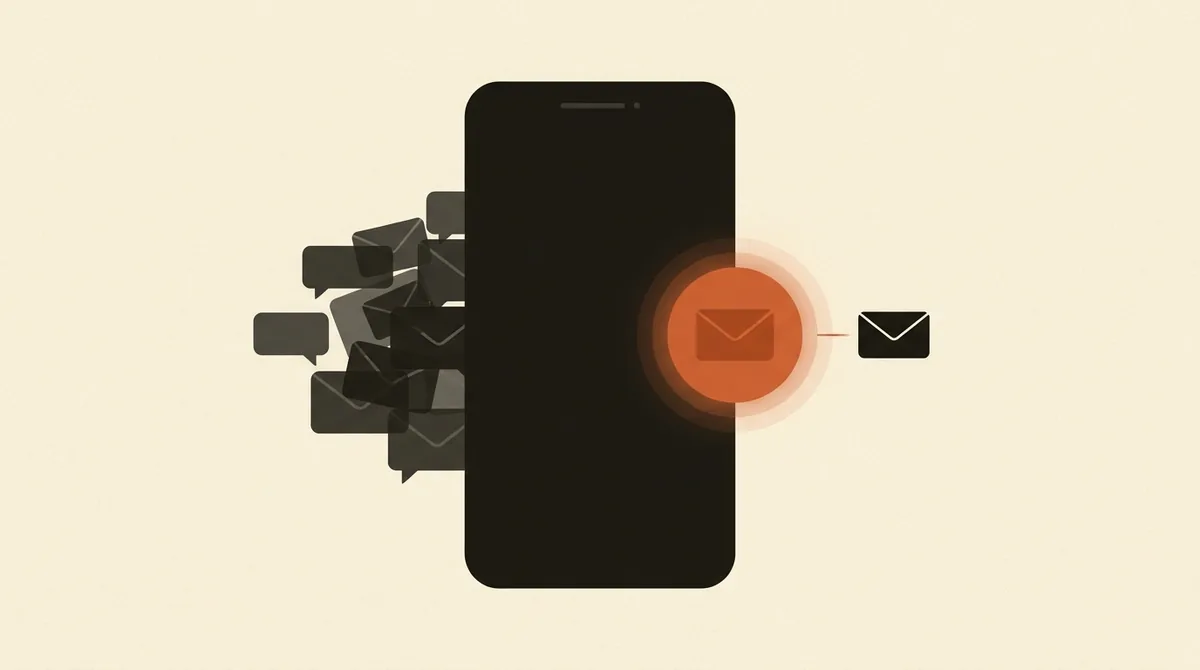
Before you fall in love with that 98%, a technical clarification is in order, because SMS plays by different rules than email. With email, opens are measured through an invisible pixel that loads when the recipient opens the message. It's an imperfect measure: many clients block images, Apple Mail Privacy Protection preloads pixels and inflates the numbers, and the real figure is always an estimate.
SMS doesn't have this problem. There's no tracking pixel: the message lands directly on the phone's lock screen, preview visible without even unlocking it. That's why the open rate is said to approach 100%. In practice, what's being measured isn't "how many people tapped to open it" but "how many messages were delivered and seen" — and on SMS, the gap between delivery and being seen is minimal.
In plain terms: when you send an SMS to a valid contact, it's near-certain they'll read it. No other digital channel gives you that guarantee. So the smart question isn't "will it get read?" but "what do I write in those 160 characters to make them act?"
2026 benchmarks: the numbers side by side
Let's put the three main channels next to each other. These are realistic ranges observed in the Italian and European market in 2026: figures vary by industry, list quality, and send timing, so treat them as orders of magnitude, not guarantees.
| Metric | SMS | ||
|---|---|---|---|
| Open rate | >98% | 15-25% | 60-80% |
| Average read time | within 3 minutes | hours or days | within a few minutes |
| Click rate (CTR) | 8-20% | 2-5% | 15-30% |
| Cost per message | 0,04-0,08 € | <0,001 € | 0,02-0,06 € |
| Text limit | 160 characters | unlimited | unlimited + media |
The picture is clear. Email costs almost nothing but is opened by a minority. SMS costs more per message, yet it gets read almost every time, and fast: over 90% of texts are opened within the first 3 minutes of arriving. That immediacy is its real weapon, more than the open rate itself.
WhatsApp sits in the middle: very high open rates and often the best click rate of the three, because it allows for conversation and media. But it comes with stricter rules on Meta-approved templates and opt-in. If you want to dig into when one beats the other, we've dedicated a specific comparison to WhatsApp versus SMS for marketing.
Why SMS beats email on this metric
The gap isn't random — it comes down to three structural factors.
1. No spam filter standing in the way
Email passes through a chain of filters: Gmail, Outlook, domain reputation systems. You can do everything right and still end up in Promotions or Spam. SMS arrives through the phone network, with no intermediate folders. If the number is valid and the sender is registered, the message gets delivered. Email deliverability, on the other hand, is an ongoing battle, as we explain in why emails end up in spam.
2. A notification you can't ignore
An SMS lights up the screen and stays there until you open it. An email gets lost in an inbox with hundreds of unread messages. The friction to "see" an SMS is zero.
3. A perception of priority
Culturally, SMS is still associated with personal or important communications: the bank's OTP code, the doctor's reminder. That perception works in your favor, but it's also fragile. Use it for daily spam and you'll burn through it fast. And that's where the real game is played.
Turning 98% into reactivation: where the number becomes revenue
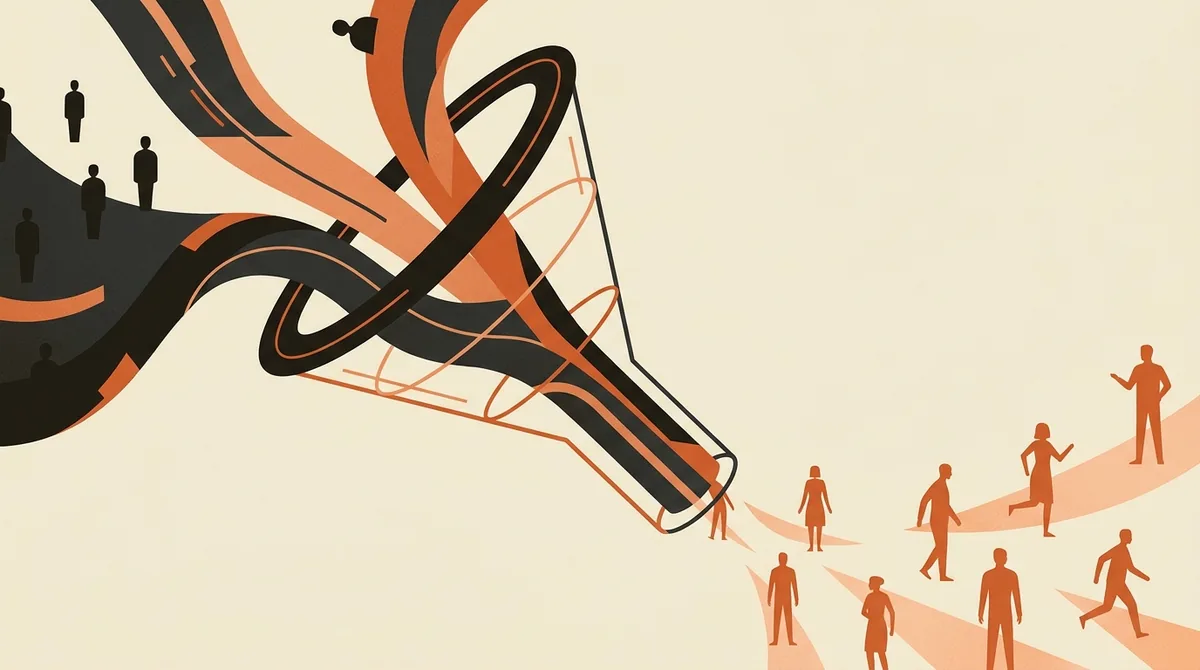
Here's the connection almost nobody makes properly. A 98% open rate has disproportionate value precisely when you're talking to contacts you can no longer reach through other channels: the dormant customers who stopped opening your emails months ago.
Think of a contact who hasn't opened one of your emails in eight months. On the email channel, they're effectively dead — your open rate for them is close to zero. But their phone number is still there. An SMS reaches them almost for certain. It's like having a second key to a door you thought was locked.
Let's run the numbers on a concrete example. You have 5,000 dormant contacts with a valid phone number:
- SMS campaign cost: 5,000 x 0,05 € = roughly 250 €
- Opens: over 98%, so around 4,900 people actually read the message
- 10% click rate: around 490 people click the offer
- 5% conversion on clicks: around 24 recovered sales
With an average order of just 60 €, that's roughly 1,470 € in revenue on 250 € spent. A ROI near 500% on contacts you considered lost — and that's not an optimistic scenario: on dormant contacts, with the right incentive, well-built SMS campaigns regularly exceed 1,000% ROI. You're not acquiring anything new, you're monetizing an asset you've already paid for. That's the whole point of monetizing an underused database.
The economics are even clearer when you look at acquisition costs. Reactivating a dormant customer costs 5-7 times less than acquiring a new one through advertising, and SMS pushes that ratio even lower, since you cut media costs entirely and pay just a few cents per contact. For the full numbers, see reactivation cost versus acquisition cost.
Have a contact database that's been sitting idle for months and want to know what a multichannel reactivation campaign could bring in? Request a free analysis: we'll estimate the possible recovery on your own numbers together.
How not to burn the advantage: deliverability and compliance
A 98% open rate is a privilege, not a right. There are two quick ways to destroy it.
The list quality problem
That 98% only holds for valid numbers with consent. If you send to poorly collected numbers, disconnected ones, or numbers without opt-in, three things happen: you waste budget on failed deliveries, you risk complaints, and in some cases the carrier blocks your sender ID. Before a reactivation campaign, clean your list. This applies to SMS just as it does to email, where the issue is even more sensitive: see deliverability and list hygiene.
The GDPR question around reactivation
This needs care, without alarmism. To send marketing SMS to a contact you need a valid legal basis: in most cases, specific consent to receive promotional communications via SMS, collected transparently. The fact that someone left you their number for an order doesn't automatically amount to consent to receive promotions.
When reactivating old contacts, the issue becomes very real: the more time has passed since the last contact, the more that consent "ages." European guidance (EDPB, guidelines 1/2024 on consent patterns) and Italy's Garante Privacy data protection authority push toward fresh, specific, documented consent. A precautionary window often cited by operators is 24 months since the last meaningful contact, beyond which it's advisable to obtain fresh consent before resuming promotions. It's not a rule set in stone, but a common-sense, risk-management criterion. This is informational context, not legal advice: for a reactivation campaign targeting cold contacts, it's worth having your consent flow validated. We go deeper on the operational side in how to reactivate old customers without GDPR headaches.
SMS as one piece of a funnel, not a standalone channel
The most common mistake is using SMS on its own, as a single broadcast. It performs far better inside an orchestrated sequence. A typical reactivation funnel works like this:
- Win-back email: start with the cheapest channel, on whoever still opens it. You'll find structure and examples in the email win-back sequence.
- Follow-up SMS: a few days later, target whoever didn't open the email. This is where the 98% makes the difference, because you reach exactly the silent contacts.
- WhatsApp or an AI call: for higher-value contacts who still haven't responded, a conversational touch closes the loop.
Automated sequences like this generate up to 320% more revenue than a single broadcast send, because they catch every contact on whichever channel they're still reachable on. SMS isn't the star of the show: it's the channel that recovers whoever the others lost. If you want to see how it all fits together, start with the complete guide to reactivating dormant customers, which ties method, channels, and compliance into a single system.
When SMS is worth it (and when it isn't)
To wrap up, a practical checklist. SMS performs best when:
- You have an urgent or time-sensitive message (offer deadline, last spot available)
- You want to reach contacts who no longer open emails
- The requested action is simple and immediate (a click, a reply)
- The customer's value justifies the few cents of cost
It's worth less when you need to communicate something long and detailed (email is better suited), or when your list is small and active (email is enough on its own). SMS is a scalpel, not a hammer: use it where its open rate and immediacy really matter, which is above all in reactivation.
The 98% is real. But it only turns into revenue when you point it at the right database, with consent in order, inside a sequence that orchestrates multiple channels. The number is the premise: the method is what separates a slide from a campaign that wins customers back.
Frequently asked questions
Why does the SMS open rate top 98%?
Because SMS lands directly on the phone's screen, with no spam filters or intermediate folders like email has. There's no tracking pixel: the message is visible in preview as soon as it arrives, so practically every delivered SMS gets seen, and over 90% within 3 minutes.
How does the SMS open rate compare to email?
SMS tops a 98% open rate, while email sits between 15% and 25% in most industries. In practice, almost everyone reads an SMS, while fewer than one in four opens an email. That's why SMS is unbeatable for reaching contacts who no longer open your emails.
How much does an SMS marketing campaign cost in Italy?
Roughly between 0.04 and 0.08 € per message, depending on volume and provider. For 5,000 contacts, that's about 200-400 €. It costs more than email, but the near-total open rate often makes the cost per actual read lower, especially on dormant contacts.
Does a high open rate guarantee more sales?
No. A 98% open rate is the starting point, not the result. What matters is the message, the incentive, list quality, and whether the SMS sits inside a sequence. A realistic click rate benchmark is 8-20%, with conversions depending on the offer and the segment targeted.
Can I send marketing SMS to old contacts in my database?
You need a valid legal basis, typically specific consent for promotional SMS. On older contacts, that consent ages: beyond 24 months since the last contact, it's worth renewing it. This is informational context, not legal advice: have your consent flow validated before you launch.
Is SMS or WhatsApp better for reactivating contacts?
It depends. WhatsApp has a high open rate and a better click rate because it allows conversation and media, but it requires approved templates and stricter opt-in. SMS has an even higher open rate and universal delivery to any phone. Often the best choice is to use them in sequence, not as alternatives.
Want to turn that 98% into customers who come back to buy, without risking deliverability or compliance? Talk to us: we'll build your custom reactivation sequence.