Meta Ads for Branding or Sales? How to Balance the Two Goals
9 min read · AstraLoop Studio
If you manage an ad budget and every euro has to earn its keep, you've probably asked yourself this more than once: does it make sense to spend on branding campaigns on Meta when the real goal is to sell? For an SMB, the temptation is to put everything into conversion. It's measurable, it's reassuring, and at the end of the month you see the numbers in black and white. The problem is that this approach, pushed to the extreme, leaves money on the table.
The truth is that branding and sales don't run on separate tracks. On Meta they run on the same infrastructure, in front of the same audience, and often the campaign that "doesn't close" is exactly the one that makes another campaign's close possible. So the problem isn't choosing one or the other. It's understanding how much to put into each and how to measure what doesn't produce an immediate purchase.
In this article we look at when branding delivers a concrete return even for businesses that live off sales, how to split the budget without guessing, and which metrics to watch so you don't scrap awareness campaigns just because direct ROAS is low.
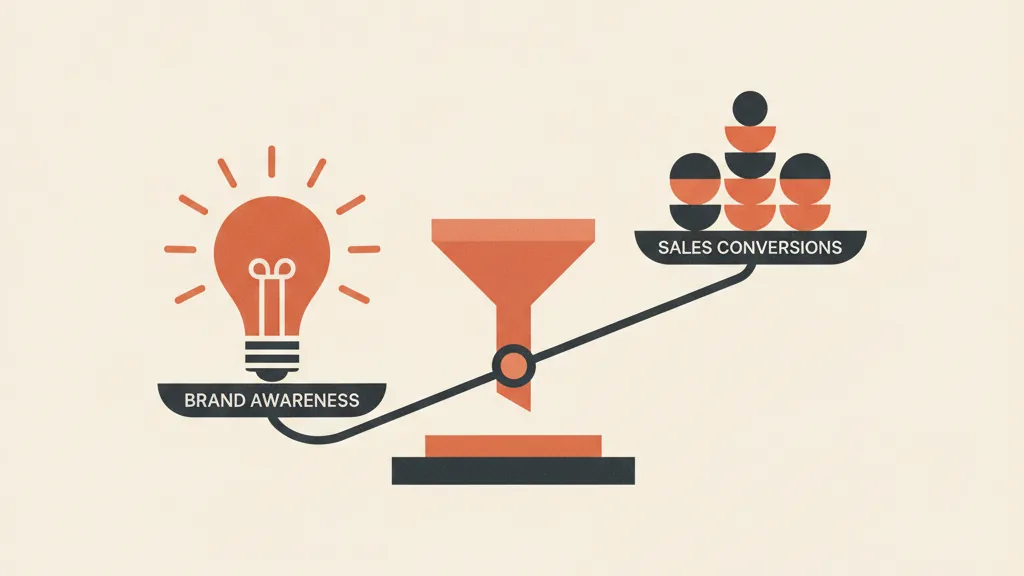
Branding and performance: two sides of the same funnel
Let's start with the terms, because in marketing jargon "branding" has become an umbrella word that means everything and nothing.
By branding we mean campaigns that build recognition, memory and positive associations toward your brand. Typical Meta objective: reach, brand awareness, video views, engagement. They don't ask for an immediate economic action.
By performance (or direct response) we mean campaigns that ask for a conversion: purchase, lead, add to cart, contact. Meta objective: sales, leads, conversions. Here you measure the return directly.
The point is that a customer doesn't go from "I don't know you" to "I'm buying" with a single click. They move through a journey, the classic TOFU MOFU BOFU funnel: first they discover you, then they evaluate you, then they decide. Branding campaigns work at the top and middle of that journey; performance campaigns work at the bottom. If you only invest at the bottom, you're harvesting demand that someone else has been cultivating. Sooner or later that pool dries up and costs climb.
We covered the structural difference between the two approaches in depth in brand vs. performance marketing. The short version: they aren't philosophical alternatives, they're complementary phases that feed each other.
Why ignoring branding drives costs up (over time)
There's a mechanism that anyone who only looks at ROAS misses. When you run performance-only campaigns against an audience that doesn't know you, your CTR is lower, cost per click is higher, and Meta's algorithm penalizes you because your creatives "convert less" for the same push. A user who has already seen your brand three times clicks and converts at noticeably lower cost.
In numbers: against a purely cold audience, an e-commerce brand can pay 30-50% more for a lead or a purchase compared with an audience that's already had prior exposure to the brand. Branding isn't a cost separate from sales. It's what makes sales cheaper.
When branding really pays off for a sales-driven SMB
Not always. And it's worth saying so, because the "brand at all costs" rhetoric has wasted budget for plenty of small businesses. Branding on Meta delivers a concrete return in these scenarios:
- Mid-to-high ticket or a long purchase cycle. If you sell a €2,000 service or a product that requires deliberation, no one buys on the first exposure. You need to be present throughout the evaluation phase. Here branding isn't a luxury, it's the condition for existing in the customer's mind at the moment of decision.
- A crowded market where trust is the differentiator. If ten competitors sell the exact same product, the one with a recognizable brand wins at the same price point. Branding builds that preference.
- A "warm" demand pool you're already saturating. If you notice the cost per acquisition of your conversion campaigns climbing month after month, it often means you've scraped the bottom of the already-ready audience. That's the signal you need to feed the top of the funnel to regenerate demand.
- A new product or category. If the customer doesn't even know a solution to their problem exists, you can't sell it to them directly. You have to educate them first. Here branding and lead generation on Facebook and Instagram work together to build awareness.
When it's NOT worth forcing branding: if you have a very tight budget (under €1,000-1,500 a month), a low-ticket impulse-buy product, and you're still validating the offer. In that case, put everything into conversion, confirm the product sells, and only then open up the top of the funnel.
How to split the budget without guessing
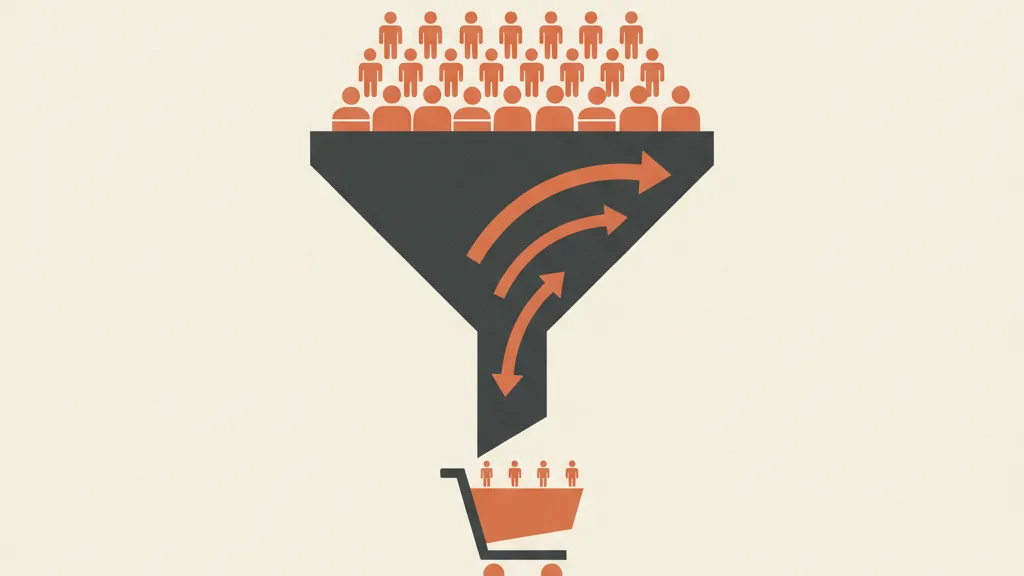
Now for the practical question. If you decide to invest in both, how do you split it? There's no universal formula, but there are solid reference points based on your brand's maturity and the quarter's goal.
| Brand stage | Performance / conversion | Branding / awareness | Notes |
|---|---|---|---|
| New brand, offer still to validate | 80-90% | 10-20% | Prove it sells first, then build |
| Growing brand, stable sales | 60-70% | 30-40% | The most common range for a healthy SMB |
| Mature brand, crowded market | 50-60% | 40-50% | Branding defends market share |
A model frequently referenced is the 60/40 split (60% sales activation, 40% brand building), developed by Les Binet and Peter Field from long-term data. It's a starting point, not a dogma: it needs to be calibrated to your ticket size, sales cycle and seasonality. To set your starting figures right, we wrote a dedicated guide on how to define your advertising budget and one on how much budget you really need on Facebook Ads.
A common mistake: mixing objectives in the same campaign
Keep branding and performance in separate campaigns, with distinct Meta objectives. The mistake we see most often is setting up an "awareness" campaign and then judging it by purchase count. If you chose the reach objective, the algorithm optimizes to show the ad to as many people as possible at the lowest cost, not to find buyers. Judging it on ROAS is like weighing water with a thermometer: you're using the wrong tool.
The real problem: measuring the return of what doesn't close
Here's the knot that trips up most SMBs. You evaluate a conversion campaign with ROAS: you spent 100, brought in 400, ROAS of 4. A branding campaign doesn't give you that number, so the perception is that it's "burning money".
That's not the case. Branding does produce a return, but on different metrics and over a longer time horizon. Here's what to actually look at.
1. Lift metrics: the change the campaign generates
The right question isn't "how many sales did this branding campaign bring in", but "how much has my overall performance improved since I turned it on". Look at:
- Total account cost per acquisition (not the single campaign's): if it drops after you turn on branding, the campaign is working.
- Branded searches on Google: how many people are searching for your name. If it rises, branding is creating demand.
- Direct traffic to the site and the volume of visits from people typing the URL by hand: a sign of recognition.
- Retargeting campaign conversion rate: an audience "warmed up" by branding converts better when you retarget it.
2. MER instead of campaign ROAS
The MER (Marketing Efficiency Ratio) measures total revenue divided by total ad spend, across all campaigns together. It's the metric that best captures the combined effect of branding and performance, because it isn't fooled by single-campaign attribution. If you turn on branding and the account's MER improves, you have your answer. We compared the two metrics in detail in MER vs. ROAS: which metric to use.
3. The limits of last-click attribution
Why does campaign ROAS undervalue branding? Because most systems attribute the sale to the last click before purchase, usually a conversion or retargeting campaign. The branding campaign that got the customer to discover the brand three weeks earlier gets no credit, even though it triggered the entire journey. That's the heart of the problem. It's worth understanding attribution models and their limits and alternatives, because it's precisely flawed attribution that makes branding look "useless".
Not sure if your branding campaigns are working or just burning budget? Request an audit of your Meta account: we'll tell you where the return actually is and how to measure it.
4. Incrementality testing (the cleanest method)
The most rigorous way to measure branding is an incrementality test: turn off the campaign in one geographic area or for one audience, keep it running elsewhere, and measure the difference in total sales. If overall sales drop where you turned branding off, that's proof it was contributing, even if its direct ROAS was low. Meta offers brand lift and conversion lift tools for this, but even a simple geo test gives you useful signal.
Connecting Meta to your CRM to see the full picture
For an SMB with a long sales cycle (services, B2B, high ticket), the sale often doesn't happen on the site but after a phone call, a quote, a negotiation. In these cases, the pixel's ROAS is blind to half the journey. The solution is to connect real conversion signals (from the CRM) back to Meta, through offline conversions and the Conversions API.
That way Meta learns who the customers that actually close really are, not just who fills out a form, and the algorithm optimizes toward quality leads. This also changes how you evaluate branding: if the CRM receives warmer leads that are more likely to close when branding is active, you have a return data point the pixel alone would never have shown you. We go into this in detail in Meta Ads and CRM: conversion signals.
A practical 4-step approach
- Start with conversion if you're just launching. Confirm the offer sells. There's no point building awareness for a product no one wants to buy.
- Introduce branding when conversion costs start climbing. That's the signal the warm audience is running dry. Open the top of the funnel with 20-30% of the budget.
- Measure at the account level, not the campaign level. Watch MER, total cost per acquisition, branded searches. Give branding at least 60-90 days before judging it: its effect is cumulative.
- Connect the CRM. If you sell services or high-ticket items, without offline conversions you're optimizing blind. With the CRM connected you see the real quality, and branding's value becomes visible.
The right balance isn't a percentage carved in stone. It's a dynamic equilibrium that shifts depending on where your brand stands and what signals your account is sending. What matters is to stop seeing branding and sales as rivals fighting over the same budget. They're two parts of the same engine: one fills the tank, the other turns the wheels.
If you want to set all of this up in a structured way, this article is part of our strategic guide to Meta Ads for 2026, where you'll find the full picture on making awareness and conversion work together in the Advantage+ era.
Frequently asked questions
Do branding Meta Ads bring direct sales?
Rarely in an immediate way you can measure with ROAS. Their return is indirect: they lower the cost of conversion campaigns, increase branded searches, and improve retargeting close rates. They need to be measured across the whole account, not on the single campaign.
How much budget should go to branding versus sales?
It depends on the brand's maturity. A business that still needs to validate its offer should put 80-90% into conversion. A growing brand often settles around 60-70% performance and 30-40% branding. The classic 60/40 reference needs to be calibrated to ticket size and sales cycle.
How do I measure the return of a campaign that doesn't close direct sales?
With lift metrics (total account cost per acquisition, branded searches, direct traffic), with MER instead of campaign ROAS, and ideally with geographic incrementality tests that compare sales where the campaign is on versus off.
Why does ROAS undervalue branding campaigns?
Because most systems attribute the sale to the last click, usually a conversion or retargeting campaign. The branding campaign that triggered brand discovery weeks earlier gets no credit, even though it kicked off the entire purchase journey.
Should a small SMB invest in branding on Meta?
Only if it has already validated its offer and notices conversion costs climbing, or if it has a high ticket, a long sales cycle, or operates in a crowded market. With a very tight budget and an impulse-buy product, it's better to focus on conversion.
How can I tell if branding is working before the 3-month mark?
Watch the early signals: rising branded searches on Google, growth in direct traffic to the site, improvement in CTR and in retargeting campaign conversion rate. These indicate the audience is warming up, before the full effect on sales shows up.
Want to balance awareness and conversion without guessing, connecting real signals from your CRM? Talk to us and let's build the right strategy for your business together.