The Messy Middle: How Google Ads Navigates the Chaotic Buyer Journey
9 min read · AstraLoop Studio
For years we were taught that the buyer journey is a funnel: awareness at the top, interest in the middle, purchase at the bottom. Clean, orderly, predictable. The problem is that no real customer behaves that way. Buyers open a dozen tabs, close them all, come back three days later, ask a friend, search for the same product three times with different words, and end up picking the brand they saw the most without being able to say why.
In 2020, Google's research team put a name to this confusing zone: the messy middle, the chaotic space between the moment someone realizes they have a need and the moment they buy. It's not an abstract theory: it's a model built on a real behavioral experiment, with very concrete implications for where to put your ad budget. In this article we'll look at what the model actually says and how to translate it into a Google Ads presence that owns the right touchpoints, connected to your CRM's nurturing.
What the messy middle actually is, according to Google
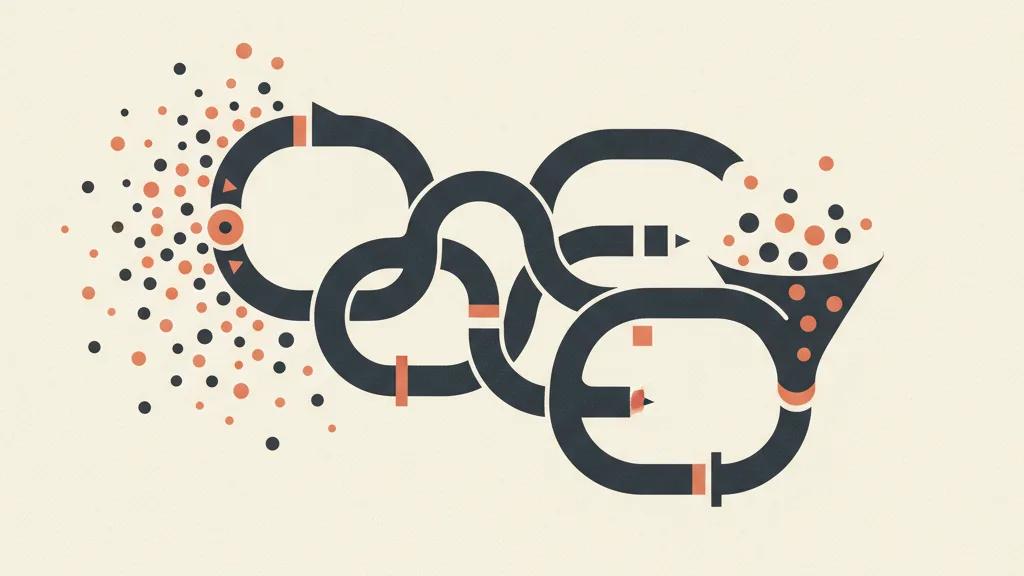
The model comes from a Google study called "Decoding Decisions", carried out with the behavioral science firm The Behavioural Architects. The starting idea is simple: between the initial trigger ("I need a new office chair") and the actual purchase, people don't move in a straight line. They cycle continuously between two mental activities:
- Exploration: an expansive activity. The person widens the field, discovers brands, reads reviews, watches videos, adds options to the list. The more they search, the more options appear.
- Evaluation: a narrowing activity. The person shrinks the field, compares, eliminates, convinces themselves or talks themselves out of it. The more they evaluate, the fewer options remain.
The key point is that these two movements don't happen once, in order. They alternate, repeat, and overlap. Someone might explore, then evaluate, then go back to exploring because a doubt put them back in play. This cycle keeps going until the purchase happens, and its length is unpredictable: it can take twenty minutes or three months. That's why it's "messy".
Around this loop sit two fixed poles: the trigger (the spark that kicks everything off) and the experience (using the product once bought, which in turn feeds the trigger for the next purchase). But the real game, the one marketing can actually influence, is played in the middle.
The six cognitive biases that decide the purchase
The most useful part of Google's research isn't describing the loop, it's testing which behavioral levers actually tip the scale inside the messy middle. In the experiment they simulated over 300,000 purchase scenarios and measured how much each bias shifts preference from one brand to another. Six principles emerged as the most powerful:
| Bias | What it does | How it translates into advertising |
|---|---|---|
| Category heuristics | Key product descriptions simplify the choice | Sharp specs in ads: numbers, dimensions, warranties |
| Power of now | Less waiting time, more perceived value | "Delivery in 24h", "Available now", "Instant activation" |
| Social proof | Recommendations and reviews from others reassure | Star ratings, customer counts, testimonials in creative |
| Scarcity bias | Less availability, more desirability | Limited stock, time-limited offer (if real, never fake) |
| Authority bias | Authoritative sources or experts guide the decision | Certifications, awards, endorsements, verifiable data |
| Power of free | A relevant freebie increases the push to act | Free trial, free shipping, first month included |
These biases aren't tricks to manipulate people with. They're mental shortcuts people already use to decide fast when they have too many options. Your job is to make the brand easy to choose in that moment, not to deceive. In the messy middle, the winner is whoever reduces cognitive friction, not whoever shouts the loudest.
Why the messy middle changes how you use Google Ads
If you accept that the journey is a loop and not a funnel, some common assumptions about advertising collapse. Let's look at the three most important ones.
1. There's no single "right moment" to catch people
With funnel logic, you try to place the ad "at the bottom", close to the purchase, so as not to waste budget. But in the messy middle, a person passes through dozens of micro-moments of exploration and evaluation. If you only show up at the end, you're an outsider popping up at the last second. If you're consistently present throughout the loop, you become the default option, the one the person already knows and doesn't need to re-evaluate from scratch.
2. Reach matters as much as conversion
Google calls this strategy "being present and persuasive". The idea is that amid the chaos, the already-known brand starts ahead: the mind prefers what it recognizes. That doesn't mean burning budget on random impressions, but building smart presence across formats that cover both exploration and evaluation. That's why formats like Demand Gen campaigns and Performance Max have taken center stage: they cover Search, YouTube, Discover and Gmail at the same time, following the person as they oscillate.
3. One channel alone can't close the loop
The messy middle spans Search (when someone is actively looking), YouTube (when they're exploring and informing themselves), visual shopping, and remarketing (when they come back after a pause). Owning just one touchpoint means showing up in a single frame of a long film. That's why dynamic remarketing isn't an optional add-on but the connective tissue that keeps the brand visible during the gaps in the loop, when the person has closed every tab but still hasn't decided.
How to build presence at the key touchpoints
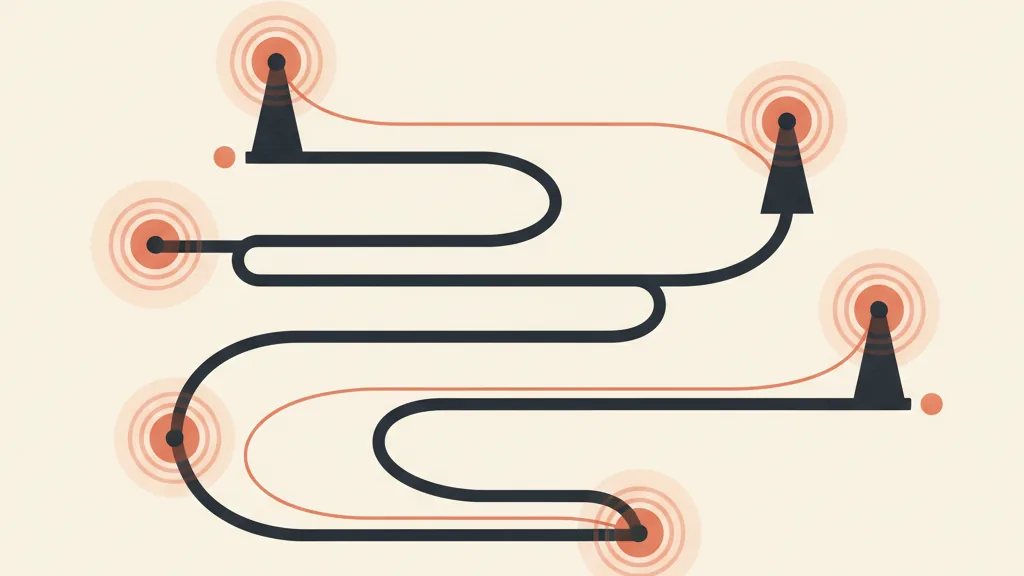
Let's get practical. Here's how to turn the model into a campaign structure that covers the loop instead of a single point.
Map your market's actual touchpoints, not the theoretical ones
The messy middle is universal, but the concrete touchpoints change from sector to sector. A furniture e-commerce store and a B2B consulting firm have very different loops. Before launching a campaign, write down where your people explore and where they evaluate:
- Where they explore: generic searches ("best CRM for SMBs"), comparison videos, blog content, social media. This calls for Search on informational keywords, YouTube, Demand Gen.
- Where they evaluate: brand searches, searches with modifiers ("pricing", "reviews", "vs"), product pages. This calls for Search on commercial keywords, remarketing, ads with social proof and price.
This mapping connects directly to work on funnel stages (TOFU, MOFU, BOFU): not to bring back the linear funnel, but to assign the right format and message to each stage.
Trigger the right biases in the right format
Not all six biases work everywhere. During exploration, category heuristics and authority matter most: the person wants to understand who you are and whether you're credible. During evaluation, social proof, immediacy and free offers tip the scale: the person is nearly decided and looking for one last reassurance. Build your creative accordingly. A Search headline for TOFU might say "Custom CRM for Italian SMBs, built into your funnel"; one for BOFU might say "Over 120 companies onboard, free 20-minute demo".
Don't neglect brand
In the messy middle, familiarity is a measurable competitive edge. Brand campaigns protect people who are already evaluating and searching for you specifically, keeping competitors from intercepting them at the last mile. Combined with steady presence during exploration moments, they build the recognition that triggers the default choice.
Want to see where your messy middle is losing customers and how to own the right touchpoints? Request an analysis of your campaigns and their connection to your CRM.
The missing piece: connecting Google Ads to CRM nurturing
This is where any reasoning confined to the ad platform hits its limit. The messy middle often doesn't wrap up in a single session. The person clicks the ad, leaves their contact info, and then disappears back into their loop for days or weeks. If you stop tracking at the click, you've paid for a lead that's still oscillating between exploration and evaluation, and you're leaving them alone at exactly the most delicate moment.
Ad presence and nurturing need to work as a single system. In practice, that means three things.
1. Pass leads from Ads to CRM in real time
Every lead generated by Google Ads should enter the CRM immediately with the source tracked, so you know which campaign, keyword and touchpoint it came from. Without this link, you'll never know which moments of their messy middle actually worked. A custom-built CRM connected to your campaigns turns clicks into a readable story, not isolated numbers on a dashboard.
2. Keep the conversation going while the person evaluates
After the initial contact, nurturing picks up the baton from advertising. Email sequences, WhatsApp messages, automated follow-ups: they keep the brand present during the gaps in the loop, exactly the way remarketing does, but on a channel you own. When you coordinate funnel and CRM, the two tools reinforce each other: ads bring the person in, nurturing walks with them until they're ready to seriously evaluate.
3. Feed conversion signals back into Google Ads
This is the loop few people ever close. When a lead becomes a customer in the CRM, that information needs to flow back to Google through offline conversions. That way, the smart bidding algorithm learns to chase not whoever clicks, but whoever actually buys. It's the most effective way to get the platform optimizing toward the messy-middle touchpoints that generate revenue, not just traffic.
Attribution: the messy middle's Achilles' heel
If the journey is a loop with dozens of touches, the last thing you want is a last-click attribution model that hands all the credit to the final ad clicked. Last-click ignores all the exploration and evaluation that made that final click possible, and it pushes you to cut exactly the mid-loop touchpoints that build preference.
That's why thinking in messy-middle terms also means rethinking how you measure. Data-driven attribution models, which spread credit across multiple touches, are more consistent with a non-linear journey. And it's worth knowing their limits: no model perfectly reconstructs a loop this chaotic, and blindly trusting a single number can lead you to the wrong calls. The ideal measure remains incrementality: did the advertising actually move sales compared to a group that never saw it?
Putting it all together
Let's recap the operational logic in one clear flow:
- Accept the loop. Stop looking for the magic moment and design continuous presence across exploration and evaluation.
- Cover the touchpoints. Search for active intent, YouTube and Demand Gen for exploration, remarketing for the gaps, brand to protect the choice.
- Trigger the right biases in the right format: authority and category cues early on, social proof and immediacy close to the decision.
- Connect Ads and CRM. Real-time leads, nurturing during the wait, offline conversions flowing back to Google.
- Measure in non-linear terms. Data-driven attribution used with awareness of its limits, and incrementality as your compass.
The messy middle isn't a problem to solve: it's how people actually buy. Whoever builds a customer acquisition system that respects this reality, instead of forcing it into a theoretical funnel, spends better, converts more, and builds an edge that competitors still loyal to the old funnel don't even see.
Frequently asked questions
What is the messy middle, in plain terms?
It's Google's model for describing the real buyer journey: not a linear funnel, but a chaotic zone between the initial need and the purchase where a person constantly bounces between exploration (widening their options) and evaluation (narrowing them down), repeating the cycle until they decide.
What are the six messy middle biases?
Category heuristics, power of now, social proof, scarcity bias, authority bias, and power of free. According to Google's research, these are the behavioral levers that shift preference from one brand to another the most within the decision loop.
How does the messy middle apply to Google Ads?
Instead of aiming for a single moment close to the purchase, you build consistent presence across multiple touchpoints: Search for active intent, YouTube and Demand Gen for exploration, remarketing for the gaps, and brand campaigns to protect the final choice. The goal is to become the default option.
Does the messy middle make the classic funnel useless?
No, it complements it. The funnel is still useful for assigning the right format and message to each stage (TOFU, MOFU, BOFU), but it should be understood as a loop rather than a one-way descent: people go back, leave and return multiple times before buying.
Why does Google Ads need to connect to the CRM?
Because the buying loop often doesn't wrap up in a single session. By passing leads to the CRM in real time, keeping the conversation going through nurturing, and feeding offline conversions back to Google, the brand stays present during the wait and the algorithm learns to optimize toward people who actually buy.
Which attribution model should you use with the messy middle?
It's best to avoid last-click, which ignores all the intermediate touches. Data-driven models spread credit across multiple touchpoints and fit a non-linear journey better, but they should be used with an awareness of their limits; the most reliable measure remains incrementality.
If you want to turn your Google Ads clicks into a system that guides people through the entire buying loop, talk to us and let's build your journey together.