Setter vs Closer: Roles, Responsibilities, and How They Work Together
9 min read · AstraLoop Studio
If you're building a sales team or evaluating an appointment-setting service, sooner or later you run into two words: setter and closer. They get used as synonyms all the time, and that's where the first mistake creeps in. These are two different roles, with different goals, different metrics, and different personality profiles. Asking a setter to close deals, or a closer to run cold prospecting, almost always wastes both of them.
In this article we'll sort it out: what a setter actually does, what a closer actually does, and exactly where one job stops and the other picks up. Most importantly, we'll cover how to manage the handoff without losing the appointments you paid to generate — because that's where most of the value gets burned.
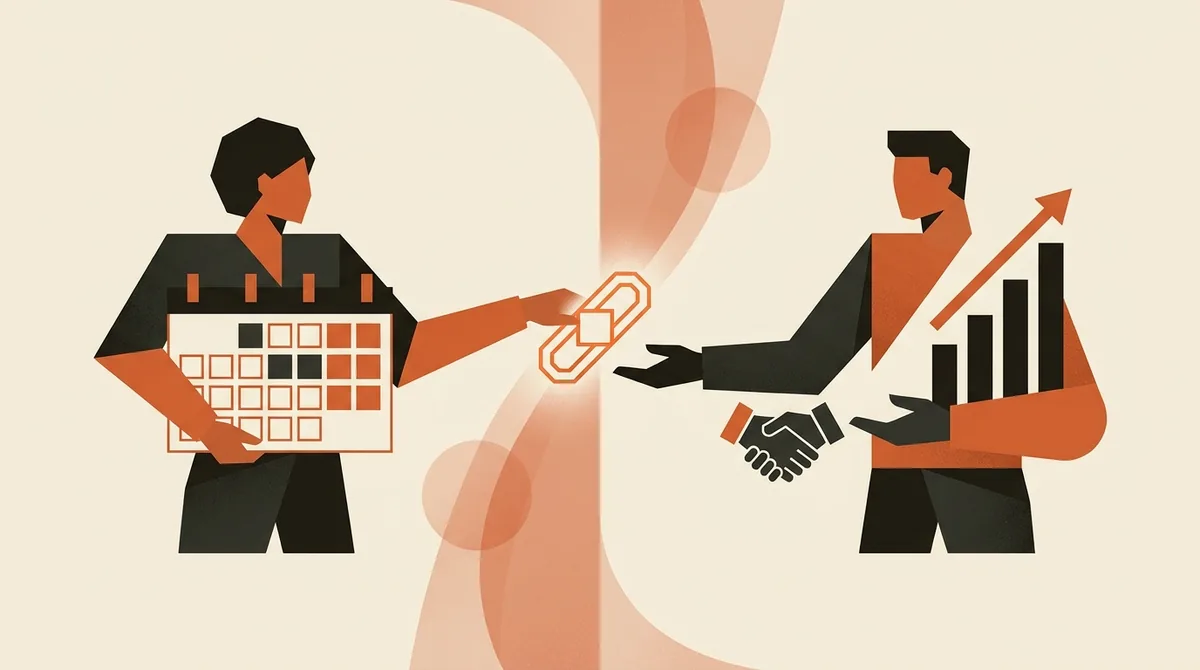
Setter and closer in one sentence
The most honest way to put it: the setter fills the calendar, the closer fills the bank account.
- The setter (or appointment setter) reaches out to prospects, engages them, checks whether they're a fit, and books a meeting with the right person. They don't sell. They qualify and schedule.
- The closer takes that already-booked meeting, runs the actual sales conversation, handles objections and pricing, and brings home the signature or the payment.
Two jobs with the same ultimate goal (revenue) but completely different levers. The setter works on volume and speed. The closer works on the depth of a single conversation. Putting both on one person's plate only works when volume is low; the moment your acquisition engine scales up, keeping the roles separate is almost always more efficient. If you want the full picture of where these two roles fit, start with our end-to-end customer acquisition system: setter and closer are two gears in that machine, not the whole machine.
What a setter actually does
The setter sits at the top of the pipeline, where the contact is still cold or lukewarm. Their typical work:
- Outreach and first contact: cold email, LinkedIn messages, calls, follow-ups. Today the first touch is often automated or AI-assisted, and the setter steps in once a reply comes in.
- Preliminary qualification: figuring out whether the contact has budget, need, decision-making authority, and timing. It doesn't need to be a deep analysis — it just needs to be a filter: does this deserve a meeting with the closer, yes or no?
- Handling early objections: not the pricing ones (those belong to the closer), but the engagement ones ("I don't have time," "just send an email," "we're not interested").
- Booking the meeting: locking in date, time, and channel, putting the event on the closer's calendar, sending reminders to cut down no-shows.
- Passing on context: collecting and handing off information (who they are, what they need, what they said) to the closer.
The setter's metric is not revenue. It's meetings booked, meetings actually held (show rate), and quality of the lead handed off. A setter who generates 20 junk meetings is worth less than one who generates 8 solid ones. We've dedicated a full breakdown to this role: read what a setter does for the operational detail.
The setter as a quality filter on AI outreach
In 2026, the model that works best isn't "a human setter doing everything by hand" nor "AI closing deals on its own." It's a hybrid: AI handles multichannel sequencing and the first exchanges, while the human setter steps in on live replies, qualifies with judgment, and books the meeting. AI brings the volume, the human brings the filter. That's exactly the logic behind performance-based appointment setting, where you only pay for meetings (or shows), not for hours.
What a closer actually does
The closer only enters the picture once there's already a qualified meeting on the books. Their work:
- In-depth discovery: genuinely understanding the problem, its economic impact, who the decision-maker is, and what happens if it doesn't get solved.
- Presenting the solution: connecting your offer to the specific problem that surfaced, instead of running the same generic demo every time.
- Handling substantive objections: price, timing, competitor comparisons, internal pushback within the company.
- Negotiation and close: setting terms, handling pricing, asking for the signature. Asking for the order, not waiting for the customer to offer it.
- Handoff to onboarding/delivery: handing the signed customer over to the delivery team with the right context.
The closer's metric is close rate (deals won / meetings held), average deal value, and sales cycle length. A closer should be measured on the meetings that actually reach them qualified: if the setter hands them junk, their close rate collapses through no fault of their own. That's why the two roles always have to be read together.
Setter vs closer: the comparison table
| Dimension | Setter | Closer |
|---|---|---|
| Goal | Book qualified meetings | Close the sale |
| Position in the funnel | Top (cold/lukewarm) | Bottom (warm) |
| Typical contact | Unknown or just engaged | Already interested, meeting booked |
| Main activity | Outreach, qualification, booking | Discovery, demo, negotiation |
| Objections handled | About engagement ("I don't have time") | About substance (price, value) |
| Key metric | Meetings held, show rate | Close rate, average deal value |
| Profile | Resilient, fast, high contact volume | Empathetic, analytical, fewer but better conversations |
| Typical pay | Base + bonus on meetings/shows | Base + commission on sales |
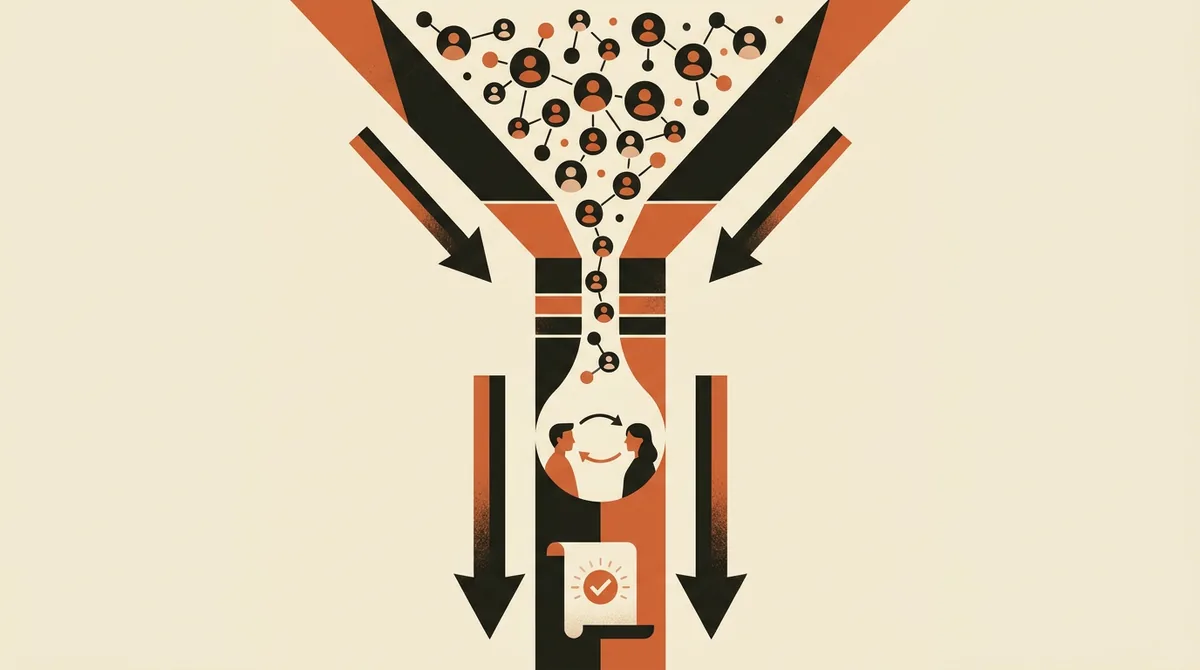
The handoff: where the pipeline wins or loses
You can have the best setter and the best closer around and still lose deals if the handoff between them is sloppy. The handoff is the most fragile moment in the whole process, and it's almost always neglected. A clean handoff needs three things.
1. A shared definition of a "qualified meeting"
Setter and closer need to be working from the same criteria. If the setter thinks "anyone who said yes" counts as qualified, and the closer expects confirmed budget and the decision-maker present, you'll get constant friction. You need a written agreement (often called an internal SLA) on what makes a meeting acceptable. It's the same logic behind the MQL and SQL model: qualification needs to be defined, not guessed at. If you haven't done that yet, start with how to qualify leads in a repeatable way.
2. A structured context handoff
The closer shouldn't have to start from zero. The setter passes along a brief: who the contact is and their role, the stated problem, what prompted them to respond now (the trigger), objections already raised, budget or timing if it came up. This goes into the CRM, not into a WhatsApp message that gets lost. Good automated sales follow-up helps make sure these details don't fall through the cracks.
3. Clear rules on timing and responsibility
- Who sends the reminders before the meeting? (usually the setter, via automation)
- What happens if the customer doesn't show up? Who follows up and rebooks?
- If the closer discovers the meeting was poorly qualified, how do they flag it back to the setter so it doesn't happen again?
This feedback loop is gold. A closer who tells the setter "these three meetings were off-target for this reason" makes the qualification better week after week. Without feedback, the setter just keeps churning out the same kind of bad meetings.
An example of a handoff that works
Picture an agency selling consulting services. The setter spots a marketing manager on LinkedIn at a company that just announced a funding round (a clear buying signal). A couple of messages in, they learn there's a lead-generation problem and budget available, and they book a 30-minute call for Thursday. Before the call, they log the brief in the CRM: name, role, trigger (new funding round), problem (unstable pipeline), expectation (wants to know if this is feasible within 90 days). The closer walks into the call already briefed, doesn't waste 10 minutes discovering the obvious, goes straight into deep discovery, and closes a pilot contract. Total time spent by the closer: one call. The setter did all the groundwork upfront.
Want to know whether your sales process should split setter and closer, or build a pipeline of already-qualified meetings? Request an analysis of your pipeline and let's talk it through.
When you need just the setter, just the closer, or both
Not every company needs two separate roles. It depends on volume and the complexity of the sale.
- Closer only (or a single salesperson): if you already get qualified inbound requests and volume is modest, one person who qualifies and closes can be enough. Generating meetings isn't the bottleneck.
- You need a setter: when you're doing cold outbound, when contact volume is high, or when the closer's time is too expensive to spend chasing people who don't reply. Splitting the roles frees the closer to do only what they do best.
- Both, structured: when you want a predictable, scalable pipeline. This is the standard model in mid-to-high-ticket B2B sales, and it's also the core of a qualified B2B appointment agency: the setter (human + AI) fills the calendar, your closer closes.
A common mistake: hiring a great closer and then leaving them to do cold prospecting because "they know how to sell anyway." Result: you're paying an expensive resource for work they hate and are bad at, and their close rate gets cut in half. Splitting the roles isn't bureaucracy — it's economics. If you want to understand how to fit these roles into a structure that brings you contacts consistently, read how to get a steady flow of customers.
Setter and closer in 2026: the role of AI
The question we get asked a lot: "with AI agents, do I still need a human setter?" The honest answer is yes, but what they do changes. Today, AI handles volume well: multichannel sequences, first messages, follow-ups, routing replies. What AI still doesn't do reliably is fine-grained judgment on an ambiguous reply, reading context, and building trust in a delicate conversation.
The model that holds up in 2026 is AI for volume, humans for filtering and relationship-building. An AI agent for lead generation can bring you 10 times the engaged contacts, but you still need a setter to decide which ones deserve the closer's time, and you still need a closer to bring home the signature. Anyone selling you "AI that closes deals on its own" is selling you smoke. If you're curious how the two outreach channels compare, take a look at cold email vs LinkedIn.
Here's the strategic point: setter and closer aren't an organizational footnote — they're the load-bearing structure of your conversion. The difference between a pipeline that loses 40% of its meetings in the handoff and one that loses 10% is often the entire margin. Define the two roles, write down the rules for the handoff, measure the right metric for each, and close the feedback loop between them. Everything else is execution.
Frequently asked questions
What's the difference between a setter and a closer, in plain terms?
The setter fills the calendar, the closer fills the bank account. The setter reaches out to prospects, qualifies them, and books the meeting; the closer runs the actual sales conversation and brings home the signature. Two different roles with the same ultimate goal: revenue.
Can a setter also close sales?
They can, when volume is low, but as soon as the pipeline grows it's better to split the roles. Setter and closer require different profiles, metrics, and levers: the setter works on volume and speed, the closer on the depth of a single conversation.
How do you measure a setter versus a closer?
The setter is measured on meetings held (show rate) and the quality of the leads handed off, not on revenue. The closer is measured on close rate, average deal value, and sales cycle length. Measuring them with the same metric is a mistake that hides the real problems.
What is the handoff between setter and closer?
It's the handover of the meeting from the setter to the closer. For it to work you need three things: a shared definition of a qualified meeting, a structured context handoff in the CRM, and clear rules on reminders, no-shows, and feedback. It's the most fragile point in the process.
With AI agents, do I still need a human setter?
Yes, but what they do changes. AI handles volume (sequences, first messages, follow-ups); the human setter steps in on ambiguous replies, qualifies with judgment, and builds trust. The model that holds up in 2026 is AI for volume, humans for the filter.
When is it worth keeping the two roles separate?
When you're doing cold outbound, you have high contact volume, or the closer's time is too expensive to spend chasing people who don't reply. In mid-to-high-ticket B2B sales, separating the roles is the standard, and it makes the pipeline more predictable and scalable.
If you want a machine that brings you qualified meetings and leaves your closer with nothing to do but close, talk to us: we'll analyze your case and tell you what actually makes sense.