The Best B2B Lead Generation Tools (and Which Ones Are Actually Enough)
8 min read · AstraLoop Studio
You're looking for the best B2B lead generation tools, and every article spits out a list of 30 of them. Apollo, Clay, HubSpot, Unbounce, Cognism, Drift. You'd think winning customers required an IT department.
It doesn't. It's the opposite.
Most companies buy eight tools and use two. They pay for licenses nobody opens. The tool isn't the strategy, it's the last thing you decide, not the first. Here's the honest list, but more importantly, we'll tell you which tools are actually enough, one for each job the funnel needs to do.

Why 30-tool lists cost you money
The typical guides to lead generation software share a structural flaw. They list tools by category but never tell you how many you actually need. The result is stack sprawl: you pile up tools that overlap.
You pay for a CRM that already has forms. You pay for a separate form tool. You pay for a separate landing page tool. Three licenses for one job. Multiply that across six months and you've burned a budget that could have gone into advertising or into a person. That's true for a software company just as much as for a car dealership paying for three separate systems to collect the same leads from its website.
The rule is simple: one tool per stage, zero redundancy. If two tools do the same thing, one of them is shelf-ware, software you pay for and never use. The right question isn't "what's the best tool?" but "which job in the funnel am I not covering yet?".
The 5 stages a lead generation stack has to cover
Every customer acquisition tool, however sophisticated, exists to do one of five things. Think in stages, not brands. Cover all five and you have a system. Miss one and no flagship tool will make up for it.
- Attract: get the right people in front of your offer (ads, SEO, LinkedIn, cold email).
- Capture: turn an anonymous visitor into a contact (landing page, form, lead magnet).
- Qualify: figure out who's worth sales' time and who isn't (lead scoring, data enrichment).
- Nurture: stay with people who aren't ready to buy yet (email automation, retargeting).
- Measure: know what a lead costs and where it came from (analytics, tracking, CRM).
That's the skeleton, the same logic behind the lead generation funnel: every stage has a number and a dedicated tool. Let's see which tools cover each one. If you're starting from zero and want the bigger picture first, read what lead generation is and how it works.
Attract and capture: where leads are born
This is where channels come into play. For inbound you need a way to publish (your site or a CMS) and a way to catch warm traffic. Outbound needs something else.
Tools for traffic and ads
Google Ads and LinkedIn Ads remain the two most direct engines for B2B. LinkedIn lets you target specific roles and companies, Google catches people already searching for you. If you sell to consumers instead, the center of gravity shifts: a gym or an e-commerce store usually finds more traction on Meta Ads and local search. Either way, you don't need a separate "tool", you need to know how to use them and a sensible budget. Below 800-1,500 €/month in Google spend, the data is too noisy to make decisions from.
Tools for capturing the contact
A landing page built to convert (not the homepage) and a short form. Many CRMs come with native embeddable forms: if yours does, don't buy a separate tool. A real estate agency collecting viewing requests or a gym with a "free trial" form doesn't need anything more exotic than that.
For outbound, you need contact research and email enrichment tools instead. This is where databases like Apollo or GDPR-compliant platforms like Cognism make sense, but only if you're actually doing cold outreach at volume. If the choice between the two channels has you stuck, we wrote a dedicated piece: cold email vs LinkedIn.
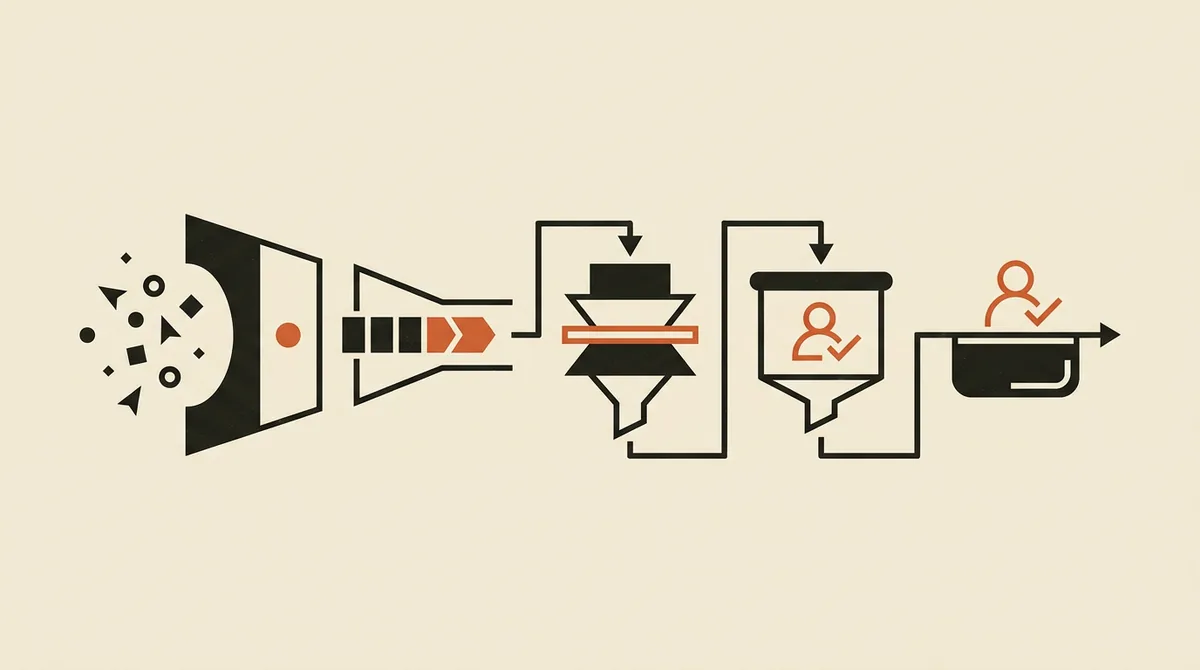
Qualify: the tool that saves your sales team's time
This is the stage almost no guide to lead generation tools digs into. And it's the most profitable one. Generating 500 contacts is worthless if your rep calls 400 of them who will never buy. The same goes for a car dealership: a hundred quote requests are worth little if ninety of them were just price shopping at random.
Lead scoring and data enrichment tools assign a score to every contact based on behavior and company data. A lead who opened three emails and downloaded a case study is worth more than one who just left their email address. The tool puts the right list at the top.
If you want the method behind the tool, read how to qualify leads without wasting time and the practical difference between MQLs and SQLs.
A badly qualified contact costs you twice: the tool's license and the hour your rep wastes chasing it.
Want to know which tools your funnel actually needs, and which ones you're paying for nothing? Let's talk.
Nurture and measure: where the funnel closes (or gets lost)
Most B2B leads don't buy on first contact. The nurturing stage, made up of email automation and retargeting, is what keeps them with you until they're ready. This is where email marketing automation earns its keep: automatic sequences triggered by an action, like a download, a signup, or a click. Even an e-commerce store works this way, with the classic abandoned-cart recovery email bringing back people who stalled at checkout.
Measurement isn't optional
A lead generation system without measurement is a dead system. You need to know three things: which channel each lead comes from, what it costs you, and how many turn into customers. The CRM is the nerve center, it collects, organizes, and tracks. Without it, your acquisition tools are working blind.
The number that ties everything together is cost per lead: if you don't know it by channel, you don't know which tool to keep and which to cut.
Where AI has collapsed three categories of tools
This is the part the guides last updated in 2023 don't have. Until recently, outreach required three separate tools: one to find contacts, one to write the messages, one to personalize them by hand. Three licenses, three logics, three points of failure.
Today a single AI layer covers all three. AI lead generation tools enrich the list, write the first personalized draft for every contact, and read buying signals in real time, things that used to require a full-time junior. This isn't marketing hype, it's category collapse. Fewer tools, not more.
One caveat though. AI amplifies a system that already works, it doesn't create one from nothing. If your funnel is leaking, automating it just means leaking faster. We've written about how this actually plays out in AI-powered lead generation and what AI agents applied to acquisition actually do.
The minimal stack that's actually enough (for most SMBs)
Here's the part nobody spells out clearly. An SMB starting out, whether B2B or B2C, doesn't need ten tools. Four are enough, one per area of work:
- A CRM (including forms and basic reporting): capture and measure.
- An email automation tool: nurture.
- A landing page builder: capture (if the CRM isn't enough on its own).
- One active attraction channel (ads or outreach) with a dedicated budget.
Many of these building blocks now live inside a single all-in-one platform. The rest (premium data enrichment, high-volume outreach tools, advanced scoring) you add later, once the data tells you where the bottleneck is. Not before.
In terms of spend, for an SMB of around 20 people, you're looking at 400-800 €/month in licenses. The real cost isn't the software, it's who makes it work. A perfect stack with nobody running it produces zero leads.
That's why, in B2B lead generation, strategy always comes before the tool. And why talking about customer acquisition strategies matters more than collecting subscriptions.
How to choose: the honest checklist
Before buying any lead generation tool, answer these questions. If you can't answer them, you don't need the tool yet, you need the strategy first.
- Which of the five stages am I not covering right now?
- Do I already have a tool that does this job (maybe hidden inside my CRM)?
- Who will use this tool every week? If the answer is "no one", don't buy it.
- Can I measure whether it's working within 60-90 days?
The right tool is the one that covers a real gap, actually gets used, and produces a number you can read. Everything else is shelf-ware with a monthly invoice.
At AstraLoop we combine AI and automation with lead generation: we don't sell tools, we build the system that makes them work together. Across 140+ automated systems and 370K+ qualified leads generated, the pattern is always the same, the winner is whoever has the right stack, not the biggest one. If you want to see how we work this way, here's how we work with AI.
Frequently asked questions
How many lead generation tools do you actually need?
Most SMBs only need four: a CRM (with basic forms and reporting), an email automation tool, a landing page builder, and one active attraction channel. Everything else gets added only once the data shows you where the bottleneck is, not before.
What's the difference between a CRM and a lead generation tool?
Lead generation tools acquire contacts (forms, landing pages, ads, outreach). The CRM manages and organizes them once captured. They're complementary: acquisition fills the CRM, the CRM tells you which tools are actually working.
Are there free lead generation tools that actually work?
Yes. Several CRMs offer free plans with forms and basic reporting that are enough to get started. The free tier covers capture and measurement: you only pay once you need advanced automation, data enrichment, or high contact volumes.
Does AI replace traditional lead generation tools?
It collapses some of them. A single AI layer can now do what used to require three separate outbound tools: finding contacts, writing personalized messages, and reading buying signals. But it amplifies a system that already works, it doesn't create one from nothing.
How much does a lead generation tool stack cost for an SMB?
For an SMB of around 20 people, licenses run about 400-800 €/month. The bigger cost isn't the software though, it's who runs it: a stack with nobody using it produces zero leads.
Tell us how you acquire customers today: we'll tell you which tools to keep, which to cut, and where AI actually saves you money. Write to us at astraloopstudio@gmail.com.