AI for Restaurants: Real Use Cases and ROI
9 min read · AstraLoop Studio
In restaurants, margins are thin and time is the scarcest resource. An owner spends the day juggling suppliers, staff, service and the till, and technology is usually the last thing on the list. Yet this is exactly where AI for restaurants is starting to make a real, concrete difference. We're not talking about robot chefs from a trade show, but the repetitive tasks that are quietly burning your hours and money right now.
This article is deliberately narrow. No generic theory: five real use cases (bookings, reviews, menu pricing, order management and customer reactivation), with numbers, indicative costs and how to measure the return. If you want the bigger picture on how to roll out AI adoption across a business, you'll find it in our complete guide to AI consulting for businesses. Here, we go straight into the kitchen.
One honest caveat before we start. AI doesn't fix a restaurant with a product or location problem: it fixes inefficiencies. If your place works but you're losing time and customers for organizational reasons, then there are AI use cases for businesses that pay for themselves within a few months.
Use case 1: bookings handled 24/7
This is the most mature use case and the one with the easiest ROI to prove. An average restaurant gets between 20 and 60 calls a day, and a good chunk of them come in at the worst possible times: during service, when nobody in the dining room can pick up. Every missed call is a potentially lost table.
Let's run the numbers. If you're missing just 3 bookings a week for a table of 4 with an average spend of €30 per head, that's roughly €1,440 a month in revenue walking out the door without you ever noticing. We broke this number down in our article on how much a missed call costs a local business, and for a restaurant the math is almost always worse than it looks.
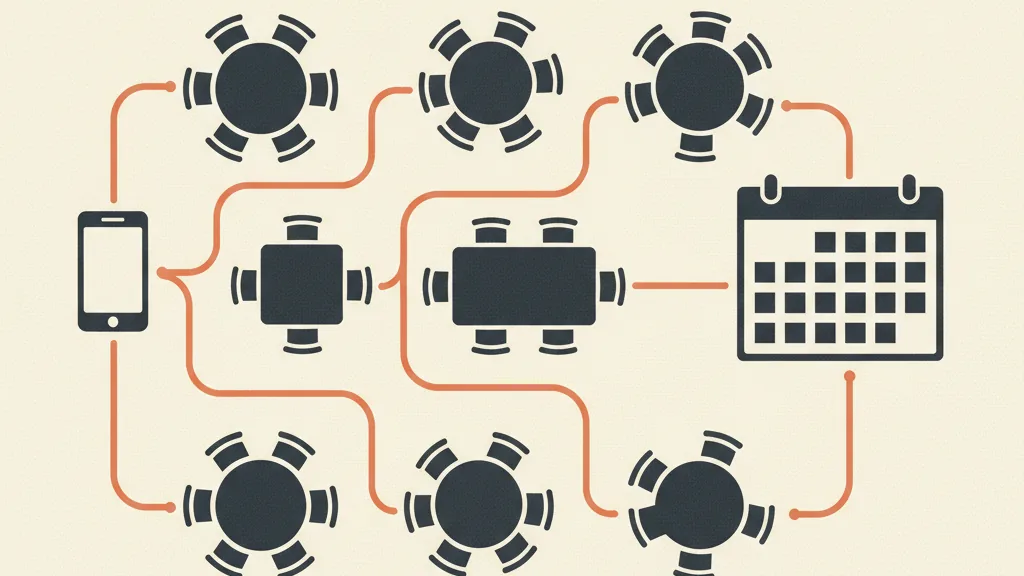
An AI voice assistant for bookings answers every call, even simultaneously, takes down the date, time, party size and any special requests (allergies, outdoor table, high chair), logs it all into your booking system and confirms via SMS or WhatsApp. It doesn't take breaks, doesn't forget, doesn't put anyone on hold.
What you actually need
- Integration with the booking system you already use (TheFork, Plateform, or even a simple Google Calendar). The AI needs to read real availability, not promise tables that don't exist.
- Handling of edge cases: large groups, private events, unusual requests. This is where you need a handoff to a human — the so-called human handoff — so the customer never hits a dead end.
- Multilingual support if you work with tourists: the assistant answers in Italian, English or other languages with no extra effort.
One non-technical but regulatory detail. Since 2025, Italy requires disclosing the use of AI on the phone (law 132/2025): the assistant must clearly state that it's an automated system. It's one line of configuration, but it has to be done.
Use case 2: reviews under control
Reviews are oxygen for a restaurant. The problem is that answering all of them, always, in the right tone, takes time and discipline you simply don't have in peak season. So negative reviews sit there unanswered (the worst possible signal to readers), while positive ones go unrewarded.
Here AI works on two fronts. The first is monitoring: it pulls together reviews from Google, TripAdvisor and social media into one place and alerts you the moment a critical one lands, so you can step in within hours rather than a week later. The second is the reply draft: the AI proposes a personalized response (not a copy-paste template), consistent with your restaurant's tone, which you approve or tweak in ten seconds.
The mistake to avoid is auto-publishing without human review. A poorly generated reply to a sensitive review does more damage than silence. The right model is "the AI writes, you sign off": you always keep the final word. It's the same human-in-the-loop guardrail we talk about when discussing why AI projects fail when the human is removed from the process too early.
The measurable return
This isn't just about image. Even a modest bump in your average rating (from 4.1 to 4.4 stars on Google) shifts your position on maps and your click-through rate. For a restaurant that lives off foot traffic and local searches, half a rating point is worth more than plenty of ad campaigns.
Use case 3: menu pricing and engineering
This is the least-watched use case, and maybe the most interesting one. The menu isn't just a list of dishes: it's the single most powerful margin tool you have, and almost nobody treats it that way.
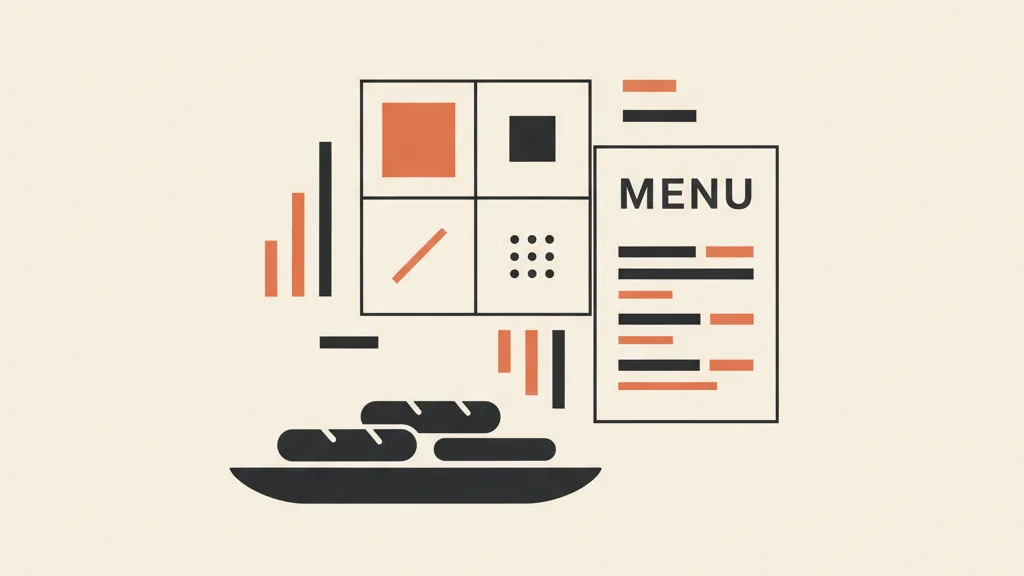
So-called menu engineering cross-references two data points for every dish: how well it sells (popularity) and how much margin it leaves (food cost). Four categories fall out of this: stars (sell well and margin well), workhorses (sell well, thin margin), puzzles (good margin, poor sales) and dogs (neither). AI runs this analysis on your actual sales data, not on gut feeling, and tells you exactly where to act.
| Dish category | Sales | Margin | Suggested action |
|---|---|---|---|
| Star | High | High | Feature it, don't touch the price |
| Workhorse | High | Low | Revisit portion or food cost, nudge the price |
| Puzzle | Low | High | Reposition it in the menu, sharpen the description |
| Dog | Low | Low | Consider removing it |
Beyond classification, AI can suggest dynamic pricing on digital channels (delivery, takeaway) based on demand, day and time, and rewrite dish descriptions to push the higher-margin ones. A €1 adjustment on a workhorse dish that sells 200 orders a month adds up to €2,400 a year in extra margin, everything else being equal. This is the kind of lever you only find by looking at the numbers, which is why we treat the menu as a genuine case for AI software for restaurants, not as a graphic-design afterthought.
Use case 4: order management and digital channels
Between dining room, phone, WhatsApp, delivery and social, a restaurant today receives orders from five different channels that often don't talk to each other. The result: transcription errors, duplicates and orders lost in chats.
Automation does two things here. First, it centralizes orders: an AI agent collects requests from WhatsApp and other channels, normalizes them and sends them to the kitchen in a single flow. We have a dedicated deep dive on automating WhatsApp Business with AI, since for many restaurants it's now the primary ordering channel.
Second, it handles automatic upselling: when a customer orders a pizza, the system suggests a dessert or a drink at the right moment, without being pushy. Small percentages on high volumes add up to real numbers by the end of the month.
Be careful not to fall into the "let's automate everything at once" trap. Orders are a process where a single mistake lands directly on the customer's plate. Start with one channel, measure, fine-tune, then expand. It's the gradual approach we describe in our 4-phase AI adoption roadmap: assessment, pilot, scale-up, monitoring.
Want to find out which use case has the fastest ROI for your restaurant? Request a free analysis: we'll look at your real numbers and tell you where to start.
Use case 5: winning back customers who don't come back
The most expensive customer to win is a new one. Yet most restaurants do nothing for the people who already had a great meal once and then vanished. In your database (bookings, delivery orders, wifi, loyalty cards) sits a mine of dormant contacts you're not monetizing.
An AI-driven reactivation flow segments these contacts (people who haven't been back in 60 days, people who celebrated a birthday there, people who only ever ordered on Fridays) and sends targeted messages via WhatsApp or SMS, with the right offer at the right time. We've dedicated a whole piece to how to win back restaurant customers, because it's probably the highest-return, lowest-cost lever you have available.
A note on GDPR, since this touches personal data: you can only contact people who've given valid consent, and the message must always allow them to opt out. This isn't a minor detail — it's the line between marketing and punishable spam.
How much it costs and when it pays off
The real question isn't "how much does AI cost" but "how quickly do I get my money back". Here are some indicative ranges for a single restaurant, to be taken as an order of magnitude rather than a quote.
| Use case | Indicative setup | Monthly fee | Typical payback |
|---|---|---|---|
| Booking assistant | €500 - 1,500 | €80 - 250 | 1 - 3 months |
| Review management | €300 - 800 | €50 - 150 | 2 - 4 months |
| Menu engineering | €500 - 1,500 | variable | 1 - 2 months |
| Orders + WhatsApp | €800 - 2,000 | €100 - 300 | 3 - 6 months |
| Customer reactivation | €400 - 1,000 | €50 - 200 | 1 - 2 months |
The formula for calculating the return is simple: (hours freed up × hourly cost) plus extra revenue minus the cost of the system. If a booking assistant recovers 3 tables a week and frees up 5 hours of your time, the payback is almost always under three months. The full method for running these numbers is in our piece on how to measure AI ROI, and it's worth doing before signing any contract.
Where to start without getting it wrong
The classic mistake is buying five tools at once and ending up with five half-finished projects. There's a smarter sequence.
- Start with the fastest-payback case, usually bookings or reactivation. A quick win that pays for itself fast gives you the budget and the confidence for the rest.
- Measure before and after: missed calls, tables recovered, average rating. Without a starting baseline, you'll never know if it actually worked.
- Integrate with what you already use: booking system, POS, channels. AI that lives in isolation from your systems just creates double work.
- Train your staff: the human factor is the number one reason these projects fail. If the waiter doesn't trust the system, they'll work around it.
If you run multiple locations or want to set up a structured path, the thinking changes scale, and it's worth framing it within AI consulting for SMEs as a real project, with defined priorities and budget, not as an impulse purchase of a tool you saw advertised.
The bottom line is this: AI in restaurants isn't a future promise. On the right use cases (bookings, reviews, menu, orders, reactivation), it's already a concrete lever for margin and time today. The difference between those who profit from it and those who waste money on it comes down to starting from a measurable problem, not from the technology.
Frequently asked questions
Can AI replace front-of-house staff?
No, and that's not the goal. AI covers repetitive tasks (answering calls after hours, managing reviews, handling chat orders), freeing up staff for table service, which remains a human job. The winning model is AI plus people, not AI instead of people.
How much does an AI booking assistant cost for a restaurant?
Roughly €500-1,500 in setup and €80-250 a month in fees, depending on call volume, languages and integrations with your booking system. Payback is typically between 1 and 3 months, since every recovered missed call equals a saved table.
Do you have to disclose that an AI is answering the phone?
Yes. In Italy, law 132/2025 requires informing the caller that they're speaking with an automated system. It's a simple assistant configuration, but it needs to be set up to stay compliant.
Can AI handle review replies entirely on its own?
Technically yes, but auto-publishing without review isn't recommended. The right model is AI drafting the reply and you approving or editing it in a few seconds, especially for negative reviews where tone matters a lot.
What is AI-driven menu engineering?
It's the analysis of dishes cross-referencing how well they sell and how much margin they leave, to figure out which ones to push, which to reprice and which to drop. AI does this on real sales data and suggests price and description tweaks, often with quick returns at the same sales volume.
Which use case is best to start with?
The one with the fastest payback, usually 24/7 bookings or reactivating dormant customers. A quick win that pays for itself in a few weeks builds the budget and confidence to gradually extend AI to other processes.
If you want to turn one of these use cases into a real, measurable project, let's talk: we'll set up your first quick win together and how to measure it.