Best Zapier Alternatives in 2026 (Including Free Options)
9 min read · AstraLoop Studio
Zapier changed the game. It made process automation accessible to anyone, even people who'd never written a line of code. But by 2026, anyone using it seriously eventually hits two walls. The first is price: it climbs fast as your workflows (Zaps) multiply and your monthly "tasks" pile up. The second is sneakier: your customers' data runs through American servers, and for a company that has to comply with GDPR, that opens up a long list of uncomfortable questions.
The good news is there's no shortage of alternatives today. Some cost less, some let you keep your data in-house, others were built with AI in mind from day one. In this guide we line them up with real costs, pros and cons, and above all tell you when one makes more sense than another.
Why look for a Zapier alternative
Zapier remains a solid tool, with thousands of ready-made integrations and an interface anyone can pick up in half a day. The problem isn't quality: it's the pricing model. You pay per "task," meaning per single action executed. As long as you're moving a few hundred operations a month, it's fine. Once your processes get serious and automations run across thousands of records, the monthly bill starts to sting.
Then there's the data question. Zapier's servers sit in the United States, and every time an automation touches your contacts' names, emails, or phone numbers, that data takes a trip overseas. For anyone handling sensitive information (professional practices, healthcare, finance), that's not a minor detail: it's a compliance risk you need to spell out in writing. If this is a real concern for you, it's worth first understanding how AI-driven business process automation works and what guarantees you actually need.
In short, people look for an alternative for three main reasons:
- Cost: ditch per-task billing for a more predictable model.
- Data control: keep information on your own servers, or at least in Europe.
- Native AI: build automations that reason, not just ones that shuffle data from A to B.
n8n: the most complete alternative (and free if self-hosted)
If we had to name just one alternative, it would be n8n. It's open source, which means in the self-hosted version you can install it on your own server without paying per-task or per-workflow licensing fees. The only real cost is the server itself: a VPS for a few euros a month is more than enough for most SMBs.
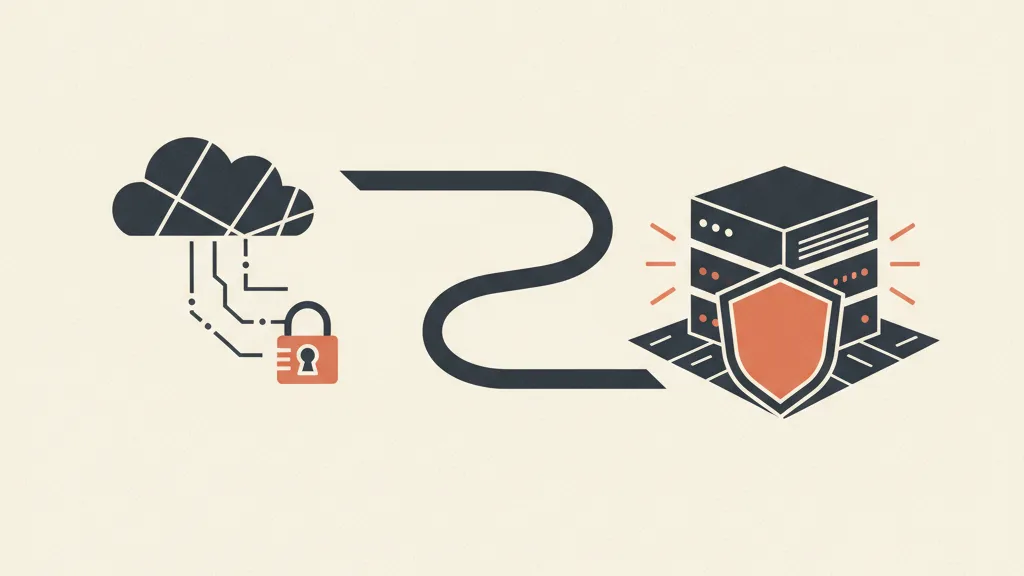
The advantage isn't just financial. With self-hosted n8n, data never leaves your infrastructure, which massively simplifies the GDPR conversation: no extra-EU transfers, no doubts about where your customers' information ends up. For a closer look at what it is and how it actually works, we have a dedicated guide to n8n and how it works, plus an Italian-language tutorial to get started from scratch.
The most interesting chapter, though, is AI. n8n has a native AI Agent node and, as of 2026, supports the Model Context Protocol (MCP), the standard that lets you connect models like Claude and ChatGPT directly into your workflows. In practice, you're no longer just building fixed-rail automations, but AI agents capable of reasoning and deciding the next step. It's the difference between a conveyor belt and a co-worker.
The flip side: n8n asks for a minimum of technical comfort. Installing it and keeping it updated isn't as hard as programming, but it's not Zapier's "click and go" either. If nobody on your team is comfortable with a server, you either lean on the paid cloud version or bring in someone who designs these systems for a living.
Make: the most cost-effective European SaaS
If the thought of managing a server gives you hives, Make is the most direct Zapier alternative that stays fully in the "turnkey" SaaS world. It's European (born in the Czech Republic), which already shortens the distance on data handling compared with a US-based provider.
On price, Make bills by "operations" with a model that's usually more cost-effective than Zapier's task-based system: for the same volume, you generally spend less. On top of that, the visual editor is powerful and lets you build fairly complex scenarios without writing code. For a reasoned comparison with other tools, read n8n vs Make vs Zapier, where we put all three head-to-head point by point.
The limitation is the same as with any SaaS: your data still passes through an external platform. A European provider beats an American one, sure, but if your goal is total control over your information, self-hosting remains a different category altogether.
Other alternatives worth knowing
Beyond the two main names, there are options that can make sense in specific cases:
- Pabbly Connect: one-time license or low-cost plans, with no per-task billing. Interesting if you want predictable spend and medium volumes, though it's less mature than Make on integrations.
- Activepieces: an open-source, self-hostable alternative, following in n8n's footsteps. Simple interface and AI-forward, with an ecosystem that's still younger but growing fast.
- Free tiers: both Make and Zapier itself offer free tiers for low volumes. Fine for getting started or for marginal automations, not for running your company's core processes.
If you're weighing up the whole tooling ecosystem, our overview of no-code alternatives from an AI-integration angle can also help.
How to choose: a quick guide
There's no single "best" tool, only the right one for your case. Here's how to find your bearings based on what you actually need.
- You want to spend as little as possible and have (or can get) some technical know-how: self-hosted n8n, hands down.
- You want a ready-to-use SaaS but want to pay less than Zapier: Make.
- You handle sensitive data and GDPR is a priority: self-hosting with n8n or Activepieces.
- You want AI at the center of your processes: n8n, for the AI Agent node and native MCP support.
One practical piece of advice if you decide to migrate away from Zapier: do it in phases. Move the most expensive and most critical workflows first, run old and new in parallel for a while, and only switch Zapier off once the results match 100%. Migrating everything at once is the fastest way to break something that used to work.
Not sure whether a ready-made SaaS or a self-hosted setup makes more sense for your business? Tell us about your processes and we'll help you pick the right tool, with no waste: request an assessment.
Conclusion
In 2026, staying on Zapier out of habit is a choice that often costs more than it should, both in euros and in control over your data. n8n has established itself as the most complete alternative for anyone who wants to spend less, keep information in-house, and genuinely integrate AI into their processes. Make remains the most sensible SaaS option for anyone who doesn't want to manage a server. The real question isn't "which tool," but "which processes do I want to automate, and with what guarantees." Answer that, and the right tool follows on its own.
Frequently asked questions
What's the best free alternative to Zapier?
n8n in its self-hosted version. It's open source, so you don't pay licensing fees per task or workflow. The only cost is the server itself (a VPS for a few euros a month), and it takes some technical know-how to install and maintain. Alternatively, both Make and Zapier itself offer limited free plans, but those only suit low volumes.
Is n8n really better than Zapier?
It depends on your priorities. n8n wins on cost (no per-task billing), data control (GDPR-friendly self-hosting), and AI capability (native AI Agent node and MCP support). Zapier wins on ease of use and the sheer number of ready-made integrations. For an SMB that wants control and AI, n8n is almost always the better choice.
Are Zapier alternatives GDPR-compliant?
Self-hosted solutions like n8n and Activepieces are the easiest to make fully compliant, because your data never leaves your own servers. European SaaS options like Make reduce the complications compared with US-based providers. With any SaaS tool, though, you still need to check the DPA and data transfers to stay aligned with GDPR.
Is Make cheaper than Zapier?
Usually yes, for the same volume. Make bills by operations with a model that's generally more cost-effective than Zapier's task-based system, and it's a European provider on top of that. It's the most direct alternative if you want to stay on a managed SaaS with no server to maintain, while spending less.
Can I connect ChatGPT or Claude to n8n?
Yes. n8n has a native AI Agent node and, as of 2026, supports the Model Context Protocol (MCP), which lets you connect models like Claude and ChatGPT directly to your company's workflows. That means you can build agents that reason and take action, not just fixed-rail automations.
Is it worth migrating from Zapier to n8n?
If your per-task costs are climbing, if you handle sensitive data, or if you want to integrate AI into your processes, then yes. The advice is to migrate in phases: move the most expensive and critical workflows first, run old and new in parallel for a while, and only switch Zapier off once the results match.
Want automations that keep your data in-house and genuinely integrate AI? Let's talk: we'll design your system on n8n or whichever platform best fits your case.