Brevo vs Mailchimp: Which One Wins Back Dormant Customers
8 min read · AstraLoop Studio
If you're weighing up Brevo vs Mailchimp, you probably don't need yet another newsletter tool. What you need is to know which of the two will help you pull revenue out of a database that's currently asleep: contacts who bought once and then vanished. Looked at through that lens, the comparison changes quite a bit, because reactivating a dormant contact is nothing like emailing someone who already follows you.
Reactivation has three precise requirements. Win-back automations that fire on their own at the right moment. Direct channels like SMS and WhatsApp, which reach people who no longer open email. And solid deliverability, so you don't torch your domain right when you're trying to reactivate it. On these three fronts, Brevo and Mailchimp are not equal. Let's see where they differ.
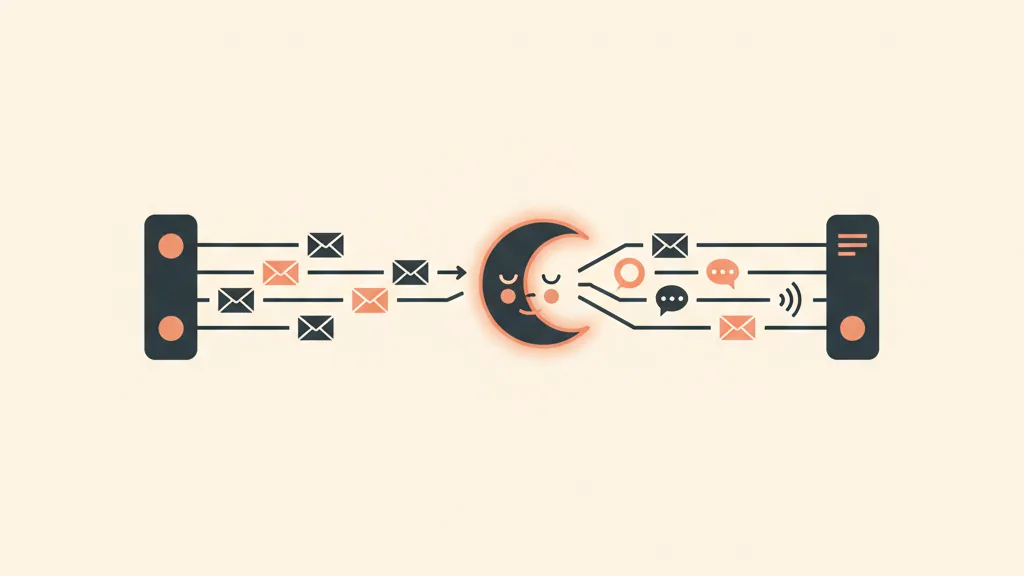
The difference that matters: native multichannel vs. email-first
The most important distinction between the two products is almost philosophical, and it has huge practical effects on reactivation.
Mailchimp started life as an email platform and, over the years, built a marketing ecosystem around it (landing pages, social ads, a hint of CRM). SMS exists but is limited to a handful of countries and doesn't cover Italy well; WhatsApp isn't natively integrated. In practice, for reactivation it mainly gives you one channel: email.
Brevo (formerly Sendinblue) was built multichannel from day one. Email, transactional and marketing SMS, and the WhatsApp Business API all live on the same platform, inside the same automations, on the same contact. For anyone trying to win customers back, this isn't a nice-to-have feature: it's the right architecture, full stop. You don't recover a contact who hasn't opened an email in eight months by sending them another email. You recover them with an SMS that gets opened over 98% of the time, or with a WhatsApp message that reads like it was written by a real person.
Win-back automations: what you can actually build
Both platforms let you build automated sequences. But the level of control and the multichannel logic change the outcome.
In Mailchimp, the "Customer Journey Builder" lets you create paths with behavior-based triggers (last purchase, inactivity, tags). You can set up a classic email win-back sequence along the lines of "We miss you, come back for 15% off." It works, but it stays email-only, and branching is more rigid, especially on the cheaper plans.
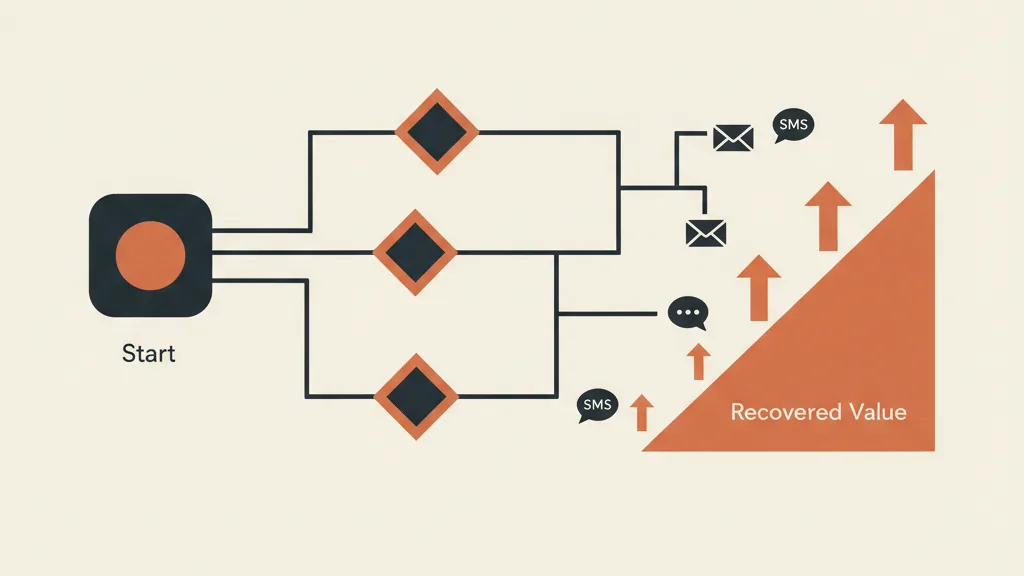
In Brevo you build the same journey, but with mixed-channel nodes: an email on day zero, and if it isn't opened within three days an SMS goes out, and if there's no response to the SMS a WhatsApp message with an incentive follows. All orchestrated in a single flow. That's the difference between a single-channel win-back campaign and a multichannel cascade, and in practice it moves the recovery rate by several points.
Here's a figure that holds for both platforms and is worth keeping in mind: automated reactivation sequences can generate up to 320% more revenue than generic broadcasts. The engine matters, sure, but what matters more is ditching "email to everyone" in favor of journeys that trigger on each contact's individual behavior.
SMS and WhatsApp: Brevo wins clearly here
If your reactivation strategy includes direct channels (and it should, given how little dormant contacts open email), the comparison is pretty much settled from the start.
| Channel | Brevo | Mailchimp |
|---|---|---|
| Email marketing + automations | Yes | Yes |
| SMS marketing in Italy | Yes, native | Limited, unreliable in IT |
| WhatsApp Business API | Yes, native | No (only via external integrations) |
| Multichannel automations in one flow | Yes | No (email-centric) |
| CRM included in base plans | Yes (lightweight but real) | Partial |
Why does this matter? Because the ROI of direct channels on cold databases is disproportionate. A well-built SMS campaign targeting dormant contacts can exceed 1,000% ROI, simply because the message gets read almost every time, within minutes. And between WhatsApp and SMS the logic changes: SMS is perfect for urgency and a sharp incentive, WhatsApp for conversation (replying, booking an appointment, clearing up a doubt). Having both inside Brevo, on the same contact, lets you pick the right channel for each segment.
With Mailchimp, to do the same thing, you'd need to connect third-party tools for SMS and WhatsApp, manage sync, duplicate lists, and duplicate consent records. Doable, but you're rebuilding piece by piece what Brevo gives you out of the box.
Deliverability: the risk nobody explains when you reactivate
This is the trickiest, and most overlooked, part of the comparison. Reactivating badly isn't just ineffective, it's dangerous. When you send to contacts who've been inactive for months, many addresses are dead, some have turned into spam traps, and the collapsed open rates signal to providers (Gmail, Outlook) that you're sending unwanted mail. The result is that you risk landing in spam even with your active customers, damaging your domain's reputation.
Since 2024, Google and Yahoo have made specific technical requirements mandatory for bulk senders: aligned SPF, DKIM, and DMARC authentication, working one-click unsubscribe, and a spam complaint rate kept under 0.3%. Cross those lines and your delivery gets throttled or blocked.
On this front, the two platforms behave differently:
- Mailchimp has a mature sending infrastructure and strict anti-abuse tooling. The flip side is that it's quick to suspend accounts that upload "cold" or purchased lists, and its policy against mass reactivation campaigns can block you right when you need it most. Great shared reputation, but little tolerance for poorly prepared reactivation campaigns.
- Brevo offers dedicated IPs on higher-tier plans and more granular control over send warm-up, plus list validation tools. More flexible for reactivation projects, as long as you know what you're doing.
The truth is neither platform will save you from a dirty list. Before you hit send on any platform, the list needs cleaning: strip out hard bounces, unsubscribes, generic addresses, and ramp up volume gradually. That holds true regardless of the tool.
Want to know which platform and which reactivation funnel actually makes sense for your specific database? Request a free analysis: we'll show you, with real numbers, how much dormant revenue you can recover.
Price: how much it really weighs on recovery
Cost should be read against what you recover, not in absolute terms. Keep the underlying figure in mind: reactivating a dormant customer costs 5-7 times less than acquiring a new one. So even the pricier plan pays for itself fast, if the system works.
Broadly speaking:
- Brevo bills by the number of emails sent, not by number of contacts. For anyone with a large but largely inactive database (the typical reactivation scenario), this model is more cost-effective: you can hold 20,000 dormant contacts without paying to keep them on the list, and only pay when you actually message them. SMS and WhatsApp are purchased on a pay-as-you-go basis.
- Mailchimp bills by the number of contacts on your list. A database bloated with dormant contacts inflates your bill even if you never write to them. For reactivation, this is the less favorable pricing model economically.
In other words: if your problem is precisely a large database you need to monetize, Brevo's volume-based model costs less than Mailchimp's contact-based one.
When Mailchimp still makes sense
To be fair, Mailchimp remains a solid choice in some cases:
- You market primarily email-only and have no interest in SMS or WhatsApp.
- You already have your whole ecosystem built inside Mailchimp (audience, templates, integrations) and migrating would cost more than it's worth.
- You want very refined reporting and segmentation on email, and you're willing to pay for it.
But if you even suspect your dormant contacts need to be reached where they actually are (on their phone, on WhatsApp), Brevo starts with a structural advantage.
The tool is only 30% of the outcome
Here's the uncomfortable part. Brevo or Mailchimp, the software remains the infrastructure, not the strategy. A database reactivates well when you do three things before you even pick a platform.
- Segment with criteria. Not all dormant contacts are the same. An RFM analysis lets you tell contacts who are just starting to go quiet (easy to recover) apart from those in deep hibernation. Sending everyone the same message wastes budget and drives up spam complaints.
- Follow the rules. Reactivating old contacts comes with precise constraints. The consent window isn't infinite, and legitimate interest needs to be documented. Before you restart, align your strategy with what it takes to reactivate without breaching GDPR.
- Orchestrate the channels. Email, SMS, WhatsApp, and, for larger databases, even AI-driven outbound need to sit inside a single coherent funnel, not be used one at a time at random.
If you want the full picture of the method, from segmentation to channel selection to compliance, start with the complete guide to reactivating dormant customers: this Brevo vs Mailchimp comparison is just the "which tool do I use" piece of it.
Bottom line: which one to choose
For the specific task of reactivating dormant customers, Brevo is the more logical choice in most cases for the Italian market: native multichannel (email, SMS, and WhatsApp in a single flow), a volume-based pricing model that doesn't penalize you for a large database, and flexibility on deliverability. Mailchimp still holds up if you're email-only and already embedded in its ecosystem.
But the tool choice comes after the strategy, not before. The wrong software with a good method still recovers customers; the perfect software with no method just burns your domain.
Frequently asked questions
Brevo or Mailchimp: which is better for reactivating dormant customers?
In most cases, Brevo, because it combines email, SMS, and WhatsApp into a single automation flow: dormant contacts who no longer open email can still be reached on direct channels. Mailchimp still holds up if you work email-only.
Does Brevo have native SMS and WhatsApp?
Yes. Brevo (formerly Sendinblue) natively supports SMS marketing and the WhatsApp Business API inside the same automations as email. Mailchimp is email-centric: SMS and WhatsApp require external integrations.
Does the pricing model differ much between the two?
Yes, and it's crucial for reactivation. Brevo bills by the number of emails sent, so a large dormant database costs you nothing until you actually contact it. Mailchimp bills by the number of contacts on your list, penalizing large but largely inactive databases.
Can reactivating an old database hurt my deliverability?
Yes, and it's the most underestimated risk. Sending to contacts who've been inactive for months generates bounces and spam complaints that lower your domain's reputation. Since 2024 you need aligned SPF, DKIM, and DMARC, working one-click unsubscribe, and a spam rate under 0.3%. The list needs cleaning and warming up before you send.
Can I migrate from Mailchimp to Brevo without losing my contacts?
Yes, exporting your list and tags is standard, but automations need rebuilding and consents need re-verifying. Before migrating, weigh whether the multichannel and pricing advantage justifies the work: if you're purely email-only, it might not be worth it.
Is picking the right tool enough to reactivate customers?
No. The software accounts for roughly 30% of the outcome. The rest is segmentation (RFM to separate recoverable dormant contacts from lost causes), GDPR compliance on the consent window, and orchestrating channels into a single funnel. A good method on an average tool beats a perfect tool used poorly.
Stop wasting time comparing tools endlessly, talk to us and let's build the multichannel reactivation system that best fits your dormant contacts.