How Much Does a Full Sales Funnel Cost: Real Prices and What Drives Them
8 min read · AstraLoop Studio
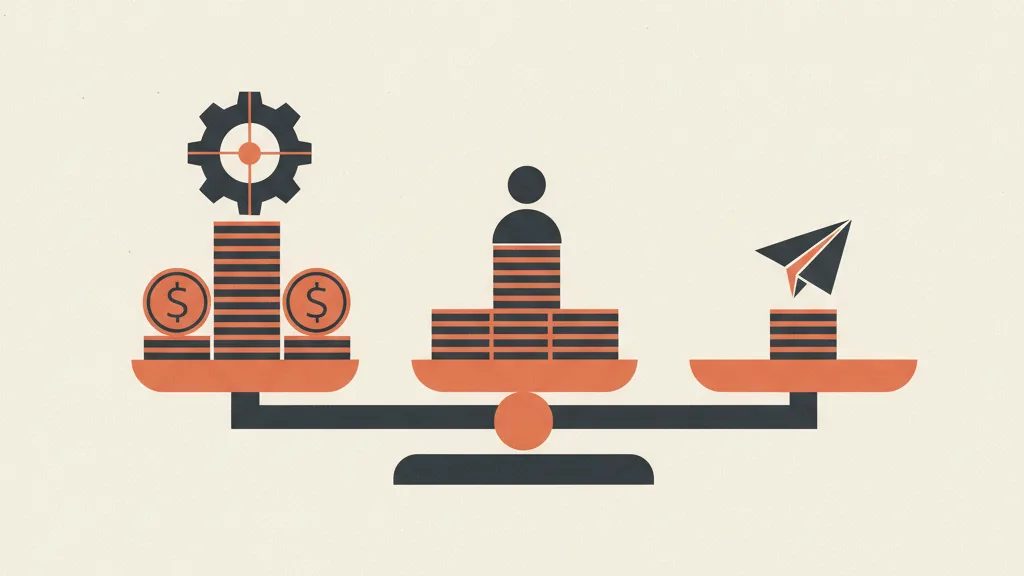
You search "how much does a sales funnel cost" and get answers ranging from 30 euros a month to 30,000 euros as a one-off. That's not a mistake: it's that the word "funnel" is used to describe three different things. A software subscription, the work of the person who builds it, and the complete system that generates leads and sales month after month. These are costs that don't even belong on the same scale.
This article sorts it out. You'll get real price ranges for each of the three items, an explanation of what actually drives the quote up (spoiler: it's not the tool), and a practical way to work out how much you should be spending based on where you are. No inflated price lists, no numbers thrown in to impress. Figures you can actually reason with.
Why search results confuse you: three things all called "funnel"
Before we get to numbers, we need to separate three concepts that in practice weigh on your wallet in completely different ways.
1. The tool (the software that hosts the funnel)
These are the platforms where you build pages and set up automations: landing page builders, email marketing, forms. Typical cost: from 0 (limited free plans) to 200-400 euros a month for a full stack. This is the figure that "how much does a funnel cost" posts quote when they want to scare or reassure you with a low number. It's true, but it's the least demanding part.
2. The service (who designs and builds the funnel)
The human work: strategy, copywriting, page design, automation setup, tracking. Freelancer or agency. This is where the numbers get serious, from a few hundred to tens of thousands of euros, because you're paying for expertise and time, not software licenses.
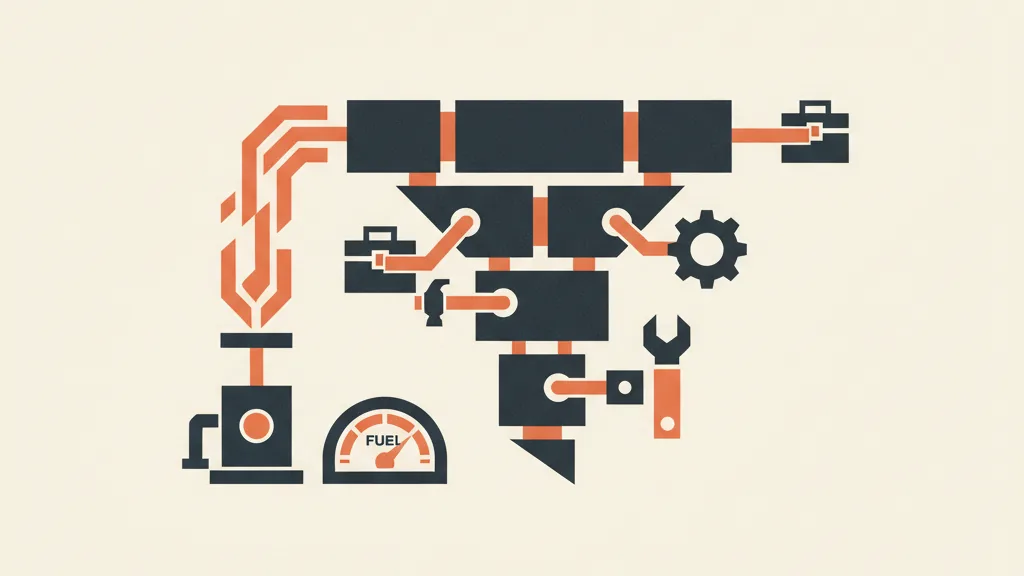
3. Ad spend (the fuel)
A funnel with no traffic is a car with no fuel. Your advertising budget (Google, Meta, LinkedIn) is a separate, recurring cost that often exceeds both the tool and the service combined. Whoever sells you a "500-euro funnel" almost never includes this part.
The confusion happens when someone adds up or mixes these items. If you want the bigger picture of what an acquisition funnel is and how it's structured, our pillar guide on the acquisition funnel is the place to start. Here we stick to costs.
How much the tool costs: the software stack
Let's start with the easiest item to quantify. A funnel only needs a handful of tool categories. Here are the real monthly ranges on the Italian market in 2026.
| Component | Examples | Typical monthly cost |
|---|---|---|
| Landing page / builder | WordPress + plugins, dedicated builders | €0 - 90 |
| Email marketing / automation | Brevo, Mailchimp, ActiveCampaign | €0 - 150 |
| CRM / contact management | HubSpot, Pipedrive, custom CRM | €0 - 200+ |
| Tracking / analytics | GA4, pixels, tag manager | €0 |
| Workflow automation | n8n, Make, Zapier | €0 - 60 |
Minimum working stack: 30-100 euros a month. Full SME stack: 150-400 euros a month. As your contact list grows, tiered tools (email and CRM) climb with it: a list of 20,000 subscribers costs a lot more than one of 500.
Watch out for a detail that adds up over time: entry-level plans hide limits. HubSpot is the classic example, the base plan looks cheap but the useful features sit in the higher tiers. We cover this in detail in HubSpot's hidden costs for SMEs. If you're weighing up which tools to build on, also check our comparison of Brevo vs Mailchimp and our overview of the best marketing automation software in Italy.
The key point: the tool is the least significant item in the total. You can have the perfect stack and a funnel that doesn't convert, because the value isn't in the software. It's in what you put inside it.
How much the service costs: freelancer vs agency vs in-house
This is where the real game is played. The "funnel" as an object that produces results is the product of strategy, content, design, and setup. Here's who does this work, and what it costs.
DIY (in-house)
Direct cost: just the tools. Real cost: your time, or that of an internal resource. A decent funnel takes 40-120 hours between strategy, writing, page building, and testing. If your time has value, it isn't free. It's the right path if you already have marketing skills and want full control. It's the trap if you're starting from zero and end up burning months on something that doesn't convert.
Freelancer
An experienced freelancer (copywriter-marketer or funnel specialist) builds a complete funnel for 1,500-6,000 euros as a one-off, depending on complexity. Upside: flexibility and a contained price. Downside: you depend on one person, ongoing optimization is often missing, and a freelancer rarely covers strategy, ads, copy, and tech all at a high level. Great for a first, simple funnel.
Agency
An agency builds the funnel as a system and, in serious models, manages and optimizes it over time. That's why the numbers climb, and why it makes sense to view them as an investment rather than a one-off expense. We'll get to the tiered price list in a moment, which is the part search results never give you.
The cost nobody puts in the quote
Whichever path you choose, ad spend remains. A B2B funnel with paid traffic realistically starts at 800-1,500 euros a month in ads to generate even minimally sensible volumes. Below that threshold, the data isn't enough to even tell if it's working. To work out what each lead really costs you, read how cost per lead is calculated and our guide to acquisition KPIs and unit economics (CAC, CPL, LTV).
Tiered price list: what an agency-managed funnel costs
This is the part missing from most searches. Here are realistic tiers for the Italian market in 2026, distinguishing one-off setup from monthly management. Ranges vary by industry, offer complexity, and CRM integration.
| Tier | What it includes | One-off setup | Monthly management |
|---|---|---|---|
| Entry | Single funnel: 1 landing page, email sequence, 1 ad channel, basic tracking | €2,000 - 4,000 | €500 - 1,200 |
| Standard | Multi-step funnel, lead magnet, nurturing, CRM integration, 1-2 channels, optimization | €4,000 - 9,000 | €1,200 - 3,000 |
| Custom / system | Full custom funnel+CRM system, advanced automations, lead qualification, multiple channels, reporting | €8,000 - 20,000+ | €2,500 - 6,000+ |
Monthly management isn't optional if you want results: it covers campaign optimization, page testing, automation maintenance, and data analysis. Ad spend is always separate (you pay the platforms directly). A common mistake is confusing the agency's management fee with the ad budget: they are two distinct line items.
A note on the custom tier: when the funnel isn't a series of standalone pages but an integrated system with a CRM that receives, qualifies, and routes leads, the price reflects software development on top of marketing. To understand where the funnel ends and the CRM begins, read the difference between a funnel and a CRM and how to integrate a CRM with your sales funnel. If you want the detailed tiered model of an agency, we go deeper in how much an agency-managed acquisition funnel costs.
Want to know which funnel tier actually makes sense for your offer and your numbers? Request a free analysis: we'll give you an honest quote for the funnel and CRM system that best fits your case.
What actually drives the quote up (in order of impact)
Two funnels can cost three times as much as each other with nobody inflating prices. Here's what moves the needle, from the heaviest factor to the lightest.
- Number of steps and channels. A single-channel funnel with one landing page is a project. An omnichannel funnel (ads, email, WhatsApp, retargeting, phone) is a system with far more moving parts to build and maintain.
- CRM integration and automation. Connecting the funnel to a CRM that qualifies leads and routes them to the right salesperson is where the technical work concentrates. It's also where lasting value gets created.
- Content quality. Persuasive copy, video, well-made lead magnets. This isn't a cost you can cut without paying for it in conversions.
- Offer complexity and sales cycle. A 50-euro impulse product has a short funnel. A 20,000-euro B2B service with a six-month cycle needs long nurturing and more touchpoints.
- Level of ongoing optimization. "Build it and go" costs less upfront and more over time, because it never improves. A funnel tested and optimized every month costs more in fees but lowers your cost per acquisition.
- The tool chosen. Last, not first. It matters, but it's the smallest variable.
If your funnel exists but isn't paying off, the problem is often the structure, not the budget. It's worth understanding why a funnel doesn't convert before spending more: sometimes the fix is to correct it, not rebuild it.
How much should you actually spend? A practical rule
The right number depends on three things: the value of your average customer, how much you're willing to invest to acquire one, and where you're starting from.
The sustainable-economics rule
Don't ask "how much does a funnel cost". Ask "how much can I spend to acquire a customer while staying profitable". If a customer is worth 3,000 euros in margin over time (LTV), you can afford an acquisition cost of several hundred euros and still be comfortable. If they're worth 80 euros, your funnel needs to be extremely lean. This math comes before any quote.
Based on where you are
- First funnel, limited budget: go DIY or hire a freelancer. Cheap stack, one channel, the goal is learning what converts. Realistic budget: 100-300 euros/month in tools plus a minimal ad spend.
- Validated and ready to scale: this is where an agency pays off. The management cost is justified if every euro of optimization brings back more than a euro of margin.
- You want a system that runs itself: a funnel integrated with the CRM, with automatic lead qualification. This is the jump from "campaign" to "acquisition system". We cover this in what a customer acquisition system is and in our comparison of acquisition systems vs lead generation.
A contrarian piece of advice: it's almost always better to start small and test, rather than commissioning a 15,000-euro funnel straight away. Validate the offer with something lightweight, measure the real numbers, then invest in the system once you already know the market responds. Whoever skips this step often ends up with a beautiful funnel for an offer nobody wanted.
Mistakes that inflate (or waste) the budget
- Buying the stack before the strategy. You end up with subscriptions you never use. Decide the path first, then the tools.
- Ignoring the ad budget. You spend on building the funnel and have no money left to drive traffic to it. It's like buying a shop and never rolling up the shutters.
- No tracking. Without data you don't know what's working, so you can't optimize, so you pay for ads that don't pay off. Tracking is the first thing you set up, not the last.
- Beautiful funnel, weak offer. No amount of design saves an offer the market doesn't want. Validate first.
- Confusing price with real cost. The "cheap" funnel that doesn't convert is the most expensive of all, because you also waste the ad budget you run through it.
If the bigger goal is generating leads predictably, not just building a single funnel, we recommend our guide to B2B lead generation, where costs and strategy fit into the full picture.
In short: the numbers to remember
Here's a clean summary of the three cost items, kept separate so you have a clear order of magnitude.
| Item | Realistic range | Recurring? |
|---|---|---|
| Tool / software stack | €30 - 400/month | Yes |
| Freelancer service (setup) | €1,500 - 6,000 one-off | No |
| Agency service (setup) | €2,000 - 20,000+ one-off | No |
| Agency management | €500 - 6,000+/month | Yes |
| Ad spend | €800/month and up | Yes |
A funnel isn't a one-off purchase: it's a system that generates customers as long as you feed it (traffic) and improve it (optimization). The real calculation isn't "how much does it cost", but "how much does every euro invested return". When that ratio is positive and stable, the funnel stops being an expense and becomes the most predictable acquisition channel you have.
Frequently asked questions
How much does a complete sales funnel cost?
It depends on who builds it. DIY: 30-400 euros a month in tools only. Freelancer: 1,500-6,000 euros in setup. Agency: from 2,000 to over 20,000 euros in setup plus monthly management of 500-6,000 euros. Ad spend is always on top, realistically starting at 800 euros a month.
Why do I find such different prices online for a funnel?
Because the word 'funnel' refers to three things: the software that hosts it, the service of whoever designs it, and the ad spend that fuels it. These are separate line items. Whoever quotes 30 euros is talking about the tool, whoever quotes 15,000 is talking about the full managed system. They're not contradicting each other, they're measuring different things.
Is it better to work with a freelancer or an agency?
A freelancer works well for a first, simple funnel on a limited budget (1,500-6,000 euros). An agency makes sense once you've already validated the offer and want to scale with ongoing optimization and CRM integration: the management cost pays for itself if every euro of optimization returns more margin than it costs.
Is ad spend included in the funnel's price?
Almost never. Your advertising budget (Google, Meta, LinkedIn) is a separate, recurring cost you pay directly to the platforms, distinct from the agency's or freelancer's fee. A funnel with no budget for traffic produces no results, so it needs to be accounted for from the start.
What's the minimum cost to get started with a funnel?
With a DIY or freelancer approach on a single channel, you can start with roughly 100-300 euros a month in tools plus a minimal ad budget. It's the right path to validate the offer and learn what converts before investing in a more expensive system.
What drives up a funnel's quote the most?
In order: the number of steps and channels, CRM integration and automation, content quality, offer complexity, and the level of ongoing optimization. The tool chosen matters little. Most of the cost is human work and technical integration, not software licenses.
Before spending on the wrong funnel, talk to us: we'll analyze your offer and tell you what you really need, with a transparent quote for building your acquisition system.