How to Reduce Missed Calls at Your Business (and Recover Lost Revenue)
8 min read · AstraLoop Studio
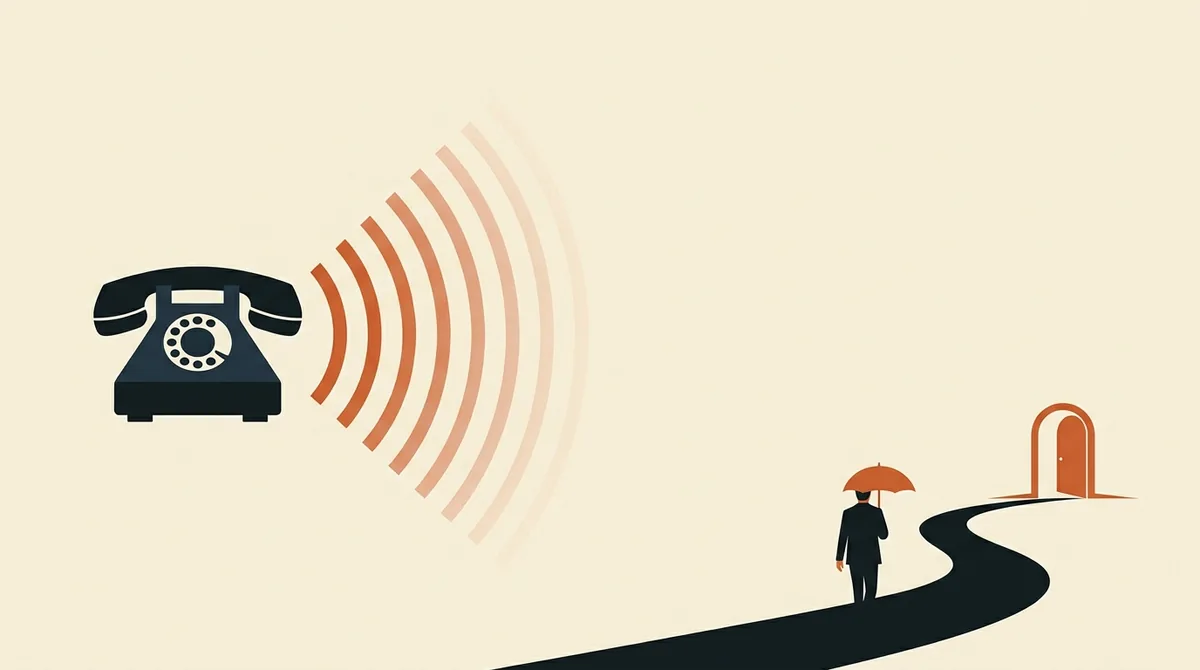
A missed call isn't a neutral event. It's a customer who had already decided to give you their money, tried to reach you, and found nothing. In most cases they don't try again: they call the competitor down the street, or the one that shows up two lines below you on Google. The revenue doesn't just "go missing" somewhere. It walks out through someone else's door.
If you run an SMB, a professional practice, a local business or a sales office, missed calls are probably the costliest and most invisible leak you have. Invisible because it never shows up in any P&L: you never see the invoice you didn't issue. In this guide we look at the real causes behind a phone that rings out unanswered, and the practical fixes, from the simplest (organizational) all the way to the most effective lever available today: an AI voice assistant that answers 24 hours a day.
What a missed call actually costs you
Before you fix the problem, you need to put a number on it. Otherwise it stays an annoyance, not a priority. The logic is simple: take the average value of a customer (or a booking, or a quote that closes), and multiply it by the share of calls you miss and the rate at which those calls would have turned into a sale.
Let's run a concrete example for a local business. Picture a repair shop with an average ticket of €180, receiving 40 calls a day and missing 20% of them (8 a day). If even 1 in 3 missed calls would have become a job, that's roughly 2.6 lost customers a day — nearly €480 a day walking out the door without anyone noticing. Over a month, that's more than €10,000.
The numbers shift from sector to sector, but the order of magnitude is almost always worse than expected. We broke the calculation down by vertical in our article on what a missed call costs a local business. It's worth running the math with your own numbers before reading on, because it changes how you look at the problem.
The real causes of missed calls (and why you underestimate them)
Calls don't go missing for just one reason. They slip through a series of small cracks that, added together, form one big hole. Here are the most common ones.
1. After-hours calls are the biggest leak
The largest share of missed calls doesn't happen during peak hours. It happens at 1pm, at 7:30pm, on Saturday afternoon, on Sunday. People call when they have free time, which is often when you're closed. A restaurant gets bookings late in the evening, a repair shop gets calls early in the morning before it opens, a dental practice gets calls over the weekend. If your answering hours line up with the hours your customer is at work, you're structurally losing a huge share of requests.
2. Overload during peak hours
During busy windows, one line or one person isn't enough. While you're on the phone with customer A, customer B rings, gets nothing, and hangs up. They won't call back — they already have the competitor's number in hand. This is the classic case where "we have someone answering" isn't actually true. Someone exists, but they're busy.
3. The wrong person answers
In many small businesses, whoever happens to be working answers the phone: the hairdresser with their hands in someone's hair, the mechanic under a car, the owner in a meeting. The phone becomes an interruption, and interruptions get ignored. It isn't laziness — it's the physical impossibility of doing two things at once.
4. IVRs and phone menus that make people hang up
The classic fix ("press 1 for..., press 2 for...") often makes things worse. A traditional phone menu routes calls but doesn't resolve them: the customer navigates three levels of options, ends up in a voicemail box or a queue, and hangs up. The resolution rate (containment) of a classic IVR typically tops out at 30-40%. That's a substantial gap compared to a system that actually answers, as we show in our comparison of voice AI vs. traditional IVR.
5. No one tracks it, no one calls back
The last leak is the most basic and the most widespread: a missed call leaves no useful trace. A number in the call log doesn't tell you who it was, what they wanted, or whether it was urgent. Without a callback process, that call is dead. We dedicated an entire piece to this, because it runs deeper than it looks: why you're losing customers on the phone even when you think you're answering well.
The fixes, from the simplest to the definitive one
Not every fix requires technology. Some are organizational and you can put them in place starting tomorrow. Others are structural. Let's list them in order of increasing effort.
Organizational fixes (low effort, partial results)
- Shift coverage for peak windows. Identify the 2-3 hours where you lose the most calls and dedicate one person to answering during those windows. It doesn't fix after-hours gaps, but it takes the edge off the peaks.
- A dedicated line for bookings. Separating the operational line from the sales line keeps an important call from getting buried under routine questions.
- Systematic callbacks within the hour. If you can't answer, at least call back. A customer called back within 60 minutes is still recoverable; after a day, they're not. This requires discipline and time you often don't have.
- Online booking alongside the phone. Move part of the traffic to a channel that doesn't need a human answer. Useful, but a share of customers (often older, often the most loyal) will keep preferring a voice on the line.
Answering services and call centers (medium effort, clear limits)
An answering service collects messages but closes nothing: many customers don't leave a message, they just hang up. An outsourced call center answers, but it costs money, often doesn't know your business, and can sound cold and generic for a local business. These are solutions that cover the answering problem, not the quality problem.
The definitive lever: a 24/7 AI voice assistant
This is where the game changes. An AI voice assistant is a system that answers the phone with a natural voice, understands what the customer wants, and follows through on the action: books an appointment, takes a reservation, answers frequent questions, qualifies the request and hands it to you already sorted. It runs 24 hours a day, 7 days a week, never takes a vacation, never gets sick, and never lets the phone ring out.
The gap compared to the old answering machines is enormous, and recent. In 2026, speech-to-speech technology (native audio, with no text step in between) brought latency below 320 milliseconds, and the conversation became fluid: the assistant handles interruptions (so-called barge-in), doesn't force you into stilted back-and-forth, and no longer has that robotic tone that used to make people hang up. If you want the full picture of why it actually works now, we cover it in our guide to how an AI phone system works.
On containment — the share of calls resolved without human intervention — a well-configured AI voice assistant reaches 60-80%, versus 30-40% for an IVR. And crucially, it solves the exact window where you used to lose everything: after hours.
| Solution | Covers after-hours | Closes the action | Typical cost |
|---|---|---|---|
| Internal shift coverage | No | Yes | Staff cost |
| Answering service | Partial | No | Low |
| Outsourced call center | Partial | Partial | Medium-high, per call |
| AI voice assistant | Yes, 24/7 | Yes | Fixed monthly fee |
Want to know how many calls — and how much revenue — you're really losing? Request a free analysis: we start from your numbers and show you what a 24/7 AI voice assistant can recover.
What an AI voice assistant actually does to stop you losing calls
Let's stay practical. Here's what happens when a call you would have missed reaches an AI voice assistant instead.
- It always answers, immediately. Zero unanswered rings, zero queue. Even while you're already on the phone with another customer, the AI handles the lines in parallel.
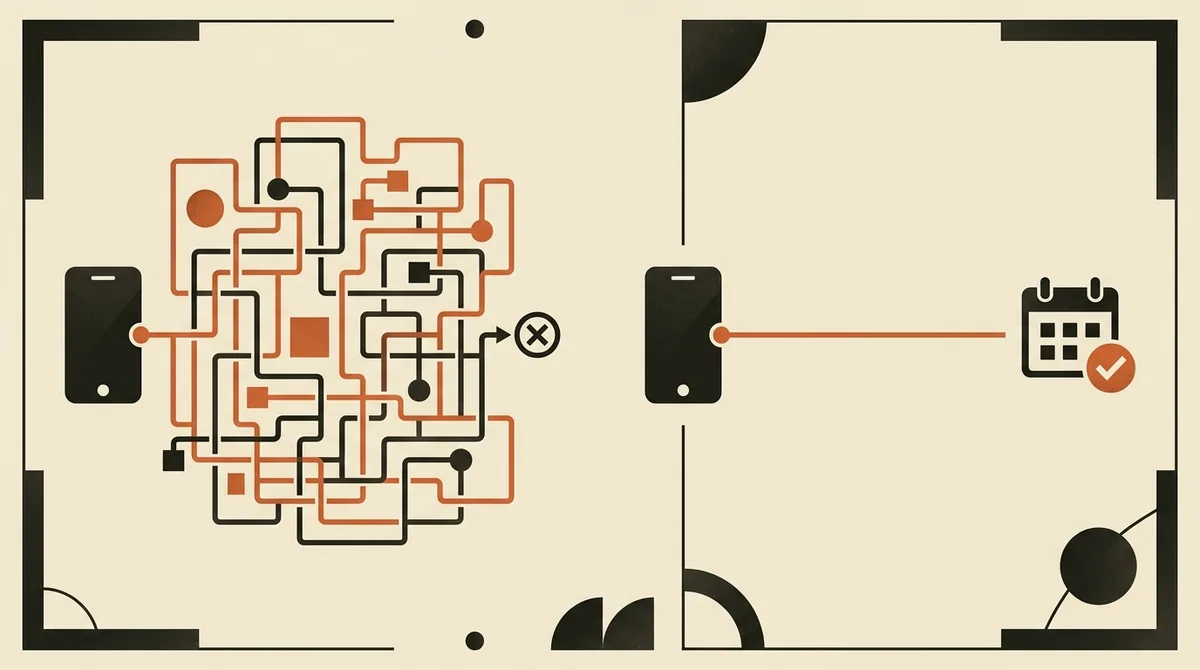
- It books the appointment directly in your calendar. Connected to your calendar (Google Calendar, Microsoft 365, or your industry software), it checks real availability and books the slot. No double bookings, no "I'll let you know." Integrating with your CRM and calendar is the real practical lever, and we cover it in how to integrate an AI voice assistant with your CRM.
- It cuts down no-shows. It confirms and reminds customers of appointments, with drops in missed appointments that reach up to 70% in healthcare verticals.
- It qualifies the call and hands it off. When the request is complex or the AI can't answer, it doesn't improvise: it passes the call to a person, with the context already gathered. This step, the human handoff, is what makes the system reliable without feeling like a wall. We explain it in how the handoff to a human operator works.
The objections you hear most often (and the honest answers)
"My customers are older, they won't talk to a robot." This is the most common objection, and it deserves a real answer. 2026's AI voices no longer sound like a 1990s answering machine: they're natural, speak fluent Italian, and handle imperfect speech or regional accents. It isn't magic, and there are still limits, but the leap from where things stood is real. We tackled this head-on in AI voices, dialects, and older customers.
"What if it gets it wrong?" That's exactly what the handoff is for: in off-script cases, the call goes to you. The goal isn't to replace human judgment on complex matters, but to stop losing the simple calls (80% of the traffic) that currently go unanswered.
One thing almost no one tells you: compliance
As of 2026, using AI on the phone comes with specific rules, and ignoring them is a real risk. Italian Law 132/2025 and the AI Act (EU Regulation 2024/1689), whose transparency obligations are expected to apply from August 2, 2026, require that users be informed when they're speaking with an artificial intelligence system rather than a person. This isn't a technicality, it's a transparency requirement. A serious AI voice assistant discloses this at the start of the call, by design. We cover it in detail in the obligation to disclose AI on the phone and, on the broader picture, in AI Act 2026 obligations for SMBs. This is informational, not legal advice: always check your specific situation with a professional.
Where to actually start
You don't need to overhaul everything. A sensible path looks like this:
- Measure it. For one week, log how many calls you miss and in which time windows. This data alone is usually enough to justify the investment.
- Calculate the cost. Apply your average customer value to the number of missed calls. Turn the annoyance into a figure.
- Cover after-hours first. It's the biggest gap and the easiest to close with a 24/7 AI voice assistant, without touching your internal organization.
- Integrate calendar and CRM. The real value shows up when the AI doesn't just answer, but books and logs everything where you already work.
If you want the full picture, from infrastructure to costs, our complete guide to AI phone systems is the place to start. And if you run a small business, our hub dedicated to AI phone systems for SMBs collects the cases closest to your own reality.
A missed call is the only business problem you pay for without ever seeing it on an invoice. The good news is that, of all the leaks in a business, it's also one of the easiest to close.
Frequently asked questions
How many calls does the average business miss?
It depends on the sector and hours, but for many local businesses the share of missed calls runs from 15% to 30%, with much higher spikes after hours and on weekends. Most customers don't call back — they go straight to a competitor.
Can an AI voice assistant really replace whoever answers the phone?
It can handle most simple, repetitive calls on its own (bookings, hours, appointments, frequent questions), which typically make up 80% of the traffic. For complex cases, it hands the call to a person with the context already gathered (human handoff). It doesn't replace human judgment — it eliminates missed calls.
Does the AI voice still sound robotic?
Not like it used to. With 2026's speech-to-speech technology, latency dropped below 320 milliseconds and the conversation is natural, handles interruptions, and speaks fluent Italian. Limits remain on very specific edge cases, but the robotic tone of old answering machines is a thing of the past.
Do I have to tell customers they're talking to an AI?
Yes. Italian Law 132/2025 and the AI Act (EU Regulation 2024/1689) require that users be informed when they're interacting with an artificial intelligence system. A serious voice assistant discloses this at the start of the call. Always check your specific situation with a professional.
How much does an AI voice assistant cost compared to a call center?
An AI voice assistant typically runs on a fixed monthly fee and covers 24/7 with no per-call cost, while an outsourced call center charges per call or per agent and rarely covers nights and weekends. On volume, the AI is almost always more cost-effective for businesses with high inbound call traffic.
Does it integrate with my calendar and my software?
Yes, serious systems connect to calendars like Google Calendar and Microsoft 365, to CRMs like HubSpot or Salesforce, and to the main industry-specific software. It's exactly this integration that turns a simple answer into an appointment or booking logged automatically.
Stop paying for missed calls you never see. Talk to us: we'll look at your situation together and figure out how to cover after-hours without upending your organization.