Why You're Losing Customers on the Phone (and How to Stop It Now)
8 min read · AstraLoop Studio
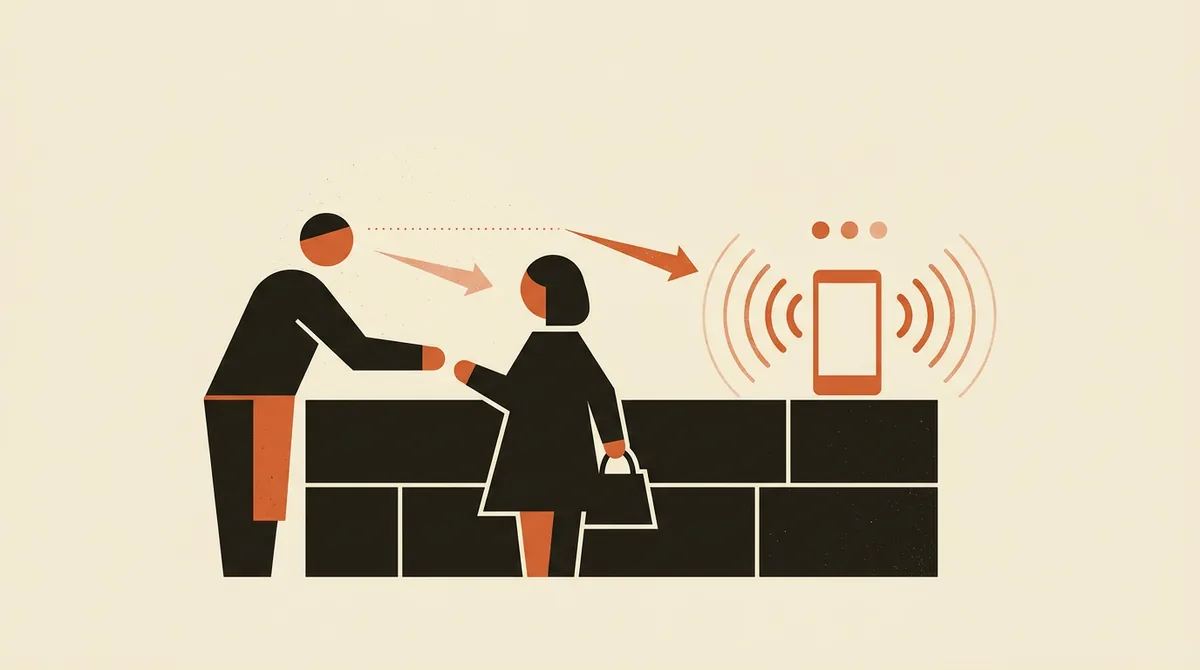
The phone rings. But your hands are full with a customer at the counter, you're in the back prepping an order, or it's lunchtime and you've pulled down the shutters for half an hour. The phone keeps ringing, then it stops. That call isn't calling you back. They've already dialed the next shop on their list.
If you recognize yourself in this scene, you're not a disorganized business owner. You're one person (or close to it) who can't be in two places at once. The problem isn't a lack of effort — it's structural. And the good news is that today it's solvable without hiring someone full-time just to answer the phone.
In this article we'll look at why you're really losing customers on the phone, what it actually costs you (in euros, not figures of speech), and what practical solutions exist for your business, from the simplest to the most automated.
The real reasons you're losing customers on the phone
The causes look pretty similar whether you run a shop, a practice, a repair garage, or a beauty salon. Let's go through them one by one, because recognizing yours helps you pick the right fix.
1. You're on your own and already serving someone
This is the most common one for micro-businesses. If you answer the phone, you leave the customer in front of you hanging. If you serve that customer, you miss the call. Either way, someone ends up unhappy. It's a conflict that "multitasking" doesn't solve — you solve it by delegating the answer to something (or someone) that doesn't pull you away from the counter.
2. The phone rings outside business hours
Many calls come in when you're closed: in the evening after work, on Sundays, during holidays. The customer has a free moment exactly when you don't. A widely cited US study in the industry found that a significant share of service calls come in outside office hours. If you're not catching them, that potential booking turns into an appointment with the competitor who's open (or who has a proper answering system).
3. Lunch break and other "dead" moments
A one-hour lunch break is often exactly when customers have time to call, because they're on a break too. You switch the phone off to eat and switch it back on at 3pm — meanwhile you've missed the hottest calls of the day.
4. The line is busy
If you have a single line and you're already on the phone with a supplier or another customer, whoever's calling gets a busy tone. A busy tone is worse than ringing out — it signals there's no room for them. Statistically, people who hit a busy signal try again far less often than people who reach voicemail.
5. The voicemail nobody uses
"But I have voicemail." The problem is that the vast majority of people don't leave messages. They hang up and call somewhere else. Classic voicemail captures only a tiny fraction of missed calls, and even when it does, you still have to call back — often hours later, once the customer has already solved their problem elsewhere.
Why "I'll call back later" almost never works
The instinctive reaction is: "fine, I'll check the number and call back the moment I get a spare minute." In theory that works. In practice it doesn't, for three reasons.
- Speed matters more than anything else. Lead-response research is consistent: the odds of closing the sale collapse if you call back hours later instead of within the first few minutes. The customer who called you needed something now.
- People looking for a local service call more than one number. They search Google, find three businesses nearby, and call them in a row. Whoever answers first wins. If you call back two hours later, they've already booked elsewhere.
- A number with no context is useless. You see a missed call from a landline or an unknown mobile number and have no idea if they wanted a quote, your opening hours, or to complain. You call back blind, and often no one even picks up.
Response speed is the same issue that drives sales follow-up management: the longer you wait, the fewer deals you close. It applies just as much to a B2B quote as to a hair salon booking.
What a missed call really costs you
Let's stop talking in feelings and put some numbers on the table. Here's a simple calculation you can adapt to your own business.
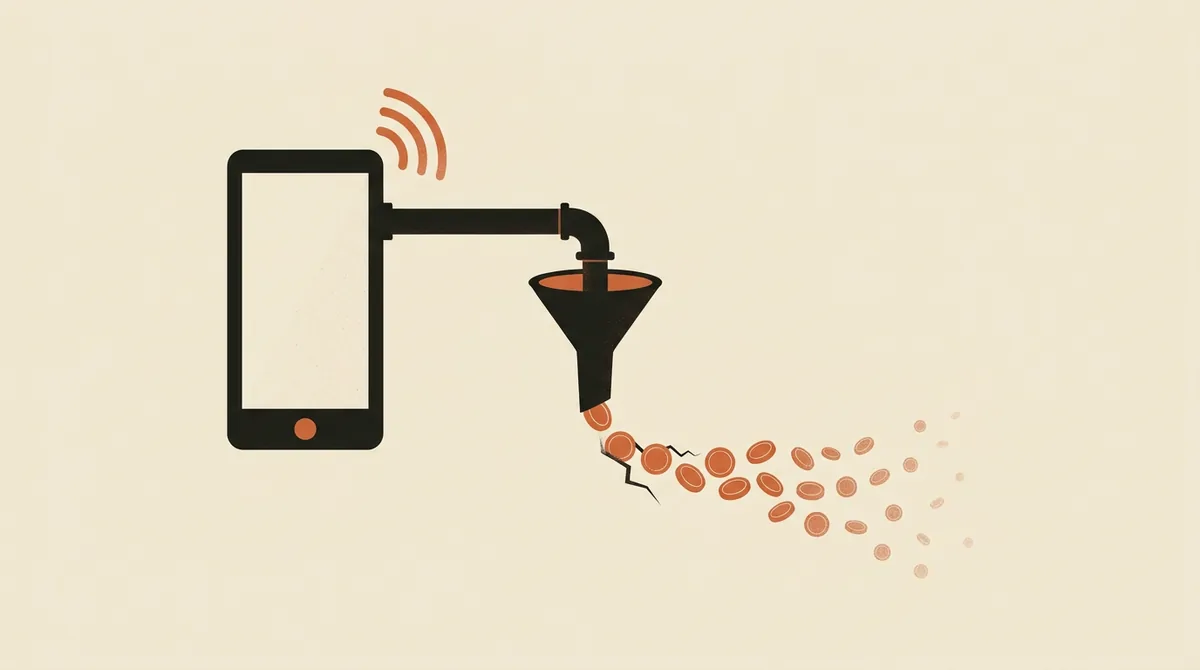
Imagine you get 15 calls a day and miss 4 of them, between customers at the counter, lunch break, and after hours. That's roughly 100 missed calls a month (over 25 working days). Now imagine only 1 in 4 of those calls was a new customer ready to buy or book: that's 25 lost customers a month.
| Sector | Average customer value | 25 lost customers/month | Lost in a year |
|---|---|---|---|
| Hairdresser / beautician | €40 | €1,000 | €12,000 |
| Garage / tire shop | €150 | €3,750 | €45,000 |
| Dental practice (first visit) | €300 | €7,500 | €90,000 |
| Restaurant (table for 2) | €60 | €1,500 | €18,000 |
These are estimates, of course. Swap in your own numbers. But even if you cut everything in half, the annual figure slipping away is still substantial, and above all invisible: you never see it in the till, because it's not a cost you pay — it's revenue that never arrives. It's the most insidious kind of loss precisely because it makes no noise.
If you want to run the precise numbers for your own case, we've written a deep dive on what a missed call is really worth for a local business, with formulas and sector benchmarks.
The solutions, from the simplest to the most effective
Not every business has the same problem, so you don't need the most sophisticated fix right away. Here's the ladder, in order of effort and effectiveness.
Level 1: call forwarding and smart voicemail
Set up call forwarding from your landline to your mobile when you step out, and use a voicemail greeting that says exactly what to do: "Leave your name, number, and what you need, and I'll call you back within the hour." It's free and cuts losses somewhat. The catch: it still depends on you calling back, and it doesn't hold up during peak moments.
Level 2: an outsourced phone-answering service
Call centers exist that answer on your behalf. They work, but they cost a fair amount each month, often only during office hours, and whoever answers doesn't know your business — they can take a message, not solve the problem. It's a step up, not the solution.
Level 3: an AI voice assistant that answers for you
This is the development that, in 2026, stopped being science fiction. An AI phone assistant answers every call, 24 hours a day, even when your line is busy or you're closed. It's not the robotic voice from ten years ago — today's voice technology holds a natural conversation, understands the caller, handles interruptions, and responds in under half a second. If you want to understand how it works step by step, we've explained how AI answers the phone without the jargon.
What it can concretely do for you:
- Answers every call, always, even three at once
- Books appointments directly into your calendar or management system
- Gives recurring information (hours, address, prices, availability) without interrupting you
- Transfers the call or sends you a summary when your input is genuinely needed (the so-called handoff to a human operator)
Want to know how many calls you're missing and what they're really costing you? Request a free, no-obligation review of your situation.
"But my customers are older / speak in dialect"
This is the most sensible and the most common objection, especially for neighborhood businesses. Honest answer: the latest-generation systems understand real spoken Italian, regional accents included, far better than they did a couple of years ago, and can be set to speak slowly and clearly. They're not 100% perfect, but when they don't understand, they hand the call to you instead of frustrating the customer. We tackled this topic without any sales spin in our article on AI voice, dialects, and older customers.
"Do I have to say it's an AI?"
Yes, and it's right that you should know that. Starting August 2, 2026, the EU AI Act (Regulation (EU) 2024/1689) and, in Italy, Law 132/2025 require disclosing to the caller that they are speaking with artificial intelligence. A properly built service already does this by default, with a transparent opening line. It's a requirement, but also a trust builder. You'll find the details on the obligation to disclose AI on the phone in a dedicated article.
How to choose based on your business
There's no need to overbuild. Think of it this way:
- Few calls a day, almost all during business hours: start with Level 1, forwarding plus a clear message.
- Many calls missed while you're serving customers or on break: an AI voice assistant pays for itself quickly, since every recovered appointment easily covers the monthly cost.
- Bookings that mostly come in evenings and weekends (beauticians, gyms, restaurants, practices): here round-the-clock coverage makes the biggest difference. See the overview on AI voice assistants for local businesses.
The right question isn't "how much does it cost," but "how much is not doing it already costing me." If you recover even just two or three appointments a month that you're currently losing, in nearly every sector the math already works in your favor.
In summary
You're losing customers on the phone for a simple reason: you're one person, not a switchboard, and you can't always answer. It's not your fault — it's the physical limit of running a business on your own. Missed calls are the quietest loss there is, because you never see it in the till.
Today you have real options, from free call forwarding to a voice assistant that answers for you 24 hours a day and books your appointments while you work. The question is no longer "how do I answer everyone," but "which level does my business actually need." And for most micro-businesses, the answer is simpler than you think.
Frequently asked questions
Why don't customers call back after they can't reach you?
Because people looking for a local service call several businesses in a row and go with whoever answers first. On top of that, the odds of closing the sale collapse within minutes: the customer needed help right away, not in two hours. Once they've found someone else, they have no reason to try you again.
How much does a missed call actually cost me?
It depends on your average customer value. If you miss 25 a month and each is worth €40, that's €12,000 a year. For a dental practice or a repair garage, the figure climbs much higher. It's revenue that never arrives, so it's invisible in the till but very real.
Does voicemail solve the problem?
Only to a small degree. Most people don't leave messages — they hang up and call someone else. And even when someone does leave their number, you're the one who has to call back, often by which point the customer has already gone with a competitor.
Does an AI voice assistant work with older customers or people who speak in dialect?
The latest-generation systems understand real spoken Italian, regional accents included, far better than before, and can be set to speak slowly and clearly. When they don't understand, they hand the call to you instead of frustrating the customer.
Am I legally required to say an AI is answering the phone?
Yes. Starting August 2, 2026, the EU AI Act (Regulation (EU) 2024/1689) and, in Italy, Law 132/2025 require disclosing to callers that they're speaking with artificial intelligence. A properly built service already does this automatically with a transparent opening line.
Do I need to hire someone to stop missing calls?
No. An AI voice assistant answers every call 24 hours a day, even several at once, without the cost of an employee. By recovering just two or three appointments a month, it already comfortably covers the expense in nearly every sector.
Tell us how your business is set up, and we'll tell you if and how an AI voice assistant can recover the calls you're currently missing. Talk to us.