How to Optimize Marketing Campaigns: Process and Improvement Levers
9 min read · AstraLoop Studio
Most marketing campaigns don't get "optimized." They get poked. Someone looks at the Meta or Google Ads dashboard, sees a number they don't like, nudges a budget up or down, swaps a creative, and moves on. Two days later they're back at square one, often undoing what they'd just done.
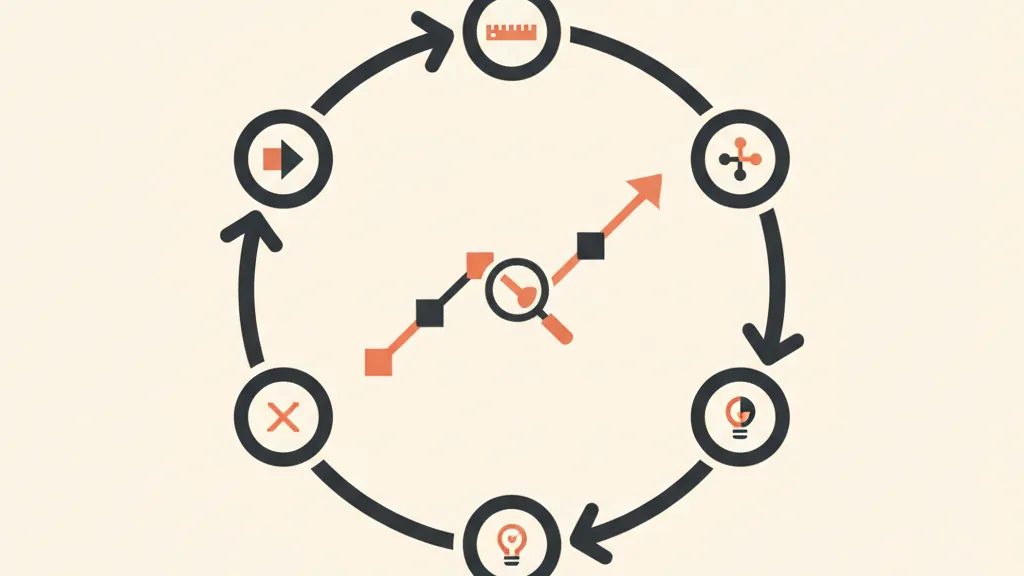
Optimizing is something else entirely. It's a repeatable process built from precise steps: measure, understand where the problem actually lives, form a hypothesis, test it in a controlled way, decide based on the data. Then start again. It's not spur-of-the-moment creativity, it's method. In this article I'll walk through the full cycle, which levers you can actually pull (in order of impact), and how AI automation takes the most tedious and dangerous part off your plate: noticing in time that something is getting worse.
What "optimizing" a campaign really means
Let's start with a distinction that's worth its weight in gold. Optimizing doesn't mean "improving at random until things get better." It means increasing efficiency against a stated goal while keeping everything else under control. If you don't know what the goal is and how you measure it, you're not optimizing: you're gambling.
The first, most common mistake is optimizing the wrong metric. You lower cost per click and congratulate yourself, while sales quietly drop because you're bringing in cheaper, colder traffic. Or you chase ROAS on a single channel while overall profitability gets worse. That's why choosing your guiding metric comes before any intervention. We've written a dedicated guide on which metric to use, MER or ROAS: MER (Marketing Efficiency Ratio), i.e. total revenue divided by total marketing spend, protects you from micro-optimizations that look like wins and are actually losses.
The second distinction: tactical vs. structural optimization. Tactical works inside the existing campaign (budget, bids, targeting, creative). Structural questions the whole setup: is the offer right? Does the landing page convert? Is there a leak further up the funnel? Many campaigns that "don't work" are actually perfect campaigns sending traffic to a landing page that doesn't convert. No amount of bid optimization will save a weak offer or a slow page.
The 5-phase data-driven optimization cycle
Here's the skeleton. It's the same one we use on every account, regardless of channel. The strength lies in repeating it with discipline, not in improvising.
1. Measure (baseline and the right window)
Before touching anything, take a snapshot of the current state. You need a baseline: the average values over the last 14-30 days for the metrics that matter. Without a baseline you can't tell whether a change is an improvement or just statistical noise.
Watch out for the time window. Looking at yesterday's numbers to decide today's move is the fastest way to make bad decisions. Platforms have attribution delays and single days swing a lot. Work on 7-day moving averages and compare like-for-like periods (Monday against Monday, not Monday against Sunday). And make sure tracking is solid: if the input data is dirty, every downstream decision is compromised. It's worth investing in properly set up conversion tracking before talking about optimization at all.
2. Diagnose (where the problem really is)
This is where people who actually optimize part ways with people who poke at random. An output KPI — say, a high customer acquisition cost — is a symptom. You need to break it down to find the cause. CAC depends on: how much you pay to bring in traffic, how much of that traffic converts, and at what value. Each of those breaks down further still.
Take the typical ad funnel and ask yourself at which step you're losing efficiency:
- Impression → Click (CTR): if CTR is low, the problem is upstream — the creative and the message aren't stopping the scroll. No landing page optimization fixes that.
- Click → Landing view: if you're losing people here, it's a technical issue (slow page, broken mobile) or a mismatch between the ad and the page.
- Landing → Lead/Purchase (CRO): if traffic arrives but doesn't convert, the work is on the page, the offer, social proof, or friction in the form.
- Lead → Customer: if you're generating contacts but not closing them, the problem isn't even an advertising one. It's lead quality or the sales process.
This breakdown tells you where to intervene. You'll often find the bottleneck isn't where you were looking. One business owner was convinced he had a cost-per-lead problem, when in fact he was generating cheap leads that sales simply never called back in time. The right lever was automated sales follow-up, not advertising.
3. Hypothesize (one lever at a time)
From the diagnosis comes a concrete, falsifiable hypothesis. Not "let's improve the creatives," but "if we change the hook in the first 3 seconds of the video to lead with the problem instead of the product, CTR rises by at least 20%." A good hypothesis states what you're changing, what you expect, and by how much.
Iron rule: one variable at a time in tests that matter. If you change creative, targeting, and budget all on the same day, when the result improves (or gets worse) you have no idea who deserves the credit. You lose the ability to learn, which is the one thing that makes an account better month over month.
4. Test (in a controlled way)
The test needs to be designed to give you a clean answer. That means: a control group where it makes sense, enough budget to reach significance, and adequate duration (never kill a test after two days out of excess enthusiasm or panic). On creatives, method matters more than gut feeling — here's a structured method for creative testing.
You also need to prioritize: you can't test everything. A simple framework ranks tests by potential impact, ease of execution, and confidence in the hypothesis. We covered this in the test prioritization framework. Test the high-impact, low-effort ideas first.
5. Decide and iterate (scale, kill, iterate)
Once a test wraps up, there are three possible outcomes: the variant wins (scale it, it becomes the new standard), it loses (kill it and archive the learning), or it's ambiguous (redesign it or shelve it). Wins aren't something you "enjoy" — you fold them into the baseline and they become the starting point of the next cycle. That's how an account grows: not through a stroke of genius, but through dozens of correct micro-decisions accumulated over time.

Optimization levers, ranked by impact
Not every lever carries the same weight. Here are the ones you can actually act on, from the most structural (high impact, rarely changes) to the most tactical (smaller impact but ongoing). The order is indicative, but the principle holds: fix the big things first, then polish the small ones.
| Lever | What you change | Potential impact | Frequency |
|---|---|---|---|
| Offer | Price, bundle, guarantee, promise | Very high | Rare |
| Creative and message | Hook, angle, format, social proof | High | Ongoing |
| Landing / CRO | Page structure, form, speed | High | Periodic |
| Targeting / audience | Segments, exclusions, lookalikes | Medium | Periodic |
| Bidding and budget | Bid strategy, allocation | Medium | Ongoing |
| Account structure | Campaign organization, naming | Low-medium | Rare |
Offer and message: where you really win
Platforms have become good at optimizing targeting and delivery on their own. With automated systems like Advantage+ and Performance Max, the variable you still have full control over is what you say and who you say it to. That's why creative is now the number-one lever in paid social. If your creatives aren't converting, before touching the budget look at the creative mistakes that tank performance: the problem is often there, not in bidding.
The offer sits even further upstream. You can have a technically perfect campaign, but if the proposition isn't compelling, no optimization will save it. Before scaling spend, check that the offer holds up: is it clear, is it desirable, does it reduce perceived risk? A good starting point is understanding how to build an irresistible offer.
Bidding and budget: important, but not where the magic happens
Shifting budget and changing bid strategy does produce results, but they're marginal gains compared to fixing the offer or the creative. The risk is spending 80% of your time here — because it's the easiest lever to touch — and 20% on the things that actually matter. Allocate budget toward what's working, sure, but don't kid yourself that reallocating a few euros makes up for a weak offer.
The AstraLoop angle: AI automations that watch for you
This is where the whole cycle gets painful. The first two phases (measuring and diagnosing) require someone to look at the numbers, constantly, and know how to spot when something's going wrong. In the reality of small and medium businesses, that doesn't happen. Nobody opens the dashboards every day. The drop gets noticed a week later, once you've already burned budget and the damage is done.
This is exactly the kind of work automation does better than a human: repetitive, continuous, threshold-based. An intelligent monitoring system watches the metrics around the clock and alerts you the moment something goes off the rails, without you having to remember to check.
Concretely, an automation like this does three things:
- Threshold and anomaly alerts. Is CPA 30% above baseline? Has ROAS dropped below the break-even threshold? Is a creative's CTR collapsing (a sign of audience fatigue)? You get a notification by email or WhatsApp the moment it happens, not at the end of the month in a report.
- Gradual decay detection. Sudden drops get noticed. Slow ones don't. A campaign losing 3% efficiency a week looks stable every single day, but in two months you've lost a quarter of your output. AI compares trends and flags the drift before it becomes visible to the naked eye.
- Context, not just numbers. A good system doesn't just send you "CPA +40%" — it tries to tell you where it's coming from: which campaign, which ad set, which creative is dragging the average down. It hands you the diagnosis already set up, so you go straight to the hypothesis.
AI doesn't decide for you (that stays human work, requiring judgment about business context). What AI guarantees is that you know in time. The difference between acting on day one and day seven, on a serious budget, is thousands of euros. This kind of monitoring is part of a broader conversation on how to use AI to optimize Meta campaigns and how to automate marketing at an SMB without adding headcount to the team.
If your campaigns are running but you never know in time when something's slipping, we can set up an AI monitoring system that warns you before the budget gets burned. Request an audit of your setup.
The KPIs that drive optimization (and the ones that distract you)
You optimize what you measure, so choosing the right KPIs is half the job. The rule: few indicators, aligned to the business goal, viewed over the correct time window.
Distinguish three levels:
- Business metrics (the only ones that pay the bills): MER, CAC, LTV, margin. These tell you whether the machine is running. If MER holds up, a wobbly channel-level ROAS matters little.
- Operational efficiency metrics: CPA, CPL, campaign ROAS, conversion rate. Useful for diagnosing where to intervene.
- Vanity metrics (ignore these when deciding): impressions, reach, likes, "engagement" for its own sake. They don't pay for anything.
The classic trap is optimizing an efficiency KPI against the business's actual interest. You lower CPL by buying cheaper, lower-quality leads, the number improves, but sales close fewer deals and real CAC rises. That's why CPL should always be read alongside quality and close rate. A useful deep dive is the relationship between acquisition unit economics (CAC, CPL, LTV): these are what tell you whether you're growing in a healthy way or just inflating numbers.
To organize all this you need a single view, not twenty open tabs. A marketing dashboard in Looker Studio that pulls together the channels and surfaces the guiding metrics saves you hours and cuts the risk of reacting to a single data point out of context. If you want the full picture of the metrics to keep an eye on, start with the marketing KPIs to monitor.
Common mistakes that sabotage optimization
I'll close with the stumbles we see most often. Avoiding them is worth more than any advanced technique.
- Touching too many things at once. You change budget, creative, and targeting on the same day. The result changes and you don't know why. You've lost the learning.
- Overreacting to daily data. A bad Tuesday isn't a trend. Anyone who optimizes by looking at yesterday yo-yos the account and never gets anywhere.
- Killing tests too early. Out of anxiety (it's going badly) or enthusiasm (it's going well), before the data is significant. Decisions made on noise.
- Ignoring seasonality and external factors. A drop can come from a competitor raising budgets, someone else's Black Friday, or the holidays. Not everything is the campaign's fault.
- Optimizing downstream a problem that's upstream. Fine-tuning bids when the real hole is the landing page or the offer. Fix the structural levers first.
- Not documenting. If you don't track what you tested and with what outcome, you repeat the same tests every three months. The account doesn't learn, and neither do you.
Optimizing campaigns, in the end, is less about tricks and more about process discipline. The winners aren't the ones who know some secret setting — they're the ones who repeat a clean cycle consistently, measure properly, and notice in time when something changes. AI automations exist precisely to guarantee that last part: that you always know, right away, when it's time to step in.
Frequently asked questions
How often should a marketing campaign be optimized?
It depends on the lever. Bidding and budget allocation should be reviewed weekly, based on 7-day averages, never on yesterday's numbers. Creative and messaging should be tested continuously, but one test at a time. Offer and landing page get touched rarely, only when the diagnosis points there. The rule is to act on significant data, not on a fixed schedule out of habit.
What's the most common mistake when optimizing campaigns?
Changing too many variables at once and reacting to daily data. If you change budget, targeting, and creative on the same day, when the result changes you don't know which move to credit, and you lose the ability to learn. Add to that optimizing the wrong metric (for example lowering CPL by buying low-quality leads) and you have the two main saboteurs.
Which metric should I watch to know if a campaign is really working?
Your guiding metric should be a business metric, not a channel metric. MER (total revenue divided by total marketing spend) and CAC tell you whether the machine is sustainable, while ROAS and CPL at the single-channel level are for diagnosis, not decisions. A high campaign ROAS alongside worsening overall profitability is a classic false positive.
Can AI optimize campaigns for me?
AI excels at the monitoring and diagnosis part: it watches metrics 24/7, catches sudden drops and slow decay, alerts you when a threshold is breached, and points to which campaign or creative is dragging the average down. The strategic decision about what to change stays human, because it requires judgment about business context. In practice, AI guarantees you know in time — you decide the move.
Should I optimize budget or creative first?
Creative, and even before that, the offer. With automated systems like Advantage+ and Performance Max, platforms already optimize targeting and delivery well, while message and offer remain fully under your control and carry the biggest impact. Reallocating budget produces marginal gains: it's the easiest lever to touch, but not the one that makes the difference.
How do I notice in time that a campaign is getting worse?
Sudden drops are easy to spot, slow ones aren't: a campaign losing 3% efficiency a week looks stable every single day, but in two months it's delivering a quarter less. The solution is an automated threshold-based alert system (CPA, ROAS, CTR) that compares trends against the baseline and notifies you by email or WhatsApp the moment performance goes off track.
Want to turn your campaign optimization into a process with automatic alerts and a diagnosis already in hand? Talk to us and let's see together where to step in.