Meta Ads for B2B: do they actually work? 2026 strategies
8 min read · AstraLoop Studio
If you work in B2B, sooner or later someone has told you the same line: "Facebook and Instagram are for B2C, you need to be on LinkedIn." That's partly true. LinkedIn has professional targeting nobody else can match. But there's a practical problem nobody mentions: it's expensive. Very expensive. And when your budget is that of an Italian SME, not an American SaaS giant, that cost becomes the difference between a funnel that runs and one that stalls after three weeks.
So the right question isn't "Does Meta Ads work for B2B?" It's "under what conditions does it pay off?" Here's the short answer: it works when you accept paying a small price in top-of-funnel lead quality and recover it with serious downstream qualification. And that's exactly where automation and AI change the equation. Let's look at the numbers, the strategy, and where the trap is hiding.
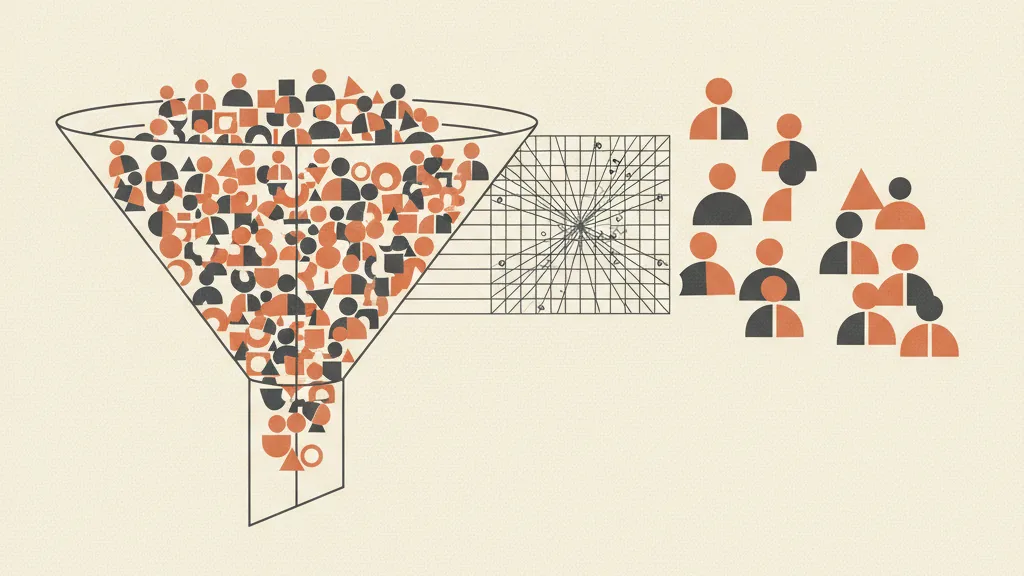
The "B2B only works on LinkedIn" myth, and where it comes from
LinkedIn grew on the promise of targeting by job title, company, seniority, and industry. Want to talk exclusively to Procurement Directors at manufacturing companies with 200+ employees? LinkedIn lets you do that with surgical precision. That's where a widespread belief comes from: if decision-makers are explicitly there, that's where you have to buy space.
The reasoning has a flaw. A B2B decision-maker doesn't stop being a person the moment they leave LinkedIn. In the evening they scroll Instagram, watch Reels, open Facebook for their industry group. It's the same person, reachable on a channel where attention costs a fraction of the price. "Professional context" is convenient for targeting, but it isn't the only place where that person gets informed or makes decisions.
The second problem with the LinkedIn dogma is cost. And here the numbers speak for themselves.
The numbers: what it really costs to reach a decision-maker
Let's compare benchmarks updated to 2026 for B2B audiences. Ranges vary by industry and country, but the order of magnitude holds steady.
| Metric | Meta (Facebook + Instagram) | |
|---|---|---|
| CPM (cost per 1,000 impressions) | roughly €6-14 | roughly €30-65 |
| CPL (cost per form lead) | roughly €30-65 | roughly €50-130 |
| Professional targeting precision | medium (interests + lookalike + first-party data) | high (job title, company, seniority) |
| Lead-to-opportunity conversion rate | lower | higher (2-3x) |
Read that last row carefully, because it's the most honest one. On Meta you pay 2-4 times less per lead, but that lead converts into a commercial opportunity at a lower rate, because the audience is less "clean." On LinkedIn you pay more, but the lead arrives already pre-filtered by the targeting. Whoever tells you one channel is universally better isn't telling you the truth.
The strategic question then boils down to one thing: would you rather pay for quality upstream (LinkedIn) or build it downstream (Meta plus qualification)? For most Italian SMEs and agencies, with volumes that aren't huge and sales cycles that require a conversation anyway, the second route is often more efficient in terms of cost per real appointment — as long as you don't let raw leads fall into the CRM unfiltered.
The strategy that holds up: demand on Meta, qualification downstream
The framework that works in 2026 isn't "Meta or LinkedIn." It's a three-layer system where Meta does the heavy lifting on volume and the intelligence gets applied afterward.
1. Demand generation and interception on Meta
You use Facebook and Instagram to broadly reach profiles that resemble your best customers. Not with job-title targeting (Meta doesn't offer that reliably), but with three levers:
- Lookalike audiences from first-party data: upload the list of your real B2B customers or already-qualified leads and let Meta find similar profiles. It's the most underrated lever, and the most powerful. If you want to understand why the data you already have is worth gold, read how a strategy built on proprietary data in marketing works.
- Interests and behaviors: industry, software used, publications followed, roles stated in profiles. Less precise than LinkedIn, but at a tenth of the cost you can afford to go broader and let the Advantage+ algorithm optimize.
- Retargeting: people who visited the site, watched a video, opened a landing page. Here, cost-wise, Meta is unbeatable.
2. The lead magnet as a filter, not a generic bait
On Meta the number one risk is junk leads: people who download the free PDF because it's free, not because they're thinking of buying. The lead magnet needs to be built to attract the right decision-maker and repel the merely curious. A "free template" attracts everyone. An "audit checklist for manufacturing procurement managers" attracts people with that role and that problem.
Format matters as much as content. Meta's native lead forms convert extremely well, but they collect leads of variable quality: the more fields you add, the fewer leads you get and the more qualified they are. Finding the right balance is a matter of testing. If you're starting from zero, our guide on building lead generation on Facebook and Instagram gives you the method, and for lead forms specifically there's a deep dive on Meta lead ads form quality.
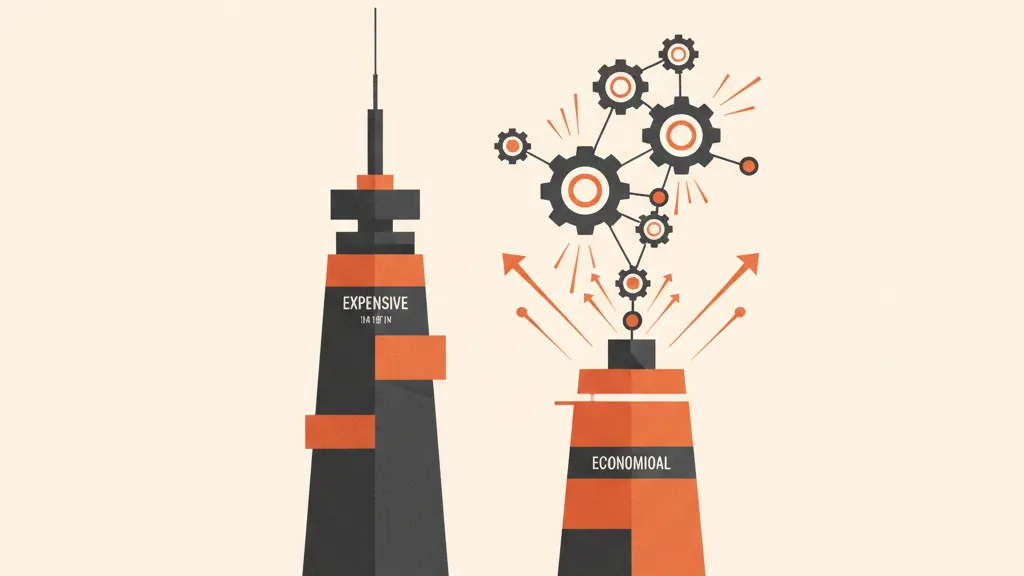
3. AI qualification: this is where you win or lose
This is the piece almost nobody implements well, and it's the one that flips Meta's B2B economics. If you let every raw lead reach your sales rep, they'll burn time on contacts who'll never buy and tell you "Facebook doesn't work." But put a smart filter between the form and the sales rep, and everything changes.
In 2026, that filter is an AI agent that engages the lead the moment it arrives (via WhatsApp, email, or chat), asks the right qualifying questions, and assigns a score. Whoever is a genuine decision-maker, with budget and a timeline, gets passed to the sales rep with the appointment already booked. Whoever isn't goes into an automatic nurturing sequence, without anyone wasting time. Here's how it works:
- The lead fills out the low-CPL Meta form.
- An AI qualification agent on WhatsApp reaches out within minutes, while interest is still warm.
- Targeted questions about role, company, urgency, and budget separate the decision-maker from the curious browser — exactly the logic behind AI-driven lead scoring.
- Only qualified leads (the SQLs) land on the sales rep's calendar. The rest go into nurturing.
With this layer, your real cost per qualified appointment on Meta can drop below LinkedIn's. You start from a much lower CPL and pay for quality only through automation, not media budget. It's the difference between buying expensive leads that are pre-filtered and buying cheap leads that you filter yourself, with a system that never sleeps.
Want to find out if Meta Ads can generate real B2B appointments in your industry, with AI qualification already built in? Request an analysis of your funnel: we'll show you where you're losing leads along the way.
When Meta is NOT the right choice for your B2B
Honest advice also means telling you when to skip it. Meta isn't the best route if:
- Your target is hyper-niche and tiny (say, the 40 CTOs at Italy's biggest banks). Here LinkedIn's job-title targeting and one-to-one selling beat any volume play.
- The product has a huge, complex sales cycle, with multiple buying committees, where the professional touchpoint matters more than volume.
- You don't have a downstream qualification system. Without an AI or human filter, Meta will bury you in low-quality leads and lead you to wrongly conclude it doesn't work.
For everything else — meaning the majority of Italian SMEs and B2B agencies with offers between €1,000 and €50,000 in value — Meta is a hugely underrated channel. The ideal combination is often hybrid: Meta to create demand and volume at low cost, LinkedIn (selectively) to catch those showing stronger buying signals. It's not a war between platforms. It's about allocating budget based on what each does best.
Tracking in the post-privacy era: don't skip it
There's a technical issue that decides whether any of this actually works: knowing which campaigns generate quality leads, not just leads. With cookie restrictions and weaker pixel signals, you need to connect Meta to your CRM. Offline conversions let you feed the signal "this lead became a customer" back to Meta, so the algorithm optimizes toward real customers instead of randomly filled-out forms.
In practice that means setting up Meta's Conversions API and uploading offline conversions from your CRM. Without this step, you're asking the algorithm to optimize in the dark. With it, every euro spent gets smarter over time, because Meta learns who your real customers are and goes looking for more like them. It's closing the loop between advertising and actual sales.
In summary: the checklist for making Meta work in B2B
- Don't replicate LinkedIn targeting. Use lookalikes on first-party data, broad interests, and retargeting, and let the algorithm optimize.
- Build lead magnets that filter, specific to a role and a problem, not generic bait.
- Put an AI qualification agent between the form and the sales rep: it's the piece that flips the economics.
- Connect Meta to your CRM with Conversions API and offline conversions, so you optimize toward real customers.
- Measure cost per qualified appointment, not cost per raw lead. It's the only number that matters.
Done right, B2B on Meta isn't a poor substitute for LinkedIn. It's a different, and often more efficient, way of filling the funnel, provided you shift the intelligence from upstream targeting to downstream qualification. And that's exactly where automation and AI make the difference between a channel that wastes budget and one that brings in customers.
Frequently asked questions
Does Meta Ads really work for B2B or only for B2C?
It works for B2B too, but on one condition: decision-makers need to be reached with lookalikes on proprietary data and interests, not with job-title targeting, which Meta doesn't offer reliably. The upside is a CPM 2-4x lower than LinkedIn. The price to pay is lower lead quality, which needs to be recovered through downstream qualification.
Meta Ads or LinkedIn Ads for B2B lead generation?
It depends on your target and budget. LinkedIn is unbeatable for very small niches and for selling to complex buying committees, but it's expensive (CPM €30-65). Meta pays off for larger volumes and offers between €1,000 and €50,000, with a CPM of €6-14. The best strategy is often hybrid: Meta to create demand, LinkedIn used selectively for those showing buying signals.
Why are Facebook leads in B2B low quality?
Because a low CPL also attracts people who fill out the form out of curiosity or for a free lead magnet, with no real intent to buy. It's not a flaw of the platform: it's physiological when you pay little per lead. The solution isn't to abandon Meta, but to add a qualification filter (an AI agent or a sales rep) between the form and the salesperson's calendar.
How much does a B2B lead on Meta cost compared to LinkedIn?
In 2026 a form lead on Meta costs roughly €30-65, versus €50-130 on LinkedIn. Careful though: LinkedIn leads convert into opportunities at a 2-3x higher rate. The right comparison isn't cost per raw lead, but cost per qualified appointment, where Meta with downstream AI qualification often wins.
How do you qualify B2B leads that come from Meta?
The most effective method in 2026 is an AI agent that contacts the lead within minutes (via WhatsApp, email, or chat), asks about role, company, urgency, and budget, and assigns a score. Genuine decision-makers get passed to the sales rep with the appointment already booked; the rest enter an automatic nurturing sequence, without wasting the sales team's time.
Do you need to connect Meta to your CRM for B2B?
Yes, in the post-privacy landscape it's almost mandatory. By setting up the Conversions API and uploading offline conversions from your CRM, you feed Meta the signal of which leads became actual customers. That way the algorithm optimizes toward real customers instead of simple form fills, making every euro spent progressively more efficient.
If you want a system that brings in low-cost leads from Meta and filters them automatically before handing them to your sales team, let's talk. We'll show you how to build it for your case.