Subject Lines That Get Emails Opened: 20 Practical Rules
9 min read · AstraLoop Studio
The subject line is the bottleneck of all email marketing. You can write the most persuasive email body in the world, but if the subject doesn't convince the recipient to tap, nobody will ever read that copy. In an inbox that gets dozens of messages a day, you have about one second and a handful of words to earn the open.
The good news is that writing good subject lines isn't an innate talent: it's a craft built on repeatable rules. And today there's an extra lever few people use well, generative AI, which lets you produce ten variants of a subject line in thirty seconds and test them instead of staring at a blank page. This article covers 20 practical rules, with real examples, and the method for using AI as an ally instead of a noisy shortcut.
To put the numbers in context: in 2026 a "good" open rate for marketing emails sits between 20% and 25%, with sharp differences by industry (B2B services often runs 18-22%, retail 16-20%). The subject line is the variable that moves this number the most, even before the content itself.
The 20 rules for high-open-rate subject lines
Length and mobile readability
1. Stay under 40 characters. Most emails get opened on a smartphone, and mobile clients truncate long subject lines. Under 33-40 characters, you're guaranteed the subject shows in full on nearly every device. Analysis across millions of sends shows that 2-4 word subject lines hit the highest open rates, with a sharp drop-off past 7 words.
2. Put the most important word first. Even when the subject gets truncated, the first 3-4 words stay visible. If the detail that convinces someone to open is buried at the end, you've lost it. Example: "Your order is late (here's what we're doing)" leads with the fact that sparks curiosity, not "Hi Marco, we're writing to let you know that...".
3. Treat the preheader as an extension of the subject line. The preview text that follows the subject is worth almost as much as the subject itself. Don't waste it on "View this email in your browser": use it to complete the promise. The subject line and preheader should be read as a pair.
Personalization (the kind that actually works)
4. Personalize beyond the first name. Dropping in "Hi {name}" barely moves the needle anymore: it's a pattern everyone recognizes. Personalization that works draws on real recipient data: the last product purchased, their city, their industry, a deadline that concerns them. Subject lines that mention the recipient's company name or a specific data point see noticeably higher open rates than the generic version.
5. Use segmentation as the foundation for personalization. You can't write a relevant subject line for an undifferentiated list. Segment first, then write. A dormant customer, a new subscriber, and a loyal customer each deserve a different subject line. If you haven't set up a structure yet, start from the segments you should create right away to give every send a purpose.
6. Use AI-driven dynamic personalization. This is where AI makes a difference at scale: instead of writing one generic subject line for 5,000 contacts, a system can generate variants that adapt the hook to each segment's (or each individual's) profile. It's the shift from batch emails to data-driven personalization, without multiplying the manual work.
The psychological hook
7. Make a clear, keepable promise. The subject line has to say what the reader will find inside. "3 ways to cut no-shows in half" beats "News from our team". If you promise and don't deliver, the next subject line gets ignored: trust in your subject lines is built over time.
8. Use curiosity, not clickbait. A well-calibrated information gap invites a click ("We changed one thing about the price"). Deceptive clickbait ("You won!!!") earns the open once and then wrecks your reputation. Honest curiosity hints at the topic; clickbait lies about it.
9. Lean on real urgency. "Last day to register for the webinar" works if it's true. Invented urgency, repeated in every email, loses its power and raises suspicion. Use it sparingly, and only when there's a genuine deadline.
10. Lead with the benefit, not the feature. The recipient doesn't care about "our new module": they care what they get out of it. "Close quotes in half the time" beats "Software update". It's the same logic behind good copy: speak to the reader's outcome, a principle you'll find across all persuasive copywriting techniques.
11. Ask questions that resonate with a problem. A well-placed question ("How many customers are you losing on the phone every month?") triggers self-recognition: the reader answers mentally and wants to know more. It has to touch a real pain point for that segment, not generic rhetoric.
Numbers, format, and style
12. Include a number. Subject lines with a digit tend to earn more opens: "5 emails that bring back lost customers" is concrete and promises a clear structure. Digits stand out visually against a block of plain words. Even better if the number comes first.
13. Avoid ALL CAPS. Writing the whole subject line in caps is one of the fastest ways to tank performance: the data shows steep drops in opens and a high spam risk. All caps shouts, and nobody likes being shouted at in their inbox. At most, emphasize ONE word, not the entire line.
14. Use emoji sparingly, don't overdo it. One or two relevant emoji can catch the eye; three or more make the email look promotional and sloppy. Fair warning: recent tests show emoji almost never boost open rate meaningfully, and sometimes hurt clicks. Avoid money emoji in particular (🤑 💰 💸), which the eye instantly flags as spam. Test on your own audience before adopting them as a standard.
15. Be specific instead of vague. "Unmissable offer" says nothing; "30% off aluminum window frames until Friday" says everything. Specificity reads as credible; vagueness is background noise the reader has learned to filter out.
16. Pick emotionally weighted words carefully. Certain words draw more attention ("free", "new", "exclusive", "finally"), but they need to be used with restraint and stay consistent with the brand. A good starting point is a list of power words in Italian to draw from without tipping into hype.
Want a system to generate and test your email subject lines instead of writing them by hand every time? Request an analysis of your email marketing and we'll show you how to build AI into your workflow.
Deliverability: getting opened starts with getting delivered
17. Don't land in spam because of your subject line. Modern filters (Gmail, Outlook, Apple Mail) no longer block on single words: they score an overall combination of content, domain reputation, and recipient behavior. But the combo of all caps + multiple exclamation marks + hyper-promotional words is still a clear red flag. If you want to understand the mechanics, read why emails land in spam.
18. Don't fake "Re:" or "Fwd:". Simulating a reply or a forward to steal an open is one of the most penalized tricks: it earns one tap and then erodes trust and deliverability. Honest subject lines perform better over the long run.
19. Sender reputation matters as much as the subject line. Even the perfect subject line is useless if your domain isn't authenticated and gets filtered upstream. Before optimizing subject lines, verify that SPF, DKIM, and DMARC are set up correctly: it's the foundation everything else rests on.
Testing and iteration
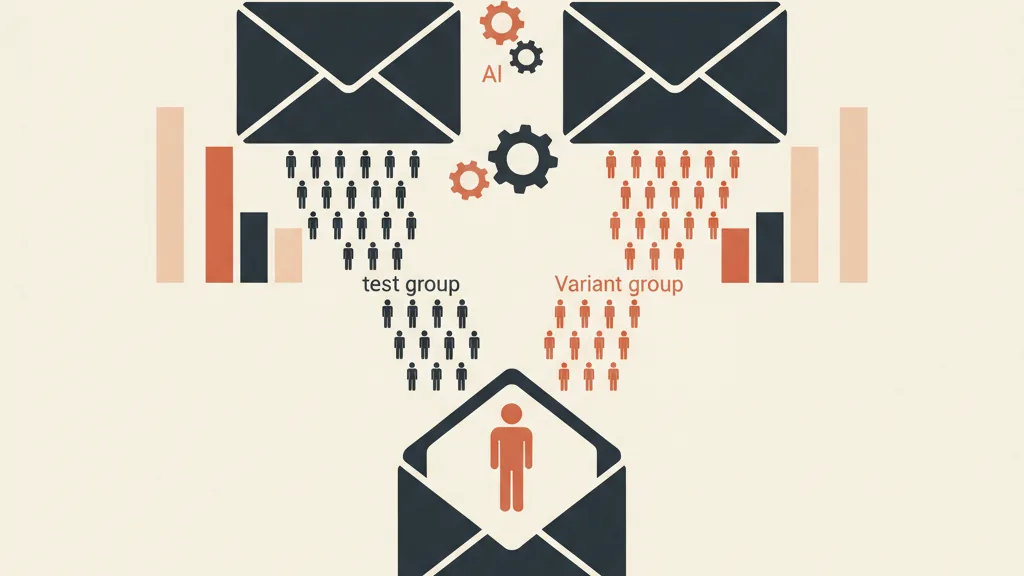
20. Always test, don't rely on gut feeling. What works for one audience can flop for another. A/B testing the subject line is the golden rule: send two versions to a sample (ideally at least 1,000 recipients per variant for a reliable result) and send the winner to the rest. If you've never done it in a structured way, the guide to A/B testing in email marketing walks you through the method step by step.
How generative AI speeds up subject lines and testing
The rules above have always held true. What's changed in 2026 is how fast you can apply them. The typical block ("I can't come up with a decent subject line") is now solved by delegating the generation phase to AI and reserving the critical judgment for yourself. Here's how to do it right.
Generate 10 variants, then choose
The worst way to use AI is to ask it to "write the subject line" and copy the first output. The right way is to ask for 10 different angles on the same message: one with a number, one with a question, one with urgency, one with curiosity, one with the benefit spelled out. In thirty seconds you have a spread to whittle down. The selection criteria stay human, because AI doesn't know your audience's nuances the way you do. It's the same approach as AI-assisted copywriting: the machine produces quantity, you bring the judgment.
Give the model a precise brief
Output quality depends on the brief. A useful prompt includes: which segment you're writing to, the email's goal, the brand's tone, a length constraint (max 40 characters), and what to avoid (no all caps, no money emoji). The more context you give, the less generic the suggestions. If you're starting from scratch, some example copywriting prompts can save you time.
Run the test as a continuous loop
The real breakthrough isn't generating one better subject line once, it's building a cycle: AI proposes the variants, the system tests them on small samples, measures the open rate, learns which angles work for each segment, and refines the next round of proposals. Plugged into a marketing automation flow, this turns subject line writing from a manual task into a self-improving process, and extends naturally to dynamic personalization across other channels (email, WhatsApp, SMS).
Keep AI on a leash
Two warnings. First: AI tends to produce generic, slightly "translated-sounding" subject lines if you don't steer it (watch for stilted phrasing and random capitalization). Second: always proofread. A subject line that promises something the email doesn't deliver does more damage than a bland one. AI is a productivity multiplier, not a substitute for quality control. The subject line is the first link in a chain: if you want to see how it connects to the rest, the guide to email marketing copywriting ties subject line, body, and call to action into one coherent system.
In summary
A good subject line is short, specific, honest, and relevant to the person receiving it. The 20 rules above cover length, personalization, psychological hooks, deliverability, and testing: apply them consistently and you'll move the open rate by several points. Generative AI doesn't replace these rules, it accelerates them, letting you produce variants in seconds and test continuously instead of relying on gut feeling. The result is email marketing that gets opened more and, above all, converts more because it reaches the right person with the right message.
Frequently asked questions
How long should an email subject line be?
Ideally under 40 characters, better yet between 33 and 40, so it shows in full even on a smartphone. Analysis across large volumes shows that 2-4 word subject lines get the highest open rates, with a sharp drop-off past 7 words.
Do emoji in subject lines increase the open rate?
Not reliably. Recent tests show that one or two relevant emoji rarely boost open rate meaningfully, and sometimes hurt clicks. If you use them, stick to one or two, avoid money-related ones (🤑💰💸), and always test on your own audience before adopting them as a standard.
Does putting the recipient's name in the subject line still work?
Barely. "Hi {name}" is a pattern everyone recognizes and it barely moves the needle. Personalization that works uses real data: last purchase, city, industry, a deadline relevant to the recipient. This is where AI helps, generating variants tailored to each segment.
What elements in a subject line get an email flagged as spam?
Modern filters score an overall combination, not single words. But all caps, multiple exclamation marks, fake 'Re:'/'Fwd:', and hyper-promotional words together are red flags. Domain authentication (SPF, DKIM, DMARC) and sender reputation matter too.
How do I use AI to write subject lines without generic results?
Don't ask for a single subject line: ask for 10 different angles (with a number, a question, urgency, a benefit) and choose yourself. Give a precise brief with segment, goal, brand tone, a 40-character limit, and what to avoid. Then always proofread: AI produces quantity, you bring the critical judgment.
How many recipients do you need for a reliable subject-line A/B test?
As a rule of thumb, at least 1,000 recipients per variant to get a result that isn't due to chance. Send two versions of the subject line to a sample, measure the open rate, and send the winning version to the rest of the list.
If you want to turn subject line writing into an automated process that generates variants and optimizes itself, let's talk: we build the workflow tailored to your list.