B2B CRM and Acquisition Funnel Agency: Why One Partner Beats Two
8 min read · AstraLoop Studio
If you're looking for a partner to acquire B2B customers, you run into a market split almost immediately. On one side are the lead generation and advertising agencies: brilliant at filling your calendar with contacts, but ask where those contacts end up and the answer is "we'll send them over in an Excel sheet" or "we push them to your CRM, if you have one." On the other side are the software houses and dev shops that build you a custom back-office system: solid architecture, clean database, zero idea of how you actually fill that CRM with qualified leads.
The result is that you, the business owner, end up as project manager between two vendors who don't talk to each other. One brings in the contacts, the other files them away, and everything in between gets lost: tracking, accountability, money. This article explains why the intersection of the two worlds — an agency that owns both the acquisition funnel and the custom CRM — is the most interesting and least crowded space, and how to spot the right partner without getting dazzled.
Why the SERP splits the two worlds apart (and why that's your problem)
Try searching "B2B customer acquisition agency" and then "custom CRM development." You get two vendor lists that almost never overlap. It's a historical divide, born out of skill sets: people good at performance marketing usually can't write code, and people who build software have never run an outbound campaign. Everyone stays inside their own fence.
The problem is that your acquisition process isn't split into two fences. A lead coming in from a LinkedIn campaign needs to enter the CRM, get the right score, trigger a follow-up, get assigned to a sales rep, and turn into a meeting. If the funnel and the CRM are designed by two different teams, that handoff is exactly where everything breaks. This is precisely the point we make when we distinguish between funnel and CRM as two tools that must work together: designing them separately builds the leak into the system from day one.
The three places where value leaks with two vendors
- The data handoff. The funnel collects fields the CRM doesn't expect, or the other way around. Neither side takes ownership of normalizing the source, the UTM, the lead status. Three months in, the database is dirty and the reports don't add up.
- Accountability. Conversions drop. The marketing agency says the problem is how sales handles the leads in the CRM. The CRM developer says the leads coming in are low quality. You're stuck in the middle, with no one to blame and no fix.
- The hidden cost of coordination. Every change needs two calls, two quotes, two timelines. The time you spend acting as technical translator between the two vendors is a real cost — it just never shows up on an invoice.
What "one partner" actually means in practice
An agency that covers both worlds isn't selling you two products bundled together. It's selling you a single system where the funnel is designed around how the CRM will work, and the CRM is built around how leads behave inside the funnel. The difference shows up at the design stage, before a single campaign even launches.
Take a concrete example. Imagine a consulting firm selling high-value services, with a two-month sales cycle and a high average deal size. With a single partner, there's one line of reasoning: what information does sales need to close the deal? From there you decide which fields to capture on the landing page, how to qualify a lead before handing it off, what lead scoring to apply, and which follow-up automations kick in if a contact doesn't reply within 48 hours. The funnel and the CRM come from the same question. With two vendors, instead, the funnel collects what it knows how to collect and the CRM files whatever it receives — and you're the one who has to hold it together.
This is the point of a custom CRM with an integrated funnel: not two systems exchanging data through an integration, but a single structure designed end to end. The advantage isn't ideological — it's measurable, in conversion rate along the pipeline and in manual work hours saved.
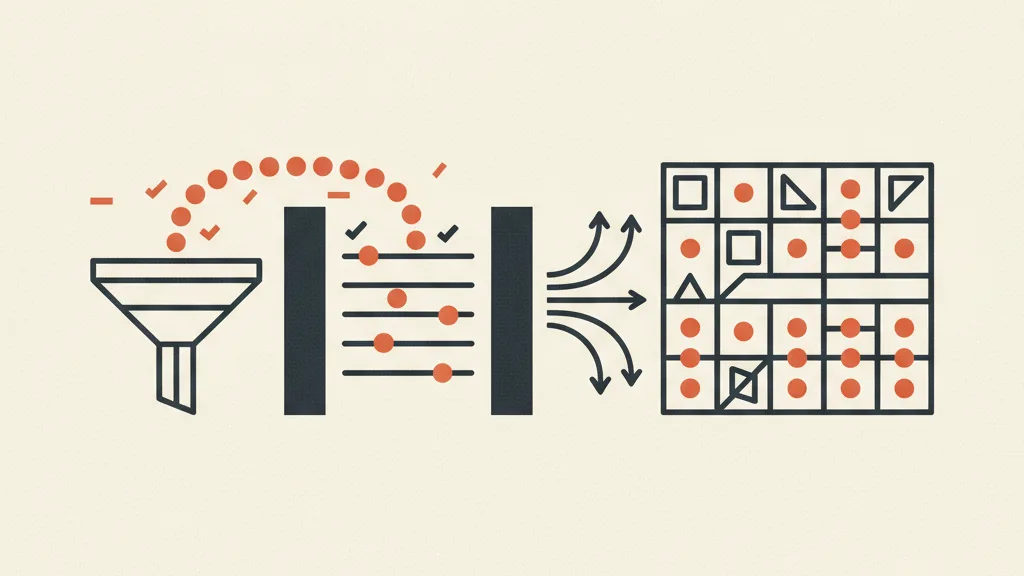
An honest comparison: one partner vs. two vendors
A single partner isn't always the right call. If you already have a CRM that works well and just need more fuel at the top of the funnel, it makes sense to hire an acquisition-only agency. But if you're building the system from scratch, or your current CRM doesn't talk to any of your channels, the table below lays out how things actually stack up.
| Dimension | Two separate vendors | One partner (funnel + CRM) |
|---|---|---|
| Accountability for results | Diffused, finger-pointing when numbers drop | Single point of contact for the whole pipeline |
| Data consistency | Yours to police, risk of a dirty database | Guaranteed upstream, fields and states designed together |
| Time to launch | Longer, two roadmaps to sync | Faster, a single plan |
| Coordination cost | High and hidden (your time) | Absorbed by the partner |
| End-to-end optimization | Hard, each side optimizes its own piece | Natural, the whole chain is in view |
| Vendor flexibility | High, swap one piece without touching the other | Lower, dependency on a single partner |
| When it pays off | CRM already solid, you just need inbound leads | System to build from scratch, or a CRM to rebuild |
Notice the one row where two vendors win: flexibility. With a single partner you depend more on whoever built the system. That's a real risk, which is exactly why choosing the right partner matters more than the model itself. The key is verifying the system stays yours — exportable data, no proprietary lock-in — even if you switch vendors down the line.
How to spot the right agency: 5 questions to ask
Plenty of agencies today claim to do "everything." To find out whether that's true or just marketing, ask these questions during selection.
- "Can you show me a CRM you built from scratch?" If the answer only mentions HubSpot or Salesforce configurations, they're configuring someone else's software, not building custom software. That's perfectly fine if that's what you need, but it's not a custom-CRM partner. The difference between a custom CRM and a SaaS solution is substantial and worth clarifying upfront.
- "How do you actually connect the funnel to the CRM?" A good answer talks about lead statuses, scoring, handoff automations, source tracking. A weak answer says "we just import them."
- "Who do I call when a number doesn't add up?" There should be one point of contact with visibility over the entire chain, not two account managers from two different teams.
- "Does the data stay mine?" The partner should guarantee full export and no proprietary lock-in. Your customer database is your asset.
- "How do you measure ROI for the whole system?" A serious partner thinks in terms of unit economics (CAC, CPL, LTV) across the entire pipeline, not just the number of leads delivered.
Weighing whether to build your funnel and CRM with a single partner? Get a free analysis of your acquisition process: we'll show you where leads are leaking today and how to close the gap.
The typical path of an integrated project
To give you a concrete sense of how a single partner operates, here are the phases that typically follow one another. Timelines vary a lot depending on complexity, but the sequence stays the same.
Phase 1: Sales process analysis (1-2 weeks)
Before a single line of code is written or a campaign launched, you map out how you sell today: who your best customers are, how you qualify them, where the pipeline gets stuck. This is where the structure of both the funnel and the CRM comes from. Skipping this phase is the number one reason funnels don't convert: they get built before the process is even understood.
Phase 2: Integrated design (2-4 weeks)
The funnel stages and the CRM's data structure are designed at the same time, with the handoff points already defined. This is where a single partner makes the difference compared to two vendors: both pieces come out coherent because they're conceived by the same team.
Phase 3: Build and integration
The custom CRM gets developed, landing pages and sequences get built, channels get connected. The technical question of how to integrate CRM and sales funnel without losing data along the way gets solved right here, by one team, not through fragile integrations between two vendors' systems.
Phase 4: Launch and optimization
Campaigns go live, leads flow into the CRM, sales gets to work. From here on, the whole chain is under one lens: if meetings drop, you can tell whether the problem is at the top (lead quality) or the bottom (CRM handling), because whoever is optimizing sees both sides.
What it costs and who it's for
An integrated project carries a higher upfront investment than a single lead generation campaign, but it needs to be weighed against the real combined cost of two vendors plus the coordination overhead. It's typically structured as an initial setup (CRM development plus funnel build) and a monthly campaign management fee. For a sense of the numbers involved, you can start with our guide on what a custom CRM development project costs, keeping in mind that in the integrated model the funnel gets added on, but the cost of coordinating between vendors disappears.
A single partner pays off most for companies building their acquisition system from scratch, or rebuilding one that isn't working. If that's where you are, the reference point to keep coming back to is always a complete customer acquisition system: the funnel and the CRM aren't two separate purchases, they're two components of the same engine. And like any engine, it runs better when the parts are designed to work together, not assembled by people who never spoke to each other.
In summary
The SERP shows you two separate worlds because the market organized itself around skill sets, not around your problem. Your problem, instead, is a single flow that starts with a contact and ends with a sales rep closing the deal. A partner who owns both the funnel and the custom CRM eliminates the most expensive breaking point — the handoff — and gives you a single point of contact accountable for the result. It's not the right choice in every case, but if you're building or rebuilding your B2B acquisition system, it's the one that saves you the most time and money over the medium term.
Frequently asked questions
Is it better to hire one agency for both funnel and CRM, or two specialized vendors?
It depends on your starting point. If you already have a solid CRM and just need inbound leads, an acquisition-only agency works fine. If you're building the system from scratch or your CRM doesn't talk to your channels, a single partner eliminates the handoff — the point where most conversions and most time get lost.
Can a lead generation agency also build a custom CRM?
Rarely. The skill sets are different: performance marketing on one side, software development on the other. Many agencies that claim to do both are actually configuring third-party software like HubSpot or Salesforce. Always ask to see a CRM built from scratch to tell a developer apart from a configurator.
What's the main risk of relying on a single partner?
Dependency. With one vendor, you have less flexibility to swap out a single piece. It's mitigated by making sure your contract guarantees data export and no proprietary lock-in, so the system stays yours even if you switch partners down the line.
How do I tell if the funnel and CRM are actually integrated?
Look at the handoff points: lead status, lead scoring, follow-up automations, source tracking. If these are defined and connected, the integration is real. If the answer is just "we import the contacts into the CRM," the two systems are sitting side by side, not integrated.
How much does an integrated funnel-plus-CRM project cost?
It's typically structured as an initial setup (CRM development plus funnel build) and a monthly campaign management fee. The upfront investment is higher than a single lead generation campaign, but it should be weighed against the combined cost of two separate vendors plus the hidden cost of coordinating between them.
How long does it take to launch an integrated system?
Generally a few weeks for analysis and design, then the build-and-integration phase, then launch. With a single partner, timelines are shorter than with two vendors because there's one roadmap to follow instead of two to keep in sync.
If you want a quote for a single integrated funnel-plus-custom-CRM system, let's talk: we start from your actual sales process, not a pre-packaged bundle.