From CMO to CGO: Why Marketing Is Becoming a Growth Function
8 min read · AstraLoop Studio
For years, marketing was judged on metrics that didn't speak the CEO's language: reach, impressions, "awareness," sentiment. Then the bill came due. Budgets under scrutiny, boards demanding returns, a customer acquisition cost that keeps climbing while margins shrink. Out of that pressure comes a role that, in many companies, is now taking the classic CMO's seat: the Chief Growth Officer (CGO). It's not a new name on the door. It's a new mandate: from communication to measurable growth, with direct accountability for the numbers that matter.
Let's look at what a Chief Growth Officer actually does, why marketing is turning into a growth function, how it differs from the CMO, and what any of this means if you run an Italian SMB that doesn't have — or want — a corporate-style C-suite.
What is a Chief Growth Officer (CGO)
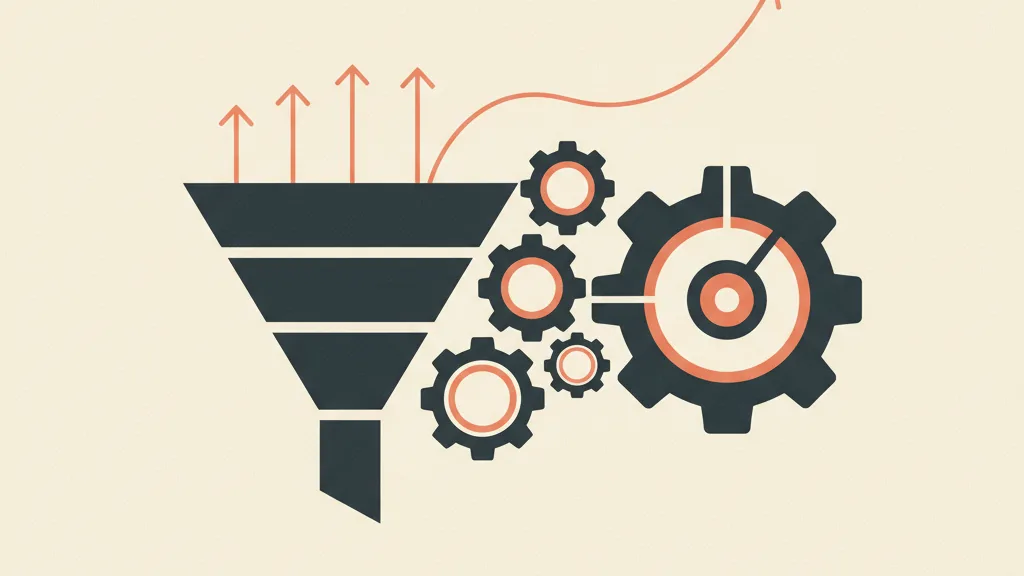
The Chief Growth Officer owns revenue growth end to end: acquisition, conversion, retention, and expansion of customer value. The traditional CMO oversees marketing (brand, demand generation, communication). The CGO oversees the growth engine as a whole, spanning marketing, sales, product, and data.
The keyword is accountability for the number. A CGO doesn't report back "campaigns that went well": they deliver incremental revenue, a sustainable ratio between customer value and acquisition cost, a payback period that stays within target. It's the same lens a business owner applies to the whole company, brought to bear on the marketing function. The title was born in tech and scale-ups, but the forces behind it apply to any company that invests in order to grow.
Why marketing is becoming a growth function
This isn't a conference-stage trend. At least four forces are pushing marketing toward integrated growth.
1. The reckoning on metrics
When rates rise and budgets tighten, the board stops settling for upward-trending charts and asks a simple question: how much revenue did this investment produce? Vanity metrics don't survive that conversation. What's needed are business indicators, and the shift from ROAS alone to MER is the first sign of that move: looking at return on total spend, not a single campaign read in isolation.
2. The collapse of post-privacy attribution
With third-party cookies fading and tracking restrictions tightening, the old last-click model has become unreliable. No one can hide anymore behind a report that self-attributes every sale. This pushes toward a more honest, holistic read of the data — and toward a role accountable for real results instead of numbers inflated by whichever platform is reporting them.
3. The funnel isn't linear anymore
Customers no longer move neatly from marketing to sales to product. They discover, try, come back, ask for support, buy, subscribe. Marketing, sales, and product operate on the same journey, often at the same time. Keeping these functions in separate silos means losing customers at the handoffs. A coherent customer acquisition system is worth more than three departments each optimizing their own slice.
4. CAC keeps rising, so what comes after matters
Acquiring a new customer costs more every year. Sustainable growth isn't won only at the top of the funnel, but in the ability to retain and expand the customers you already have. That's why the CGO's mandate includes retention, upsell, and database reactivation — areas the classic CMO often never touched.
CMO vs CGO: the real differences
The table below sums up how the role shifts when the center of gravity moves from communication to growth.
| Dimension | CMO | CGO |
|---|---|---|
| Mandate | Marketing and brand | End-to-end revenue growth |
| Core KPIs | Awareness, leads, cost per lead | MER, LTV/CAC, payback, retention |
| Functions owned | Marketing | Marketing, sales, product, data |
| Time horizon | Campaign and quarter | Customer lifecycle |
| To the board | Reports marketing results | Accountable for business numbers |
| Typical risk | Vanity metrics | Short-term obsession, if mismanaged |
One thing to watch: the CGO isn't a "more aggressive" CMO. It's a role with a different scope, one that requires fluency in both the language of data and the language of the P&L. And it carries a mirror-image risk, just as real: if it only chases immediate conversion, it sacrifices the balance between brand and performance and burns tomorrow's demand to inflate today's.
What a CGO actually owns
A Chief Growth Officer's operating scope rests on four pillars.
- Marketing: acquisition and demand generation, from content to paid campaigns.
- Sales: qualification, follow-up, and closing. The handoff between marketing and sales is often where the most revenue leaks away.
- Product: onboarding, activation, and perceived value. A product that fails to activate well wastes every euro spent on acquisition.
- Data: the connective tissue. Without a unified read of the data, "integrated growth" is just a slogan.
The fourth pillar is the one that breaks the model. In nearly every company, data lives in silos: ad platforms on one side, the CRM on another, back-office and e-commerce systems somewhere else again. Putting someone "in charge of growth" on top of fragmented data produces nothing but an empty title and meetings where every department shows up with different numbers.
AI as the glue between functions
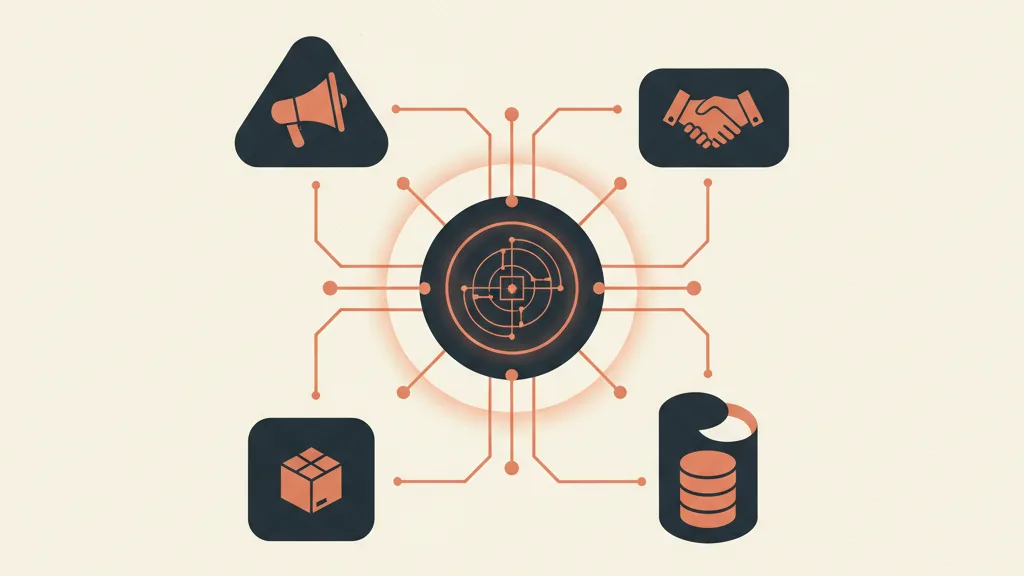
This is where the angle we see working in the field at AstraLoop comes in: what makes integrated growth operational isn't yet another dashboard, but the intelligent automation that connects the functions to each other. The coordination that once required huge teams is now built with AI and automation.
- Unified data: bringing marketing, sales, and post-sale into a single source of truth, typically a custom-built CRM that talks to the other platforms.
- Closed conversion loop: sending offline conversions back from the CRM to the ad platforms, so the algorithm optimizes for real customers instead of the first lead that walks by.
- Automatic qualification and follow-up: lead scoring, enrichment, and contact sequences that let no opportunity slip through the cracks between departments.
- Reactivation: winning back dormant customers from the database is often the cheapest growth lever available, and it lends itself well to automation.
A concrete example. A company generates 200 leads a month from its campaigns. Without coordination, sales works them by gut feel, many go unanswered, and the platform keeps optimizing for volume. With a closed loop, every lead enters the CRM with a score, high-probability prospects get an immediate follow-up, real sales flow back to the ad platforms, and cost per customer drops without touching the budget. That, in practice, is thinking like a CGO.
Want to connect marketing, sales, and data into a single growth engine? Tell us how you work today and we'll show you where AI can close the loop.
Running an SMB? You don't need the title, you need the mandate
Most Italian companies will never hire a Chief Growth Officer, and that's fine. The value isn't in the job title, it's in the mandate: one person accountable for the growth number, with marketing, sales, and data at the same table and shared KPIs. You don't need twenty new hires to think like a CGO — you need AI-driven process automation that holds together what today is scattered across people and spreadsheets.
In practice, in a small or mid-sized company that role is often played by the owner themselves, or by the marketing manager with a broader mandate. What changes the game isn't the title, but three conditions: unified data, shared goals between the people who acquire customers and the people who sell to them, and tools that close the loop automatically.
SMBs do have one advantage: a leaner structure. In a ten-person company, getting marketing and sales to talk to each other is one meeting, not a corporate-scale change-management project. The difficulty isn't organizational — it's a matter of method and tooling. And that's exactly where automation makes the difference.
The numbers a CGO is accountable for
If you want to adopt a growth mindset, start by tracking the right indicators. There aren't dozens of them — just a handful, all tied to the P&L.
- MER (Marketing Efficiency Ratio): total revenue divided by total marketing spend. Tells you whether the whole engine is profitable.
- LTV/CAC: the ratio between customer lifetime value and acquisition cost. Below 3 is usually a warning sign.
- Payback period: how many months it takes to recoup the cost of acquiring a customer.
- Retention and net revenue retention: how much value you keep and grow from customers you've already acquired.
If these terms feel unfamiliar, the place to start is acquisition unit economics (CAC, CPL, LTV): they're the grammar a CGO reasons in every day, and the baseline for knowing whether you're growing or just spending.
How to start, even without a C-suite
You don't need a revolution. Five moves, in the right order, are enough.
- Unify your data: pick a single source of truth (usually the CRM) and connect the other platforms to it.
- Share the KPIs: marketing and sales need to answer to the same numbers, not separate metrics that contradict each other.
- Close the loop: send real conversions back to the ad platforms, so you optimize for revenue, not clicks.
- Automate the handoffs: use AI for qualification, follow-up, and reactivation, so no contact falls through the cracks.
- Name an owner: one person is accountable for the number. Without an owner, growth belongs to no one.
This is also the core of a well-built digital strategy for SMBs: not a pile of disconnected activities, but a system where every euro spent and every lead generated feeds into one measurable engine.
Three mistakes to avoid
- Changing the title, not the substance: renaming the CMO to CGO without granting real authority over sales and data changes nothing.
- Optimizing only for the short term: cutting everything that doesn't convert today empties tomorrow's pipeline.
- Chasing the tool before the process: buying yet another tool before unifying your data is spend, not growth.
In summary
The shift from CMO to CGO tells a simple truth: marketing is no longer judged on how visible it is, but on how much it grows the company. You don't need to rewrite the org chart tomorrow. You need to adopt the mandate, measure the right numbers, and use AI as the glue between functions that today work in isolation. The title is optional. Accountability for growth isn't.
Frequently asked questions
What does a Chief Growth Officer do?
They're accountable for revenue growth end to end: acquisition, conversion, retention, and expansion. Unlike a CMO, they coordinate marketing, sales, product, and data toward a single measurable business goal.
What's the difference between a CMO and a CGO?
The CMO oversees marketing (brand, demand, communication) and measures its results. The CGO is accountable for overall growth and business numbers (MER, LTV/CAC, retention), also coordinating sales, product, and data.
Does an SMB actually need a Chief Growth Officer?
Rarely does it need the title. It needs the mandate: one person accountable for the growth number, with unified data and shared KPIs between marketing and sales. In an SMB, that role is often played by the owner or the marketing manager.
Which KPIs does a Chief Growth Officer track?
Mainly MER, the LTV/CAC ratio, payback period, and retention (including net revenue retention). These are indicators tied to the P&L, not vanity metrics like impressions or reach.
Does the CGO replace the head of sales?
No. It's not a sales boss, but the role that aligns sales, marketing, and data around the same growth goal. The functions stay in place — what changes is the coordination and accountability for the final result.
What role does AI play in the Chief Growth Officer model?
AI acts as the glue: it unifies data in a CRM, closes the conversion loop back to the ad platforms, and automates qualification and follow-up. It's what makes integrated growth sustainable even without large teams.
If you're ready to move from campaign thinking to measurable growth, let's talk: we'll look at your numbers and pinpoint where the funnel is leaking customers.