How to Use a Sales Questionnaire to Sell More (Quiz Funnel)
10 min read · AstraLoop Studio
Ask a visitor to "fill out the form and we'll call you back" and you'll get few leads, almost all cold. Ask a few questions instead ("What problem are you trying to solve? How urgent is it? How much can you invest?") and two things happen at once. People answer far more willingly, and you walk into the call already knowing who you're talking to. That's a quiz funnel: a questionnaire designed to sell, not to entertain.
It's not a passing trend. The 2026 data is clear: a well-built quiz collects leads with an opt-in rate of 40-65%, versus the typical 5-20% of a classic landing page or a downloadable PDF (source: Interact, over 80 million leads tracked). The reason isn't magic. It's that the questionnaire turns an anonymous form into a personalized micro-consultation. In this article we'll look at how to build one that actually qualifies, and how to connect it to an AI agent that carries the lead all the way to the appointment without dropping the ball.
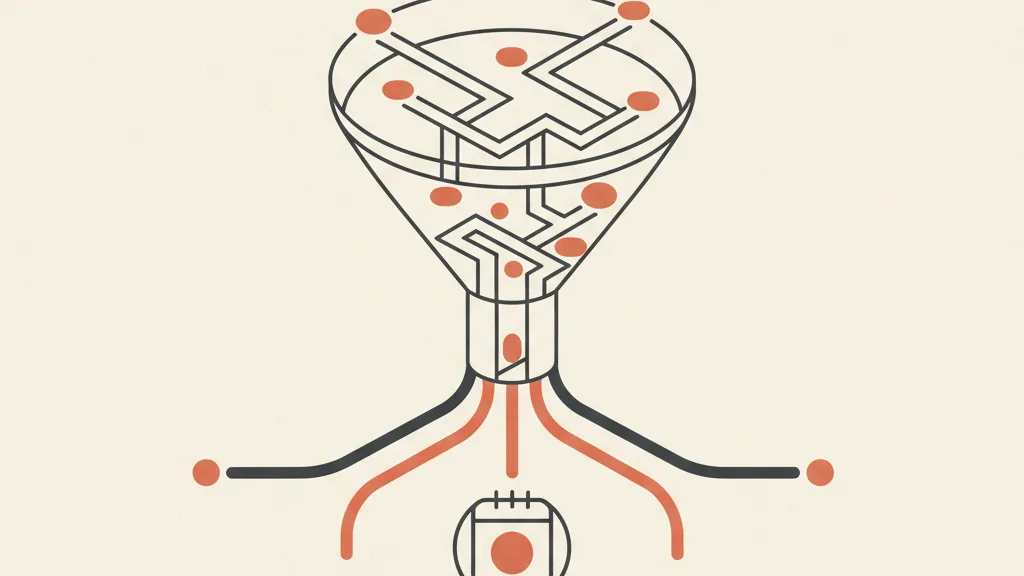
What a quiz funnel is (and why it converts better than a form)
A quiz funnel is a sequence of multiple-choice questions that the visitor fills out in 60-90 seconds, at the end of which they receive a personalized result: a diagnosis, a recommendation, a ballpark quote, a suggested path. The request for contact details (email, phone) comes right before the result, when the person has already invested attention and is motivated to see their answer.
The difference from a static form is psychological before it's technical. A form says "give me your data." A quiz says "help me understand your situation, so I can give you the right answer for you." The first is a request, the second is an exchange. That's why it works on three levels:
- Qualifies. Every question is a filter. Whoever isn't a fit finds out (or you reveal it) before you waste a call.
- Personalizes. Depending on the answers, you change the headline, the offer and the final message. A tailored quote converts far better than a generic "contact us."
- Segments. The answers become first-party data (so-called zero-party data): you already know what each lead wants, and you can use it throughout the follow-up.
The quiz funnel is one of many ways to build an acquisition funnel. It doesn't replace your campaigns, but it does replace (and beat) the landing page with a form you usually tack on at the end.
The 4 types of quiz that sell
Not every questionnaire serves the same purpose. Before writing the questions, pick your angle. These are the four that work best for acquiring customers.
1. Diagnostic quiz ("What's your problem?")
The visitor describes their situation, you hand back a diagnosis. Think of a dental practice asking "How long since your last check-up? Any discomfort? What would you like to improve?" and returning a recommended treatment path. Great for services where the customer doesn't know exactly what they need.
2. "Product finder" quiz ("Which solution is right for you?")
You guide the person toward your best-fit product or package. This is typical of e-commerce and list-priced services: skincare that recommends a routine, an agency that recommends a package based on budget and goal. It cuts down on choice paralysis.
3. Quiz-calculator ("How much could you gain or save?")
The result is a number: an estimated ROI, a ballpark quote, a potential saving. It works extremely well in B2B because it speaks the language of someone who has to justify a spend. The number is the hook for the call: "this is the estimate, let's look at your actual case together."
4. Qualification quiz ("Are you the right customer for us?")
The most sales-direct of the four. The questions are your fit criteria (industry, size, budget, urgency) disguised as a diagnosis. Whoever answers well gets invited to book, whoever isn't a fit gets a free resource and doesn't waste your time. It's an elegant way to qualify leads before you even talk to them.
In practice the types blend together: a good qualification quiz often has a diagnostic result or a number attached. What matters is that every question works for you, not that it's there just to pad things out.
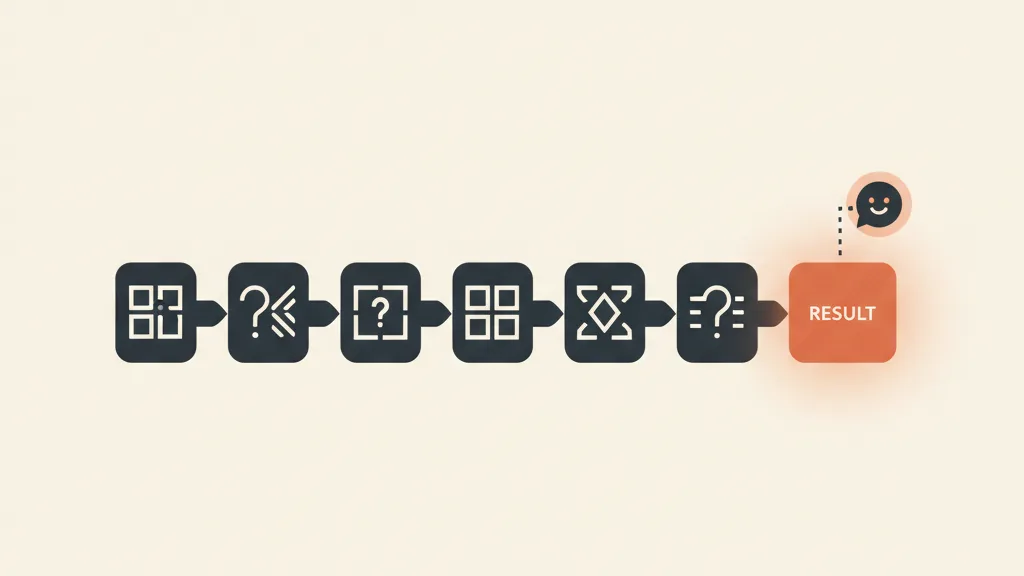
How to structure the questionnaire: the rules that matter
How many questions to ask
This is where everything is decided. Too few and you don't collect enough to personalize and qualify; too many and people abandon. The 2026 benchmarks converge on a clear range.
| Context | Recommended number of questions | Note |
|---|---|---|
| B2C / e-commerce, low ticket | 5-8 | Priority on speed of completion |
| B2B / high-value services | 8-12 | More questions are acceptable: the lead is worth more |
| Over 15 questions | Avoid | Completion rate collapses |
The practical rule is simple: every question must do at least one of three things — qualify, personalize the result, or segment for follow-up. If a question does none of the three, cut it. A lean questionnaire with 7 useful questions always beats one with 14 questions thrown in "just to know everything."
The right order for the questions
Start easy and engaging, leave sensitive questions (budget, contact details) toward the end. Someone who has already answered five questions is far more willing to leave you their number: it's the principle of progressive commitment. The most delicate moment is the "lead gate," the point where you ask for contact details.
Where to place the request for contact details
This is the single most important decision in the whole funnel. The lead gate should sit right before the results page, never at the start. By that point the person has invested 60-90 seconds answering specific questions about their problem, and the curiosity to see the result pushes them to complete it. Whoever designs this step well sees completion rates of 60-80% and contact-release rates above 85% among those who reach the gate.
Really personalize the result
The result shouldn't be a generic "thanks, we'll be in touch." It should mirror the answers: "Based on what you told us, here's the typical situation, here's what we recommend, here's the next step." The more the result feels written specifically for that person, the higher the conversion. Data shows that quizzes that dynamically change headline, image and offer based on the answers reach average conversion rates close to 47%, versus 40% for standard quizzes (source). If your industry is B2B services, expect realistic numbers around 35-40% — still triple a traditional landing page.
The right questions for qualifying (without sounding like an interrogation)
A qualification quiz only works if the questions uncover your ideal-customer criteria while keeping a consultant's tone. Here's the framework we use, adaptable to almost any service.
- The problem. "What's the main challenge you want to work on right now?" Used to understand intent and personalize the result.
- The current state. "How do you handle this today?" Reveals the maturity level and whether you're genuinely useful.
- Urgency. "How much of a priority is solving this in the next 3 months?" Separates buyers now from people who are just browsing.
- Size and context. Industry, revenue, headcount, volume: the filters that tell you whether they're a fit.
- Budget (handled gently). Best in ranges ("How much have you thought about investing? Under X, between X and Y, over Y") and placed at the end.
These answers, combined, give you a score. And this is where the quiz stops being a form and becomes a lead scoring engine: every answer is worth points, the total tells you how hot the lead is. A lead that flags an urgent problem, adequate budget and a matching industry is a potential SQL, and should be handled differently from someone who's just browsing.
Want a quiz that doesn't just collect emails but qualifies leads and gets appointments booked automatically? Request a free analysis of your funnel: we'll look together at how to connect it to an AI agent and your CRM.
The angle that changes everything: a quiz connected to an AI agent
So far we've talked about collecting and qualifying. But the real bottleneck comes after: what happens when someone finishes the quiz? In most cases the lead ends up on a list, someone will call them back "sooner or later," and meanwhile the lead has gone cold. The quiz generates demand; slow follow-up wastes it.
This is where the model we recommend to our clients comes in: the quiz doesn't end with a "thank you," it ends with a conversation. The moment the person submits their contact details and sees the result, their data (every answer, the score, the urgency level) is passed to an AI agent that continues the dialogue exactly where the quiz left off.
In practice, it works like this.
- The quiz qualifies and assigns a score. The answers become structured data, not free text.
- The AI agent takes over the lead. An AI agent on WhatsApp writes within seconds: "Hi, I saw your main issue is X and that it's fairly urgent. Let me ask a couple of quick questions so I can help you better." It digs into whatever the quiz left open, handles objections, and keeps the lead warm while it's still hot.
- The agent books the appointment. For leads that are a fit, it offers a calendar slot directly. Anyone who isn't a fit gets a useful resource and is placed in a nurturing flow, without taking up sales' calendar.
- Everything lands in the CRM. Quiz answers, score, conversation transcript and confirmed appointment: the salesperson walks into the call with the full context already at hand.
The result is that the time between "I filled out the quiz" and "I have an appointment" is measured in minutes, not days. And whoever has worked on this metric confirms it: adding an automatic qualification and scoring system to lead magnets has cut the average time to a qualified lead by more than 6 days and reduced junk leads by around 30% year over year (source). If you'd rather use the phone than a message, the same logic applies with a voice AI agent that calls and books the appointment while the lead is still hot.
Mistakes to avoid
- A quiz that's too long. Past 12 questions, you're losing people on every screen. Cut without mercy.
- Asking for contact details at the start. This kills your completion rate. The gate belongs before the result, not before the questions.
- A generic result. If the final page is the same for everyone, you've thrown away the quiz's main advantage. Personalize based on the answers.
- No fast follow-up. Collecting the lead and calling back three days later is like cooking and never serving the meal. The quiz's value fades with the wait.
- Useless questions. Every question must qualify, personalize or segment. If it does none of the three, it's just free friction.
- Confusing the quiz with the CRM. The quiz captures and qualifies, but the data has to flow into your system. Get clear on the difference between a funnel and a CRM before you build.
How to get started, in practice
You don't need an expensive platform to start. You need clarity on three things.
- Who you want to filter. Define your ideal customer and turn the criteria into questions. This determines the scoring.
- What you offer at the end. The personalized result and the offer attached to it. A well-built result is half the job, and it's worth polishing the offer you put in front of people who make it to the end.
- What happens next. The piece almost everyone forgets. A quiz without automatic follow-up is only half a quiz.
A well-designed quiz funnel connected to an AI agent and a CRM isn't a trick for collecting more emails: it's a way to turn anonymous traffic into qualified appointments, automatically, even while you sleep. It's exactly the logic behind a genuine system for generating qualified leads, where every piece — quiz, agent, CRM — does its job and hands off to the next one without friction.
Frequently asked questions
How many questions should a quiz funnel have?
For B2C and e-commerce, 5-8 questions; for high-value B2B services, 8-12. Past 15 questions the completion rate collapses. The rule: every question must qualify, personalize the result or segment the lead, otherwise cut it.
Where should the contact-details request go in a quiz?
Right before the results page, never at the start. By that point the person has already invested 60-90 seconds and the curiosity to see the result pushes them to complete it. Asking for contact details up front tanks the completion rate.
Does a quiz funnel really convert better than a landing page?
Yes. 2026 data shows opt-in rates of 40-65% for quizzes versus 5-20% for classic landing pages or downloadable PDFs. The reason is that a quiz offers an exchange (answer and get a tailored result) instead of a plain request for data.
Does a quiz funnel work in B2B too?
Yes. In B2B, calculator quizzes (estimated ROI or quote) and qualification quizzes work particularly well. Realistic B2B conversion rates sit around 35-40%, still well above a traditional form.
How do I connect a quiz to an AI agent that books the appointment?
When the quiz is completed, the answers and score are passed to an AI agent (on WhatsApp or by voice) that continues the conversation, digs deeper, offers a calendar slot to leads that are a fit, and logs everything in the CRM. That way the time between completing the quiz and getting an appointment is measured in minutes.
What's the difference between a quiz for entertainment and one for selling?
An entertainment quiz aims for shares and has no commercial goal. A quiz funnel is designed to qualify (every question is a filter), personalize the final offer and capture leads ready to be recontacted, with a clear next step toward the sale.
If you want to build a quiz funnel connected to an AI agent that qualifies and books appointments for you, let's talk: we'll analyze your case and show you the concrete path for your business.