ChatGPT and AI for Facebook Ads: A Practical Workflow for Copy and Creative
10 min read · AstraLoop Studio
There are two wrong ways to use ChatGPT for Facebook Ads. The first is ignoring it and writing every piece of copy by hand, wasting hours on work AI can speed up. The second, far more common, is opening ChatGPT, typing "write me 10 Facebook ads for my product," and pasting whatever comes out without touching it. The first wastes your time. The second burns your ad spend on generic copy that no algorithm can save.
The truth sits in between, and it's less glamorous than what gets said on LinkedIn: generative AI is a productivity multiplier for people who already know what they're doing, not a replacement for the strategist. Here's a concrete, step-by-step workflow for folding ChatGPT (and similar tools like Claude or Gemini) into a real advertising process: from angle research to copy, to creative variations, all the way to reading the results. With prompts you can copy, and more importantly, with the limits you need to know before you blow up a campaign.
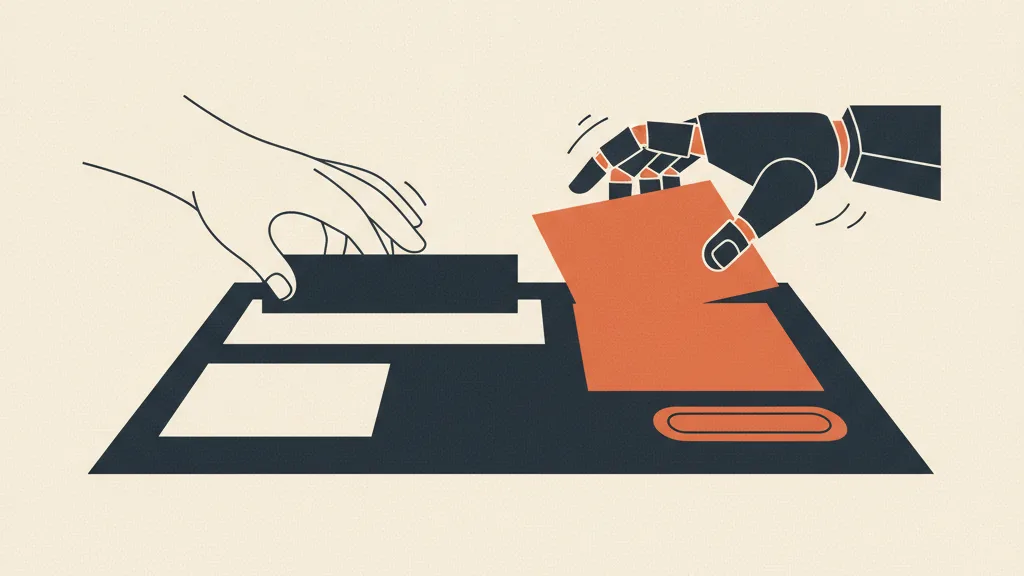
Where AI genuinely helps (and where it doesn't)
Before you open ChatGPT, you need clarity on what to expect. Generative AI is strong when the task is "produce many variations from a clear direction." It's weak when the task requires market judgment, real knowledge of your customer, or data the model doesn't have.
| Workflow stage | Does AI help? | Why |
|---|---|---|
| Angle and message research | Yes, as brainstorming | Generates hypotheses to test, not truths |
| First copy draft | Yes, with human review | Speeds up the draft, always needs cleanup |
| Variations on a winning copy | Very much so | Extends an angle that already works |
| Hook and creative format ideas | Yes | Widens the range, you pick |
| Audience and budget choices | No | Needs business knowledge and account data |
| Results interpretation | Only as support | Risk of hallucinating numbers |
Keep this in mind for the rest of the article: every AI output is a starting point to validate, not a finished result ready to publish. Skip the human review and you get copy that sounds "AI-written" — flat, interchangeable. And at current ad costs, a flat ad is an ad that burns budget.
Stage 1: angle research
The angle is the heart of an ad: it's the specific promise you use to address the customer's problem. Before writing any copy, you should have a list of 8-10 different angles to test. This is where ChatGPT saves you the most tedious hour of the job — as long as you feed it real material.
The trick is not to ask it to invent, but to rework data you provide: customer reviews, recurring questions from customer care, typical objections, product description. Feed it only "I sell supplements" and you'll get platitudes. Paste in 30 real reviews and it will surface angles you hadn't even noticed.
A good starting point is thinking in terms of customer awareness levels: someone who doesn't know they have the problem needs a different approach than someone already comparing solutions. If this framework isn't clear to you yet, it's worth reading about the five levels of customer awareness first, since it's the grid you'll use to filter the angles AI suggests.
Example prompt for angles
Prompt: "You are a direct-response strategist experienced with Meta Ads in the Italian market. Below I'm pasting 25 real reviews of my product [name + 2-line description]. Analyze them and extract: 1) the 5 benefits customers mention most, in their own words; 2) the 4 recurring objections or doubts; 3) 8 distinct ad angles for a Facebook ad, each with a sentence explaining who it targets and which emotional lever it pulls. Do not invent benefits that aren't in the reviews. Reply in English."
The "don't invent" constraint in the prompt is essential. Without it, the model fills the gaps with clichés. With that limit, it stays anchored to your data. What comes out is a list of hypotheses that you then select from, discarding the ones that don't survive contact with reality. For more on the method, we have a dedicated piece on how to find creative ideas for ads that pairs well with this step.
Stage 2: from draft to publishable copy
Once you've chosen 3-4 angles, AI is useful for the first draft. The mistake to avoid here is asking "write an ad": you'll get an average text, too many emojis, and that hollow enthusiastic tone users now spot at a glance. You need to guide the model with a framework and your brand voice.
Classic copywriting frameworks work well as structure to impose on the AI. If you want a refresher, our article on the AIDA, PAS, and BAB frameworks explains when to use each. In the prompt, saying "use the PAS structure" produces far stronger copy than a generic request, because you give the model a logical skeleton instead of letting it wander.
Example prompt for copy
Prompt: "Write 3 copy variations for a Facebook ad, angle: [chosen angle]. Framework: PAS (problem, agitation, solution). Target: [customer description]. Tone of voice: direct, concrete, no hype, informal, no more than one emoji per ad. Each variation: hook in the first line (max 8 words), body of 4-5 lines, one clear call to action. Local price format if relevant. Don't use empty superlatives like 'incredible' or 'revolutionary'."
What comes out is a draft, not the final text. The human review is where the difference gets made: you cut the redundant lines, swap out the words your customer would never use, and check that the claims are true and compliant with Meta's policies (watch out for health, money, and "before/after" claims). Before publishing any copy, it's worth running it through a review checklist to catch errors AI doesn't see.
A step few people take: training the model on your voice. Instead of redefining the tone in every prompt, you can paste in 3-4 examples of your best copy and ask the AI to mimic the register and rhythm. That's the first step toward an AI brand voice trained on your own model, which makes every output more consistent and cuts down editing work.
Stage 3: creative variations and visual ideas
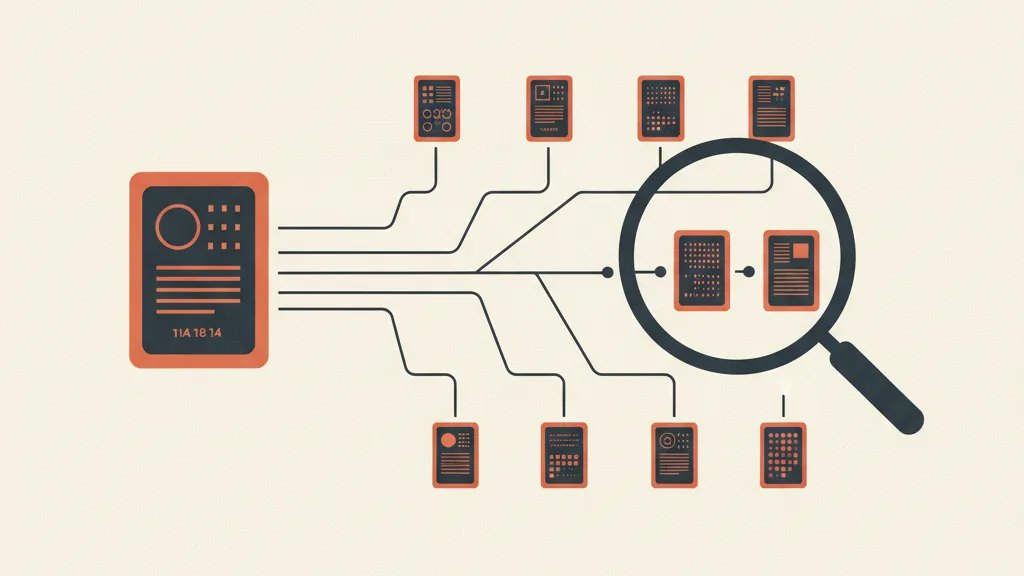
When an ad works, the game is to spin it into more variations to feed the tests and delay creative fatigue. This is AI's home turf: give it a winning copy and ask for 10 variations that each change one single element (the hook, the emotional lever, the body format). It's far more efficient than rewriting from scratch.
One thing to watch: a variation isn't "the same thing said with different words." A good test changes one isolated variable, so you know what made the difference. If you change the hook, tone, and offer all at once and the ad performs better, you've learned nothing. Our piece on the creative testing method explains how to structure these experiments without wasting budget.
On the visual side, ChatGPT doesn't generate finished images, but it's excellent for ideating concepts: scene descriptions, visual hook ideas, briefs for a designer or an image-generation tool. You can ask it "10 visual ideas to stop the scroll for this angle, each described in one sentence." Actual production then moves to dedicated tools, and on that front we have a guide to AI image-generation tools for marketing and one on how to produce ad creative with AI.
The advantage of volume, with judgment
With Advantage+ and Meta's automatic optimization systems, the number of creatives you can test matters more and more: the algorithm needs material to work with. AI lets you produce that volume without tripling your hours. But volume without selection is just noise. You're still the one deciding which variations have a thesis behind them and which are filler. If you're wondering how much material you actually need, we covered that in how many creatives per month you need on Meta.
Want a system that uses AI to produce and test creative without losing strategic control? Request an analysis of your campaigns and we'll show you where to automate and where you need a human hand.
Stage 4: reading the results (with caution)
Here's where the most serious limit comes in. You can paste an export of your campaign data into ChatGPT and ask for an analysis — plenty of people do. The model will hand back an organized, readable summary, useful for structuring your thinking. But you need to keep your eyes open here, for three reasons.
- Number hallucinations. Language models aren't calculators. They can miscalculate an average, flip a metric, or "read" a figure that isn't there. Every number the AI reports needs to be checked in Ads Manager.
- Missing context. The AI doesn't know there was a holiday that week, that you changed the landing page, or that your margin is 12%. Without context, its "advice" stays generic.
- Confuses correlation with causation. It will tell you an ad converted better, but not why. The diagnosis remains human work.
Use AI to ask the right questions, not to hand you final answers. A sensible use is to ask it "look at this data and tell me which 3 things you'd dig into further," then go verify it yourself. To understand which metrics actually matter and how to read them, start with the Meta Ads KPIs that matter and with how to tell if a creative is performing. Correctly reading the numbers is your skill: AI organizes it, it doesn't replace it.
A complete workflow, in summary
Putting the stages together, here's what a realistic work cycle looks like — one that integrates AI without handing it the thinking.
- Gather raw material: reviews, objections, customer care questions, product data.
- Generate angles with AI starting from that material, then filter them yourself for customer awareness and realism.
- Write the drafts imposing a framework and your brand voice, then review each copy by hand.
- Spin off variations starting from the best copy, changing one variable at a time.
- Ideate visuals with AI and produce them with dedicated tools.
- Launch and test with a structured method, not at random.
- Analyze using AI as an assistant, verifying every number in the platform.
The throughline is always the same: AI speeds up production, you hold the wheel. Whoever flips that balance (AI decides, the human copy-pastes) ends up with mediocre campaigns produced faster — the worst possible outcome. If you want to see how this logic extends to automatic campaign optimization, we covered it in how to use AI to optimize Meta campaigns and in our guide on how to use copywriting with AI.
The limits to always keep in mind
Let's close with the list of concrete risks, because knowing them is what separates people who use AI well from people who hurt themselves with it.
- The "AI-written" tone. Without editing, copy all sounds the same. Users recognize it and scroll past.
- Meta policy compliance. AI doesn't know the advertising rules: claims about health, weight loss, earnings, or discrimination can get your account blocked. Always check.
- Sensitive data. Don't paste customer personal data or confidential information into ChatGPT: consider enterprise versions with privacy guarantees.
- Dependence on examples. If you give the model one example, it will tend to copy it. Vary your inputs or you'll get repetitive output.
- No up-to-date market data. The model doesn't know your sales from yesterday or the current costs in your niche. You have to bring that data.
Used within these guardrails, ChatGPT becomes what it should be: a tool that gives you back hours, not an autopilot. Copy that sells is still the product of your understanding of the customer. AI writes it faster, but the strategy remains human work. If you want a broader picture of what sets a converting ad apart, our piece on Facebook Ads copy that sells is the natural companion to this guide.
Frequently asked questions
Can ChatGPT write my Facebook Ads on its own?
It can write drafts, not final versions. Publish what comes out without review and you get flat, interchangeable copy that users recognize as 'AI-written' and scroll past. Strategic direction, angle selection, and editing remain your job: AI speeds up the writing, it doesn't decide what to say.
What data should I give ChatGPT to get useful angles?
Real material about your customer: reviews, recurring questions from customer care, typical objections, and a precise product description. The more concrete input you give it, the more grounded the angles are in reality. Feed it generalities and you get platitudes back.
Can I use ChatGPT to analyze campaign results?
Only as support for organizing your thinking, never as a source of truth. Language models can hallucinate numbers, miscalculate averages, and confuse correlation with causation. Every figure needs to be checked in Ads Manager, and the final diagnosis remains human work that accounts for business context.
How do I stop copy from sounding 'AI-written'?
Guide the model with a framework (like PAS or AIDA), impose your brand voice by pasting in 3-4 examples of your best copy, ban empty superlatives, and limit emojis. Then always review by hand: cut redundant lines and swap out words your customer would never use.
Does ChatGPT also generate images for ads?
It doesn't produce finished visuals ready for publication, but it's excellent for ideating concepts: scene descriptions, visual hooks, and briefs for a designer or an image-generation tool. Actual production then moves to tools dedicated to image generation.
Are there privacy risks in using ChatGPT for ads?
Yes. Never paste customer personal data or confidential information into consumer versions. If you work with sensitive data, consider enterprise versions that offer contractual guarantees on privacy and on how data is used for training.
If you want to seriously integrate AI and automation into your customer acquisition process, let's talk: we'll build the workflow tailored to your business.