Digital Transformation for SMEs: Where to Start (2026 Practical Guide)
10 min read · AstraLoop Studio
"We need to digitalize the company." It sounds like a clear sentence, but in practice it means almost nothing. Digitalize what? The warehouse? The way you respond to customers? Invoicing? The salesperson who tracks leads on an Excel sheet only he ever opens?
The problem with digital transformation, for an Italian SME, isn't technology. The tools exist, they're cheap, and they work. The problem is that the term is so vague it becomes paralyzing. It sounds like a million-euro project, with consultants in suits talking about "ecosystems," when the transformation that actually helps starts with a single process that's costing you time and money right now.
This guide tells you where to actually start. No theory, no "mindset shift": a concrete roadmap, in order, whose first step pays for itself within a few months in most cases. And it explains why, in 2026, that first step for SMEs is almost always AI and automation, not new management software.
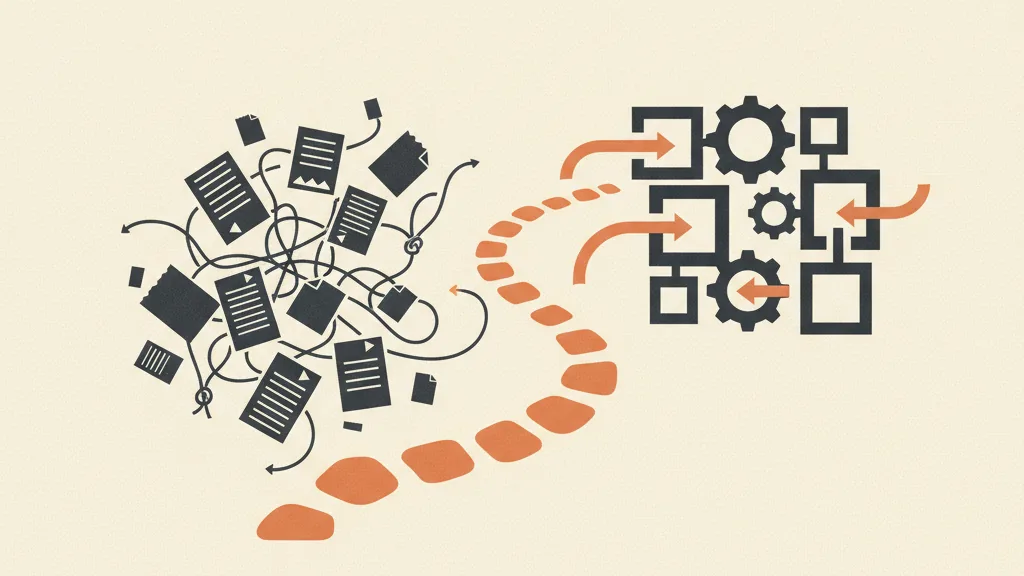
What digital transformation (really) means for an SME
Forget the conference-hall definitions. For a small or medium business, digital transformation is one thing: using technology to do the work you already do better, faster, or with fewer people. It's not about buying software. It's about changing how work flows through the company.
There's a distinction worth keeping in mind, because almost everyone skips it:
- Digitalization: you take a paper process and put it on a computer. The quote that used to live on a notepad is now a PDF. Useful, but you're just changing the medium.
- Digital transformation: you rethink the process itself. The quote doesn't just go digital, it fires automatically when a request comes in, hooks into the CRM, and sends a follow-up on its own if the customer doesn't reply within three days. Here you haven't moved the sheet, you've changed how you work.
The difference in return is enormous. Digitalizing a form saves you five minutes. Transforming the request-handling process gets you back customers you used to lose because nobody called them back. One is a cosmetic improvement, the other moves revenue.
The right starting point, then, isn't "which software do I buy" but "where am I losing money every week because of how we work today." Start there, and technology becomes a consequence, not the project itself.
Why most digitalization projects fail
Before giving you the roadmap, it's only fair to tell you where almost everyone trips up. Because avoiding three mistakes is worth more than ten pieces of advice.
1. Starting from the tool instead of the problem
"We need a CRM." Why? In most cases the real answer is "because we keep losing track of customers." But if you buy a CRM without having defined that problem, you end up with an expensive piece of software that's half-filled-in, that nobody updates, and that everyone bypasses after six months to go back to the old Excel sheet. The tool isn't the solution: it's what you use after deciding how you want to work.
2. Wanting to change everything at once
The "let's digitalize the whole company" project fails because it's too big to actually get done. It turns into an endless work site that blocks day-to-day operations, wears people out, and doesn't produce visible results fast enough to justify the effort. The transformation that actually works is made of small, closed steps, each with a measurable return before you move on to the next.
3. Ignoring people
You can buy the best software in the world, but if the salesperson doesn't use it, you've thrown the money away. Resistance to change isn't bad will: it's that you're asking someone to work differently without explaining what's in it for them. Every step of the roadmap needs to answer "what's in it for the person using it" before it answers "what's in it for the company." We wrote a dedicated piece on this: the real reasons AI and automation projects fail, which applies just as well to digitalization in general.
Keep these three points in mind and you're already ahead of most companies that charge in headfirst and grind to a halt.
The 5-phase roadmap (in the right order)
Here's the practical path. The order matters: each phase sets up the next and lets you see a result before you invest more.
Phase 1. Map where you're losing time and customers
Before touching any technology, sit down (with the people who do the actual operational work, not just you) and write out the processes eating up your time or costing you opportunities. The right questions are concrete:
- How many customer requests go unanswered because nobody saw them in time?
- How much time does your salesperson spend manually entering data instead of selling?
- How many times do you look for information (an old quote, a customer's details) and can't find it right away?
- Which repetitive tasks do you do every day that a machine could do identically?
That gives you a list. For each item, roughly estimate two numbers: how much it costs you (in hours or lost customers) and how hard it would be to fix. You'll need this for phase two.
Phase 2. Pick ONE high-return, low-friction process
Don't start with the biggest, most complicated problem. Start with whatever has the best ratio between impact (how much it saves or earns you) and ease (how fast it is to implement). This is the "quick win" that builds internal trust and funds the steps that follow.
In practice, for Italian SMEs, the three most common candidates are: handling incoming requests (calls, messages, forms), sales follow-up that nobody currently does, and reactivating dormant customers sitting in the database. It's no accident these are exactly the processes where AI-driven business process automation delivers fast results without upending the organization.
Phase 3. Automate, don't just digitalize
For the process you've chosen, the goal isn't to put it on a screen: it's to remove the manual work. A few concrete examples of what that means in 2026:
- An AI assistant that answers calls and messages after hours, qualifies the request, and books the appointment, instead of letting the customer go to a competitor.
- Automatic follow-up sequences that re-contact a lead who hasn't replied, without the salesperson having to remember to do it.
- Data that moves between systems on its own (from the form to the CRM, from the CRM to the calendar) instead of being copied by hand.
This is where the difference between digitalizing (moving the sheet) and transforming (eliminating the work) becomes visible. It's also why, today, the highest-ROI first step almost always runs through AI: it does things that used to require a person, at a fraction of the cost.
Phase 4. Bring the pieces together around a center
Once the first process works and you've come to trust the method, the next step is giving the company a central place where information lives. For most SMEs that center is the CRM: not as a bloated address book, but as the hub the automations run from and where everything that happens with customers converges. If you don't have a system yet, it's worth understanding how a CRM built specifically for SMEs works, rather than bending to a generic piece of software you pay a lot for and use at 20% capacity.
Around this center you connect processes one by one as you transform them: acquisition, sales, service. That's how isolated quick wins become a coherent customer acquisition system, instead of staying disconnected tricks.
Phase 5. Measure, adjust, then expand
Every step needs a number attached to it: more appointments, hours saved, customers reactivated, shorter response times. If you don't measure it, you don't know if it worked, and you can't justify the next investment. Figuring out how to measure the ROI of an AI project before you start keeps you from falling for solutions that look cool but move nothing. Only move to the next process once the current one is stable and producing numbers. Digital transformation isn't an event, it's a cycle you repeat.
Want to figure out which process to transform first in your company? Tell us how you work today and we'll tell you where AI and automation would deliver the fastest return.
Why AI and automation are the right first step (and not new management software)
Many people think digitalizing means switching management software or rebuilding the website. Sometimes that's needed, but it's rarely the right starting point, because those are long, expensive projects with a slow, hard-to-isolate return. In 2026, for an SME, AI and automation have three advantages that make them the ideal first building block.
| Criterion | New management software / website | AI + automation on one process |
|---|---|---|
| Time to see results | Months, often over a year | Weeks |
| Initial investment | High, hard to stop once started | Contained and scalable |
| Risk if it goes wrong | Blocks operations | Confined to one process |
| Measurable ROI | Diluted across everything | Direct and attributable |
| Impact on revenue | Indirect | Often immediate (more leads handled, fewer lost) |
The logic is simple: an automation that recovers even just two or three customers a month, who you used to lose because nobody called them back, can pay for itself within a few weeks. New management software, however useful, doesn't give you that number so directly.
This doesn't mean throwing AI at everything. It means using it as leverage on the right process. If you want to understand the smartest entry points for a small business, we have a dedicated guide on how to get started with artificial intelligence in your business without overreaching, and an overview of concrete AI use cases for businesses to get a sense of what's realistic today.
A concrete example: from scattered spreadsheets to a system
Take a typical company: a services firm with four people, plenty of incoming requests and no order to speak of. Leads come in by phone, email, and website form. Whoever answers first, answers; whoever's busy, loses them. Follow-ups happen "whenever there's time," which is to say almost never. Customer data lives in three different files.
Done properly, the transformation doesn't start with one piece of software that redoes everything. It starts like this:
- Phases 1-2: they map their processes; the obvious bottleneck is missed after-hours requests and skipped follow-ups. High impact, low difficulty.
- Phase 3: they put in an AI assistant that answers around the clock, qualifies the request, and books the appointment. They immediately recover opportunities that used to fall through.
- Phase 3-bis: they add automatic follow-up sequences for lukewarm leads. The close rate rises because no one falls through the cracks anymore.
- Phase 4: everything converges on a CRM. Now the data lives in one place, not three files.
- Phase 5: they measure appointments and conversions, watch the numbers climb, and only then consider the next step (perhaps connecting the upstream acquisition side with a proper B2B lead generation strategy).
No traumatic revolution. Small steps, each with a return, adding up to a company that works differently. That's real digital transformation, not the slogan version.
Where you start, concretely
If you had to boil it all down to one action to take this week: grab pen and paper and write down the three processes costing you the most time or the most customers today. Don't think about tools yet. Then, next to each one, write down how much it's costing you. The first item on the list, by cost-to-ease-of-fixing ratio, is your starting point.
Digital transformation isn't a leap into the dark, nor a project to put off until "whenever we have time." It's a series of practical decisions made in the right order, starting from a problem that's genuinely costing you money and using technology only where it's needed. In 2026, for most SMEs, that smart first step is an automation or an AI assistant on a well-chosen process: small investment, fast return, confined risk. Everything else gets built from there.
Frequently asked questions
Where do you start with digital transformation in an SME?
Not with software, with a problem. Map the processes costing you the most time or customers today, estimate what they cost you, and start with whichever has the best ratio of impact to ease of fixing. In most cases that's handling incoming requests or sales follow-up.
How much does it cost to digitalize a small company?
It depends on what you choose as the first step. An automation or an AI assistant on a single process is a contained, scalable investment, often paid back within a few weeks. New management software or a new website cost far more and return slower, which is exactly why they're rarely the right starting point.
What's the difference between digitalization and digital transformation?
Digitalizing means putting a paper process on a computer (the quote becomes a PDF). Transforming means rethinking the process itself: the quote fires automatically, hooks into the CRM, and sends its own follow-ups. The first changes the medium, the second changes how you work and moves revenue.
Why do so many digitalization projects fail?
For three recurring reasons: starting from the tool instead of the problem, trying to change everything at once and creating an endless work site, and ignoring the people who are supposed to use the new systems. The fix is moving in small, measurable steps and explaining to every team what's in it for them.
Do you need a CRM to start digital transformation?
Not right away. The CRM makes sense as a central hub in a later phase, once you've already transformed one or two processes and need somewhere for information to converge. Starting from the CRM without having defined the problems first leads to expensive, half-empty software nobody updates.
Why are AI and automation a good first step in 2026?
Because they deliver results in weeks, not months, with a contained investment and risk confined to a single process. An automation that recovers even a handful of customers a month, previously lost to missed follow-up, can pay for itself quickly, with a direct, measurable ROI.
If you'd rather start from a clear picture instead of trial and error, request a review of your processes: together we'll pinpoint the highest-ROI first step and tell you what to expect.