PTaaS vs Traditional Penetration Testing: Continuous Pentesting for SMBs
9 min read · AstraLoop Studio
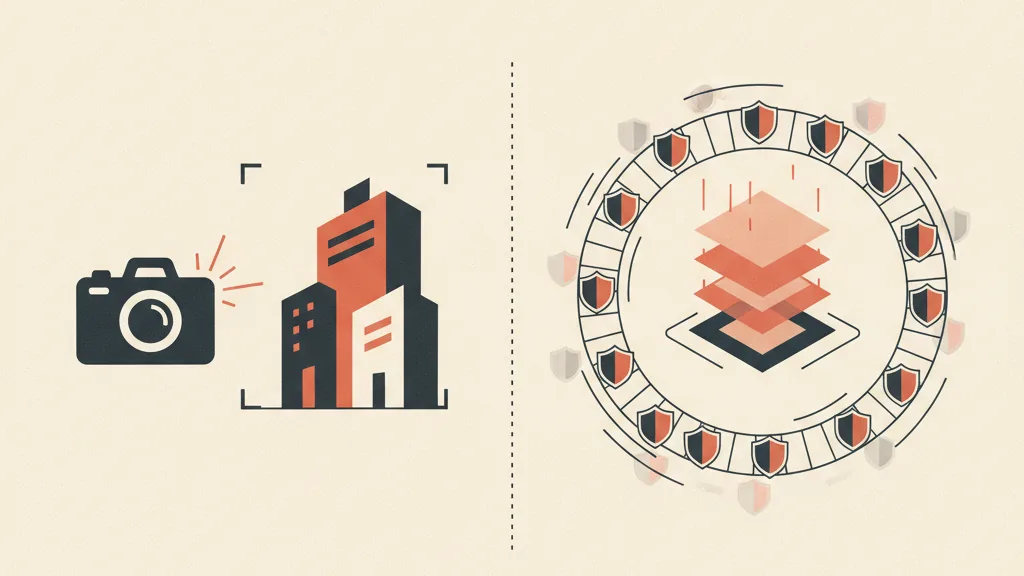
A classic penetration test works like a photograph. A provider attacks you in a controlled way for a week or two, hands you a report, and tells you "as of this date, you were secure up to this point." The problem is that the next day you've already shipped a new version of the app, updated a plugin, or connected a new vendor through an API. The photograph is already out of date.
PTaaS (Penetration Testing as a Service) flips that logic. Instead of an annual event, testing becomes a continuous, on-demand service aligned with your release cycles. Every time you ship something meaningful, it gets tested. In this article we'll look at the concrete difference between the two models, when PTaaS genuinely pays off for an SMB, and what it costs in Italy in 2026.
If you're still working out the difference between an automated scan and a manual test, start with our piece on the difference between vulnerability assessment and penetration testing. Here we'll assume you already know what a pentest is, and focus on the delivery model.
What PTaaS actually means
PTaaS stands for Penetration Testing as a Service. It's a model where penetration testing stops being an isolated project ("we'll run a pentest in March") and becomes an ongoing service, usually delivered through a platform that manages requests, surfaces vulnerabilities in real time, and tracks remediation.
Three features set it apart from a traditional pentest.
- Continuous or on-demand: you don't wait for the yearly window. You kick off a test whenever you need one — a new release, a critical feature, a third-party integration.
- Centralized platform: vulnerabilities land on a dashboard as they're found, not in a PDF at the end of the project. Your team can start fixing before the test is even finished.
- Human plus automation: automated scanners run continuously to catch the background noise, while human pentesters handle business logic and the edge cases a tool can't see.
Watch out for a common commercial trick. Some vendors label as "PTaaS" what is really just a vulnerability scanner sold on a subscription. That's not the same thing. A genuine PTaaS includes manual verification by qualified people, not just a repeated automated scan. That's exactly where many companies end up cutting corners without realizing it.
PTaaS vs traditional penetration testing: the comparison
Here's the comparison across the parameters that actually matter when you have to choose.
| Parameter | Traditional penetration test | PTaaS (continuous pentest) |
|---|---|---|
| Frequency | 1-2 times a year | Continuous or on-demand with every release |
| Delivery of results | PDF report at the end of the project (weeks later) | Real-time dashboard, vulnerabilities as they're found |
| Coverage of new code | Only the version tested on that date | Tracks deploys, tests recent changes |
| Cost | One-off project (€3,000-15,000+) | Monthly or annual subscription |
| Time-to-fix | Long — you find and fix issues months apart | Short — you fix while the test is still running |
| Best suited for | Stable environments, one-off compliance obligations | Frequent shippers (SaaS, e-commerce, apps) |
The difference isn't "one is better than the other" in absolute terms. It's a matter of pace. If your software changes only a handful of times a year, a well-run traditional pentest covers the risk fine. If you ship every week, an annual test leaves eleven months out of twelve uncovered.
Why an annual pentest isn't enough anymore (especially in Italy)
The problem with the annual model isn't theoretical. The 2026 Clusit Report paints a picture where Italy accounts for roughly 10% of global incidents, with severe attacks up 23% in the first quarter and vulnerability exploitation up 65% versus 2024. SMBs are the target in 72% of cases. In plain terms: attackers are exploiting flaws faster and faster, and a twelve-month gap between tests is an eternity.
Then there's the supply chain factor. Third-party compromises have quadrupled in five years, and roughly 30% of breaches involve a vendor. Every time you connect a new API, plugin, or partner, you open up a new attack surface that last year's pentest never saw. A continuous model, by design, catches it.
Add the regulatory backdrop. The NIS2 directive enters its operational phase in 2026 (baseline measures due by October 2026, incident notification from 1 January 2026), and among its requirements is assessing the security of your vendors, not just your own. Accountability falls directly on the CEO and the board, and it's no longer something you can delegate to IT. If you fall within its scope, demonstrating continuous control is worth far more than an annual report. To check whether it applies to you, start with this NIS2 applicability check and the concrete obligations for SMBs.
Penetration testing, whether traditional or continuous, is one piece of a bigger picture. It's worth framing it within a full IT security audit, which also covers configurations, access management, training, and compliance — not just the technical test.

Which SMBs actually benefit from PTaaS
PTaaS isn't for everyone. It's a targeted answer to a specific problem: frequently changing what's exposed on the internet. Here are the profiles where it makes the most sense.
Companies that ship software frequently
SaaS products, web apps, and platforms with an in-house or external dev team shipping every week or every sprint. Here an annual pentest is nearly pointless: by the time the report arrives, half the tested code no longer exists. PTaaS hooks into the development cycle and tests changes as they hit production.
E-commerce with continuous integrations
An online store that keeps adding plugins, payment gateways, marketplaces, and marketing tools keeps changing its attack surface. Every integration is a new risk. It's a big enough issue that it's worth reading more on IT security for e-commerce, where continuous pentesting pairs well with platform-specific controls.
Companies handling sensitive data
Law firms, medical practices, accountants, and any business processing special-category data under GDPR. Here it's not just about attacks: a breach involving sensitive data means notifying the Italian Data Protection Authority within 72 hours, plus potential fines. Continuous testing lowers the odds of ever reaching that point. If you fall into these categories, also check out the safeguards for law and accounting firms.
Companies that need to prove their security to clients or insurers
If you sign B2B contracts with security clauses, or you're evaluating cyber insurance, being able to show evidence of continuous testing — rather than a twelve-month-old PDF — changes the conversation. Many policies now require proof of active controls, and PTaaS produces that evidence naturally.
On the other hand, if you run a static brochure site you haven't touched in months, an infrastructure that changes once a year, or a very tight budget, a one-off traditional penetration test is probably the more rational choice. Don't pay for a continuous subscription to test something that isn't moving.
Not sure whether your case leans toward continuous or annual testing? Request an analysis of your attack surface — we'll tell you, with real numbers, which model covers your risk better.
Penetration testing as a service: pricing and how it's structured
Let's be upfront: there's no single price list. PTaaS pricing depends on scope (how many applications, assets, and APIs), test frequency, and the share of manual work versus automation. Be wary of anyone quoting a flat number without having seen what you actually need to protect.
To give you a realistic sense of the Italian market.
- One-off traditional penetration test: roughly €3,000 for a limited scope, up to €15,000 and beyond for complex applications. See the full breakdown in our guide to penetration test pricing.
- PTaaS subscription: structured as a monthly or annual fee. For an SMB with one or two main assets, it typically starts at a few hundred euros a month, scaling up with the number of applications and the frequency of manual testing.
The real comparison isn't "subscription vs. one-off project" on list price. It's the cost of risk. A breach you don't catch costs an SMB far more than the price gap between the two models: between downtime, recovery, notifications, and reputational damage, you can easily reach five or six figures. It's worth reading how much a data breach really costs an SMB before deciding where to cut costs.
One practical tip for evaluating quotes: always ask how much of the test is manual, who the pentesters are (certifications, experience), how vulnerabilities are rated (CVSS or a proprietary methodology), and whether fixes get re-tested after remediation. A serious provider will happily answer these questions.
How PTaaS fits into the development cycle
The value of continuous pentesting shows up when it's wired into the process, not bolted on the side. The typical flow looks like this.
- Scope setup: define which assets, applications, and APIs are in scope, and what counts as "critical" enough to test on every release.
- Continuous baseline scans: automated tools run in the background, flagging known noise — vulnerable versions, weak configurations.
- On-demand manual testing: whenever you ship a significant feature or change something sensitive, you request an in-depth test from the pentesters.
- Real-time triage and remediation: vulnerabilities land on the dashboard with severity ratings and guidance. Your team fixes them without waiting for a final report.
- Re-testing: after a fix, it gets verified. This closes the loop — something that often stays open in the annual model.
The result is a much shorter time-to-fix. In the traditional model, you discover a flaw in March, read about it in April, and fix it in May. With PTaaS, the gap between discovery and fix is measured in days, sometimes hours. And in a world where vulnerability exploitation keeps accelerating, that gap is what's really at stake.
How to choose between the two models: a practical rule
If you need to decide quickly, use this rule of thumb.
- Choose PTaaS if you ship software frequently (weekly or monthly), run an e-commerce store with constantly changing integrations, handle sensitive data, or need to demonstrate continuous controls to clients and insurers.
- Choose a traditional pentest if your environment is stable, you need a test for a one-off compliance requirement, or your budget can't sustain an ongoing subscription.
- Consider a mix: many SMBs run a thorough traditional pentest once a year across their full infrastructure, and turn on PTaaS only for the assets that change frequently. That's often the best balance.
Whichever path you choose, penetration testing remains a technical tool within a broader strategy. It won't solve staff training against phishing, won't cover access governance, and won't make you NIS2-compliant on its own. Treat it as one piece of a cyber security strategy for SMBs built for 2026, not as a box you tick once a year.
If you're not sure where to start, the fastest route is to have your actual attack surface mapped and find out, with real numbers, whether your case leans toward continuous or annual testing. From there, the rest follows on its own.
Frequently asked questions
What's the difference between PTaaS and a traditional penetration test?
A traditional penetration test is a one-off event (1-2 times a year) that gives you a report at the end of the project. PTaaS (Penetration Testing as a Service) is a continuous or on-demand service: you test with every release, see vulnerabilities in real time on a dashboard, and fix them while the test is still running. The key difference is pace, not technique.
How much does penetration testing as a service cost?
There's no single price list: it depends on scope (how many apps and APIs), test frequency, and the share of manual work. For an SMB with one or two main assets, the subscription typically starts at a few hundred euros a month, versus €3,000-15,000+ for a one-off traditional pentest. Be wary of flat prices quoted without anyone having seen what you need to protect.
Does PTaaS make sense for a small business?
It makes sense if you ship software or frequently change what's exposed online (SaaS, e-commerce with integrations, apps). In those cases an annual test leaves eleven months out of twelve uncovered. If instead you have a stable environment you don't touch for months, a one-off traditional penetration test is probably more rational.
Does PTaaS include manual testing or just automated scans?
A genuine PTaaS combines continuous automated scans (for known background noise) with manual testing carried out by human pentesters on business logic and edge cases a tool can't catch. Watch out: some vendors label a plain subscription-based scanner as "PTaaS." Always ask how much of the test is manual and who performs it.
Does PTaaS help with NIS2 compliance?
Yes, indirectly. NIS2 (operational from 2026) requires continuous security controls and vendor risk assessment, with direct accountability for the CEO and the board. Being able to show continuous testing and re-verified fixes is stronger evidence than an annual report. It doesn't replace a full compliance audit, though — it's a technical piece, not the entire regulatory picture.
Can I combine a traditional pentest with PTaaS?
Yes, and it's often the best choice for SMBs. Many companies run a thorough traditional pentest once a year across their entire infrastructure, and turn on PTaaS only for the assets that change frequently (the app, the e-commerce store, the APIs). That way you cover both the periodic full snapshot and the continuous flow of new code.
Want to find out where you're really exposed before someone else does? Talk to us and let's build the testing plan that fits your business.