Penetration Testing: What It Is, How It Works and Why Your Business Needs It
9 min read · AstraLoop Studio
A penetration test (or pentest) is a simulated, authorized cyberattack against your systems. The goal isn't theoretical. A professional acts the way a real criminal would: they look for a way in, actually try it, and then tell you exactly which door they went through and what they could have stolen. That's the whole difference from a simple automated check: it doesn't just tell you "this port looks open", it tells you "I got in through this port, reached the customer database, and here's the proof."
It's a distinction that matters, because in 2026 Italian companies' attack surface is more exposed than ever. The Clusit 2026 Report shows Italy accounts for roughly 10% of serious incidents worldwide, with serious attacks up 23% in the first quarter and vulnerability exploitation up 65% compared to 2024. SMBs are the target in 72% of cases. Anyone thinking "we're too small to matter" is thinking like it's ten years ago.
In this guide I'll walk you through how a pentest works, phase by phase, with concrete examples, and above all why the human part of the job is what separates a report that ends up in a drawer from one that saves you from a data breach. If you want the full picture on securing a company, this article is one piece of a complete IT security audit. Here we go deep on the pentest alone.
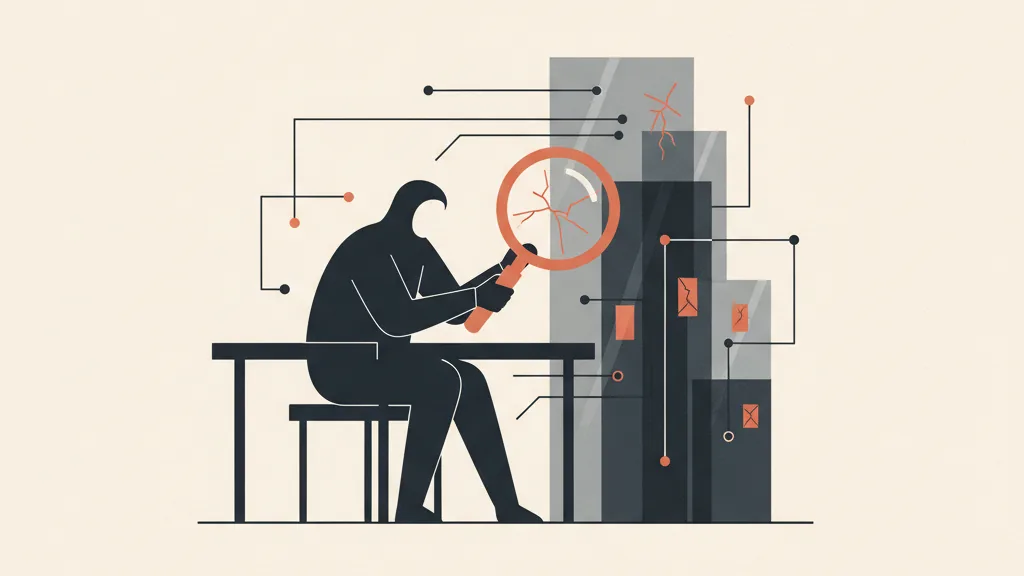
Penetration testing and vulnerability assessment: not the same thing
Before we get to the phases, let's clear up a misconception that costs many companies money. "Vulnerability assessment" and "penetration test" get used as synonyms, but they're two different activities with different goals.
A vulnerability assessment is a scan. A tool sweeps through your systems, services and software, checks them against a database of known vulnerabilities, and produces a list of potential issues. It's broad, fast, repeatable. It tells you what could be exploitable.
A penetration test picks up where the scan leaves off. It takes those vulnerabilities (plus the ones no tool spotted) and actually tries to exploit them, chaining them together to see how far an attacker could get. It tells you what is exploitable and how much damage it can do.
The practical rule: the vulnerability assessment is the map, the pentest is whoever walks through it. Many companies need both, at different times. If you want the full breakdown of the difference between vulnerability assessment and penetration testing, we've covered it in a dedicated article, along with exactly what a vulnerability assessment is when all you need is a snapshot of your exposure.
The phases of a real penetration test
A well-run pentest follows a precise sequence. It's not "poke around until something breaks" — it's a method, often aligned with standards like OWASP (for the web) or PTES. Here are the phases you'll find in every serious engagement.
1. Scoping and rules of engagement
Before anything is touched, the perimeter gets defined: which systems, which IPs, which applications, what time window, what level of aggressiveness. The type of test is also decided.
- Black box: the tester starts from zero, like an external attacker who knows nothing.
- Grey box: they receive some basic information or credentials (simulating an employee or a registered customer).
- White box: they have access to code, architecture and credentials (the deepest level).
This phase is contractual and legal. Without written authorization, a pentest is a crime. It's also when you make sure production systems don't get knocked over during business hours.
2. Reconnaissance
Here the tester gathers everything they can about you before attacking anything. It's the most underrated phase, and often the most revealing. It includes:
- OSINT (open source intelligence): exposed company emails, credentials leaked in old data breaches, employees on LinkedIn, technologies visible in your site's code.
- Enumeration: forgotten subdomains, open ports, listening services, software versions (an old login panel, an exposed staging environment).
A real attacker spends most of their time here. The entry point is often not a sophisticated technical flaw, but a test server left online with the default password, or an email address found in a stolen-credentials list. This ties into third-party risk: many exposures come from suppliers and integrations, and roughly one in three breaches involves an actor outside your own company. The same logic applies to business email phishing, where the weak link is often outside your technical perimeter.
3. Mapping and vulnerability analysis
With the picture assembled, the tester identifies concrete weak points: vulnerable login forms, APIs that leak data, unchecked file uploads, server misconfigurations, overly broad permissions. Automated scanners come into play here too, but their output is just raw material. Human judgment is what tells you which of those signals are actually dangerous in your specific context.
4. Exploitation
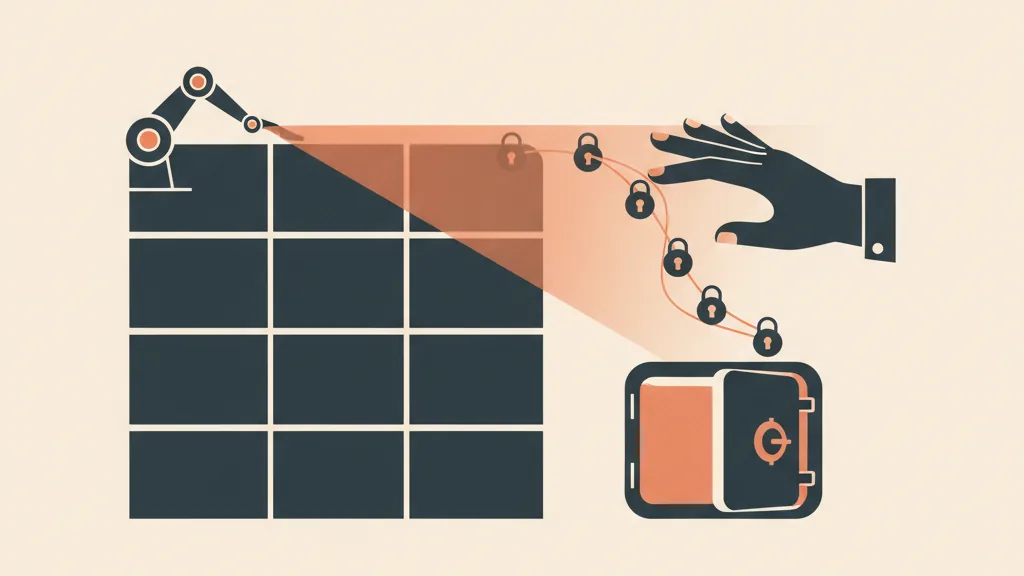
This is the heart of the pentest, the phase that sets it apart from any scan. The tester tries to exploit the vulnerabilities to gain real access: SQL injection to read the database, privilege escalation to become admin, authentication bypass, remote code execution on the server.
The most valuable part isn't any single exploit, it's the chaining. A medium-severity issue looks harmless on its own. But an attacker links them together: a minor vulnerability lets you read a config file, which contains a password, which opens a second service, which leads to the backup server. No automated scanner builds this chain. It takes a person thinking like an adversary.
5. Post-exploitation and lateral movement
Once inside, the tester documents how far they could have gone: what data they could have exfiltrated, whether they could move from one system to another, whether they could make the access persistent. It answers the question that actually matters to you: if someone gets in, how much damage do they do before you notice?
6. Report and remediation
A pentest is only as good as its report. A good report has two levels.
- An executive summary: overall risk, priorities, business impact in plain language (not "CVE-2024-xxxx", but "an outsider could access your customer records").
- A technical breakdown for whoever has to fix things: each vulnerability with its severity, steps to reproduce it, proof (screenshots, logs) and remediation guidance.
Vulnerabilities are usually ranked by severity using the CVSS system. A complete pentest closes with a re-test: after you've fixed the issues, the tester verifies the holes are actually closed. Skip this step and you don't know whether you solved the problem or just moved it.
Manual pentest vs. automated scan: why a human audit finds what tools can't
The market is full of cut-price offers that sell "penetration testing" but actually deliver an automated scanner's output packaged into a PDF. These are two different products, and the difference shows when it matters.
Scanners are excellent at what they do: they cover a broad perimeter quickly, they find known vulnerabilities, outdated versions, recurring misconfigurations. But they have structural limits that no database update can fix.
| Aspect | Automated scan | Manual pentest (human audit) |
|---|---|---|
| Business logic | Blind: doesn't know that "user A" shouldn't see "user B"'s orders | Tests real workflows and finds logic flaws |
| Chaining vulnerabilities | Flags isolated issues | Links minor flaws into a full attack |
| False positives | Many: flags things that aren't actually exploitable | Verifies every finding by actually testing it |
| Zero-day / new vulnerabilities | Invisible until they're in the database | Found by reasoning about context |
| Business context | None | Assesses the real impact on your data and processes |
The clearest example is business logic flaws. Picture an e-commerce site where changing a parameter in an order's URL lets a customer see another customer's invoices. Technically there's no "known vulnerability": the system works exactly as programmed, it was just programmed badly. A scanner raises no alarm, because it has no way of knowing that behavior is a problem. A person following the purchase flow finds it in five minutes. It's a full-blown GDPR violation, but invisible to automation.
The same goes for reconnaissance and chaining: these are reasoning tasks, not pattern matching. A tool gives you a list; a person gives you a story ("from this point, I got here"). And in 2026 attackers themselves are using AI to build increasingly realistic combined attacks. Defending yourself with old-school automation alone is like bringing a knife to a gunfight.
None of this makes scanners useless — quite the opposite. The sensible model is hybrid: automation covers breadth and frees up time, while a human analyst works in depth where the risk is high. If your vendor is only offering you a bargain-basement scan and calling it a pentest, now you know what you're (not) buying.
Want to know where you'd get breached before an attacker finds out? Request a security assessment of your systems and let's talk about the right scope for your business.
Why your business needs it (even if you're an SMB)
Three concrete reasons, beyond "it's good practice."
1. The risk is real and growing. With SMBs targeted in 72% of cases and vulnerability exploitation up 65%, the question isn't "will I be attacked?" but "when, and how exposed will I be?" A pentest tells you in advance where you'll be breached, while you can still close the hole at zero cost instead of after the fact, at the cost of a data breach.
2. Regulatory compliance. The NIS2 Directive, in force in Italy in 2026, requires companies within scope to have adequate technical measures and documented risk management, with incident notification and accountability falling directly on the CEO and management bodies (no longer something IT alone can be blamed for). A periodic pentest is a natural part of that posture. If you're not sure whether you're in scope, start with whether NIS2 applies to your business and the concrete obligations for SMBs. This also ties into GDPR obligations: different requirements, but converging on the same question — "can you prove you did your part?"
3. Insurability. More and more cyber insurance policies require, as a condition for coverage or a reasonable premium, proof that you've conducted security testing. A recent pentest report is often exactly what an insurer wants to see before signing. In the event of a claim, showing you ran serious checks is the difference between a payout and a denial for negligence.
When and how often to run a pentest
It's not a one-off activity. Your attack surface keeps changing: every new release, every integration, every vendor introduces potential flaws. Typical occasions:
- Before launching a new application or e-commerce site.
- After significant architectural changes.
- At least once a year (every six months for critical systems).
- When requested by enterprise clients, tenders or insurers.
The cost of a penetration test depends on scope, depth and test type: we've dedicated an article to the real ranges, so you can avoid both the too-cheap offer (which hides a plain scan) and the inflated quote. If you need ongoing coverage rather than a single engagement, also consider the Penetration Testing as a Service (PTaaS) model, which turns testing into a continuous practice.
In short
A penetration test is a simulated, authorized attack that follows precise phases (scoping, reconnaissance, analysis, exploitation, post-exploitation, reporting) and gives you a concrete picture of what happens if someone decides to break in. Its strength lies in the human element: the reasoning that chains isolated flaws together, uncovers logic errors invisible to scanners, and translates technical risk into business impact. In a year when Italian SMBs are the primary target and NIS2 shifts accountability onto company leadership, knowing in advance where you'll be breached isn't a luxury — it's the cheapest thing you can do.
Frequently asked questions
What's the difference between a penetration test and a vulnerability assessment?
A vulnerability assessment is a scan that lists potential vulnerabilities (the map). A penetration test actually exploits them, chains them together, and demonstrates how much damage an attacker can do (whoever walks the map). Often you need both, at different times.
How long does a penetration test take?
It depends on the scope. A test on a single web application typically takes anywhere from a few days to two weeks, including reconnaissance, exploitation and report writing. Large infrastructure scopes or in-depth white-box tests take longer.
Can a pentest damage my systems?
A professional tester sets precise rules of engagement during scoping to avoid outages, avoids aggressive testing on production during peak hours, and agrees on time windows in advance. The risk exists but is managed through planning — which is exactly why written authorization is mandatory.
Why isn't an automated scanner enough?
Scanners find known vulnerabilities and common misconfigurations, but they're blind to business logic, they don't chain minor flaws into a full attack, and they generate plenty of false positives. The most serious flaws — like one user accessing another user's data — are only found by a human analyst reasoning about context.
Is my SMB too small for a penetration test?
No. According to the Clusit 2026 Report, SMBs are the target in 72% of cases, precisely because they're often less protected. Automated attacks don't select by size — they hit whoever is exposed. A test scaled to your perimeter is accessible even for small companies.
Does a penetration test help with NIS2 compliance?
Yes, it's a useful piece of the puzzle. NIS2 requires adequate technical measures and documented risk management, with accountability resting on management bodies. A periodic pentest helps demonstrate that you've adopted serious controls, but it needs to be part of a broader compliance path — it's not the only requirement.
If you're considering a penetration test or a more complete audit, talk to us: we'll analyze your exposure together and tell you honestly what you actually need.